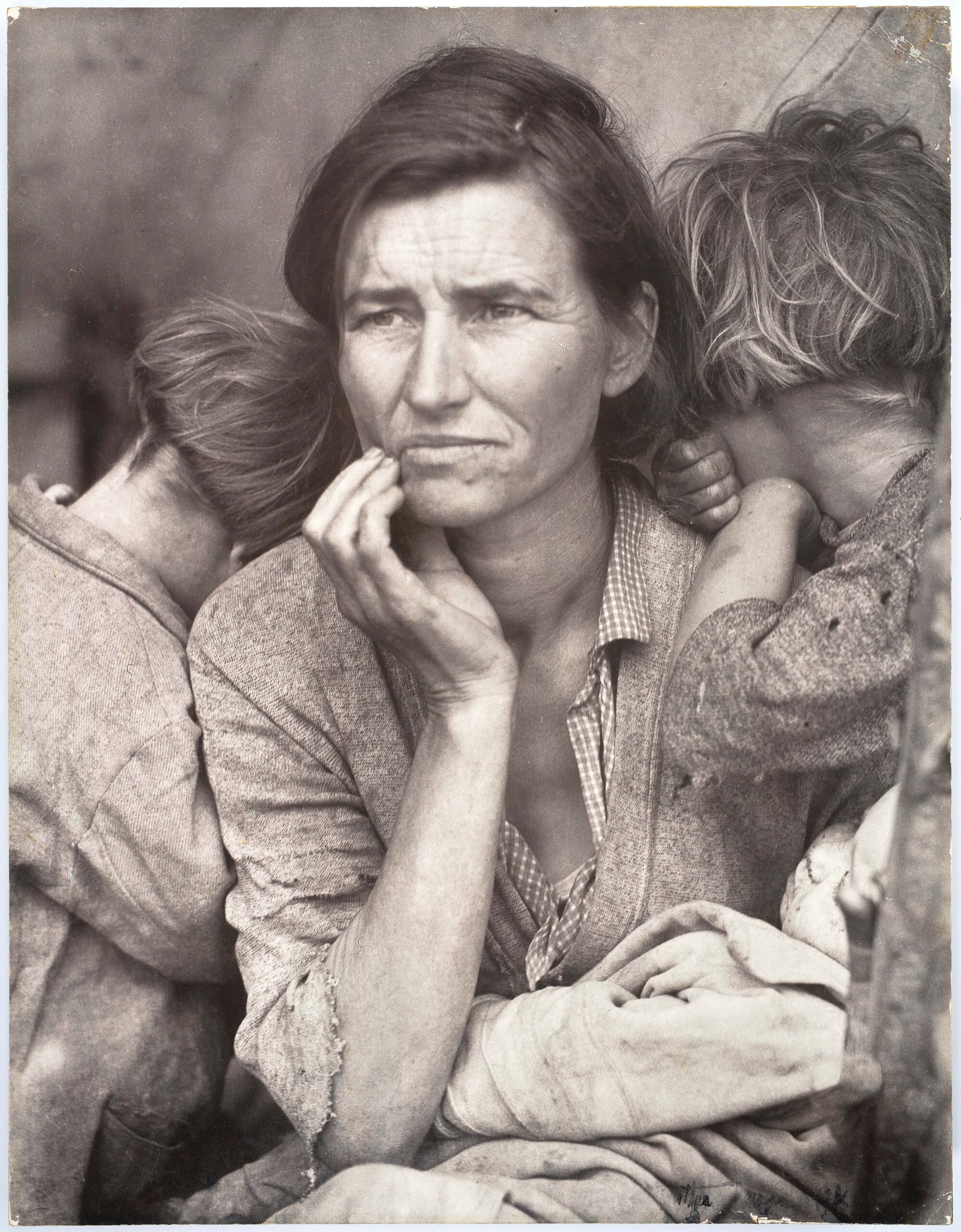
“Migrant Mother, Nipomo, California” by Dorothea Lange, 1936, gelatin silver print, 18¾ by 14½ inches. Lucas Museum of Narrative Art, PKY.1062.
By Liz Goldner
LOS ANGELES — Filmmaker George Lucas has been exploring the worldwide presence of myths and stories since his college days. These similar narratives, appearing across dissimilar cultures, are told by people who have never met each other. Lucas credits his mentor, professor Joseph Campbell who explored the origins of myths, for his interest in mythology. He applied Campbell’s theories and their storytelling nuances to his 1977 blockbuster movie, Star Wars, with its tales of good and evil, and with the concept of “The Force.” It became one of the most celebrated films of all time.
The storytelling theme in Star Wars has influenced Lucas’ filmmaking ever since. Many varieties of stories are also present in his Lucas Museum of Narrative Art — which scheduled its grand opening for September 22. The 300,000-square-foot museum, set in a Los Angeles building that resembles a spaceship, presents exhibitions and stories addressing society’s evolution going back millennia, along with displays about contemporary life.
The museum’s mission is to explore and examine the vast range of human experiences through prints, illustrations, paintings, sculptures, films and more. Mellody Hobson, cofounder of the museum and Lucas’ wife, explains, “This is a museum of the people’s art. The images are illustrations of beliefs we live with every day. Our hope is that as people move through the galleries, they will see themselves, and their humanity, reflected back.”
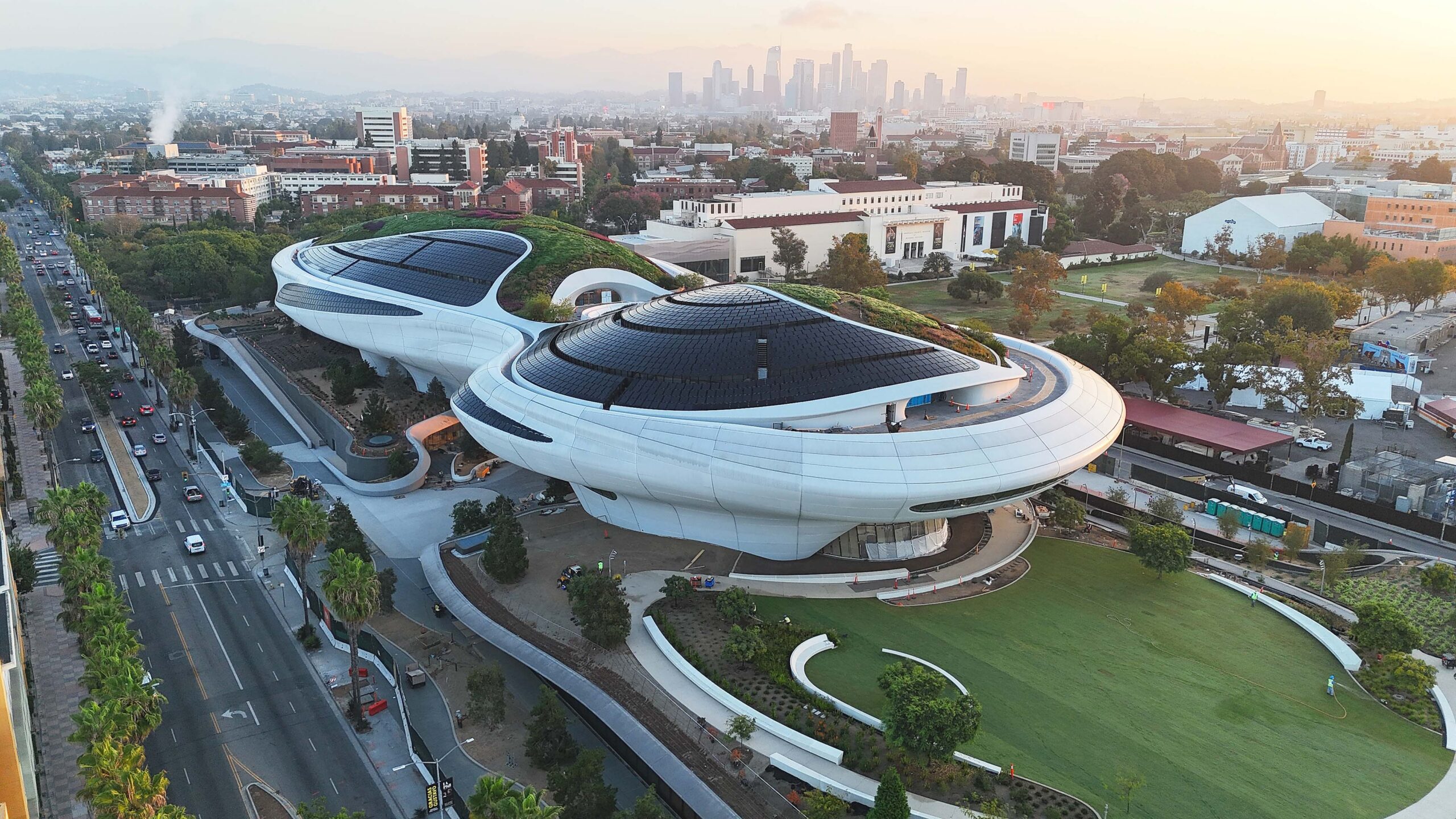
Aerial view of Lucas Museum construction, September 2025. © 2025 Lucas Museum of Narrative Art. Photo courtesy of Hathaway Dinwiddie. Photo by Pedro Ramirez. All rights reserved.
Lucas — who has been collecting narrative art for more than 50 years — added, “Stories are mythology, and when illustrated, they help humans understand the mysteries of life.”
In the recently-published Lucas Museum catalog, he wrote: “Myths were developed around love, faith, family, childhood, community, fantasy and the unknown. They both reflected and connected society with a common belief. In conveying values, they helped hold together a village…then a city…then a nation.” The Lucas Museum exhibits artwork that is curated to inspire togetherness and reflection among viewers, and to move people to consider how images influence our world.
Lucas Museum artworks trace the evolution of human culture. These include photographs of cave paintings, ancient sculptures of gods and goddesses, Renaissance paintings, illustrations of mythical and fantastical characters, Depression-era photos, comic book illustrations, Star Wars images and contemporary visuals about life in the United States. Exhibitions also display photography, architecture, cinema, stories of the American West, children’s stories, comics, graphic novels and murals. Subsections address such concepts as love, family, motherhood, community, sports and adventure. Touring the exhibitions reveals numerous illustrations displaying distinctly cinematic aspects.
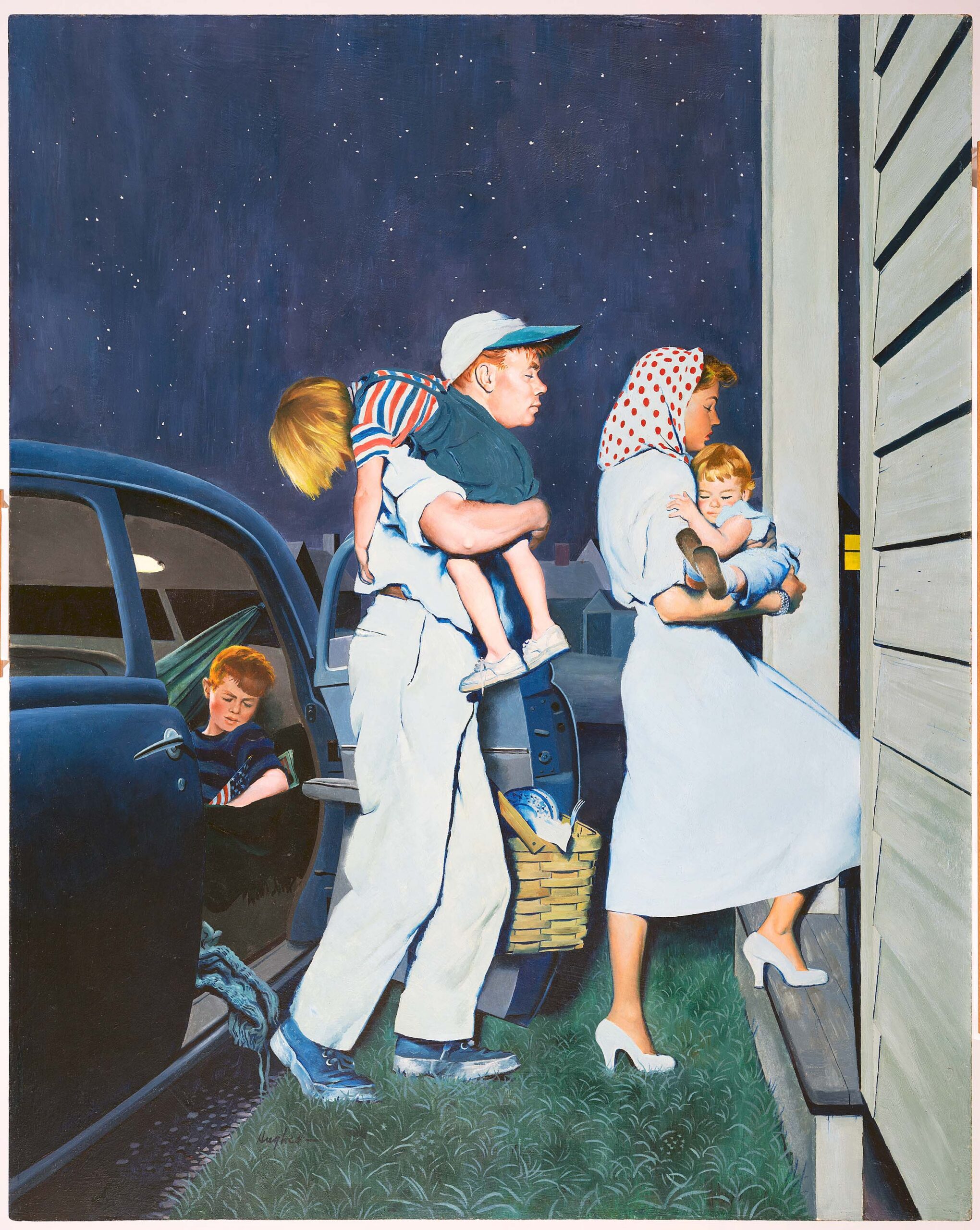
“Home at Last” by George Hughes, cover for The Saturday Evening Post, September 1, 1951, oil on board, 30 by 24 inches. Lucas Museum of Narrative Art, PKY.993. © SEPS by Curtis Licensing.
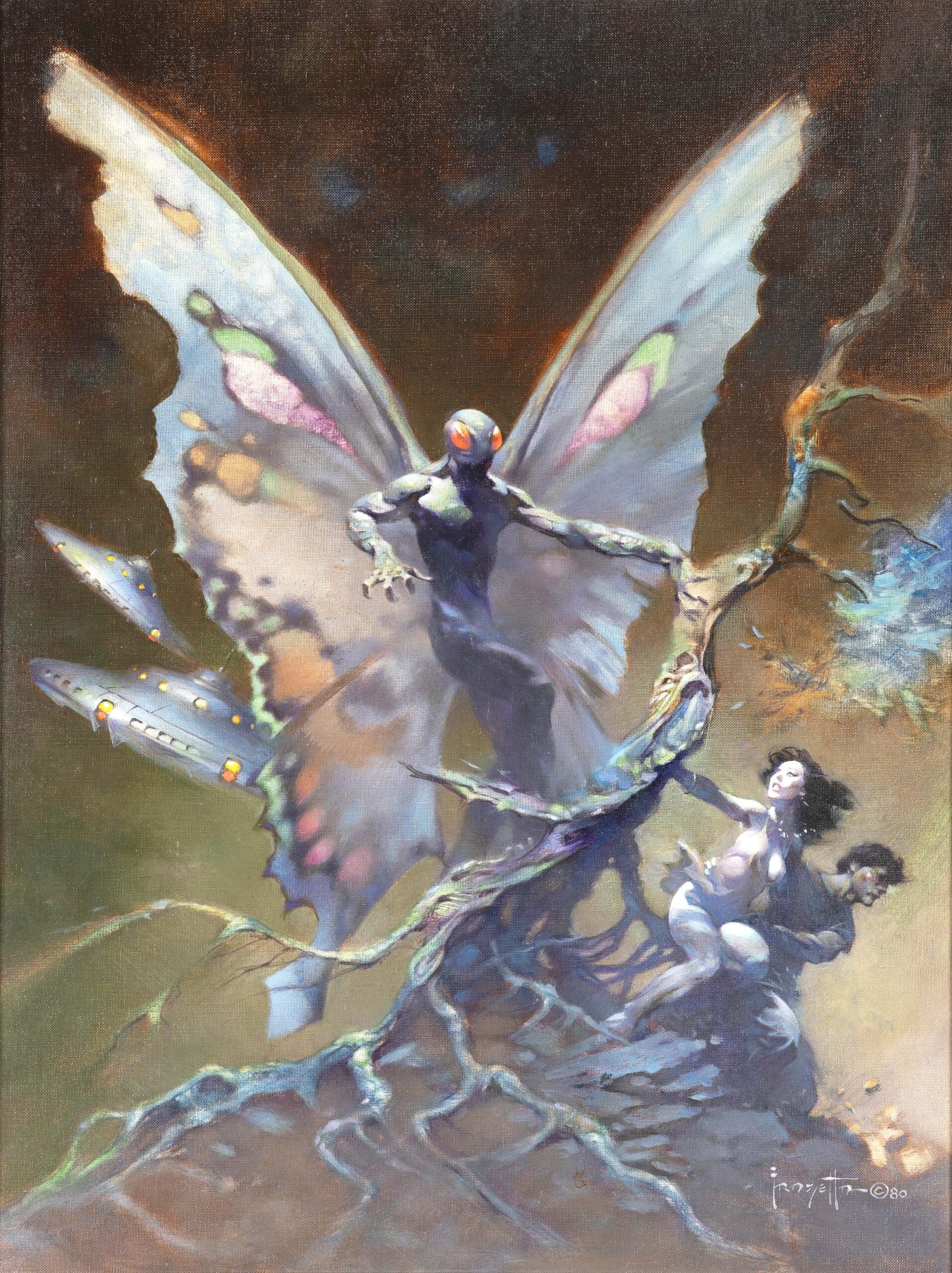
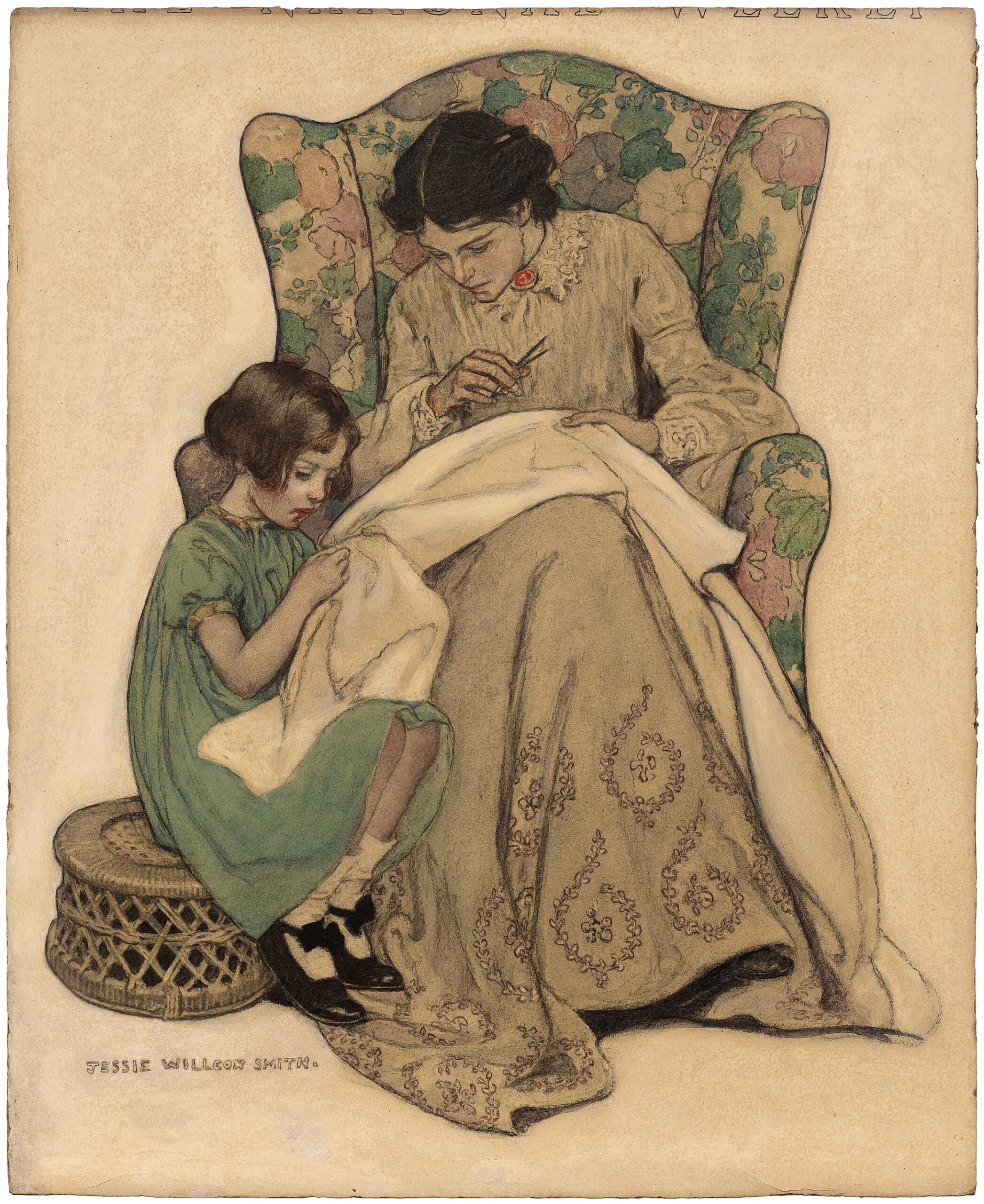
Among 18 inaugural exhibitions, six are devoted to the work of individual American artists: regionalist painter Thomas Hart Benton; fantasy artist Frank Frazetta; painter/illustrator of dreamy visions Maxfield Parrish; Norman Rockwell, who depicted humanity and American culture; Jessie Willcox Smith, who illustrated fairy tales and childhood scenes; and painter and dramatic book illustrator N.C. Wyeth.
The Lucas collection contains notable work by contemporary artists, including Judith F. Baca, Robert Colescott, Frida Kahlo and Diego Rivera. Here also are renowned Twentieth Century photos by Dorothea Lange, Robert Capa and Gordon Parks. Reflecting the museum’s dedication to storytelling in many mediums, extensive film archives, including the complete Lucas Archives (1971-2012) are available to viewers.
Inside the five-story museum, viewers will behold 30 galleries, occupying 100,000 square feet of gallery space, containing more than 1,200 objects.
The logical place to begin the Lucas Museum journey is on the first floor with “The History of Narrative Art: Heroes • Myths • The Sacred.” This introduction to visual storytelling opens with high-resolution images of cave paintings, including “Cave of Altamira, Santillana del Mar, Cantabria, Spain,” (35000-15000 BCE), depicting ancient animals and foliage. Viewing this image within a darkened room is to witness the genesis of narrative art.
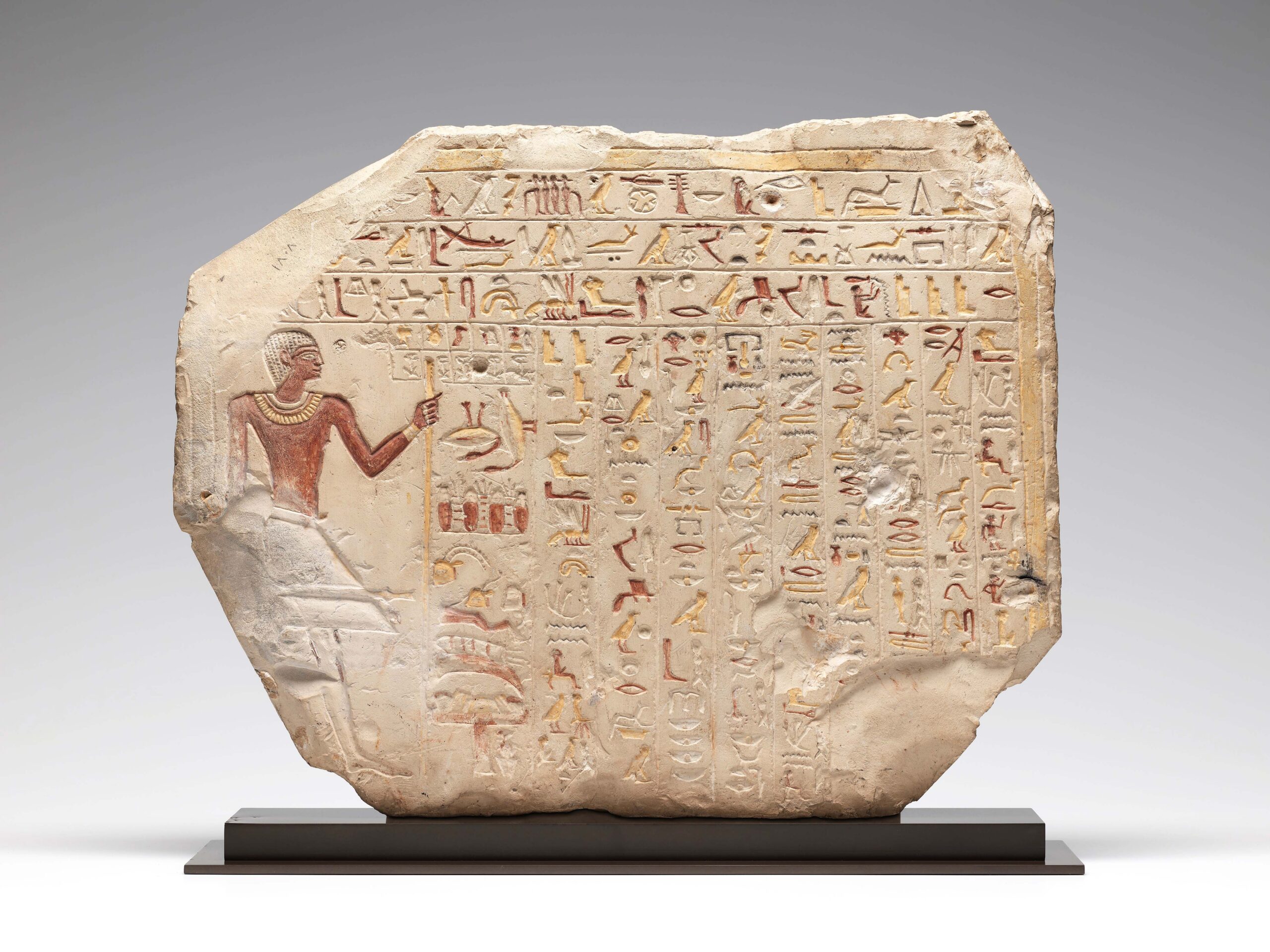
Polychrome relief depicting the afterlife of an elite official, artist unknown, Egypt, circa 2200-2000 BCE, First Intermediate Period, limestone with polychrome, 20⅛ by 25-3/16 by 1¾ inches. Lucas Museum of Narrative Art, 2019.26.1.
Beyond the cave art, there are 3D scans and high-resolution images, including Michelangelo’s “David” (1501-04) and those of the Vatican Museums, the Sistine Chapel’s ceiling, the Louvre, Renaissance and Eighteenth Century paintings, up to Renoir’s “Bal de Moulin de la Galette” (1876), embodying the quintessential Impressionist style and lifestyle during the Belle Époque. This section introduces viewers to the concept of narrative art as a tool to “communicate values, assert power and define belief.”
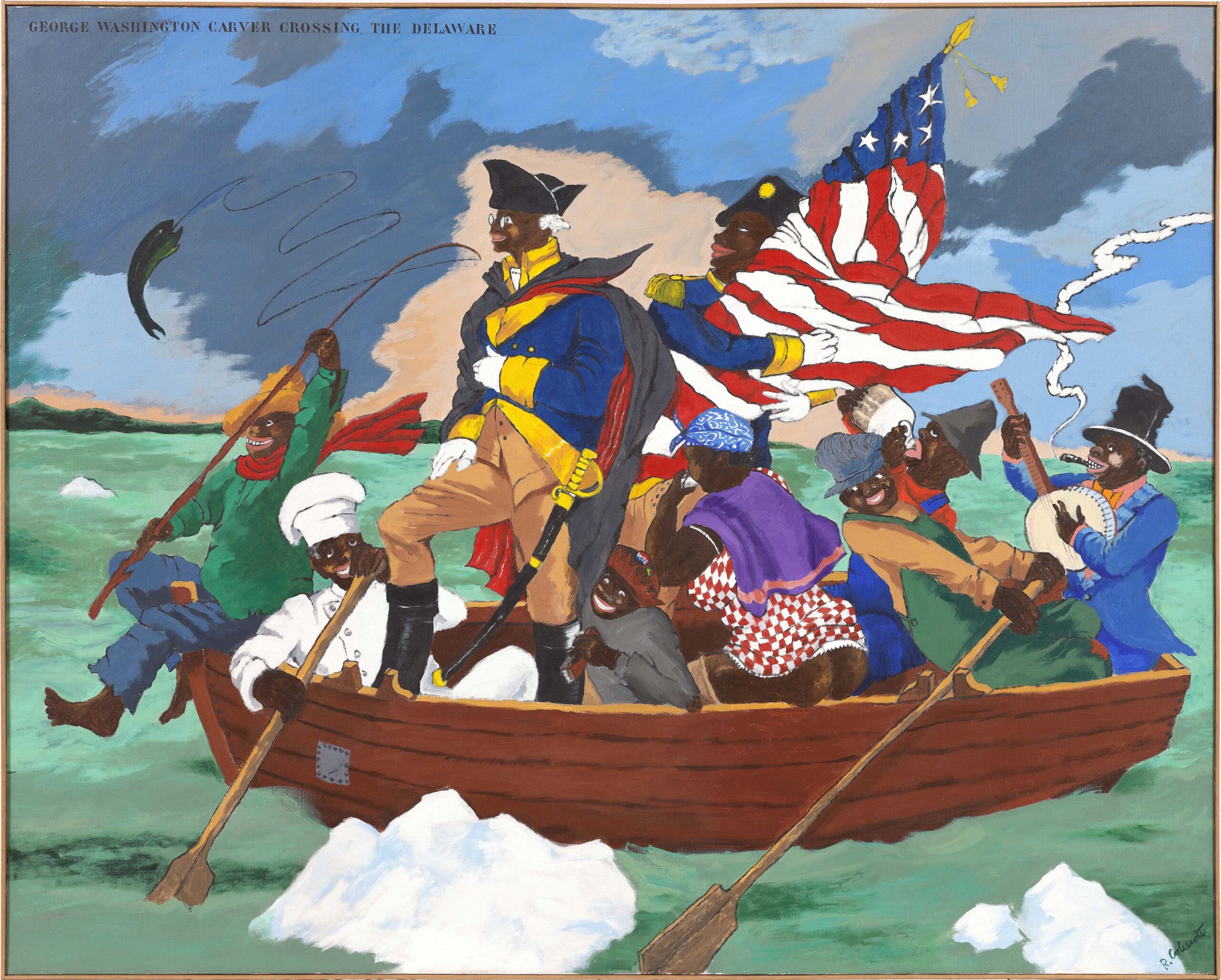
Leaving the history section and taking one of the elliptical glass elevators to the fourth floor, viewers can enjoy a large variety of contemporary narrative artwork. One of the most important paintings on display is “George Washington Carver Crossing the Delaware: Page from an American History Textbook” (1975) by Robert Colescott. This satirical reinterpretation of Emanuel Leutze’s “Washington Crossing the Delaware” (1851), depicts the African American scientist George Washington Carver as George Washington, accompanied by a boatload of stereotypical Black figures. These include Aunt Jemima, Uncle Ben, banjo players and mammies, parodying the Leutze painting, bringing racial issues to light.
Dozens of illustrations by Norman Rockwell are displayed at the Lucas. His “Age of Romance” features a young boy reading a large book about the Middle Ages. Behind him is an enlarged circular depiction of a knight in armor rescuing a young maiden, reflecting his imagination. Rockwell’s “Shuffleton’s Barbershop” depicts a New England barbershop, in which the barber and friends are playing music, and “The Problem We All Live With,” which is on loan from the Norman Rockwell Museum (Stockbridge, Mass.), illustrates six-year-old Ruby Bridges, escorted by four deputy US marshals, as she steps towards the end of segregation in a Southern school. The painting expresses Rockwell’s progression to conveying political views in his work.
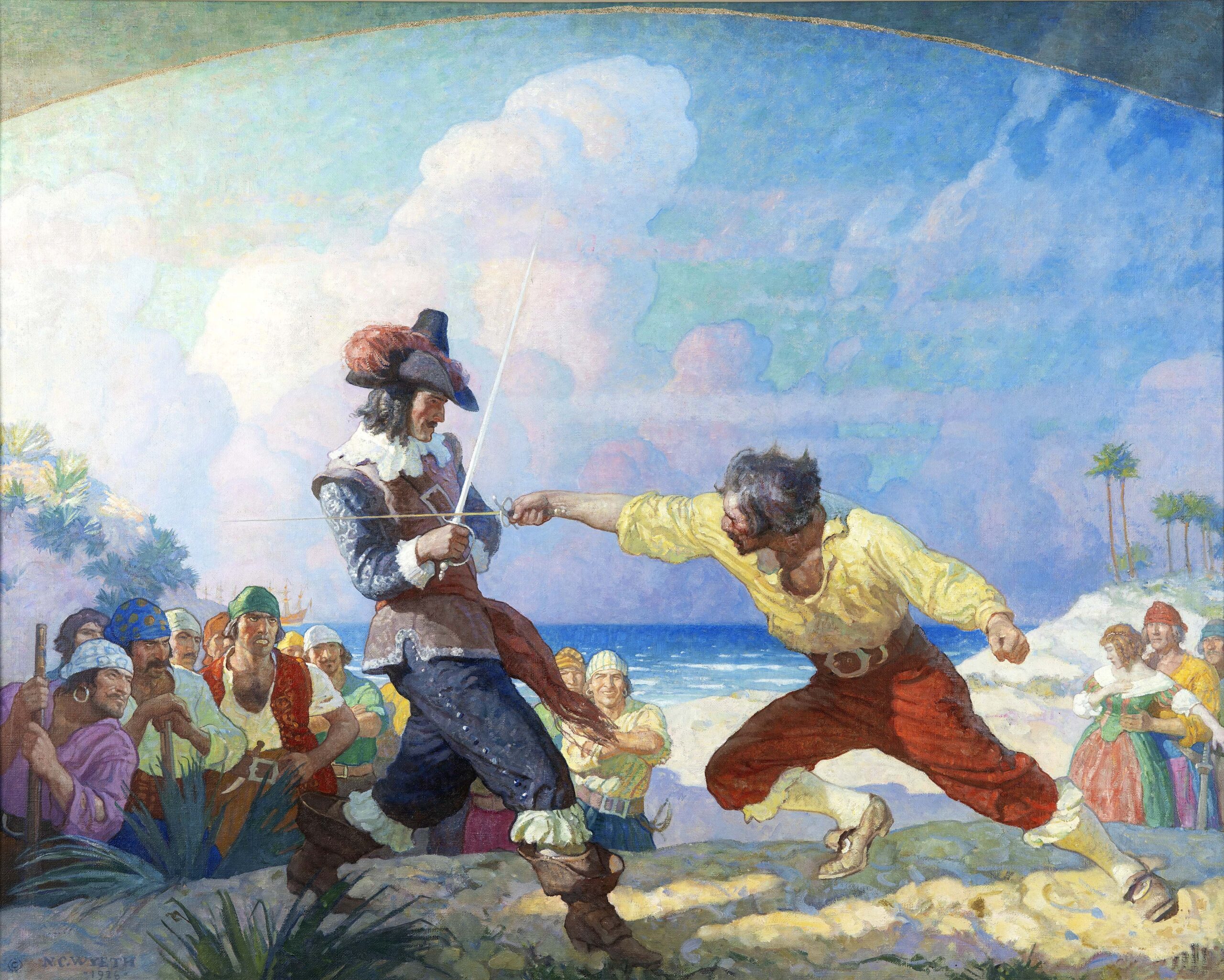
“‘Allons!’ said De Bernis. ‘It is time to make an end. So!’ He parried. ‘So,’” N.C. Wyeth, illustration for “The Duel on the Beach,” for Ladies’ Home Journal, 1926, oil on canvas, 48 by 60 inches. Private collection.
N.C. Wyeth was a masterful early Twentieth Century painter of numerous artworks and illustrations for more than 100 books. His 1926 work, captioned “‘Allons!’ said De Bernis. ‘It is time to make an end. So!’” was created for “The Duel on the Beach” a short story by Rafael Sabatini. Wyeth’s painting, published in Ladies’ Home Journal, reveals Monsieur de Bernis engaged in a dramatic sword fight on the beach against a villainous pirate. As they cross swords, De Bernis utters, “It is time to make an end.”
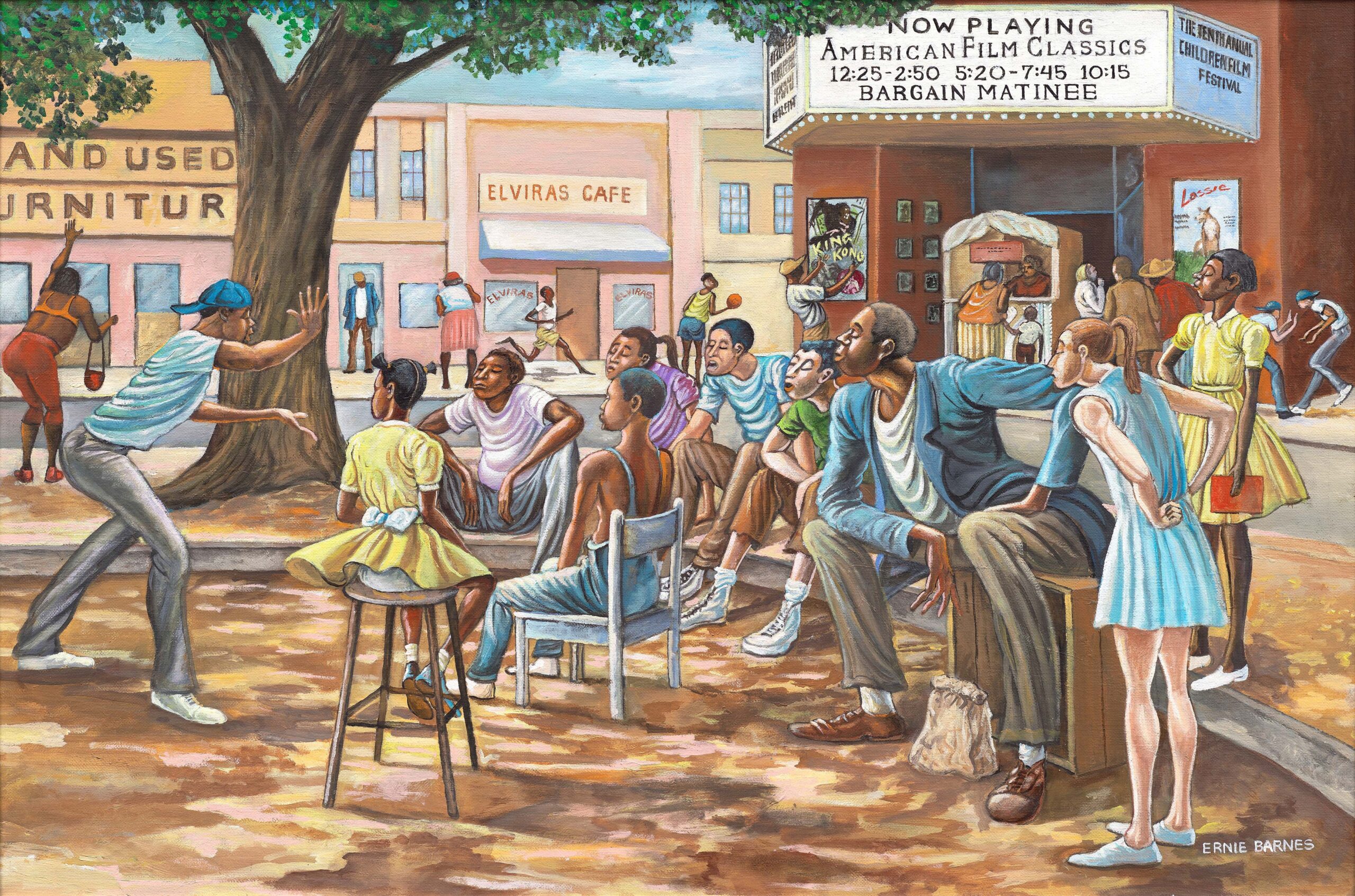
On a lighter note, “The Critic’s Corner” by artist and former NFL player Ernie Barnes is a consummate storytelling illustration. It captures a group of Black youngsters gathered in a town center in front of a movie theater, having an intense yet friendly discussion, possibly about a film they just viewed. Nearby, people are shopping, running, playing basketball and simply having fun.
To not disappoint Star Wars fans, the gouache painting “Artoo and Threepio Leave the Pod in the Desert” (1975) by Ralph McQuarrie features the two robots from the film, who occupied its first 17 minutes. McQuarrie worked with Lucas as he was formulating his film, creating concept paintings based on the script. Several of these paintings, now on display at the museum, helped Lucas get approval from 20th Century Fox to make his film.
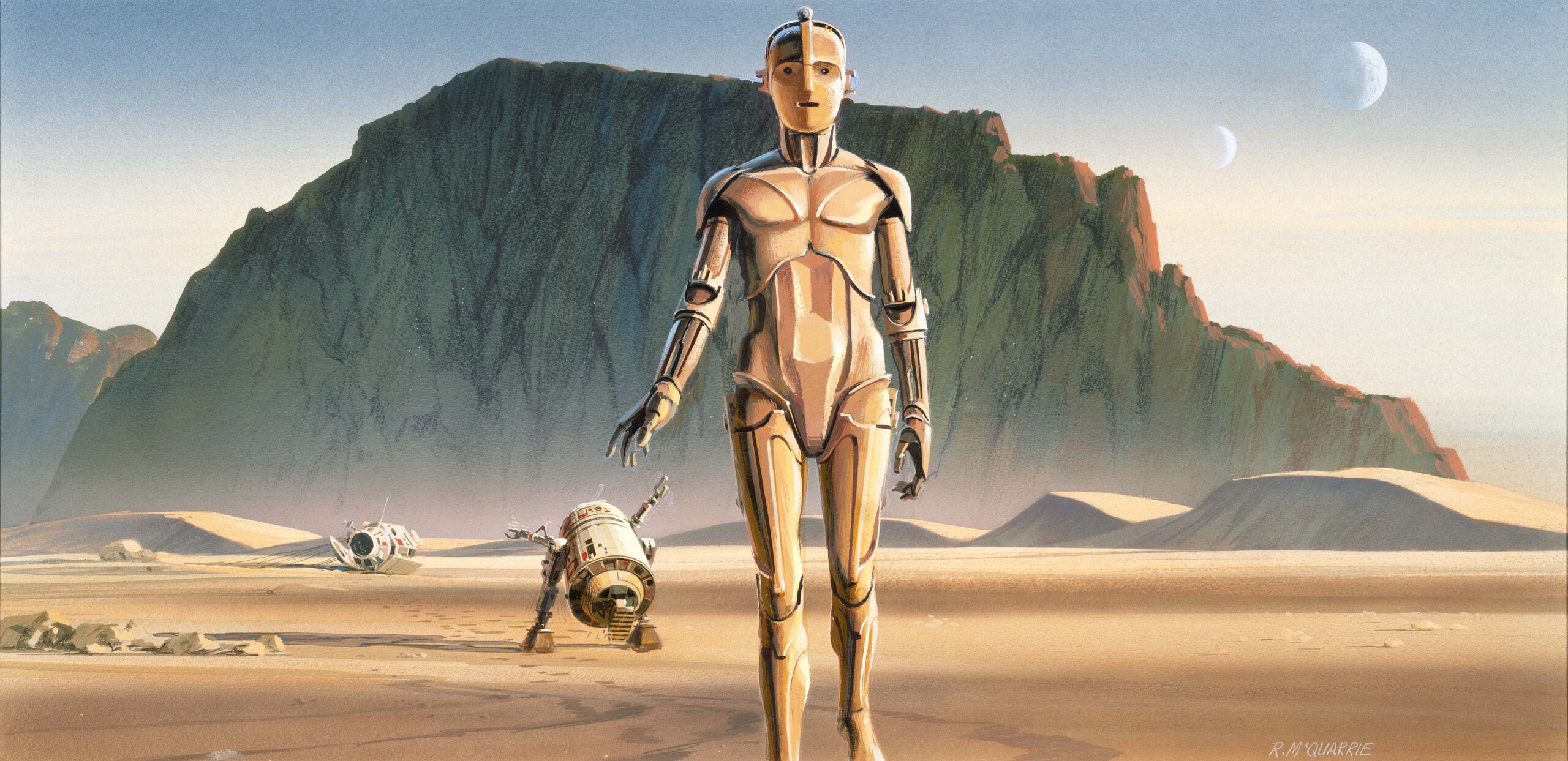
“Artoo and Threepio Leave the Pod in the Desert” by Ralph McQuarrie, production art for Star Wars: Episode IV – A New Hope, 1975, gouache on board, 13¼ by 20 inches. Lucas Museum of Narrative Art, Los Angeles, 2013.005241. © & ™ Lucasfilm Ltd. All rights reserved. Used under authorization.
The museum’s fifth floor is devoted to murals, with several by Diego Rivera on view. The star of the installation is a lifelike film of Judith F. Baca’s mural “The History of California” (1976-84), known as “The Great Wall of Los Angeles.” Situated in Los Angeles’ San Fernando Valley, the half-mile-long mural traces the country’s history, from prehistory through the mid Twentieth Century. It includes indigenous people, various stages of the country’s development, Albert Einstein and the development of California culture, from the rise of Hollywood to the emergence of rock and roll. The Social Realistic artwork was created by hundreds of the artist’s colleagues and students over more than a decade. Baca said that she hopes the mural will help to reveal and reconcile “diverse peoples’ struggles for their rights and affirm the connections of each community.”
Many other important works are exhibited at the Lucas Museum. Thomas Hart Benton’s “American Historical Epic, Second Chapter: Axes (Clearing the Land),” focuses on builders developing early American settlements. Frida Kahlo painted “Autorretrato dedicado al Dr Eloesser (Self-Portrait Dedicated to Dr Eloesser)” to express deep gratitude for her medical advisor and friend who treated her chronic pain. Dorothea Lange’s iconic “Migrant Mother” compassionately portrays an impoverished California woman and her children during the Great Depression.
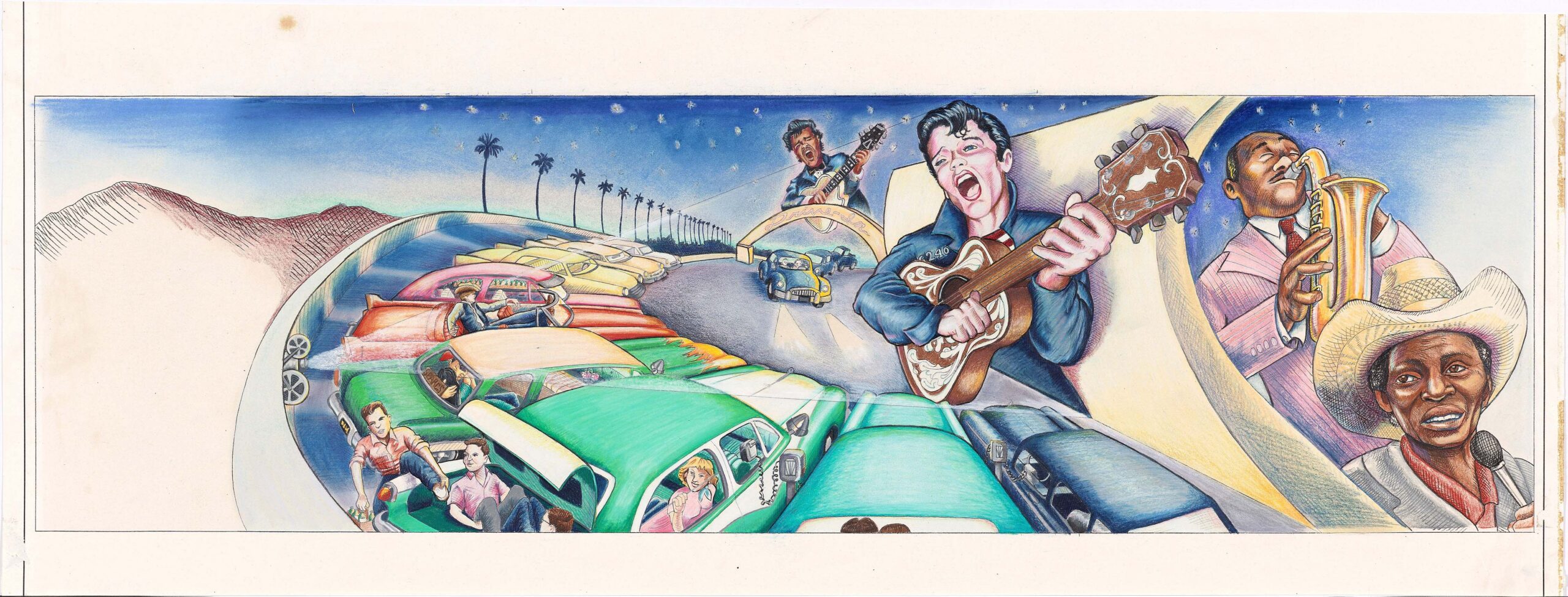
Final coloration for “The Birth of Rock and Roll” from the mural “The Great Wall of Los Angeles 1950” by Judith F. Baca, 1983, colored pencil and pastel on print, 19⅛ by 43⅛ inches. Lucas Museum of Narrative Art, 2018.34.6.5.20. © 1980 Judith F. Baca.
Housing the Lucas Museum’s artworks and its pictorial displays is its futuristic building in Los Angeles’ culturally vibrant Exposition Park. The architect, Ma Yansong of MAD of Beijing, Los Angeles and Rome, has created a dramatic design reflecting Los Angeles’ pioneering spirit. The building includes two cinematic theaters, ten studio and classroom spaces, a café called the Skywalker Grill (with magnificent views of Los Angeles) and retail space. The surrounding 11-acre museum park and gardens, designed by Studio-MLA, Los Angeles, includes hundreds of indigenous and drought-tolerant plants, more than 200 trees, terraces and pathways.
The Lucas Museum presents the story of humankind, while encompassing multiple subjects and time periods. “The artists in this collection…connected our modern imaginations with our ancient emotions — with common beliefs creating community,” Lucas explained in the catalog. Indeed, the Lucas Museum weaves together numerous themes, media and time periods to inspire discovery, community and humanity.
The Lucas Museum of Narrative Art is at 1 Lucas Plaza. For more information, www.lucasmuseum.org.