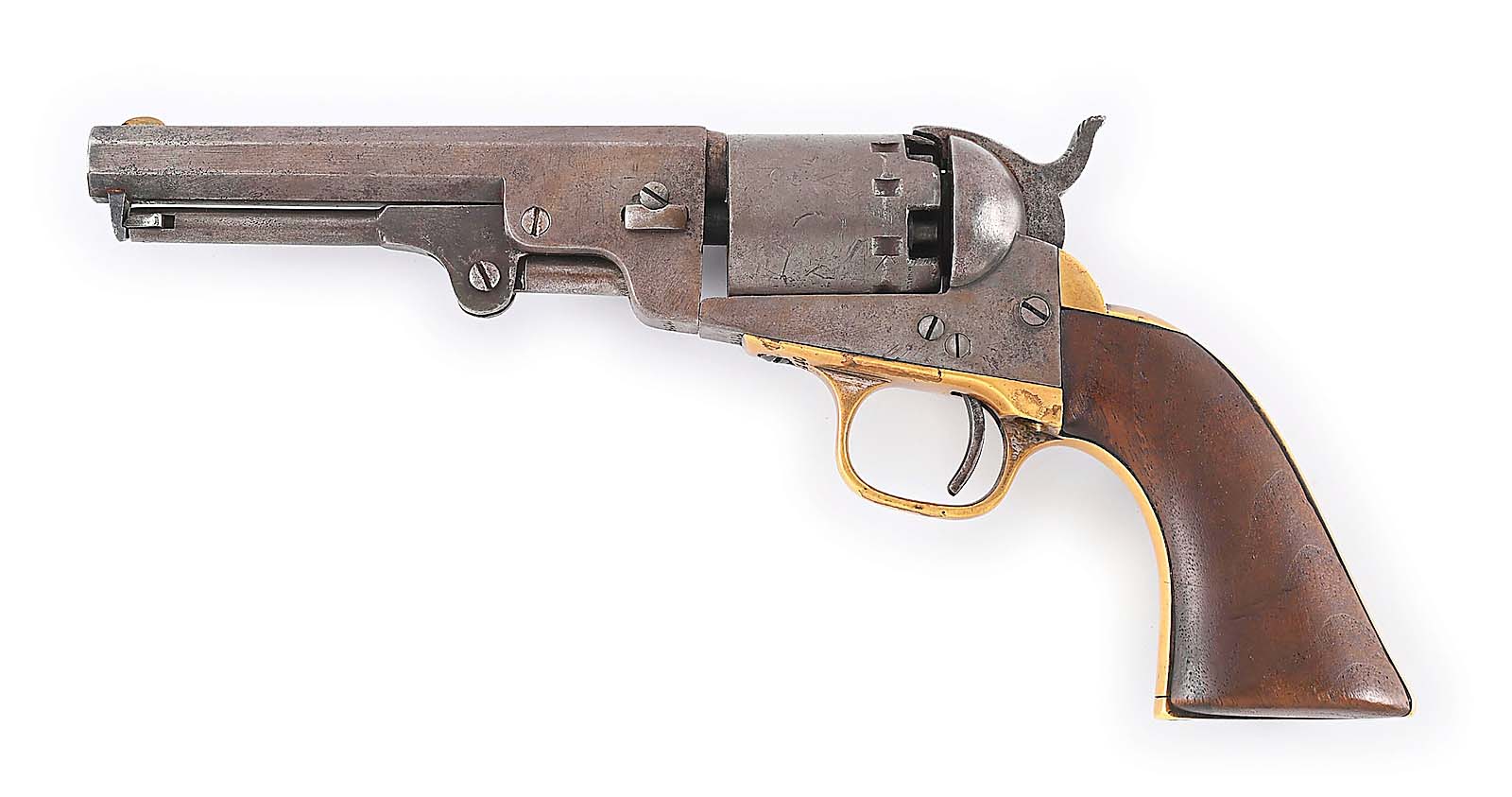
Achieving the top price of the auction was this Manhattan Arms Navy Series IV single-action percussion revolver with ownership attributed to the outlaw Jesse James; it went out at $100,860 ($100/150,000).
Review by Carly Timpson
SANTA FE, N.M. — Western art and antiques brought collectors out to Santa Fe for the weekend of June 19-21, when Old West Events and Morphy Auctions joined up again for the 36th Annual Old West Show and associated auction. The Old West & Native American Art Show & Auction bills itself as offering the “finest authentic Western art, artifacts and collectibles for public sale,” with the show having hundreds of national dealers in fields such as Western art, antiques, apparel and boots, décor, jewelry, antique firearms, Native American arts and artifacts, spurs, saddles, photography, textiles and more. As for the auction, which was conducted on the evening of June 20, Morphy Auctions presented a 515-lot event showcasing an array of merchandise relating to the American West, Native Americans and cowboy culture. At the end of the night, the auction realized more than $900,000.
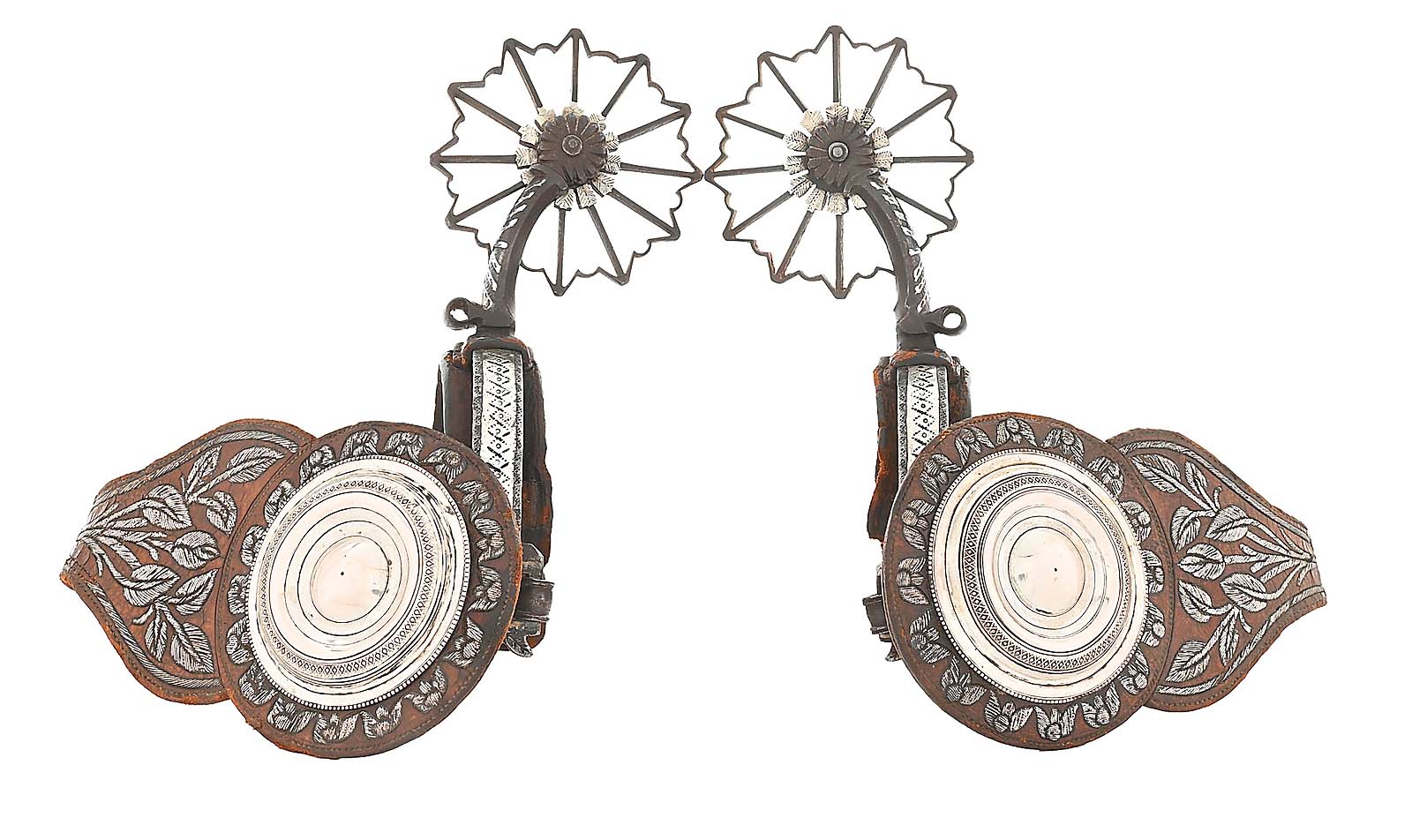
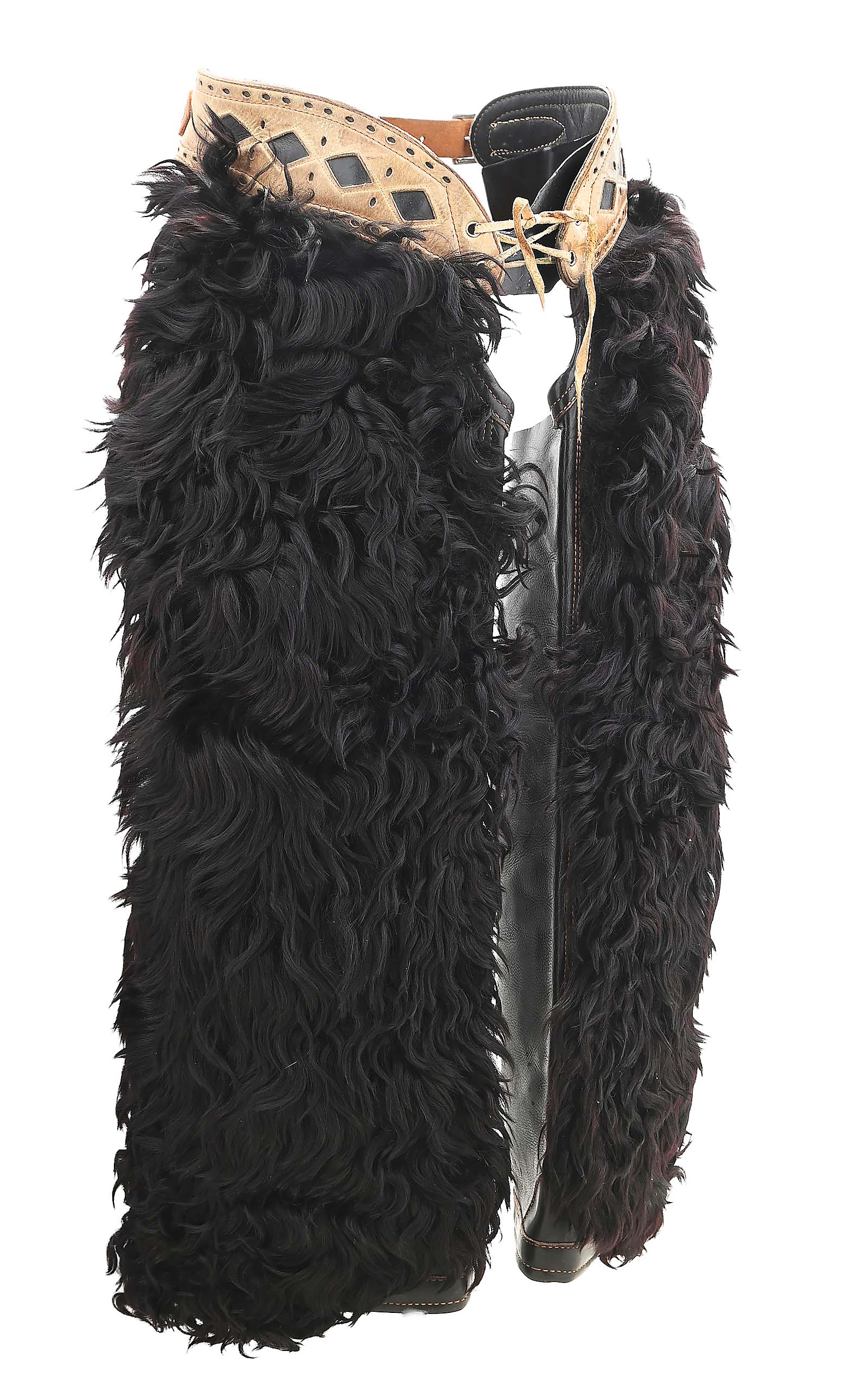
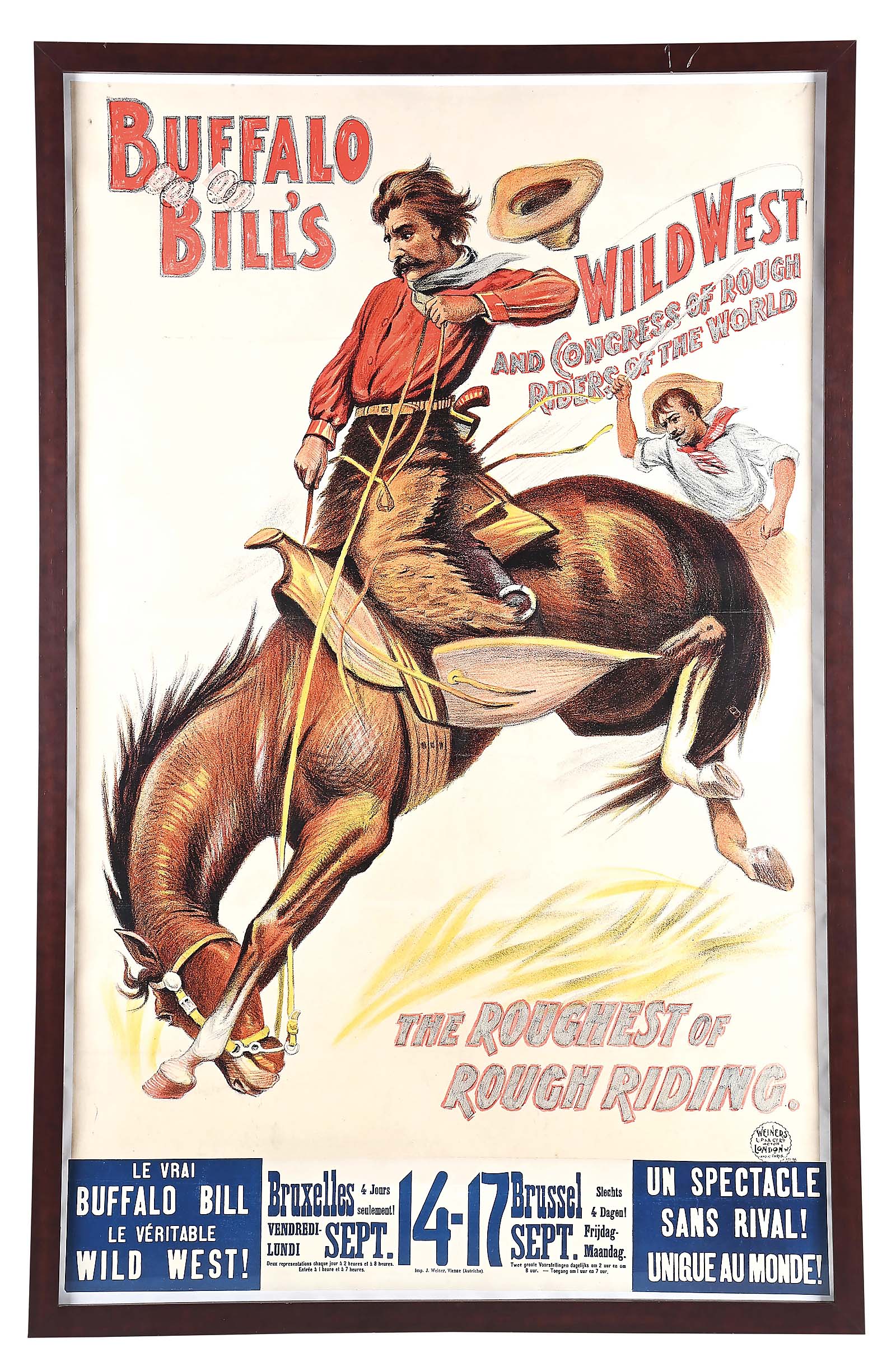
Cheryl Goyda, firearms department manager and Old West Events Show manager, shared, “The event went well! Western stuff did extraordinarily well — multicolored bridles, chaps, spurs… and there was a collection of posters that did well… As for Native American items, pottery did well, especially Santa Clara Pueblo, and jewelry. Also, there was a collection of original art by Fred Harman, the artist who did the Red Ryder comic strips, dailies they called them. The material itself was strong, which is what you want to have for a good, strong auction.”
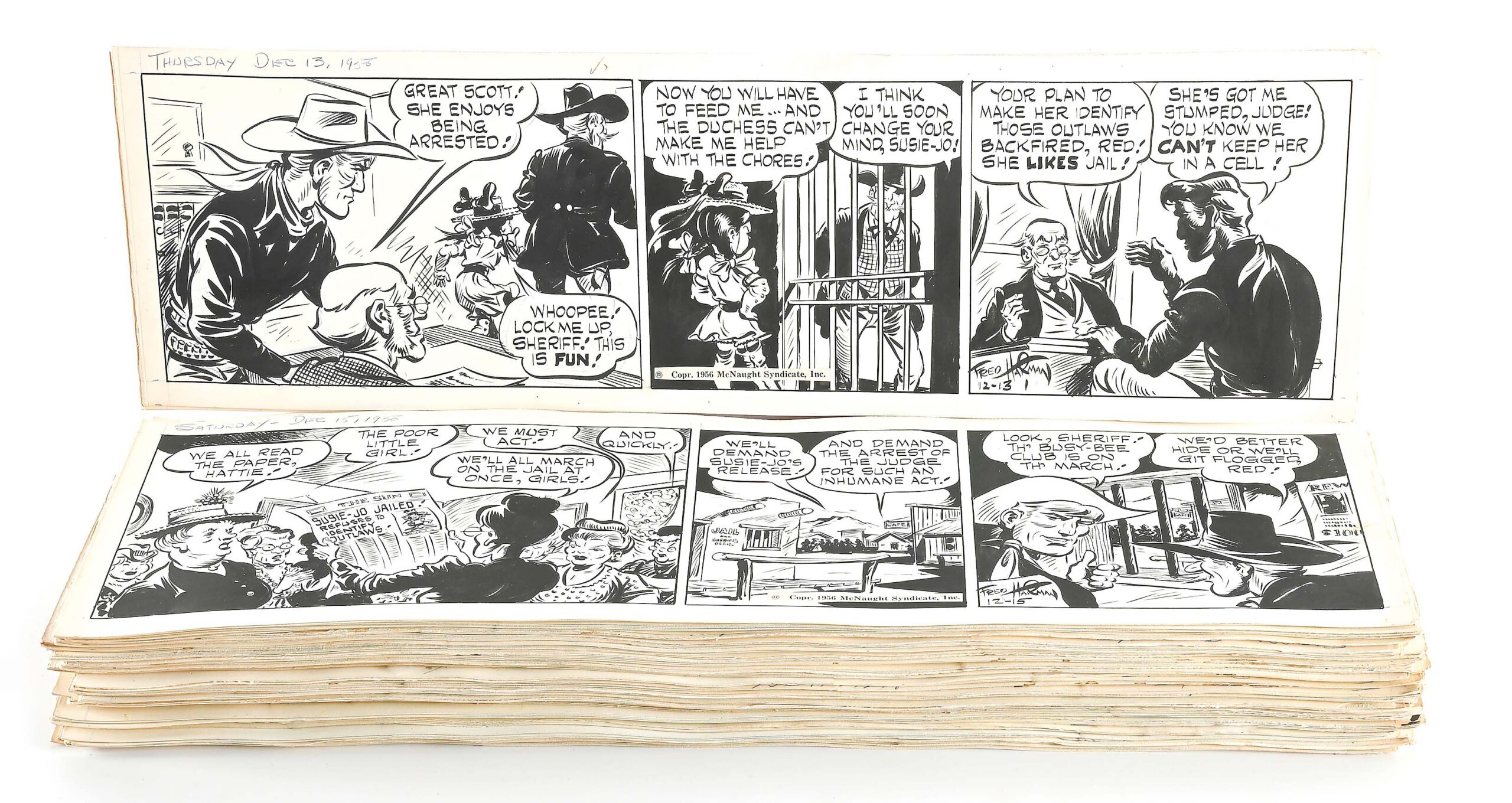
The original art for 106 Red Ryder dailies by cartoonist Fred Harman (American, 1902-1982), dated June-December 1956, McNaught Syndicate, Inc, 7 by 23 inches each, brought $5,658 ($3,8/6,800).
As Goyda said, “Western stuff was the big winner in this particular sale. One big one was the firearm used by Jesse James — that did real well and got a lot of attention.” This firearm was a Manhattan Arms Navy Series IV single-action percussion revolver with ownership attributed to the outlaw Jesse James. Reportedly used by James at the robbery of the Southern Bank of Kentucky in Russellville, Ky., the revolver came with a letter from James’ son and daughter-in-law that corroborated that fact and stated that they gave the gun to Carl W. Breihan, a Western scholar who identified “the faker J. Frank Dalton,” who claimed to be Jesse James. A second letter signed by Breihan confirmed the story, and a third from the NRA Museums director indicated the provenance is credible, representing “a high level of confidence in outlaw-related firearms, as most guns of that type have apocryphal provenance.” At the close of the sale, the gun had been bid to $100,860.
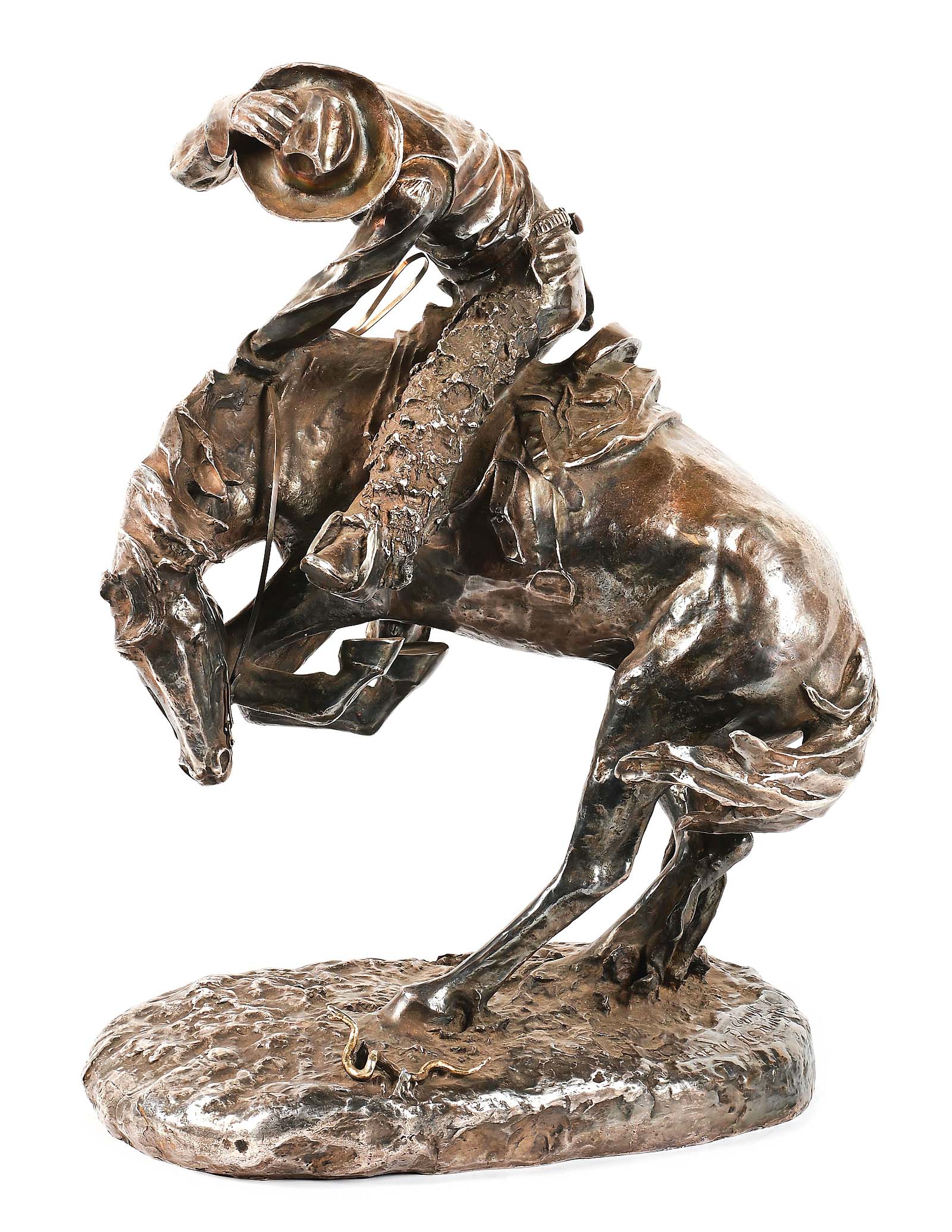
A rare silver casting of Frederic Remington’s “The Rattlesnake” sculpture was taken to $84,000. Depicting a cowboy with wooly chaps atop a spooked horse rearing over a snake, the sculpture had provenance to the Frederic Remington Art Museum (Ogdensburg, N.Y.), where the original 1895 model is held. Cast in more than 1,000 troy ounces of .999 silver, this 1989 example was made from a mold created from the original, which is now retired, never to be used again, and is also in the collection of the Frederic Remington Art Museum. Hand chased by a craftsman under the supervision of Silversmiths Group USA, the model is number three from an edition of 100 in pure silver, five museum proofs and one in solid 24K gold.
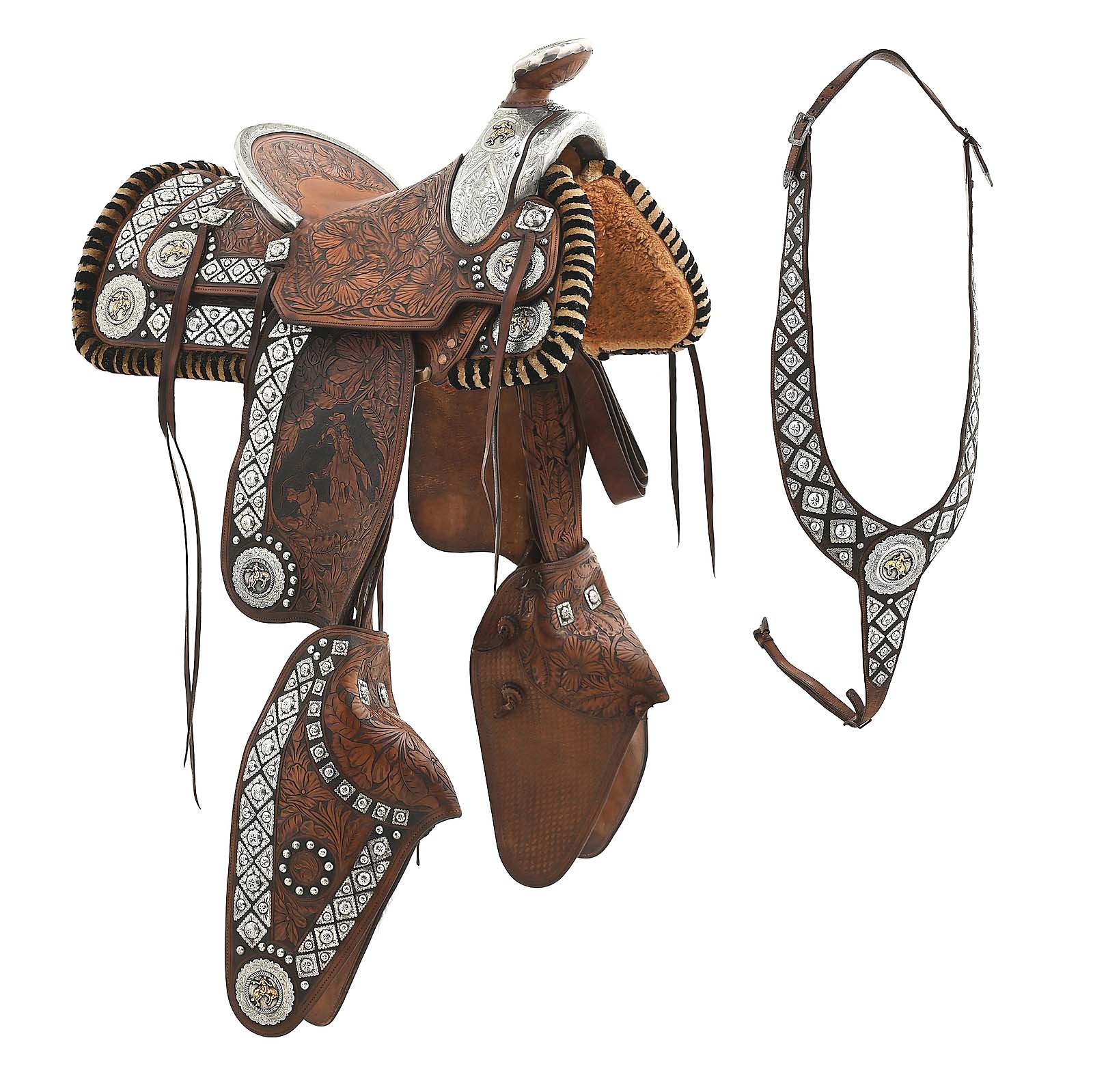
The first silver parade saddle built by Olsen-Nolte in San Francisco, circa 1937, with silver engraved by Robert Schaezlein and leather tooled by Gene Sisco, brought $46,740 ($40/60,000).
The first high-end saddle made by San Francisco makers Olsen-Nolte was the grand marshal of a parade of a dozen saddles to cross the block. Dated circa 1937, this example was made during the first year of partnership between John Olsen and Al Nolte and the first built in their San Francisco shop. The intricate tooling was executed by Gene Sisco, “a skilled silversmith and toolmaker who specialized in leather smithing at the saddlery,” and the silver details were the work of Robert Schaezlein, who had his own shop in the city. Given the saddle’s exceptional craftsmanship, “It was featured in their store for many years as a sample of all they could do,” Goyda explained. In fact, the saddle had been mounted on a horse only twice in its nearly 90 years of life. As an addition, the lot sold with an original 1930s photograph of the Olsen Nolte Saddle Shop storefront, apropos with horses waiting out front. The parade saddle — complete with its original corona, tapaderos and breast collar — marched off for $45,600.
The next highest priced parade saddle was one that belonged to Ray “Crash” Carrigan. Though it was used in films such as The Three Mesquiteers and The Range Busters, this Dick Dickson, Jr, model Edward H. Bohlin saddle was Carrigan’s personal saddle and he rode it in several Southern California parades, including eight Rose Bowl Parades. The saddle, its original Bohlin trunk and an archive of material, including a signed photograph of Crash riding the saddle and a handwritten letter in which he described the piece, found a new rider for $18,450.
“Gold-quartz is always super popular — there’s a lot of strong collectors for that,” Goyda said when asked about an 18K pink gold Waltham pocket watch that sold for $24,600. However, this watch was a standout due to its alternating inlaid panels of pink and white gold-quartz surrounding a central yellow gold California grizzly bear. “The bear was unusual, you don’t always see that. It’s a California piece with the grizzly bear, and it was an exceptional piece of gold-quartz especially strong with the California grizzly bear on it.”
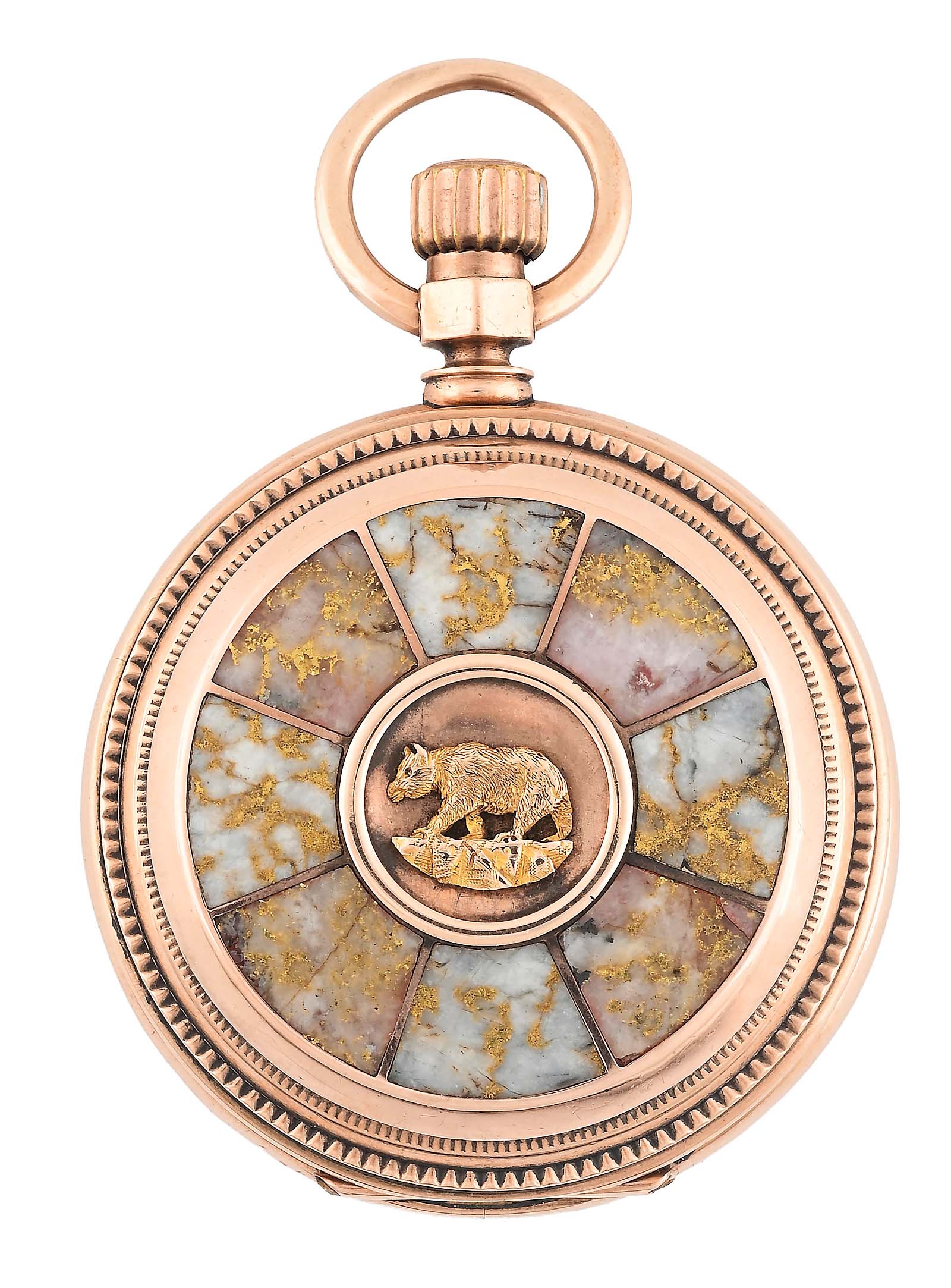
This 18K pink gold Waltham hunting cased pocket watch with alternating inlaid panels of pink and white gold-quartz surrounding a central yellow gold California grizzly bear, circa 1889, 2 inches in diameter, roared to $24,600 ($20/30,000).
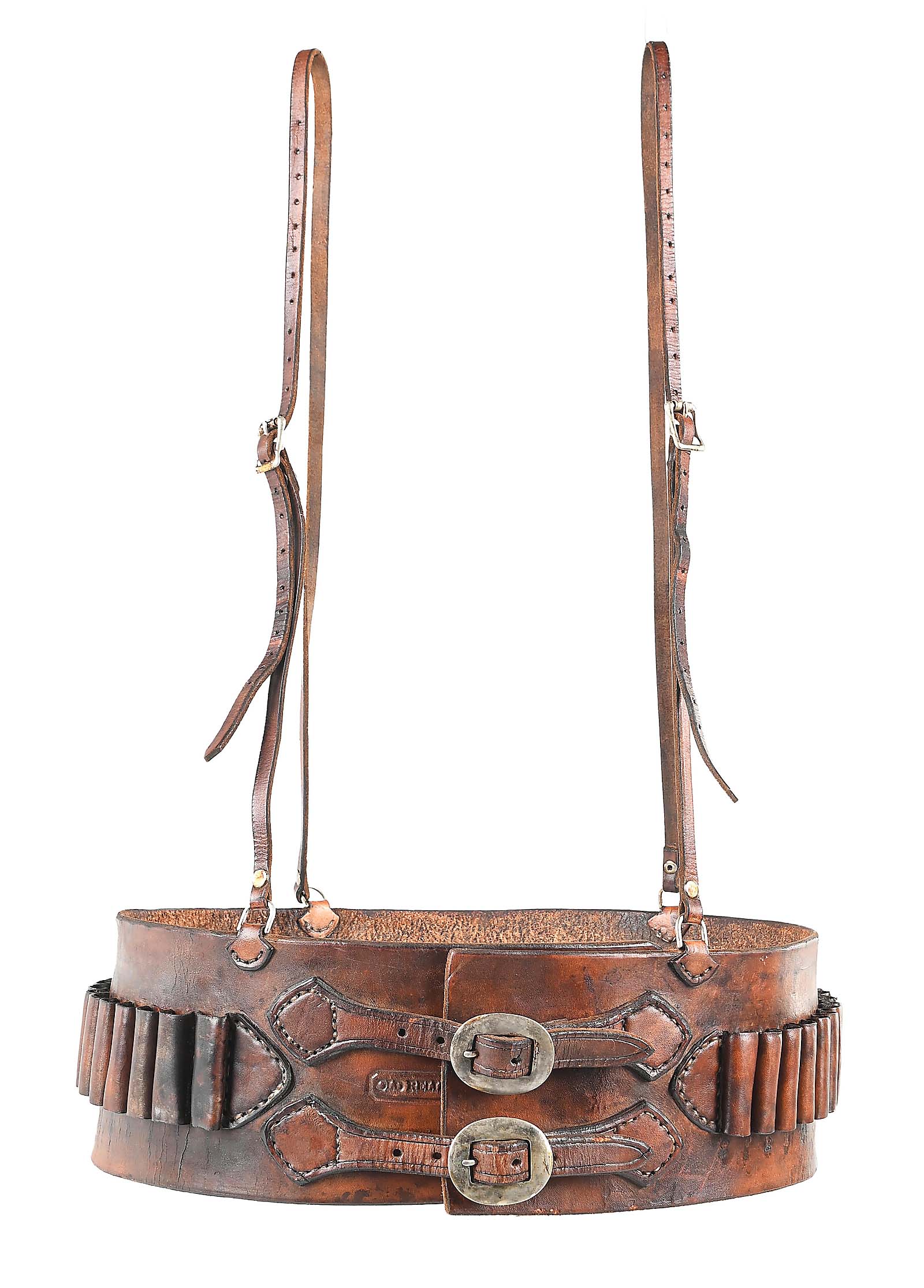
Far surpassing its $6,500 high estimate to make $24,600 was a Sharps “Old Reliable” cartridge belt, similar to the example worn by famed buffalo hunter Jesse Hendricks in a photo in Sharps Firearms: Early Sharps Metallic Cartridge Firearms and Model 1874 Sporting Rifles (2017). Goyda said, “That’s an amazing, world-record price for a piece of leather.” Driving the price was the fact that “it was very early, provenance was good, it was found at an old hunting camp in Canada and it’s not something you see often, so it had that rarity factor too. It had everything going for it and it’s the top of its category,” she explained. Branded “Old Reliable” on the end between twin buckle straps, each of the 2-inch cartridge loops was intact, as were the thin leather shoulder straps.
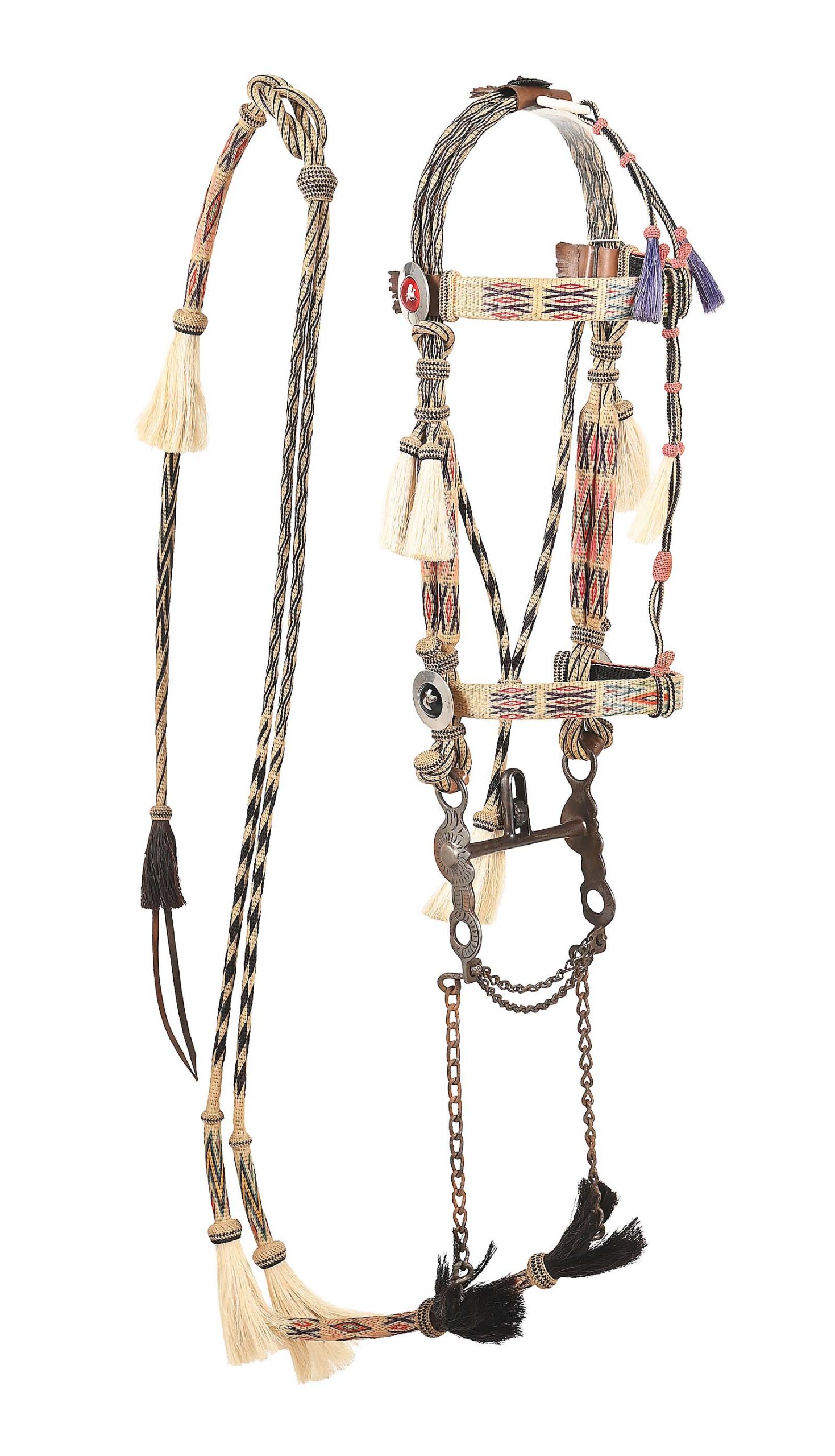
“Multicolored horsehair bridles were actually stronger than they have been,” shared Goyda. The category was led by an example made in a Montana prison. Crafted in black on cream-colored foundation, the bridle was detailed with turquoise, pink, orange, green, purple, red and blue colors throughout and had domed rosette conchos featuring images of horses within nickel borders. It was taken past its $10,000 high estimate to achieve $17,920.
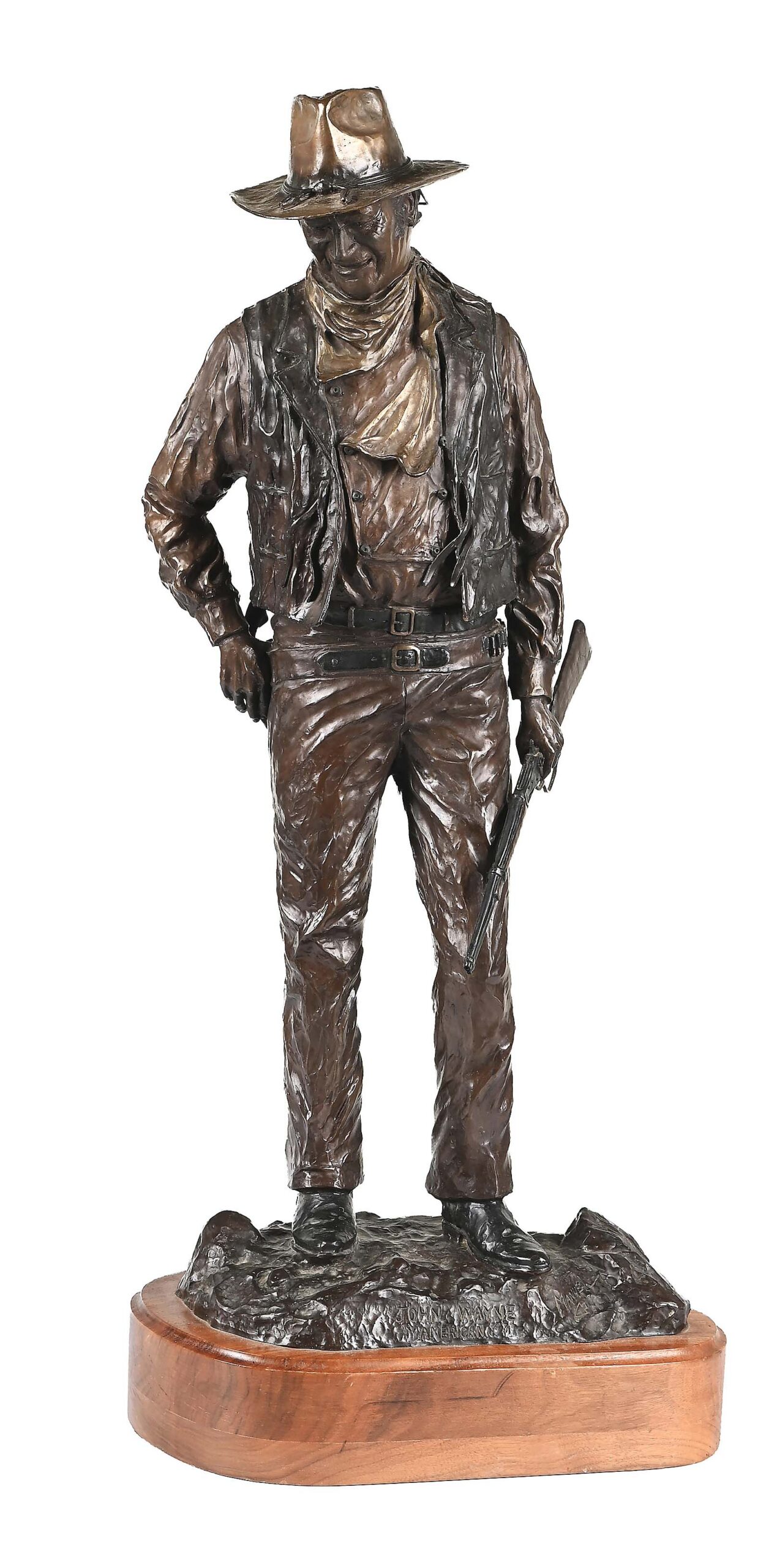
With provenance to the collection of Phil Spangenberger, a 1979 bronze figure of John Wayne by David Manuel brought $9,840, which Goyda said was “the highest number of one of those I know of bringing. Part of the reason was probably because it’s from the collection of Phil Spangenberger. He was very well known in our world, consulted on movies and he had a relationship with John Wayne and his son. Sometimes it’s all about the provenance.”
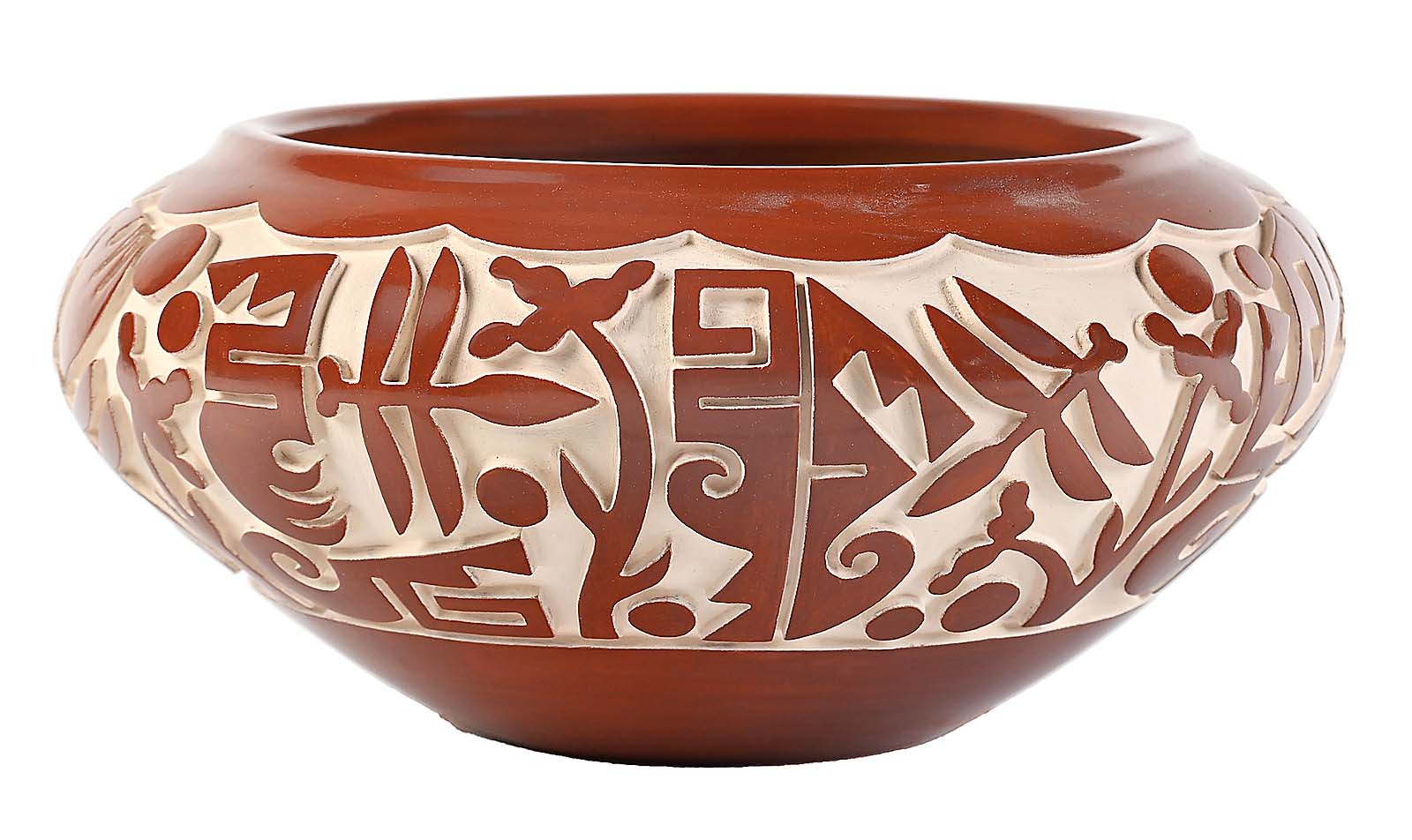
Bringing $8,320 to lead Native American objects was this Santa Clara Pueblo brownware pottery bowl by Tammy Garcia, 1995, 10½ inches in diameter. Goyda called it a beauty, adding that the known maker helped drive its price. ($5/10,000).
Leading a selection of Native American objects was a Santa Clara Pueblo brownware pottery bowl by Tammy Garcia. With great intaglio geometric, floral and insect design and bold coloring, the bowl was incised “Tammy Garcia Santa Clara Pueblo 3-95” to its base. It had provenance to the estate of a collector in Lake Tahoe, as well as Dr Margaret McKee. Goyda supposed the bowl’s beauty, and the fact it was made by a known artist, helped drive its price to $8,320.
Goyda closed saying, “There were a lot of new people who attended the show and bid in the auction, which we like to see. The show was well attended and the dealer booths were fabulous, as always. It was a little bittersweet because this is our last year in Santa Fe — we will be moving to Mesa, Ariz., May 2027, but we’re looking forward to that.”
The next Old West & Native American Art Show & Auction will be in Las Vegas on January 21-23, 2027, alongside the Las Vegas Antiques Arms Show. Prices quoted include the buyer’s premium as reported by the auction house. For more information, www.morphyauctions.com or www.oldwestevents.com.