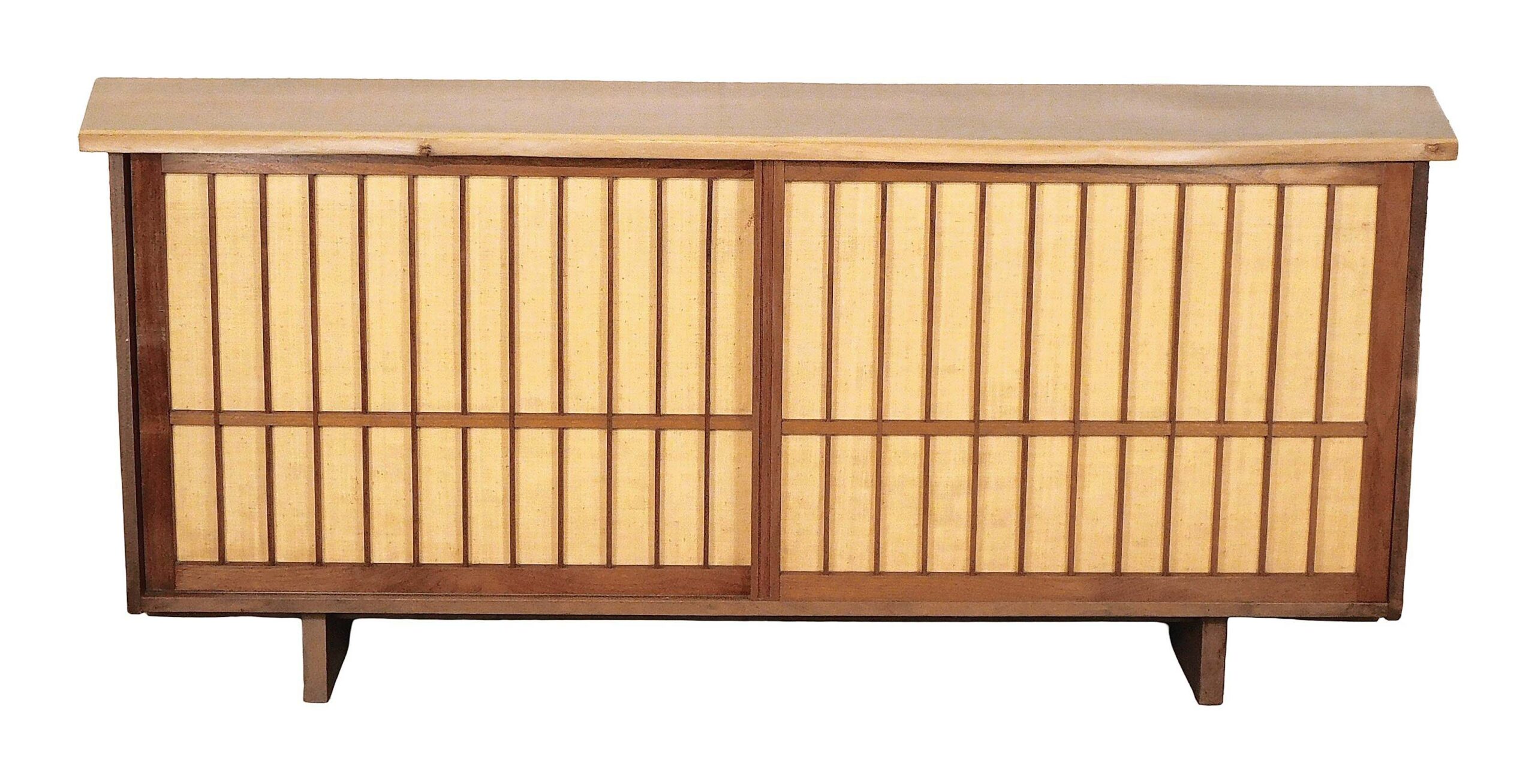
The top lot of the sale was this George Nakashima (American, 1905-1990) double sliding door cabinet, 1995, American black walnut with pandanus cloth, 33 inches tall by 73 inches wide by 21 inches deep, which earned $42,000 ($15/25,000).
Review by Kiersten Busch
PLAINVILLE, CONN. — On July 13, Winter Associates conducted a 305-lot sale featuring a collection of 1955-57 George Nakashima furniture from a Connecticut estate, as well as other items, such as silver, gold, jewelry, fine art, porcelain, glass, textiles and coins.
When asked about the sale, gallery and advertising manager for Winter Associates, Merideth Adams, explained, “It was a very good sale with many items going over their estimate and quite a few surprises. The family who owned the Nakashima collection is delighted with the results.” Although a sale total was not disclosed, Adams was happy to report that 92 percent of items were sold. She also shared that buyers came from all over the world, with “bidders registered throughout America as well as from the United Kingdom, Belgium, China, Poland, Germany, Spain, the Netherlands, etc.”
Unsurprisingly, the top lot of the sale came from the collection of Nakashima furniture: a 1955 double sliding door cabinet in American black walnut with pandanus cloth, which earned $42,000. The cabinet’s two sliding doors concealed media compartments, where the original owner’s Sony record player and cords were kept; both were included with the lot. It was also accompanied by a digital copy of the original Nakashima Studios purchase card, where it was acquired directly on December 19, 1995.
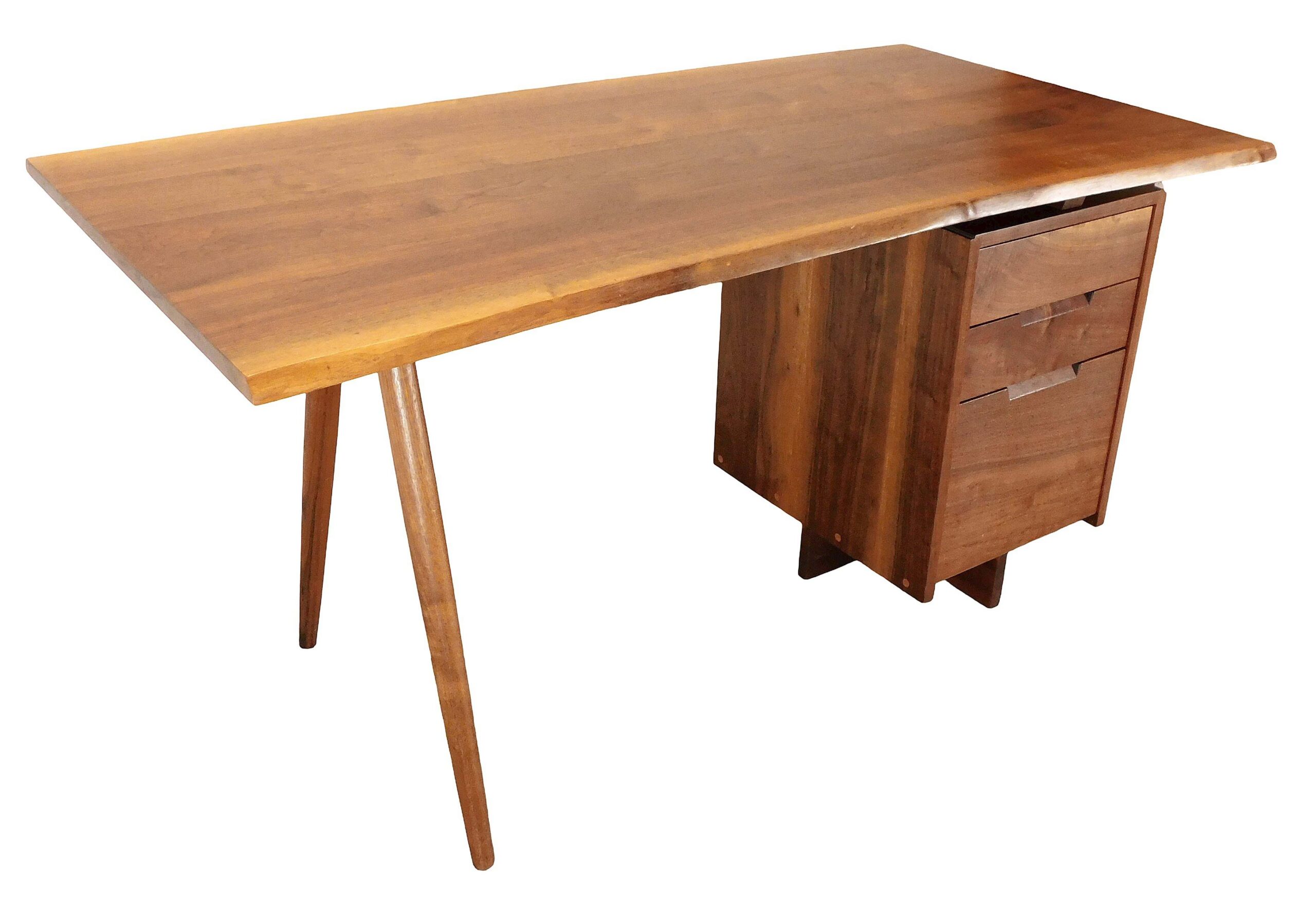
Earning $22,800 was this George Nakashima (American, 1905-1990) single pedestal desk, 1956, American black walnut, 28½ inches tall by 54¼ inches wide by 28¼ inches deep ($8/12,000).
“All of the Nakashima furniture was sold to buyers on the East Coast, primarily New England,” Adams added. “One set of chairs was purchased by a buyer in Korea.”
Including the top lot, seven of the ten highest prices of the sale came from that furniture collection. The second-highest price of the day was awarded to a 1956 single-pedestal desk in American black walnut, which sold for $22,800. It had a rectangular plank or slab top with two free edges, a right-hand bank of three drawers and two turned legs.
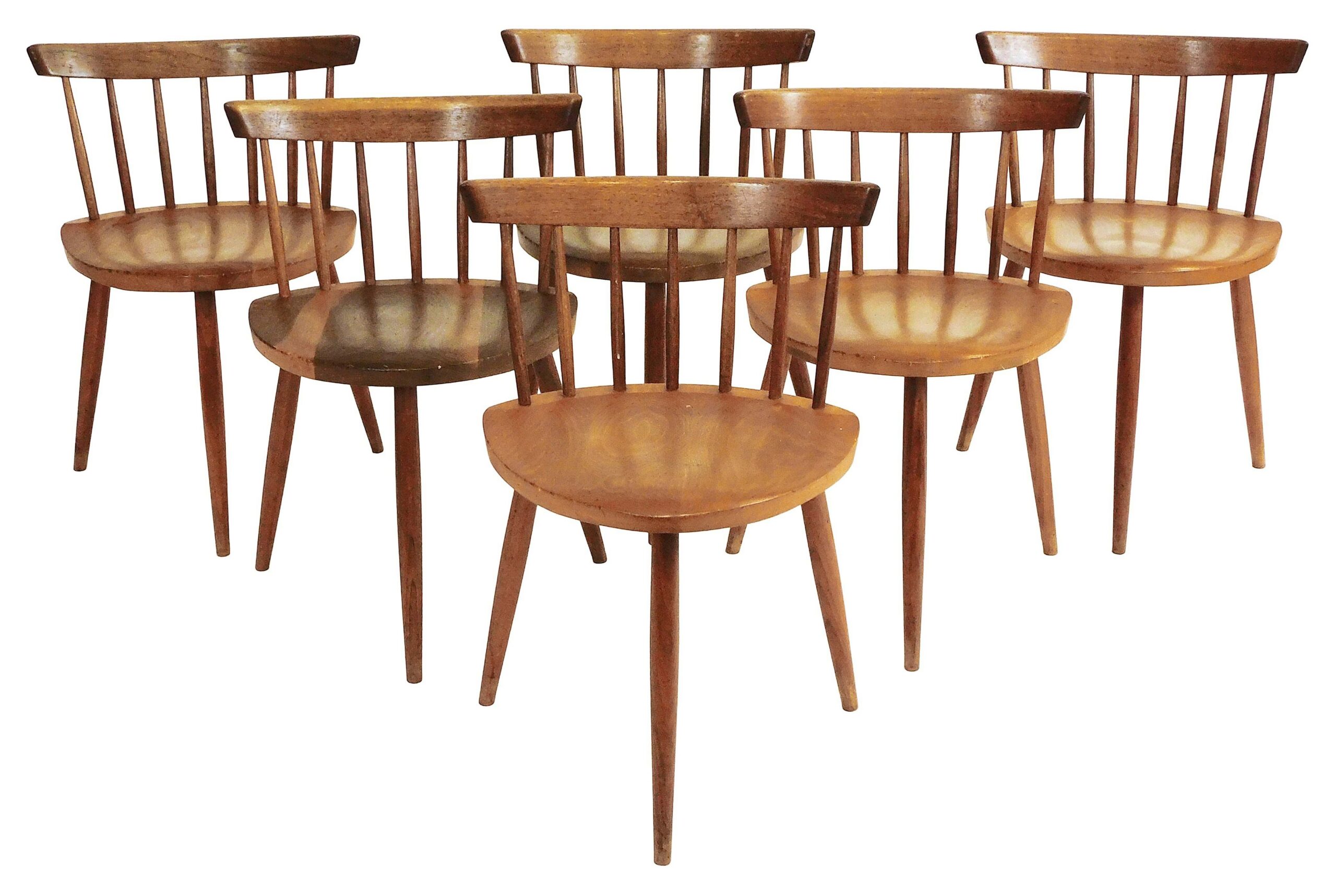
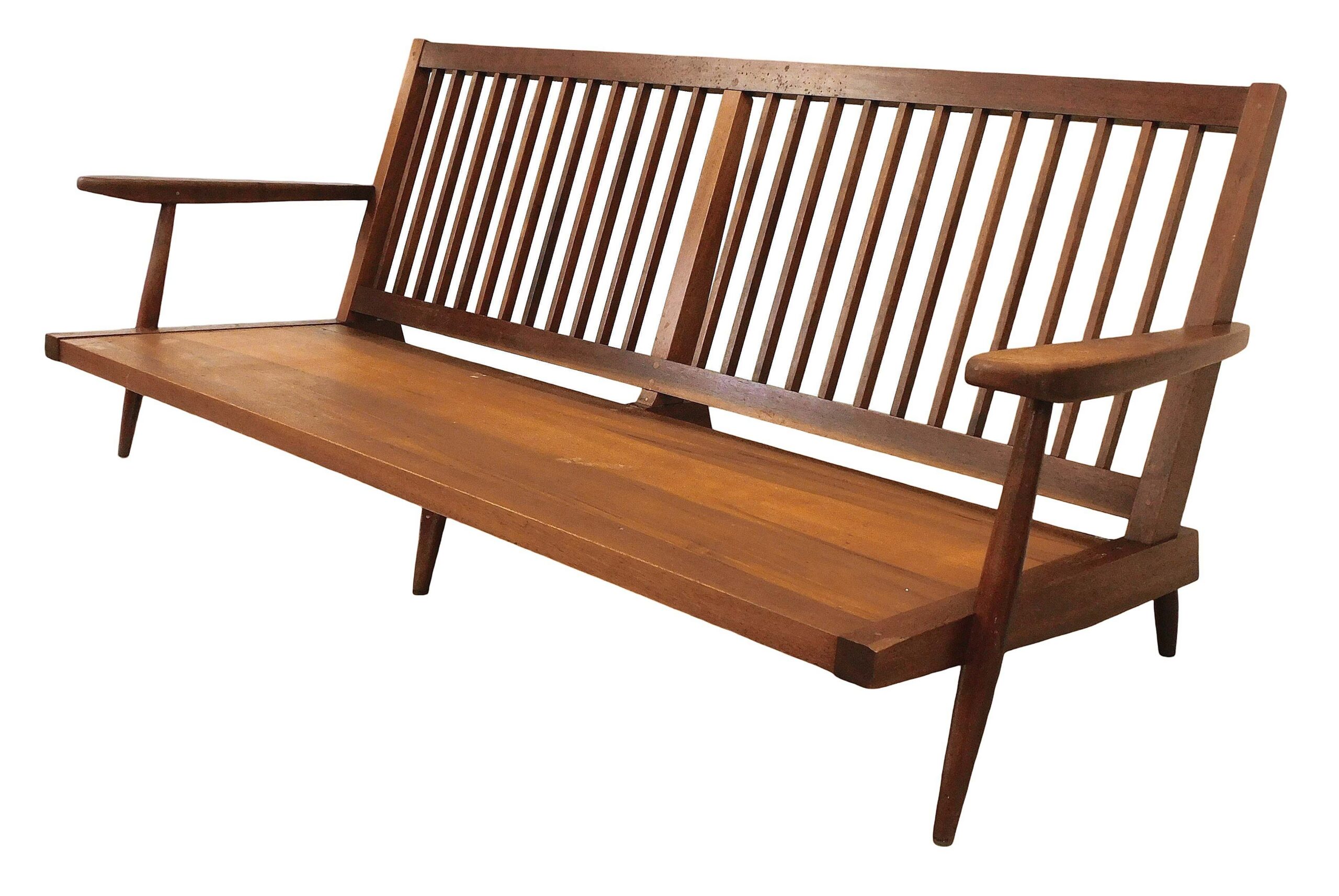
Following at $19,200 were two separate Nakashima lots: a set of six “Mira” chairs and an American black walnut settee with arms. The former were made in 1956-07 from American black walnut, but had poplar seats, while the latter, made in 1955, had a rail backrest, a plank seat and measured 78 inches wide. The catalog also noted that the chairs were purchased by the consignor’s father in two separate instances: four on April 12, 1956, and two on May 3, 1957.
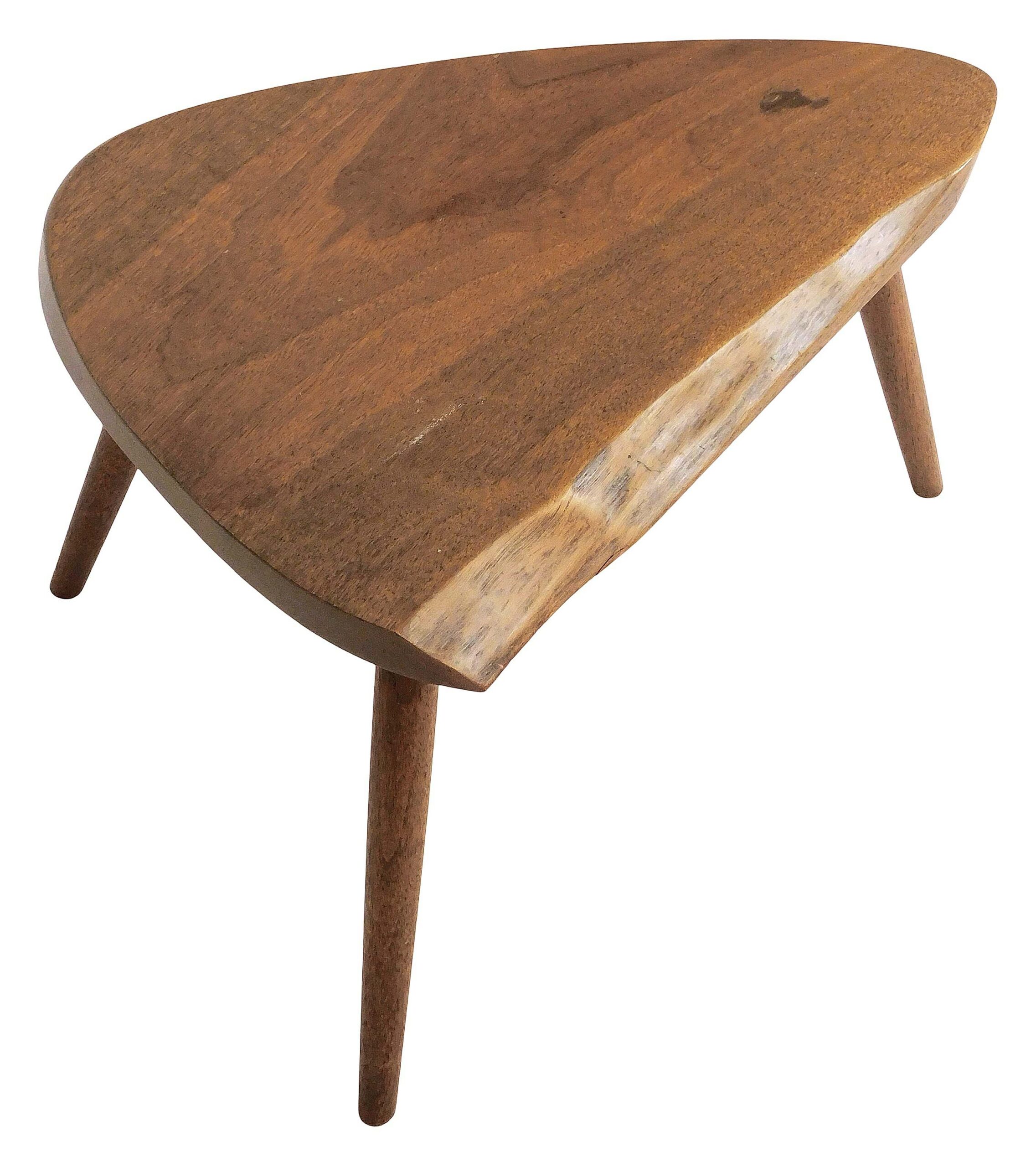
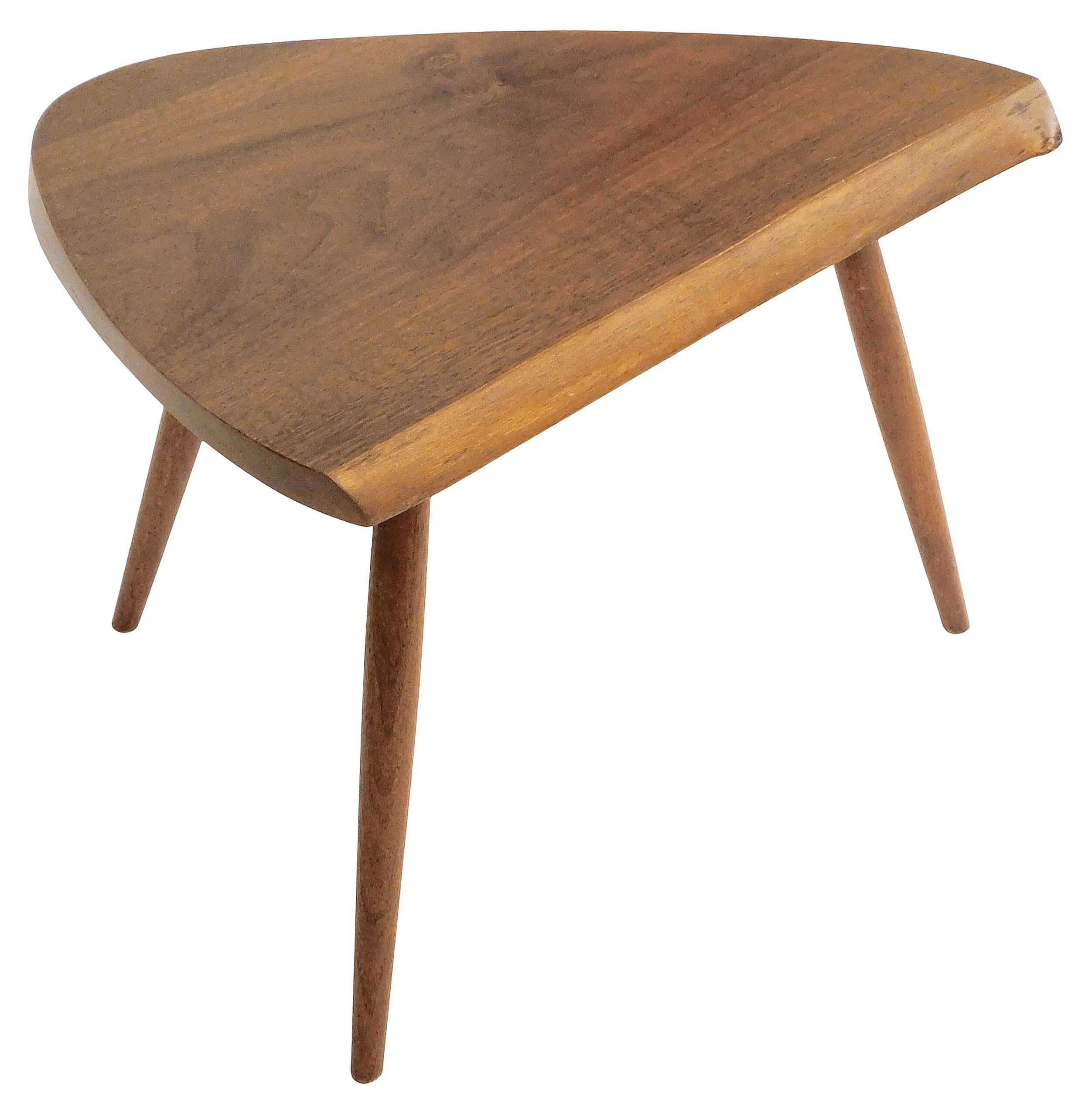
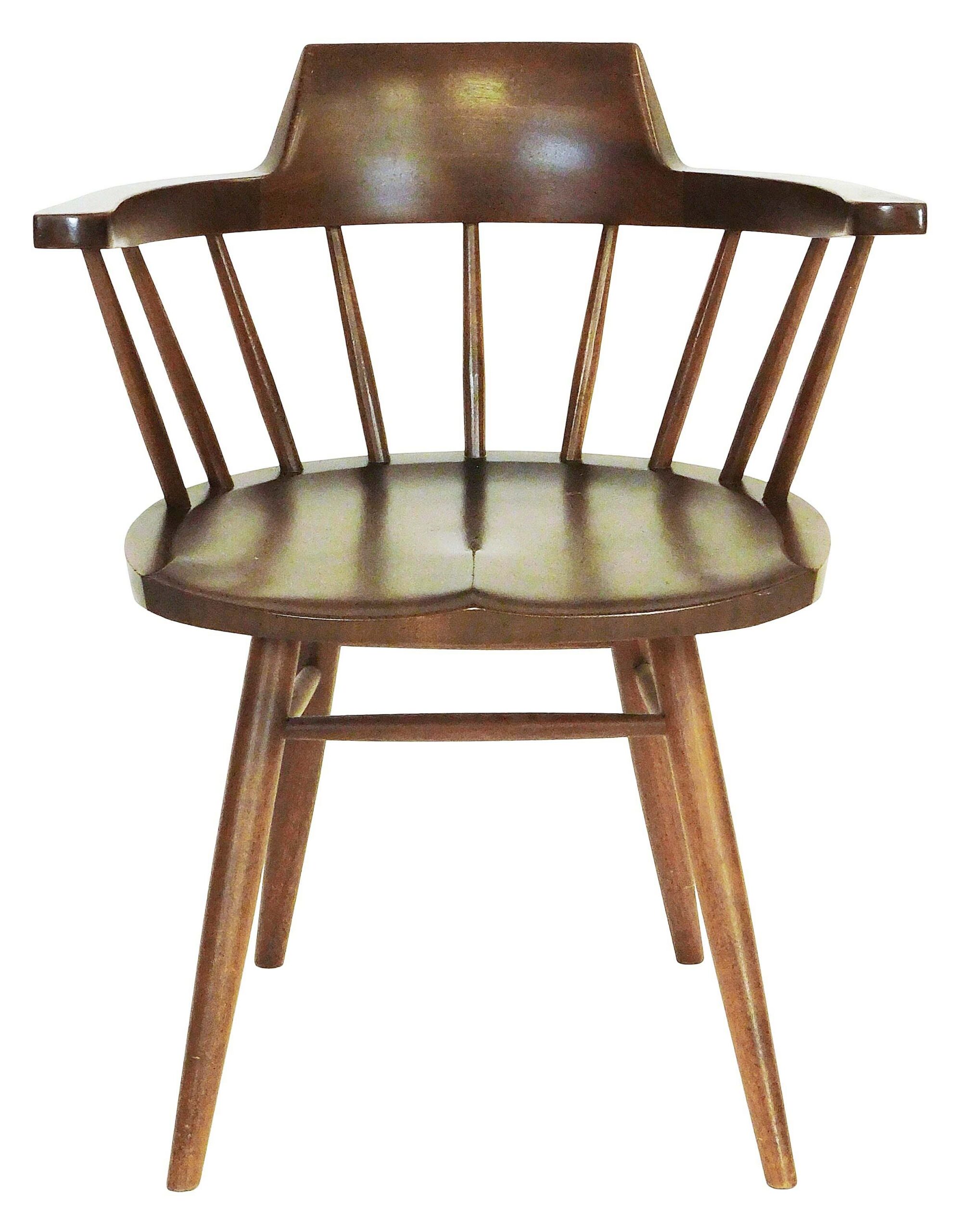
Additional Nakashima highlights, all made in 1956 from American black walnut, included a set of four “New Chairs,” also with hickory ($14,400); a “Plank Stool” with a triangular slab top ($6,600); a “Wepman Table” ($5,400); and a “Captain’s Arm” desk chair with a low back, nine spindles and carved saddle seat ($3,600).
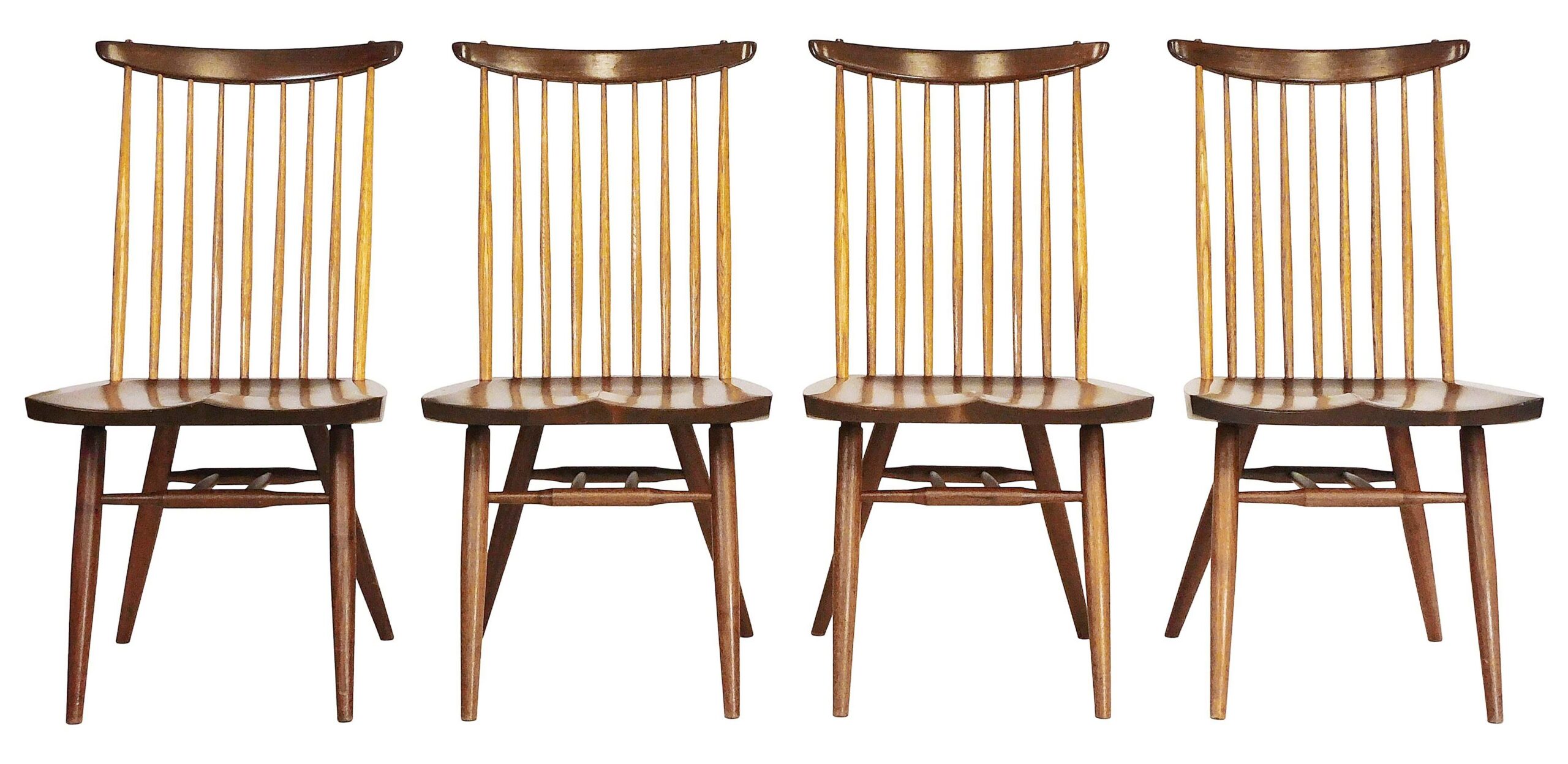
This set of four American black walnut and hickory “New Chairs” by George Nakashima (American, 1905-1990), 1956, 36 inches tall by 18 inched wide by 19¼ inches deep each, more than doubled their low estimate to make $14,400 ($6/10,000).
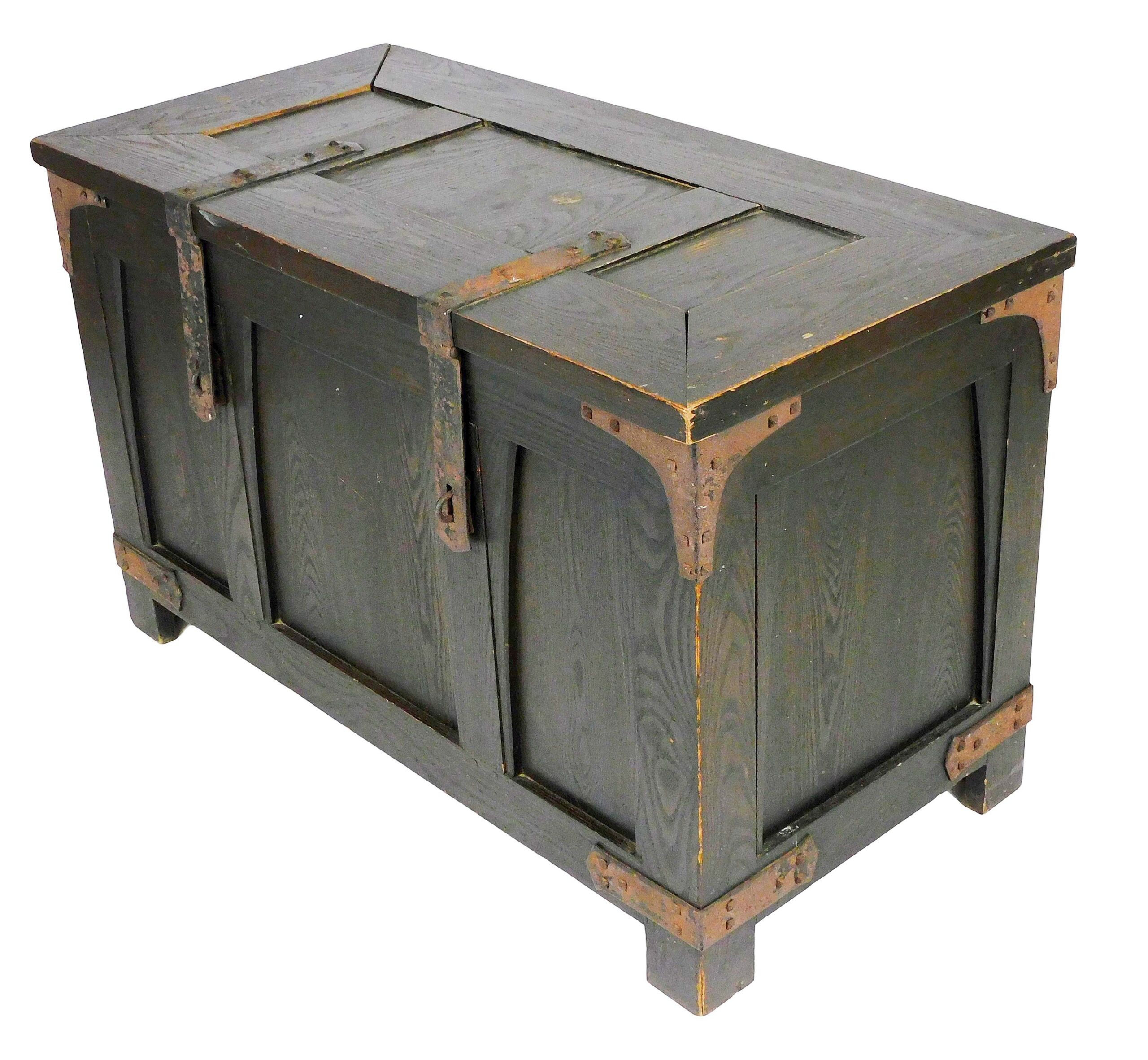
Nakashima’s works were not the only furniture that performed well, as an oak and cedar-lined double hasp bridal chest in the manner of Gustav Stickley closed shut for $9,000, far surpassing its $350/750 estimate. The circa 1900 piece was iron bound and had a paneled construction with curved decorative wood and a black painted surface.
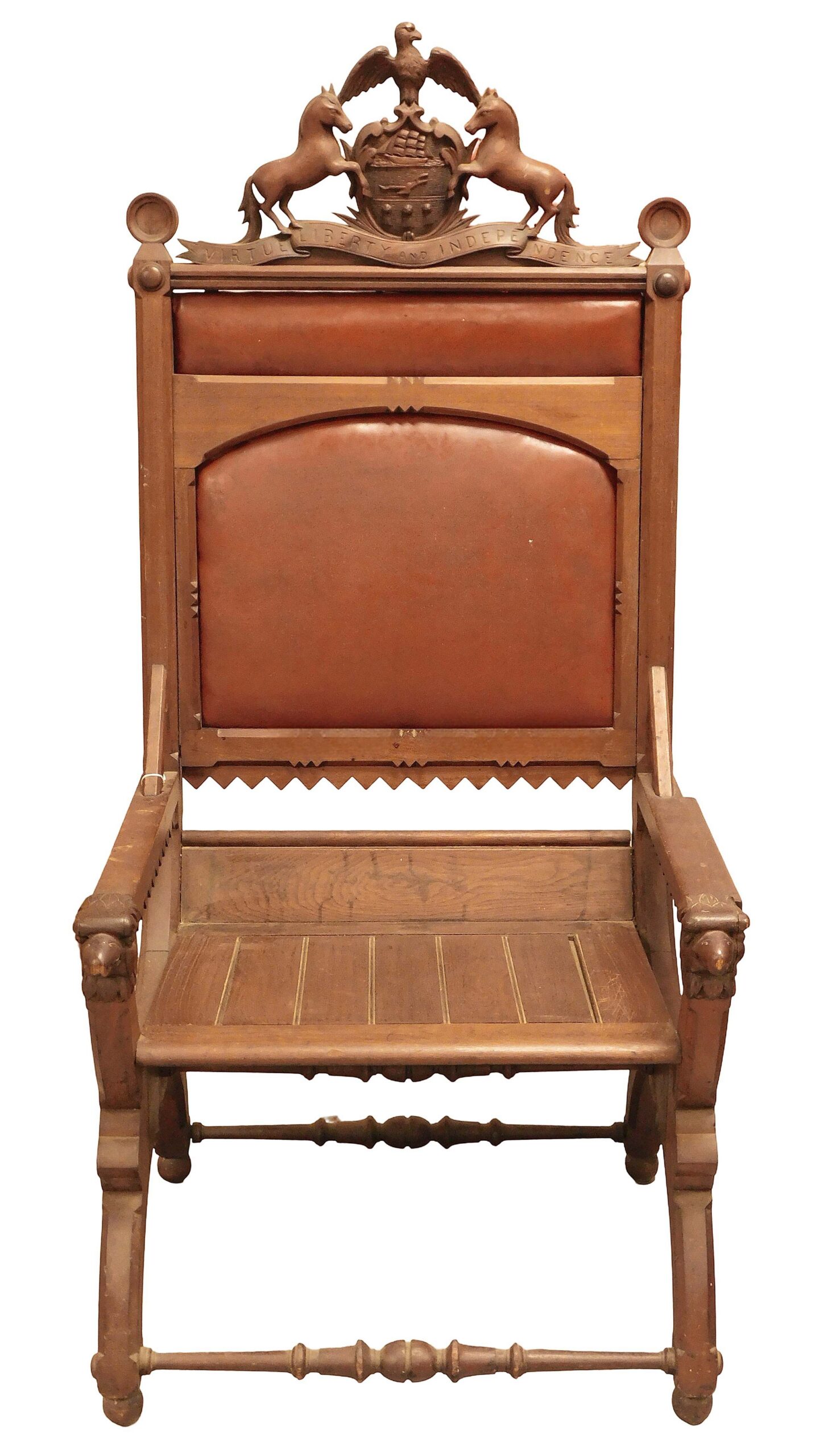
Eclipsing its $150/350 estimate by more than 22 times was a Pennsylvania Pavilion armchair made for the 1876 Centennial Exposition in Philadelphia. The chair had a walnut crest with a carved eagle, horse and shield, as well as a ribbon reading “Virtue Liberty and Independence.” It was “One of six created,” shared Adams, and it “sold with email correspondence with the Philadelphia History Museum Registrar confirming that the chair matches a set in their collection.” The chair will go to a home in Pennsylvania for $7,800.
Nearly 40 lots of Asian art and antiques crossed the block, led by a Chinese embroidered tapestry (kesi) or robe fragment, which sold far past its $125/200 estimate, and will return to its home country for $15,600. “It was shared by the auctioneer during the sale that the piece was gifted to the consignor from their neighbor,” elaborated Adams about the Ming dynasty tapestry, which depicted two birds perched on rocks among peonies and flowering branches against a sky of stylized clouds. Framed behind glass, the work measured 29 by 35 inches.
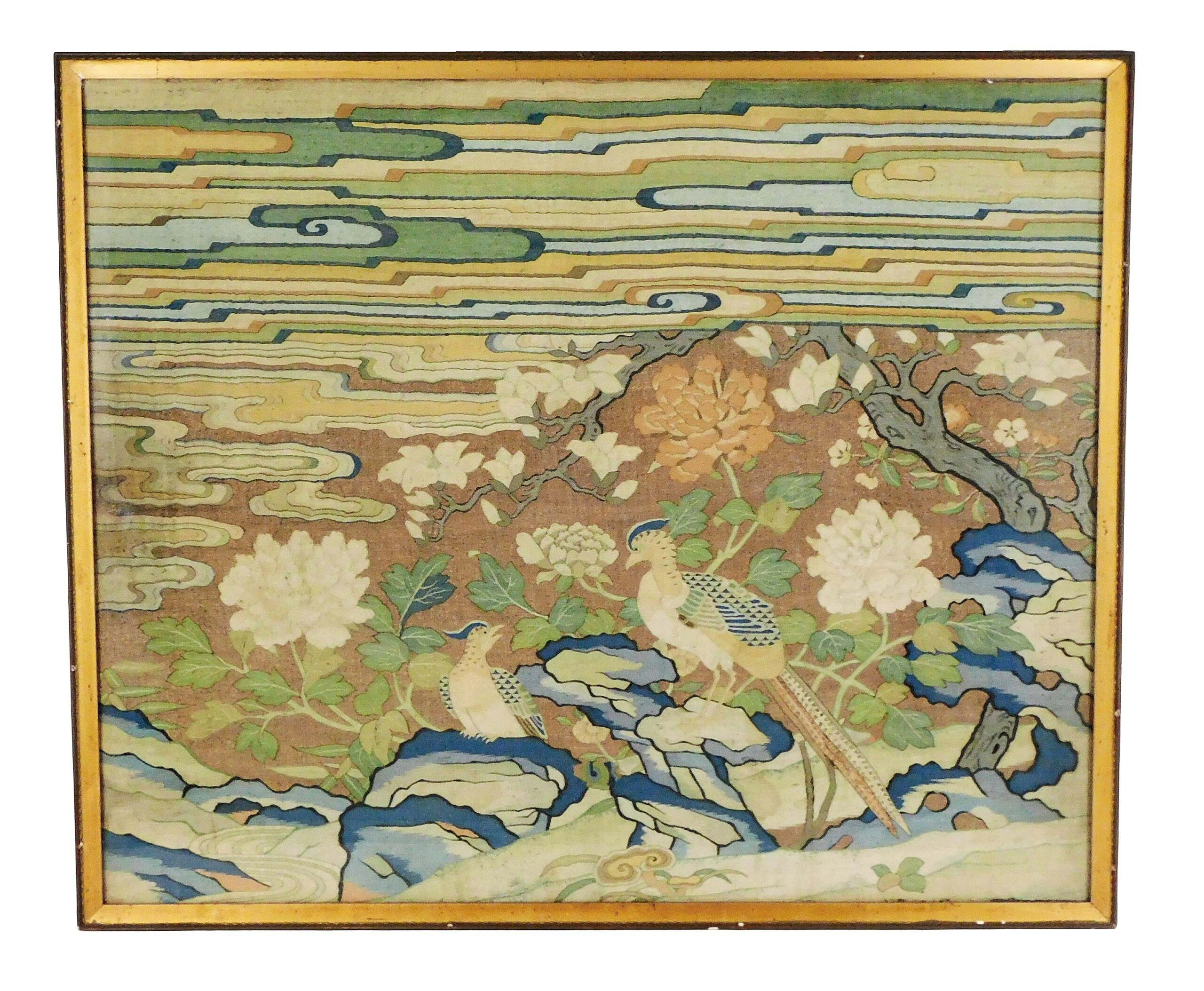
Heading back to China for $15,600, this embroidered tapestry (kesi) or robe fragment, Ming dynasty or later, 29 by 35 inches framed, flew far past its $125/200 estimate.
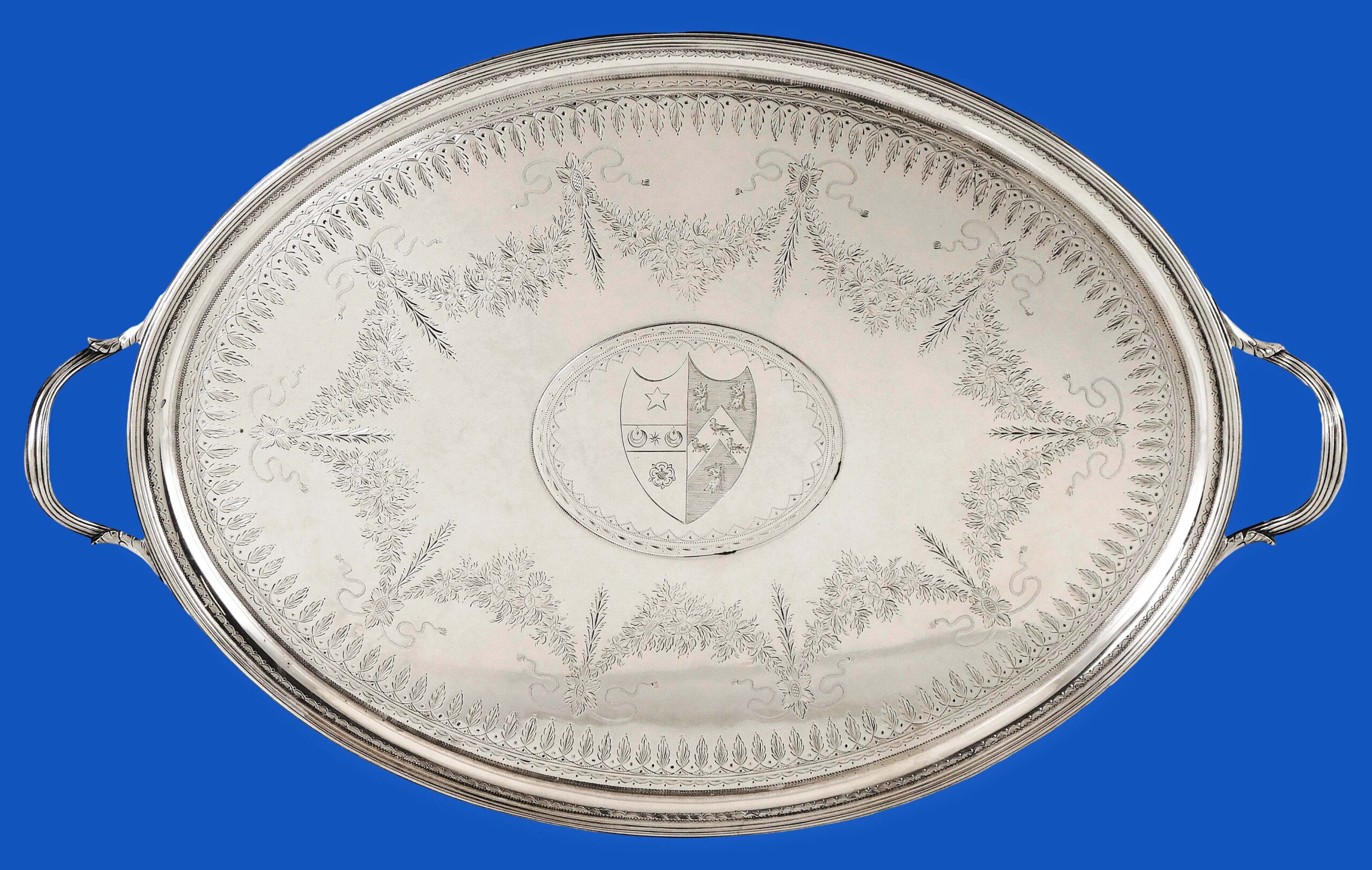
Silver, ever-popular with bidders because of its current market price, was led at $4,800 by a George III sterling silver bright-cut oval tray with “WB” maker’s marks, which resembled those of William Bateman. Made in London in 1802, the tray was engraved with a heraldic shield, flower and ribbon swags and had acanthus leaf-decorated handles.
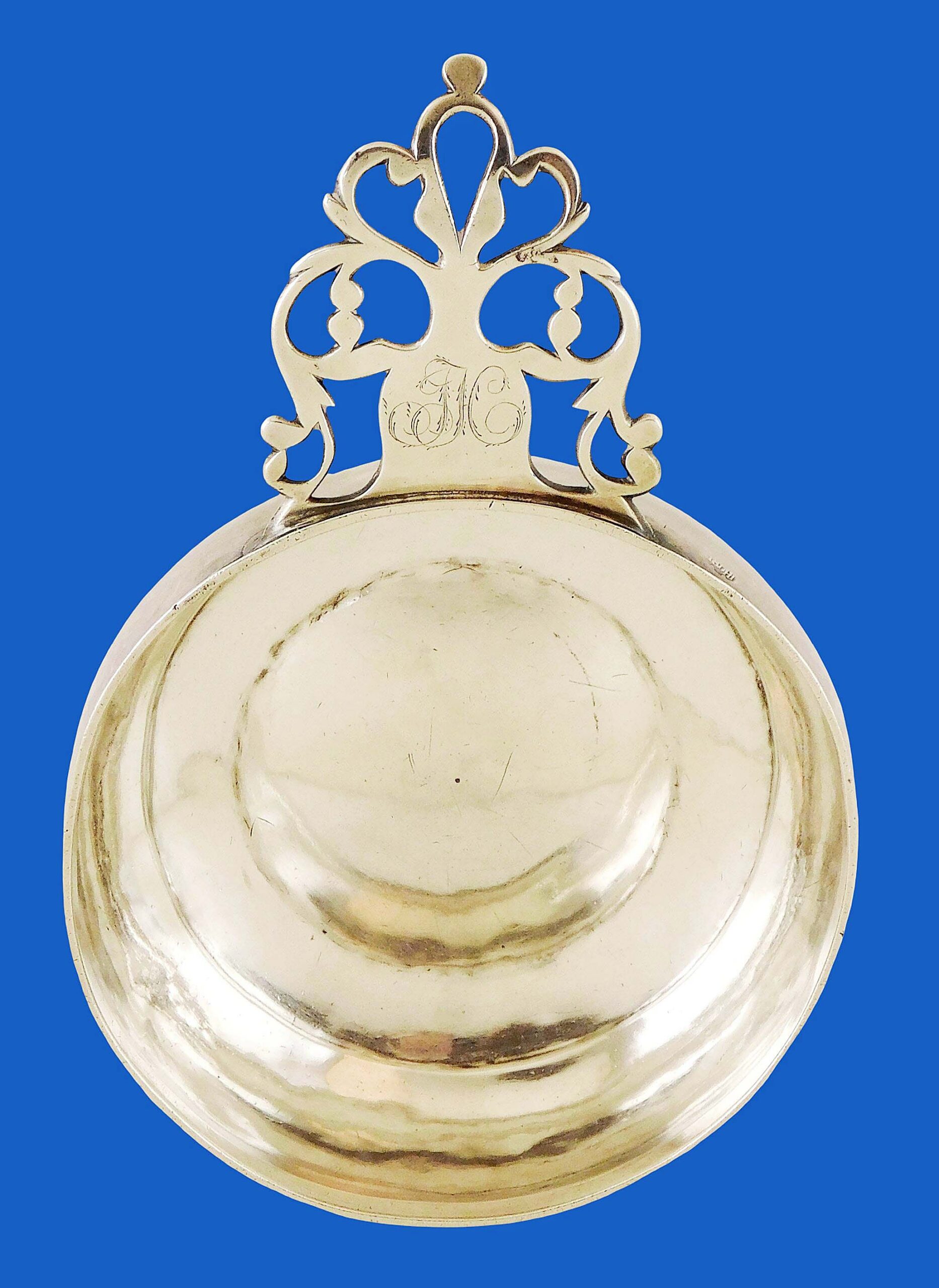
“There was a very interesting pre American Revolution silver porringer by Jacob Hurd (Boston, 1703-1758), that sold for $2,760, way over its estimate of $750-$1,500,” shared Adams. “The Hurd family was an important silversmith dynasty who are buried across from the Revere family in Boston.”
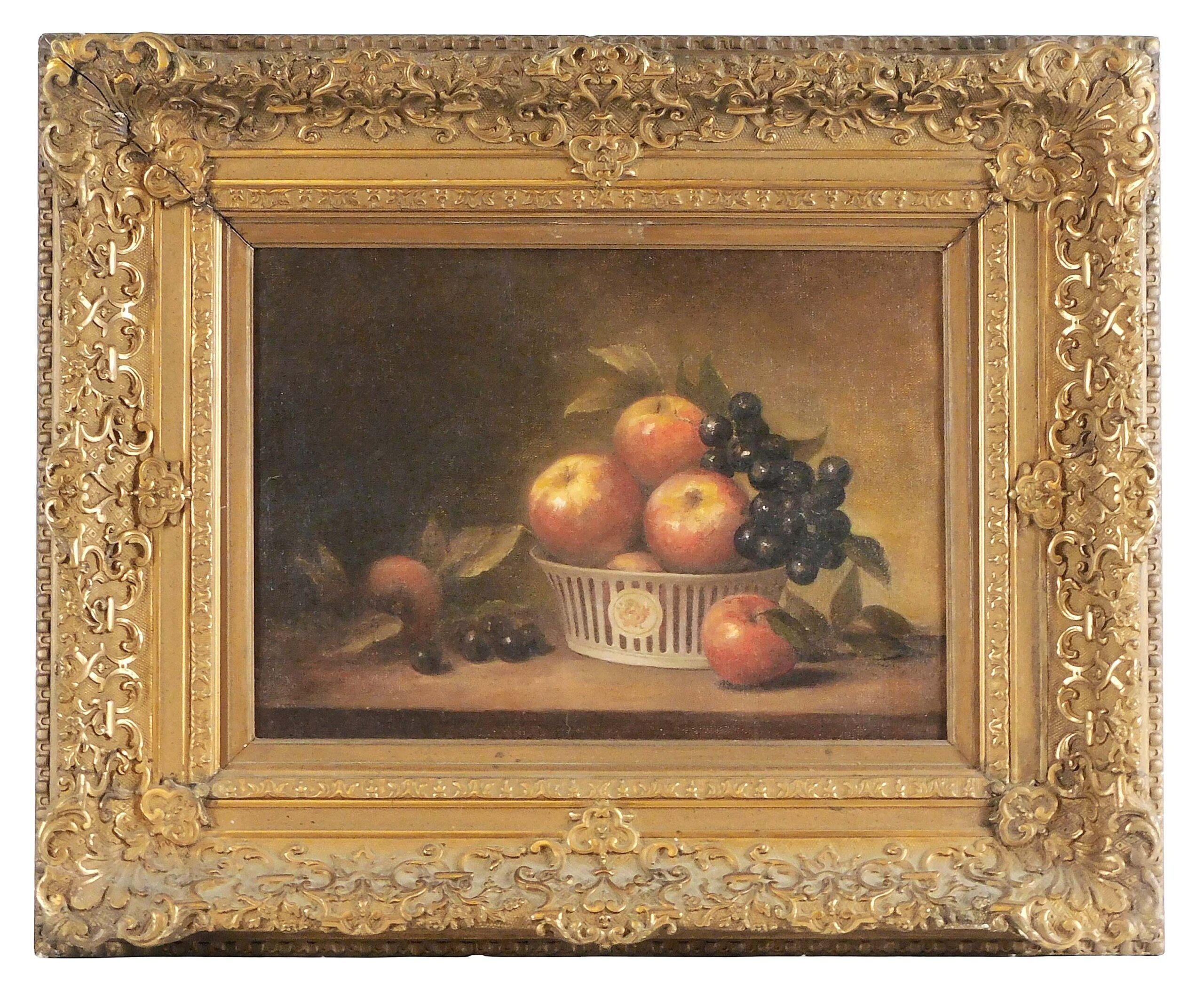
A Nineteenth or early Twentieth Century oil on canvas fruit still life led fine art selections, rocketing past its $100/200 estimate to make $3,900. Depicting apples and purple grapes overflowing out of a white reticulated basket, the unsigned painting was set in a gilt frame and had a faint stamp reading “The… (illegible)… Feb 25, 1886.”
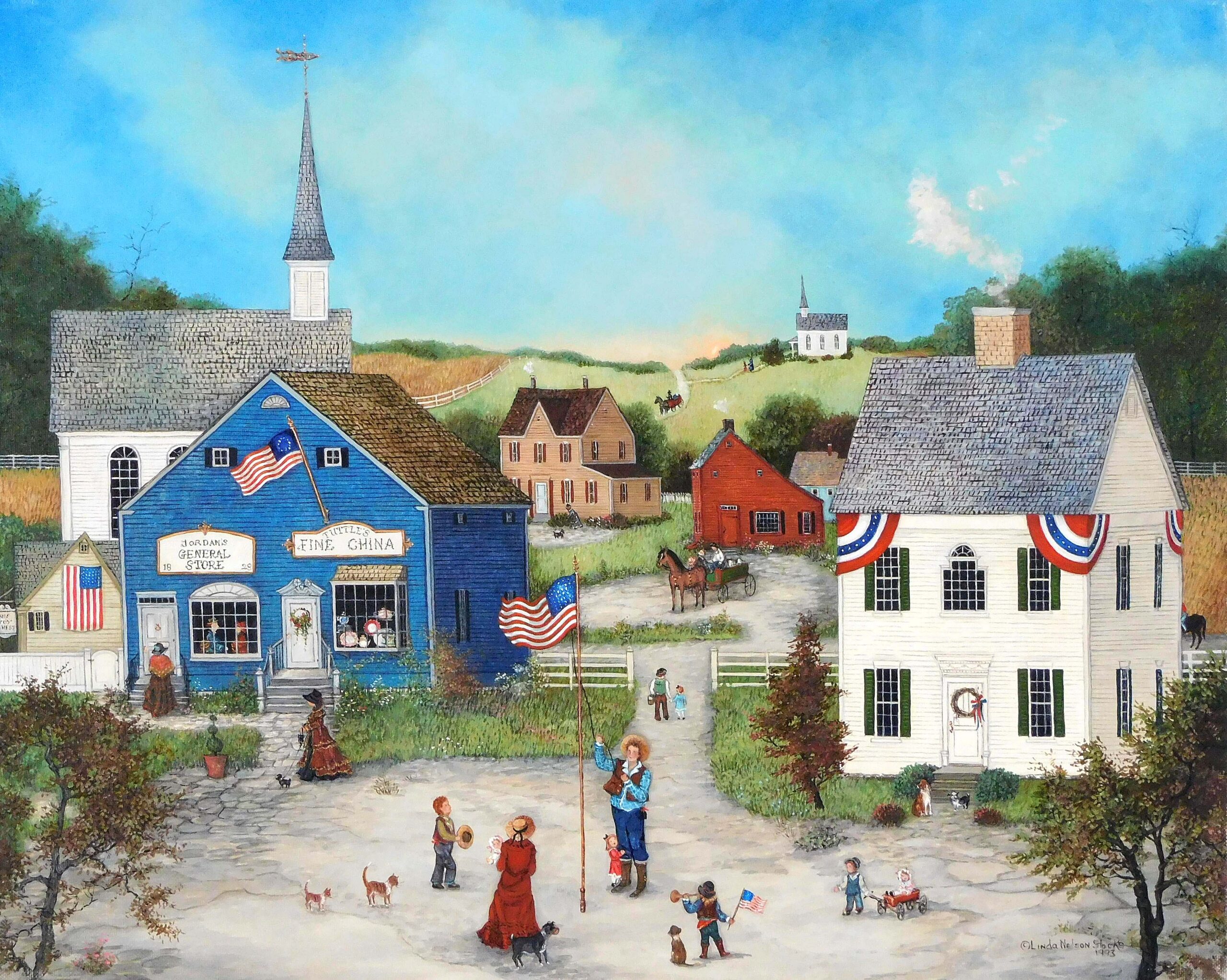
Bidders were feeling patriotic as they raised Linda Nelson Stocks’ 1993 oil on archival canvas “Celebrating the Fourth” to $3,900 against a $400/600 estimate. The work depicted an idyllic New England town center with colonial homes and shops that were labeled “Jordan’s General Store” and “Tuttles Fine China.”
A miniature portrait of a young gentleman attributed to William M.S. Doyle (Boston, 1769-1828) was done in watercolor on oval support and surpassed expectations to make $2,040 ($300/500). Created in the early Nineteenth Century, the 3-inch work was signed “Doyle” on its left edge, and had an early ink inscription on silk lining reading “Lamqua” or “Lam Qua.”
Winter Associates’ next sale is set for August 17. Prices quoted include buyer’s premium as reported by the auction house. For information, 860-793-0288 or www.auctionsappraisers.com.