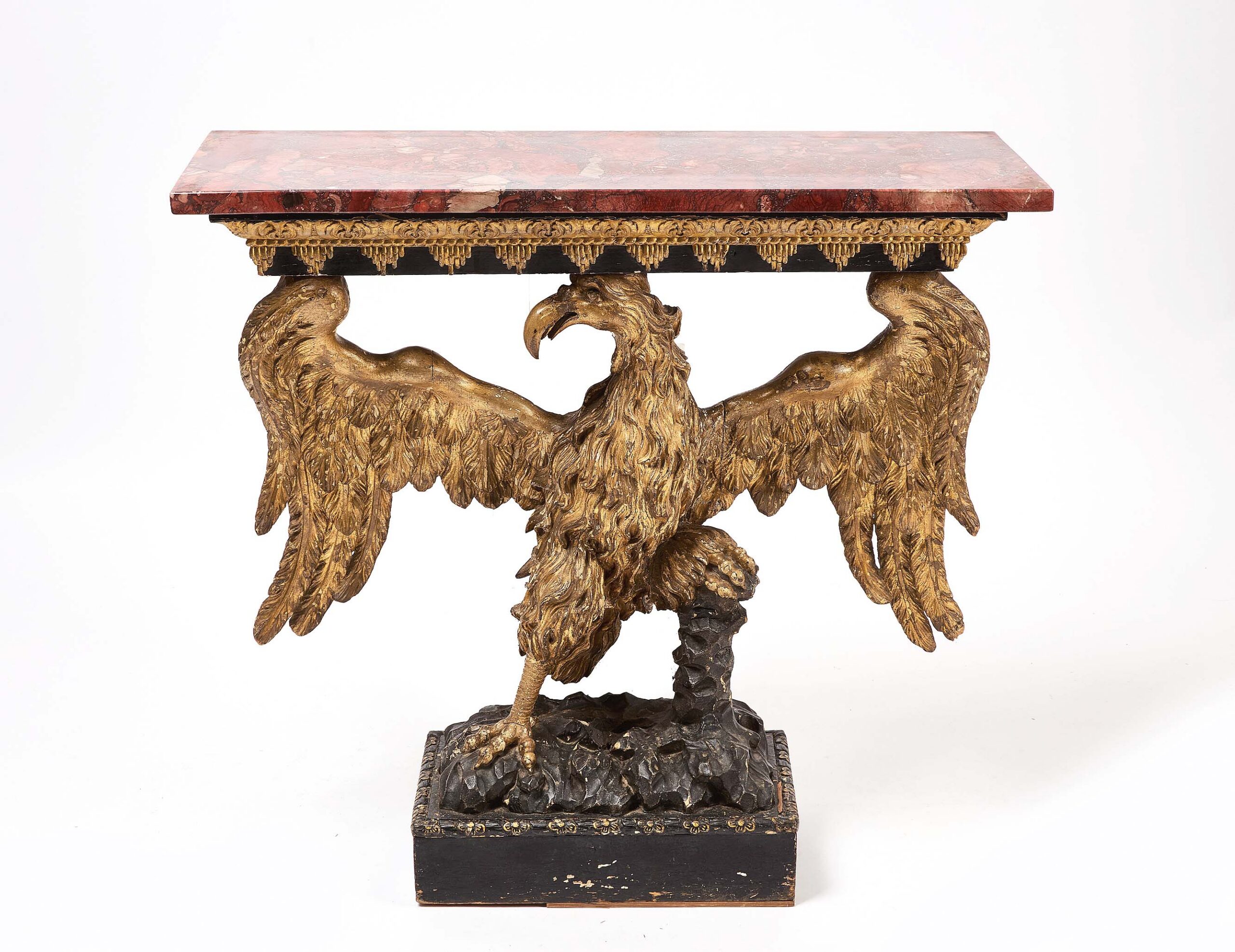
This figural spread-winged eagle console table with a red marble top, American or English, circa 1800, 34 inches tall by 36½ inches wide by 15 inches deep, flew to new heights, besting its $4/6,000 estimate to make $12,540, the highest price of the June Estates and Collections sale.
Review by Kiersten Busch
BRANFORD, CONN. — New England Auctions rounded out the month of June with two consecutive auctions conducted June 17-18. Native American from Private Collections took place on June 17, offering 227 lots of Native American jewelry, bags, baskets, pottery and much more, while June 18 saw 295 lots cross the block in the firm’s June Estates and Collections sale. Collectively, the two sales totaled $621,409, with a sell-through rate just below 99 percent. Auction gallery manager Kate Brashears described the combined sale total as “a result that reflects both the quality of material offered and strong bidder engagement across very different collecting fields.”
Native American from Private Collections
The first sale started strong, with a Sioux pictorial muslin painting of a sundance ceremony realizing top-lot status at $31,500. Made in the Plains region in the late Nineteenth Century, the 141-inch-long work was cataloged as “important,” most likely due to its provenance to Tom Deupree, who purchased it directly from the Lakota (Sioux) tribe around 1980. According to catalog notes, “Mr Deupree purchased it along with a second muslin that was sold to Don Ellis Gallery.”
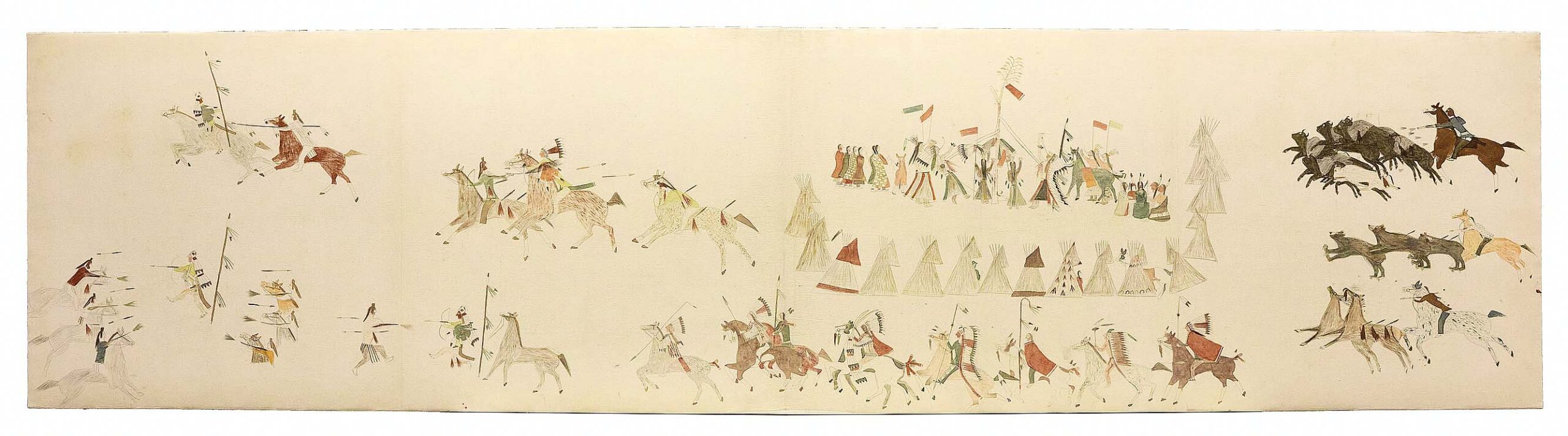
The highest price of the Native American from Private Collections sale went to this Sioux pictorial muslin painting of a sundance ceremony, Plains region, late Nineteenth Century, 35 by 141 inches, which realized $31,500 ($25/50,000).
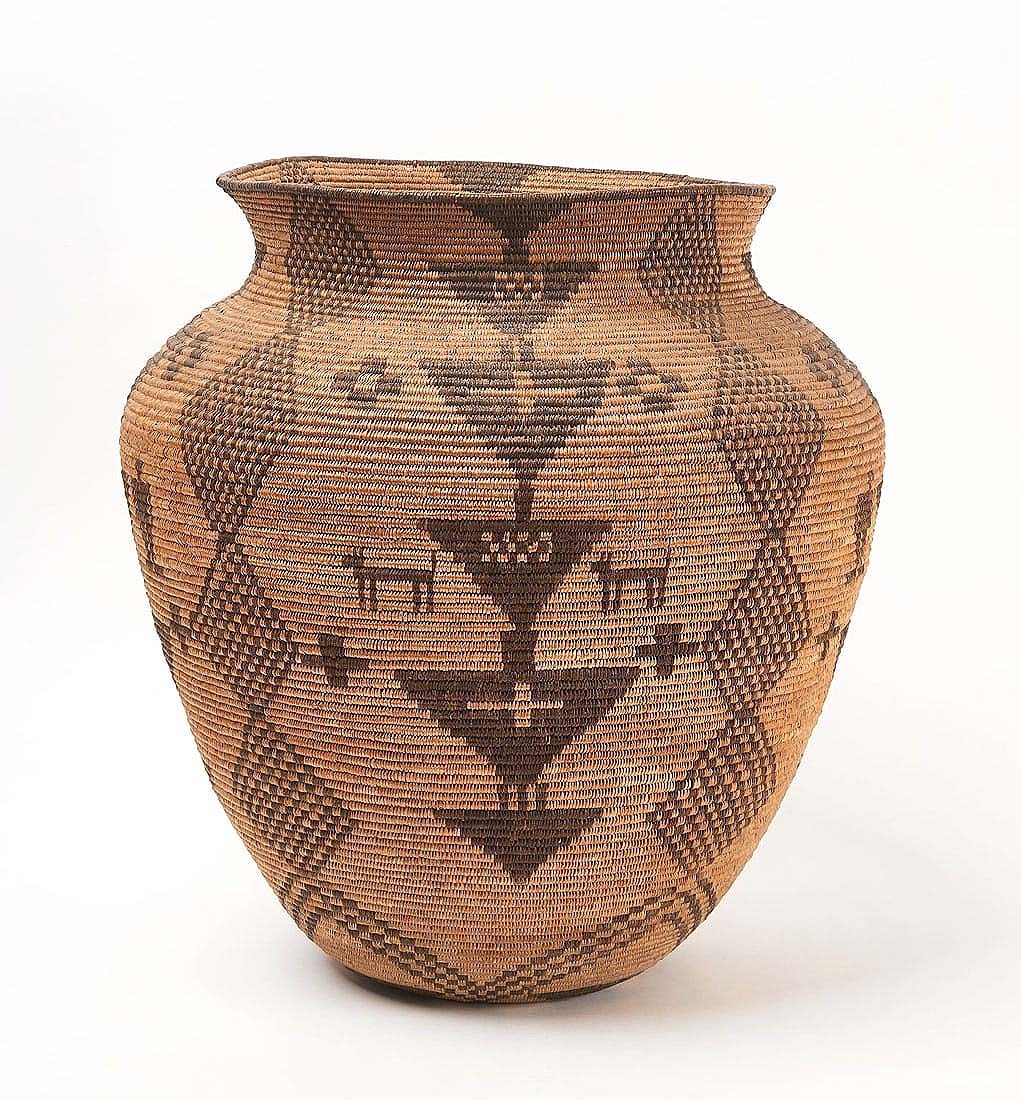
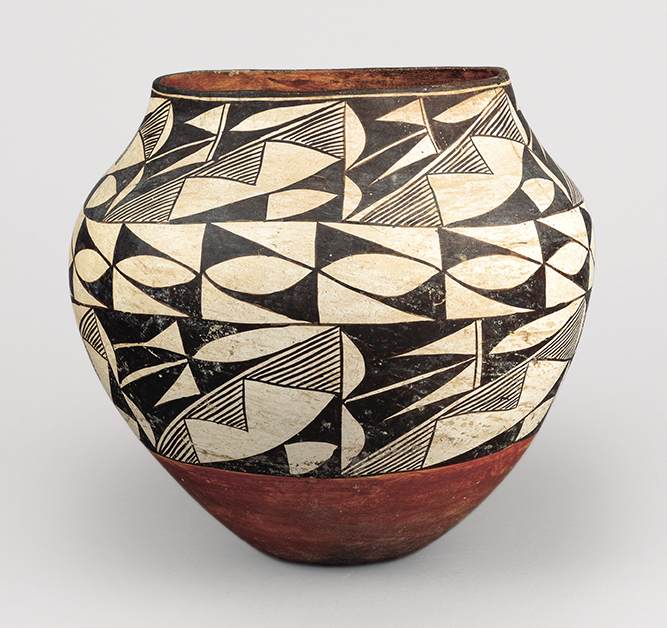
The second highest earning lot of the day was a large Apache coiled olla that more than tripled its $1,5/3,000 estimate to make $10,710. It was made in the Southwestern United States circa 1890 and measured 17 inches tall by 15½ inches in diameter. Several other Apache bowls and ollas crossed the block, ranging in price from $567 for a Western Apache bowl with a spiral design from Arizona (circa 1880-1900), to $4,032 for a White Mountain Apache basket with figures made in New Mexico circa 1895.
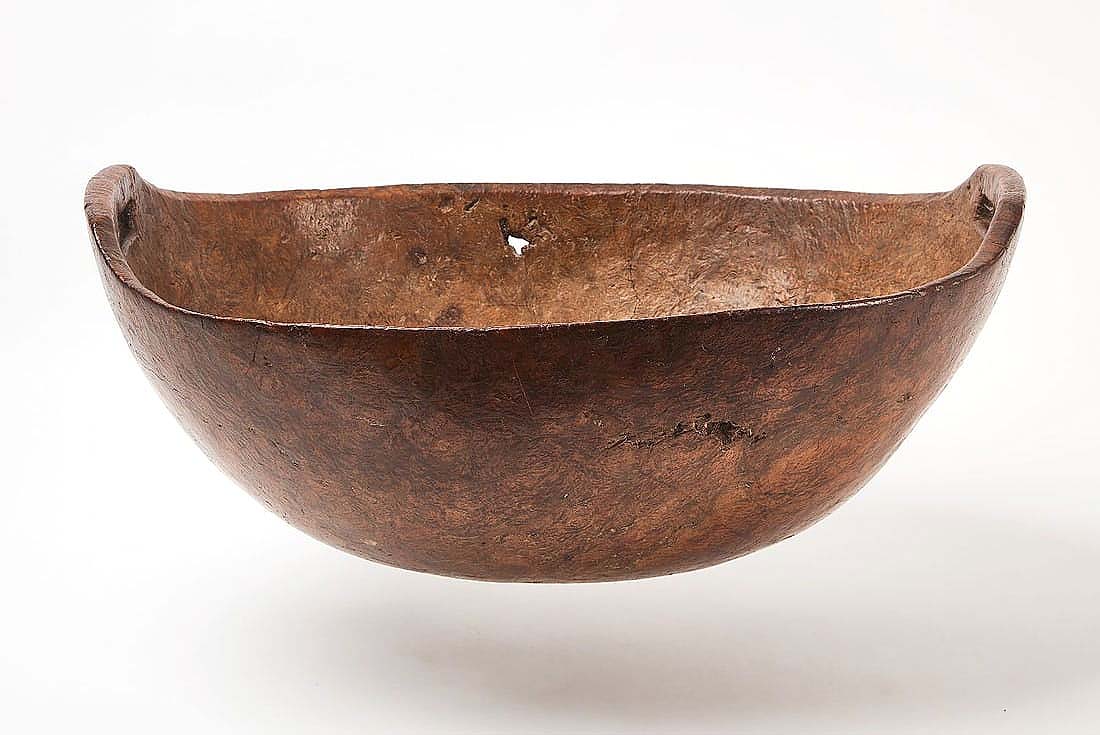
While not a woven bowl, an elliptical burl bowl originating from an unspecified Northeastern United States Indigenous tribe also attracted bidders, earning $5,240. Made circa 1800, the bowl was cataloged as “large,” measuring 24½ inches across, including its rectangular cut-out handles.
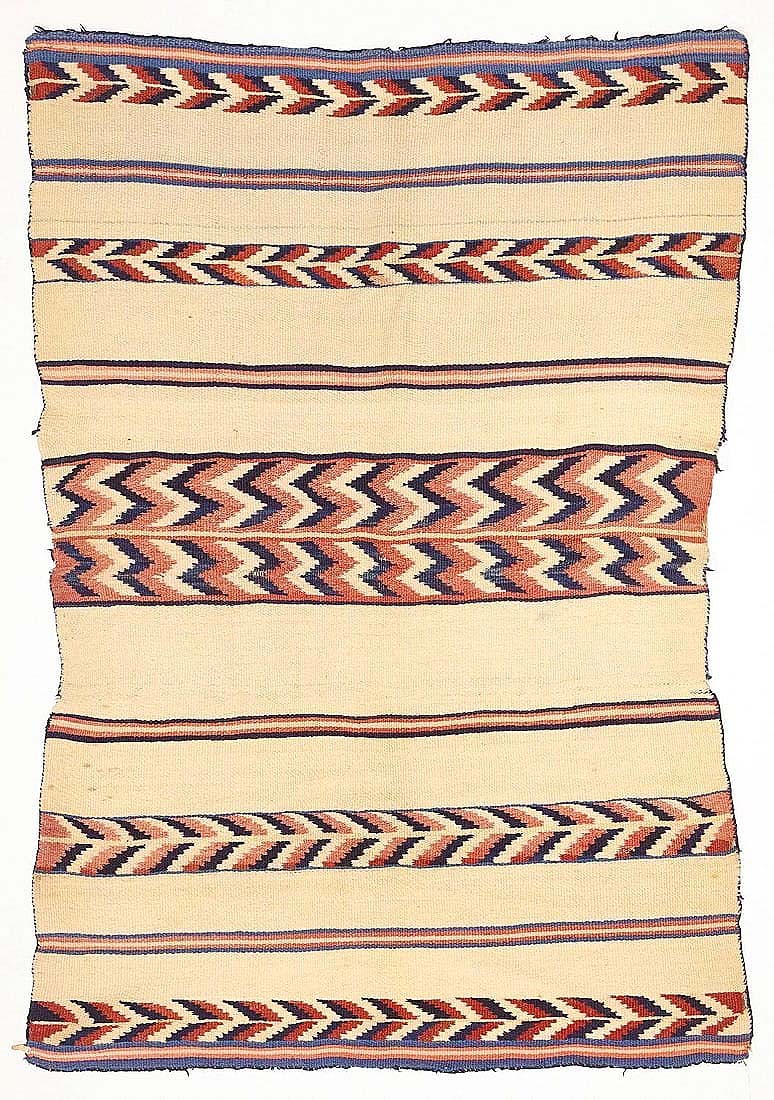
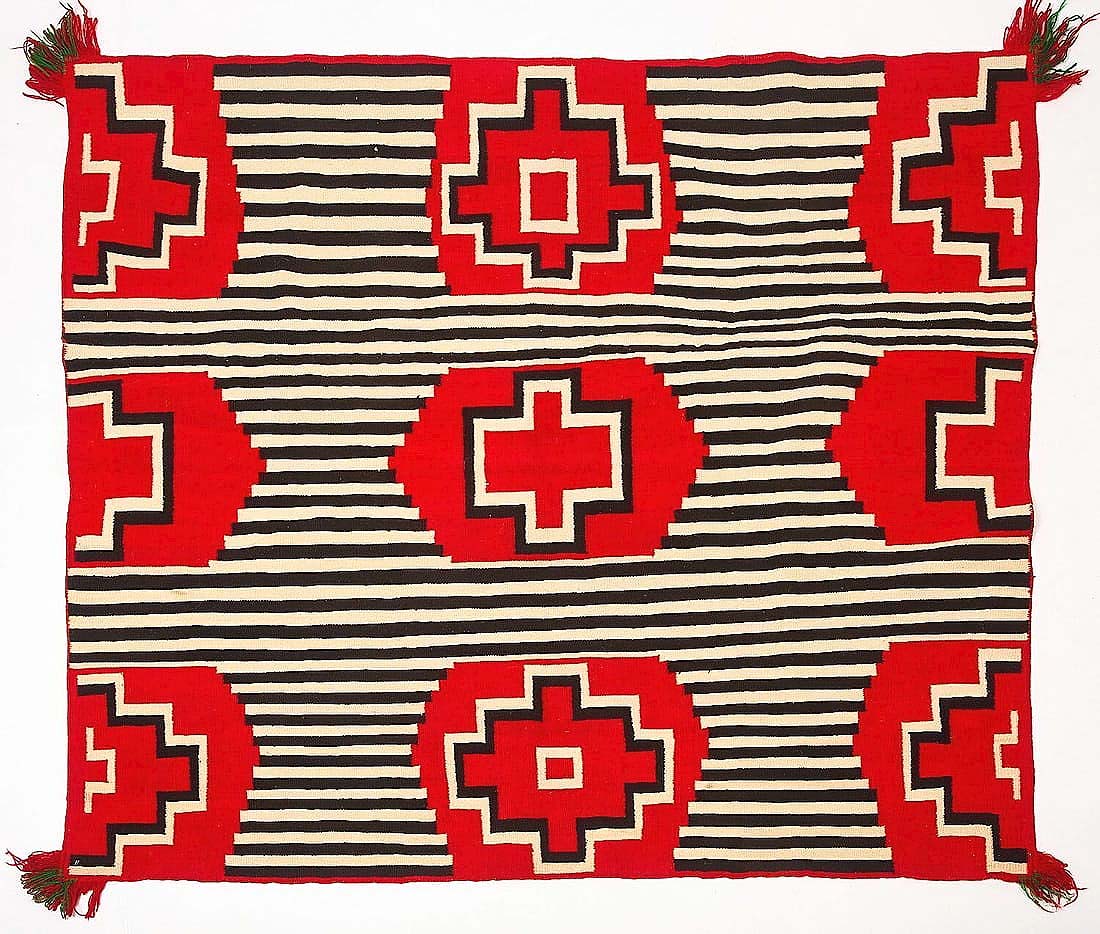
Blankets and other textiles occupied a good number of the top selling lots. An early Navajo blanket from the Southwestern United States, made of hand-spun wool circa 1865, led the charge, surpassing its $2/4,000 estimate at $6,930. Other Navajo textiles that did well included a circa 1900 Germantown weaving ($6,048), a Nineteenth Century women’s blanket with striped geometric patterns ($5,040) and a circa 1915 Yei rug centering a single figure surrounded by whirling logs ($3,024). While not Navajo, a Native American Moki Germantown weaving made from handspun and indigo yarn from the Northeastern Arizona region also surpassed estimates to unfurl for $5,292 ($3/5,000).
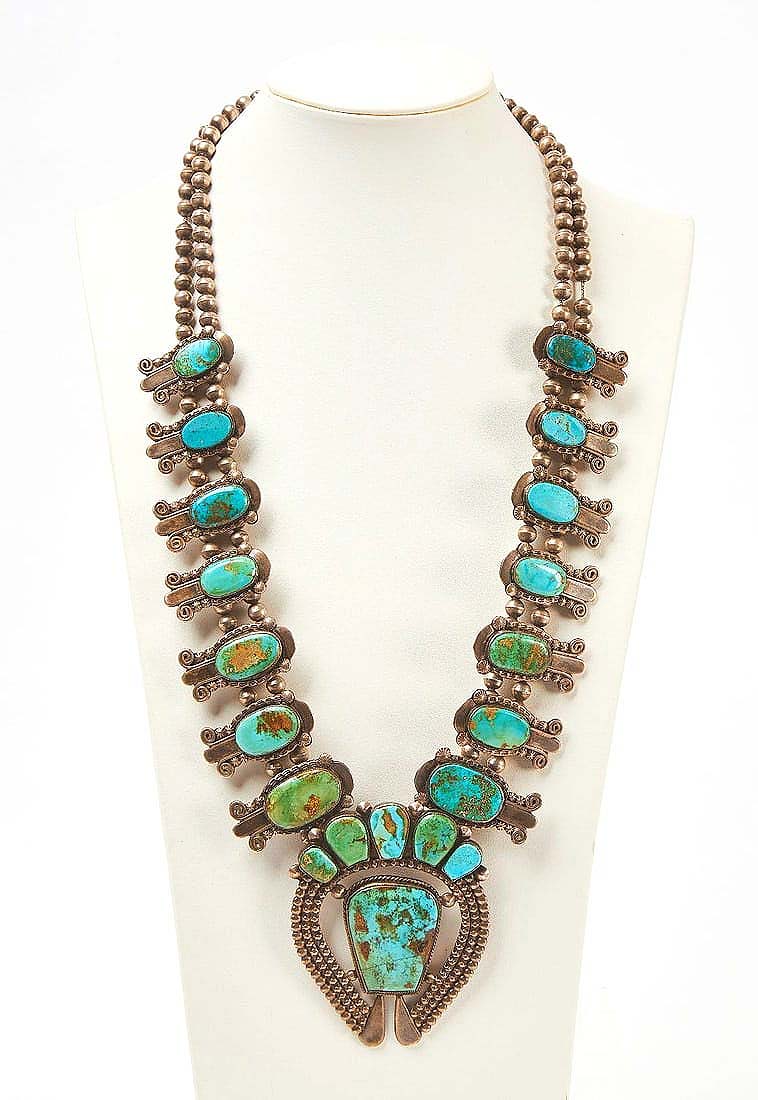
Leading the jewelry selection in the Native American from Private Collections sale was this Native American double-strand squash blossom necklace, Southwestern United States, circa 1930, sterling silver with turquoise, 15⅝ inches long, 7.94 troy ounces, which earned $4,978 ($1,2/1,800).
Just under 30 lots of Indigenous turquoise jewelry were offered, with a circa 1930 double-strand squash blossom necklace made with sterling silver and turquoise stones leading the charge at $4,978, almost three times its $1,800 high estimate. Several other squash blossom necklaces crossed the block, with prices ranging from $693 for a circa 1940 example strung with US V-nickels dated 1900-1912, to $1,638 for an example with double-stranded and hammered silver beads made circa 1930.
Also excelling in the jewelry category were two Native American concho belts, earning $3,528 and $1,638 respectively. The former incorporated sterling silver with inset turquoise on rectangular conchos and was made some time during the mid Twentieth Century, while the latter, signed “T. MTZ.” on the backside of its buckle, was a Navajo example utilizing primarily sterling silver, with small turquoise stones inset into the silver medallions.
Many Indigenous tribes are known for their intricate beadwork, which showed up on practical items, such as clothing, bags and cradleboards as well as accessories. Various items in the sale included such beadwork, led at $10,080 by a Crow cradleboard that was previously auctioned with Heritage in December 2021. Made with wood board, canvas, glass seed beads, animal hide and red wool trade cloth, the 39-inch-long cradleboard was sewn together with sinew thread and dated to the last quarter of the Nineteenth Century.
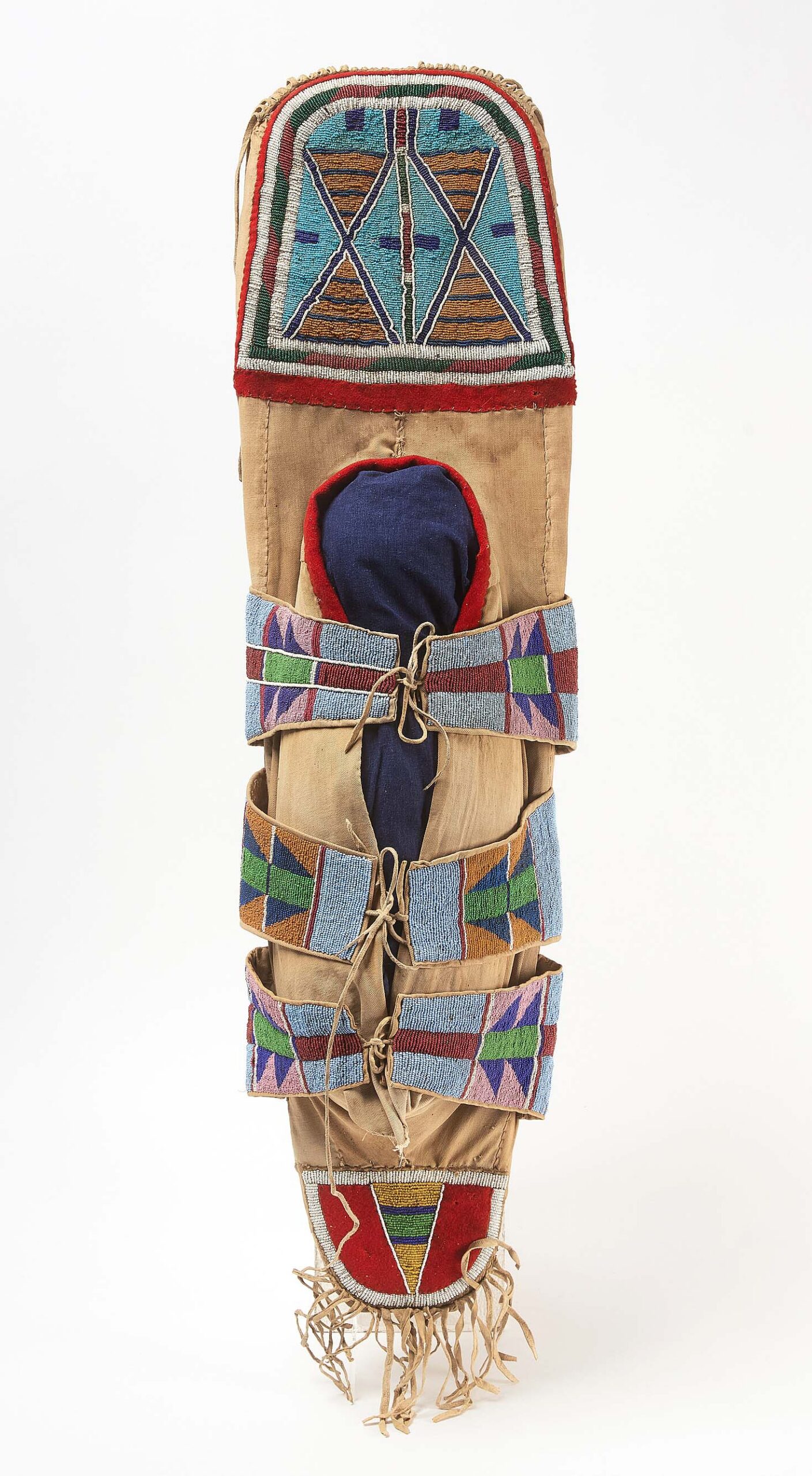
Cataloged as “rare,” this Crow beaded cradleboard, last quarter Nineteenth Century, wood board, canvas, glass seed beads, hide, red wool trade cloth, 39 inches long, was swaddled up for $10,080 ($10/15,000).
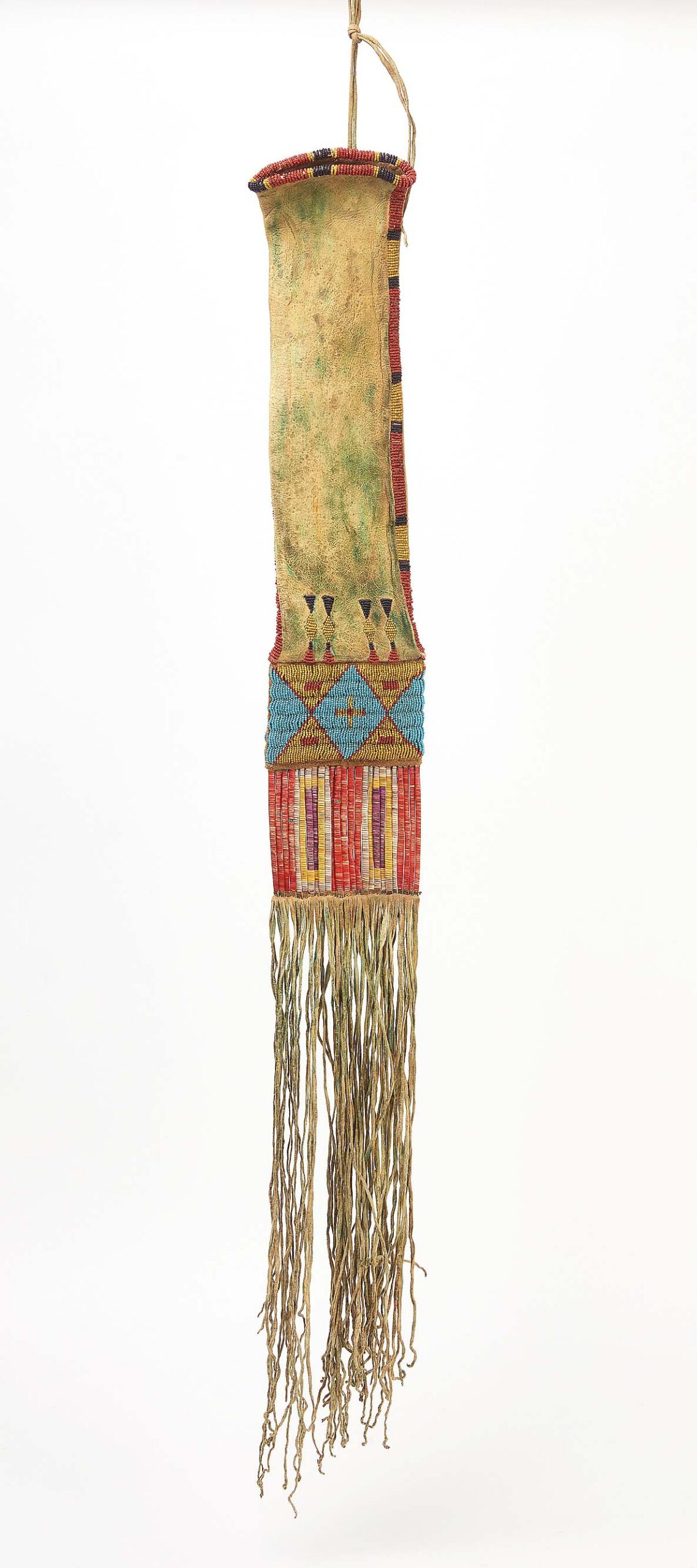
Beaded items continued to be popular with bidders, as a circa 1880 Plains region pipe bag with beadwork and quill work on a pigmented hide ($5,554), a circa 1900 Plains sinew-sewn beadwork dress with flag designs ($3,668) and two Nineteenth Century Plains region sinew-sewn Possible bags with beadwork done on animal hide ($3,528) also found new homes for high prices.
In a post-sale write up, owner Fred Giampietro briefly commented, “We’re encouraged by the strength of the Native American market and look forward to presenting more material in future sales.”
June Estates & Collections
The highest price of the June Estates and Collections sale was earned by a carved giltwood spread-winged figural eagle console table with a red marble top, which soared past its $4/6,000 estimate to earn $12,540. The console was American or English, made circa 1800 and had provenance to the collection of Bruce and Donna Wendel.
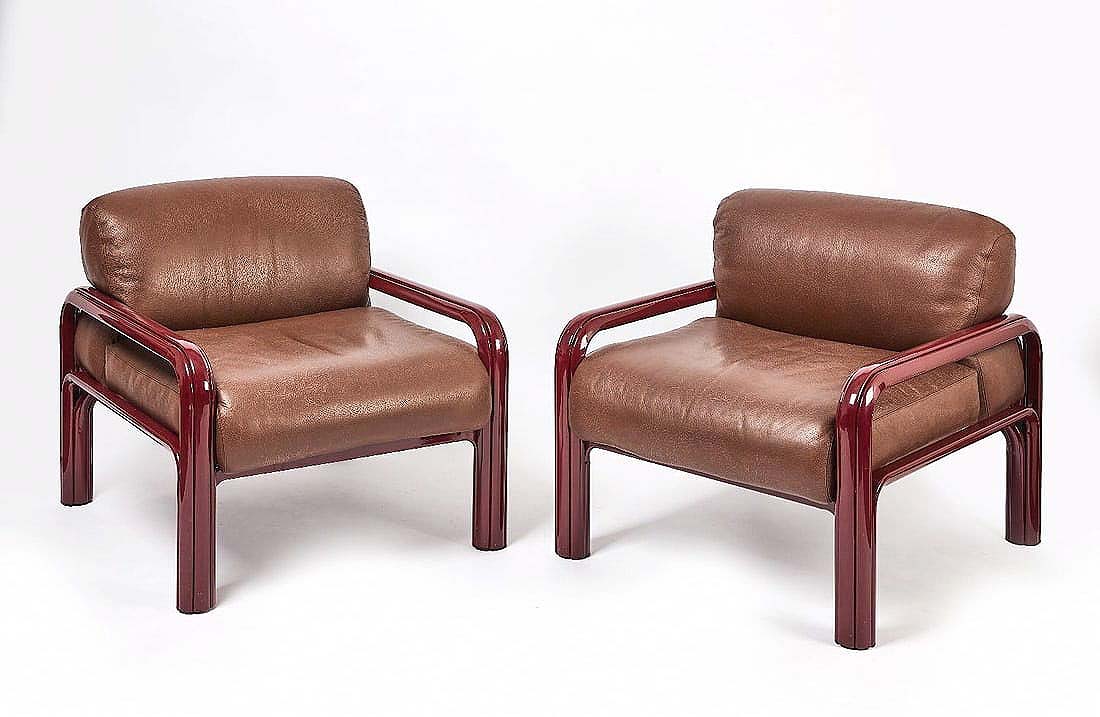
Designed by Gae Aulenti for Knoll International, this pair of armchairs with a burgundy frame and brown leather upholstery, Italy, circa 1980, Model 54S, 30 inches high by 30½ inches wide by 34 inches deep each, sat pretty for $9,825 ($1/2,000).
Furniture was extremely popular with bidders, earning many of the top prices in the sale, including a pair of armchairs designed by Gae Aulenti for Knoll International, which sat pretty at $10,560, surpassing their $1/2,000 estimate. While the chairs, which were part of the Orsay Collection (also known as the Aulenti Collection), were first released in 1974, this specific pair was made in Italy circa 1980. They each had a burgundy frame upholstered with brown leather cushions and were cataloged as Model 54S. Another group of chairs, these a set of six black saddle leather Cab chairs on metal frames by Mario Bellini, also sold above estimate at $6,048 ($1,2/1,800). Made in Italy circa 1985, each chair was marked “Cassina” to the underside of its seat.
Adjacent, but not quite, to the leather-upholstered chair selection was a vintage Chesterfield sofa upholstered in hand-dyed brown leather, which made more than four and a half times its $1,000 high estimate at $4,536. The sofa was made during the Twentieth Century in London, was tied with horsehair and was mounted on rolls on caster wheels.
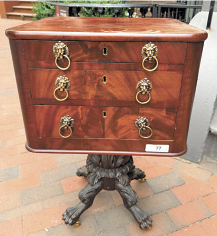
A Gueridon brass-mounted occasional table with a marble and inlaid top and brass paw feet also performed well, outselling its $1/1,500 estimate. It featured a central figural urn mounted with lion heads and was made in France in the Nineteenth Century, realizing $5,240. Following behind at $4,284 was an Italian Midcentury Modern executive desk attributed to Osvaldo Borsani and comparative to the T96 model desk for Tecno. The unmarked desk was made from exotic wood, set on top of a brass metal base, with brass parts.
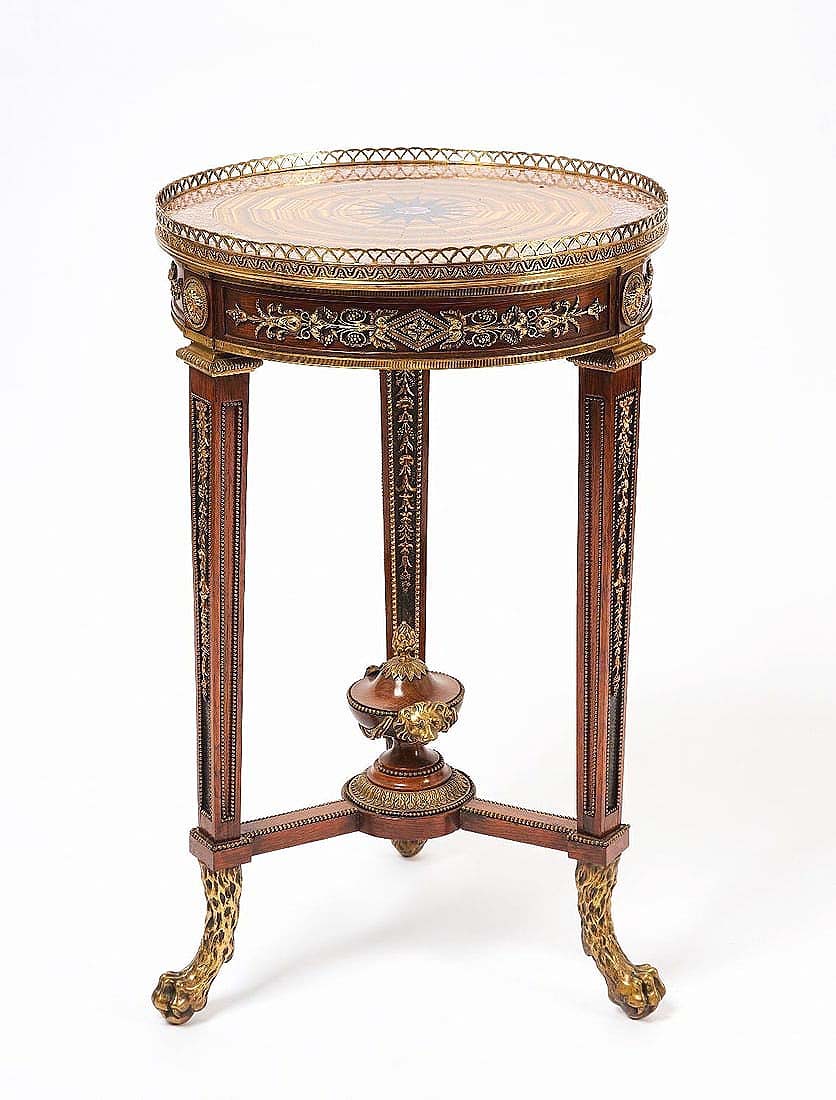
This Gueridon brass-mounted occasional table with a marble and wood inlaid top, French, Nineteenth Century, 31⅛ inches tall by 19½ inches in diameter, sold above estimate for $5,240 ($1/1,500).
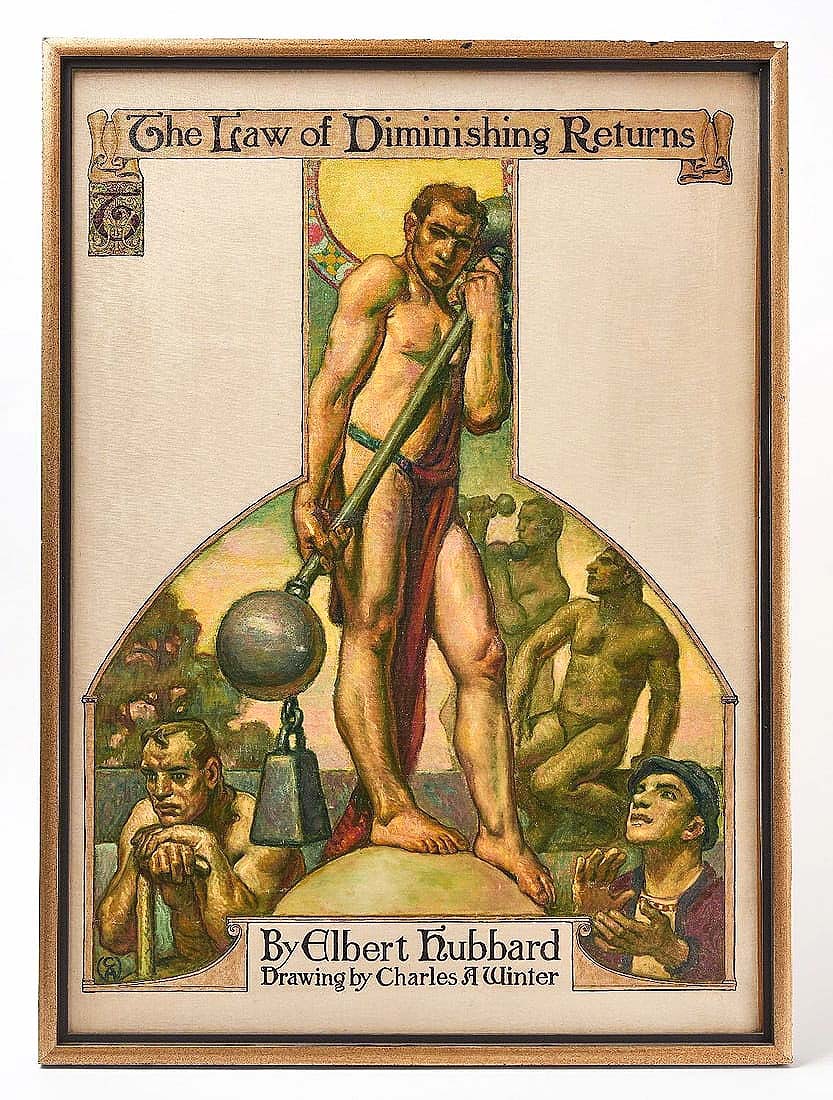
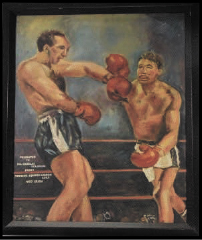
Fine art was led by “The Law of Diminishing Returns” by Charles Allen Winter. The circa 1917 oil on canvas was the original work behind the 1918 Harper’s Bazaar magazine illustration, which appeared alongside an essay of the same name by Elbert Hubbard. More than quadrupling the high end of its $1,5/2,500 estimate, the work made $10,560.
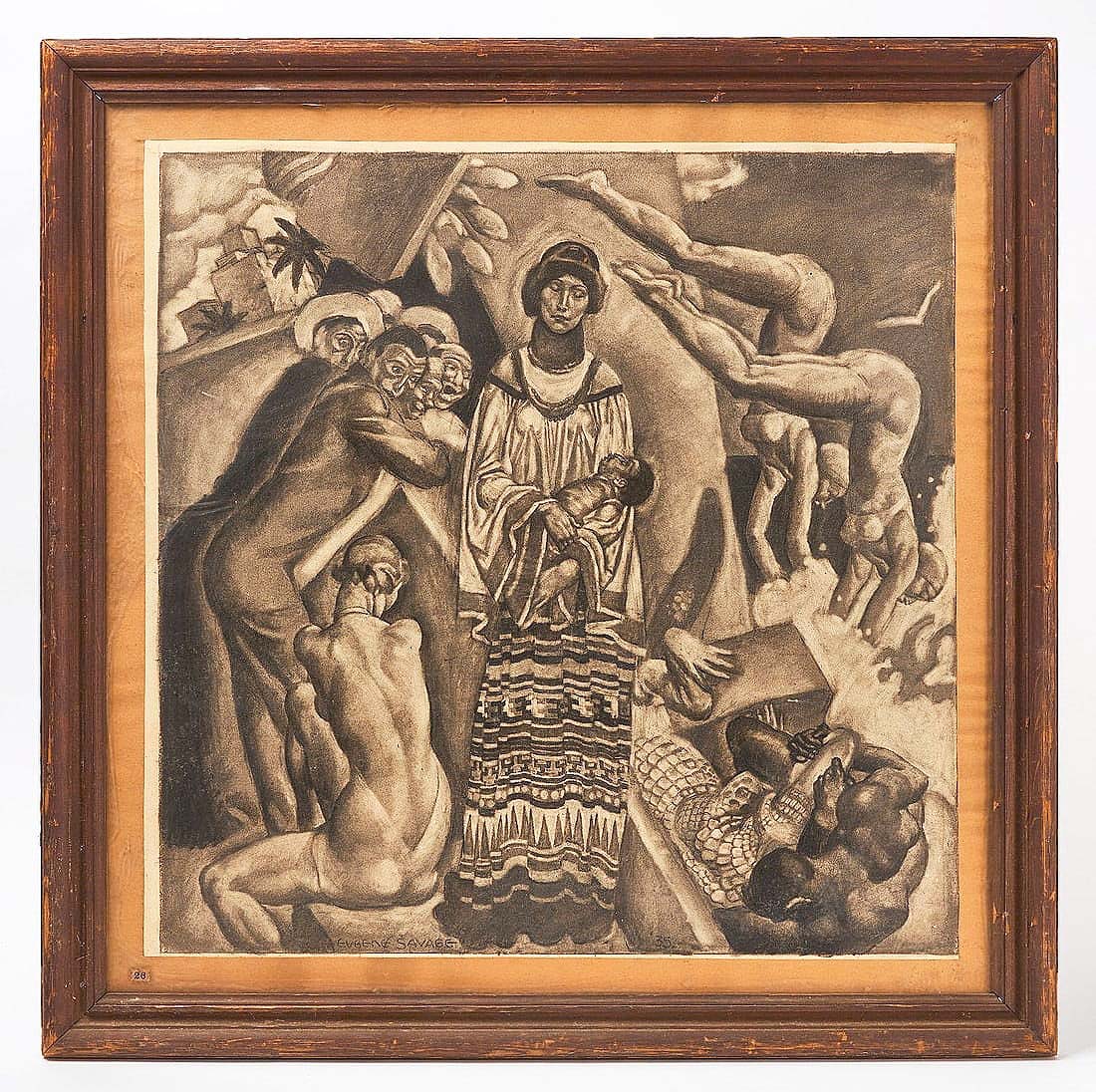
An untitled charcoal on paper mural study by Eugene Francis Savage, dated to 1935, realized $5,544, eclipsing its conservative $300/500 estimate. What may have encouraged bidders’ enthusiasm on the lot was its extensively documented provenance, which included the estate of Professor Dorothy (Bosch) Keller, who taught at the University of Saint Joseph for 55 years, as well as Deane G. Keller of Marlborough, Conn., a former 25-year faculty member at the Lyme Academy College of Fine Arts.
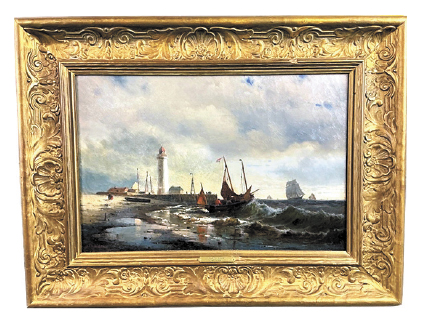
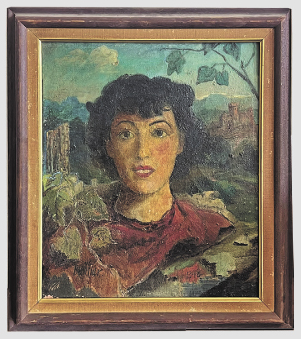
Other fine art to excel was an oil on board illustration after Norman Rockwell’s “Hey Fellers, Come On In!” ($3,276), the ink and pigment on Masonite “Ladder” by Clarke Hutton ($2,268), a watercolor on heavy rag paper of Taos Pueblos by Sandor Bernath ($2,106), Aaron Shikler’s charcoal and chalk on paper titled “Irvine in Great Coat” ($1,890) and a March 13, 1911, academic study of a nude male figure holding a firearm in oil on canvas by Edwin Cassius Taylor, former Street professor of painting and design at the Yale School of Fine Arts ($1,890).
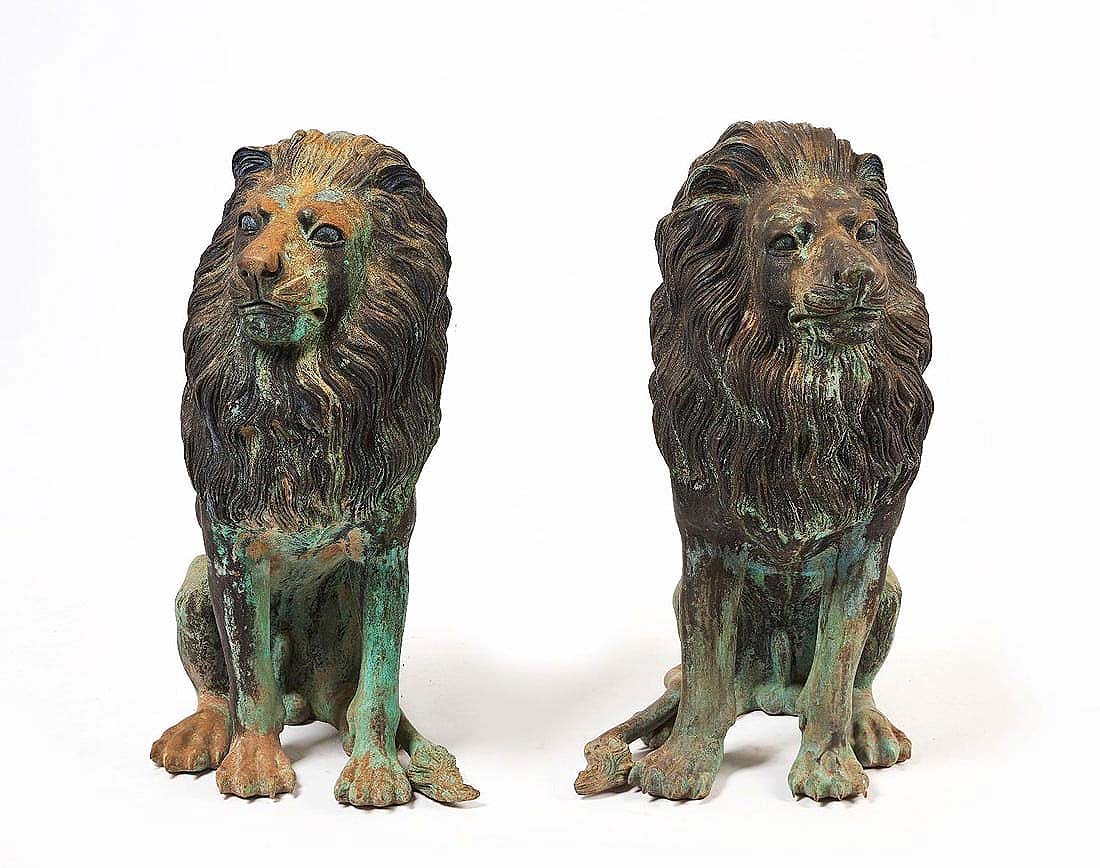
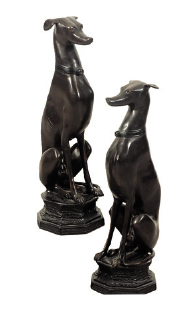
This pair of seated cast bronze garden lions, early Twentieth Century, 36 inches tall by 20½ inches wide by 21½ inches deep each, roared to life for $7,860 ($2/4,000).
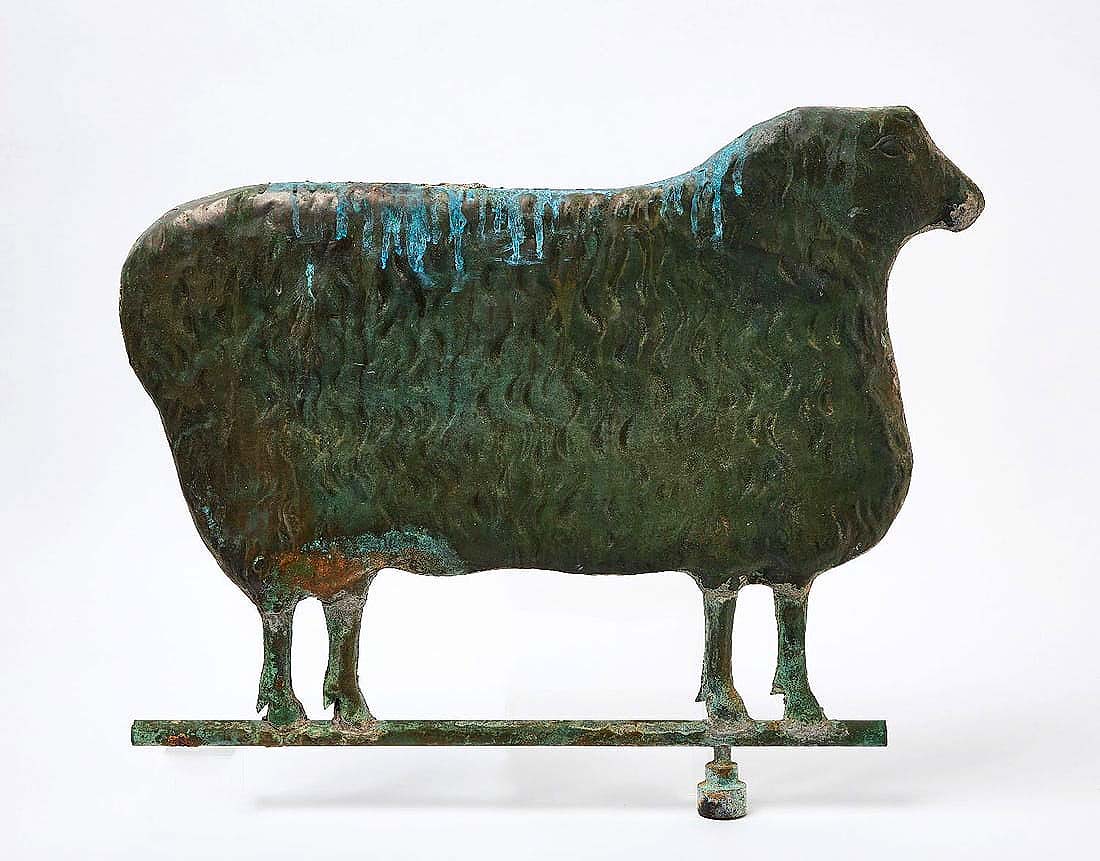
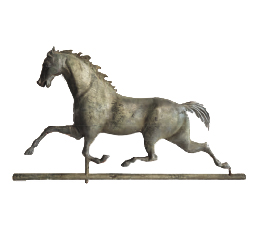
Animals were represented in a few three-dimensional forms, such as a pair of seated, cast bronze lions with natural verdigris patina, which dated to the early Twentieth Century and sold for $7,860. Also excelling was a circa 1880 molded copper weathervane of an ewe with natural verdigris patina, most likely by Cushing & White (Massachusetts), which brayed for $5,240.
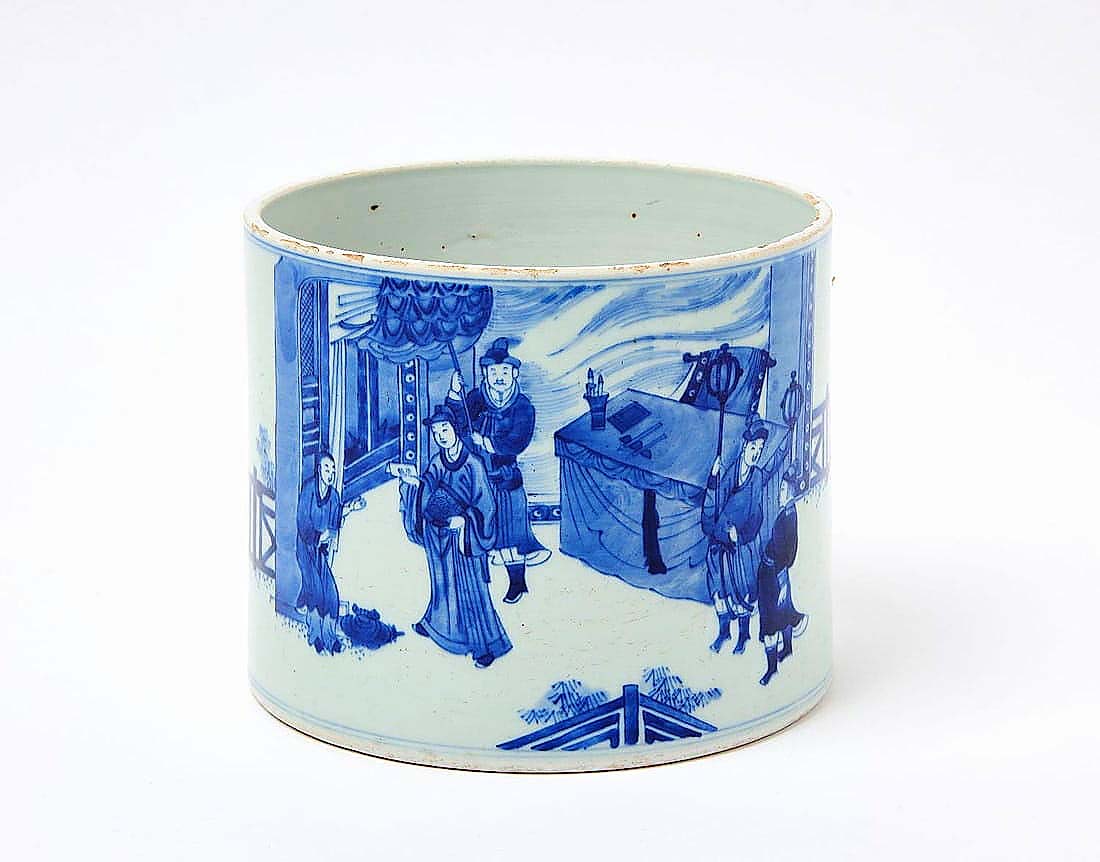
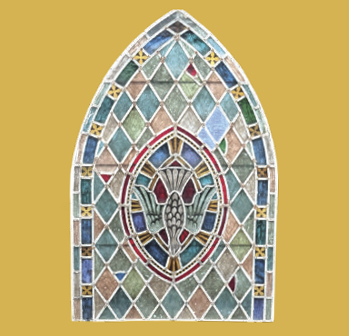
Several unique finds also graced the top-earning lots of the sale, which included an unmarked blue-and-white brush pot from the Chinese Kangxi period, which measured 7¼ inches in diameter and earned $5,040. Following at $4,284 were two Tiffany Studios leaded glass panels with an architectural design which were consigned from a Stonington, Conn., estate. Made with opalescent glass in a pattern of blues and greens, they each bore a maker’s mark on their reverse: “Tiffany Studios N.Y. 1914.”
Prices quoted include buyer’s premium as reported by the auction house. For information, 475-234-5120 or www.newenglandauctions.com.