By Laura Beach
PHILADELPHIA, PENN. — Lust! Obsession! Shark attack!! Here is the tale of an object so irresistible that it unleashes a furious contest of wit and will among besotted collectors. Could Ian Fleming have told this story better? In brief, it goes like this. A well-known dealer is tarrying by the sea, waiting to bid by phone on a must-have lot for her private collection. Telltale fins appear on the horizon. Chaos erupts. The dealer flees, the lot is lost and the hunt begins.
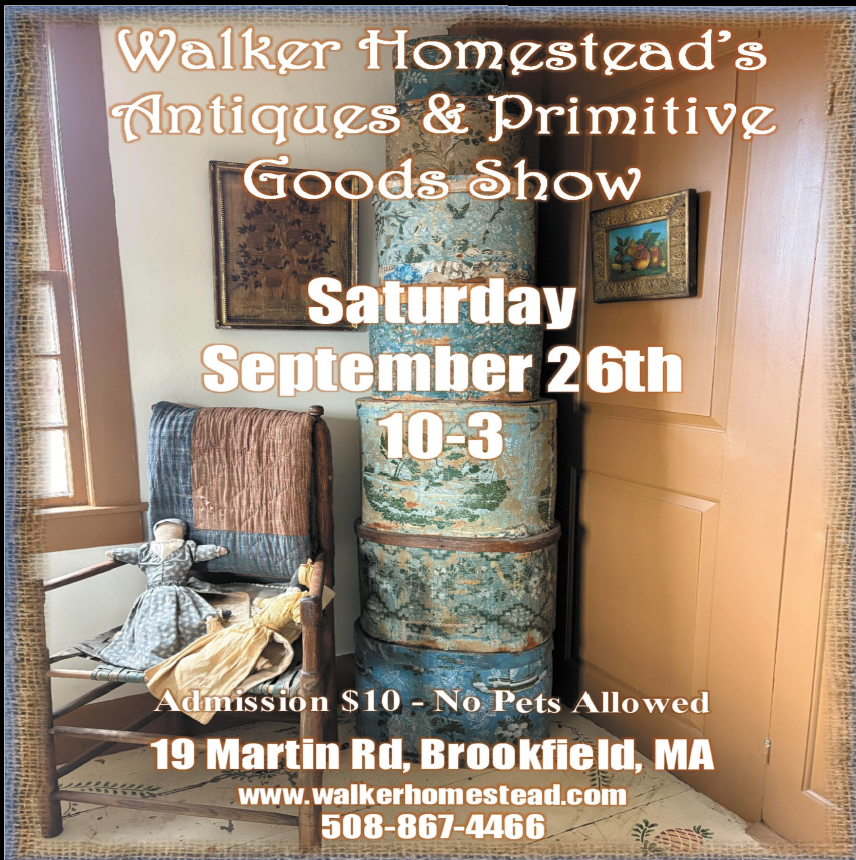
To find out what happens next, read on or visit the Philadelphia Antiques and Art Show, set to preview on Thursday evening, April 14. The fair’s loan exhibit, “Secret Treasures: The Passion of Collecting as Seen through Dealers and Their Collections” continues through the weekend. Curated by Edwin Hild of Olde Hope Antiques, it pairs 58 objects with dealers’ stories of how they acquired the pieces and what they mean to them today.
“Secret Treasures” honors the Philadelphia Antiques and Art Show’s exhibitors. As loan show committee chair Nancy Taylor explains, these professionals and others like them play a crucial part in educating the public and developing collectors, imparting expertise accumulated over a lifetime of looking and learning. Dealers, says Taylor, are the soul of the Philadelphia show and have been for the past 53 years.
The loaned works are not for sale and many have been off the market for years. Some, we are happy to say, first appeared in these pages. “I wanted objects of personal interest, objects that speak to the sensibility and passion of collecting. I wanted to know what inspired dealers to keep these pieces,” Hild says of the objects spanning several centuries, many mediums and a multitude of cultures.
Some of the most compelling stories involve the intersection of objects and memory. Greg Kramer and Robert Schwarz, for instance, chose items they remember from their grandparents’ homes.
James L. Price, John Chaski and William Vareika selected symbolic milestones, resonant objects associated with the dealers’ discoveries of their professional calling and growing awareness of antiques as the tangible embodiment of the past.
Collecting can be emotional and intuitive, ___ as Grace Snyder, Polly Latham and Trish Herr suggest. For two collecting couples — Lesley Hill and Alan Stone, and Philip Bradley and Lisa Minardi — it is a companionable, intellectually rewarding pursuit. Often collecting is all of these things, as Jim Kilvington’s story about his quest to learn the origins of an unusual group of floral-decorated furniture reveals.
A beautiful, handmade object can root us in a place we love and know well, as Arthur Liverant’s tale of his acquisition of an iconic Colchester, Conn., bed rug reveals, or seal a bond of friendship, as Patrick Bell describes.
Sam Herrup, Howard Godel and Skip Chalfant speak of passion undimmed by passing years. By contrast, Arlie Sulka, Edwin Hild and Kelly Kinzle characterize collecting as a journey, describing the evolution of their taste and interest over time.
“Secret Treasures” is not without its comic moments. The eccentricity of the trade, with customs and preoccupations that few outside the business would understand, is central to Steve and Carol Huber’s story about a courting mirror they acquired from the show promoters Frances Phipps and Betty Forbes. Every coupled person will smile knowingly at Amy Finkel’s frank disclosure of a deal she made with her husband that paid off in every way.
What makes a person a collector, and a collector a dealer? Probably the best way to explain it is to simply invoke Lady Gaga: “Born this way.”
And, in case you are wondering, the “shark lady” is Barbara Israel.
For more treasures than we have space to show here, visit www.antiquesandthearts.com. Better yet, visit the Philadelphia Antiques and Art Show at The Navy Yard’s Marine Parade Grounds. It closes April 17. For tickets, directions and other information, 610-902-2109 or www.philadelphiaantiquesandartshow.com.
FOR PRINT AND WEB
_B3VO126.JPG
We have never offered “An Athlete,” a German School fruitwood carving of circa 1540, for sale as it is one of the finest small freestanding sculptures of this period we have ever had the opportunity to own. There is a yet to be deciphered monogram on its base. We believe strongly that someday we will arrive at a firm attribution, possibly even to Peter Flötner, the German sculptor who died in 1548 in Nuremberg. The opportunity to purchase this was somewhat accidental. Some years ago, it was in a London sale, illustrated in a very small photo with a modest estimate. A day before the auction a colleague told us that there was no chance that we could buy it, as it would far exceed the estimate. All this conversation did was reinforce our wish to have it, and have it we did even at a price far above the estimate. We have always been grateful to our colleague for having tried to discourage us.
—Lesley Hill and Alan N. Stone, Hill-Stone, Inc
18.JPG
Thirty-two years ago, while Elliott was away in Pennsylvania doing a show, I was home alone and leafing through Antiques and The Arts Weekly. There was a picture of this fantastic, utterly charming hooked rug about to come up for auction. It was the dead of winter, I was about nine months pregnant and only had an unheated, uninsulated cargo van at my disposal, but I was determined to purchase this rug. After a long drive on snowy roads, I arrived at the sale and, after a bit of a battle, prevailed and bought it. Elliott loved it, too. It has hung over our son’s bed ever since, even though Zack hasn’t lived at home for years.
—Grace Snyder, Elliott & Grace Snyder Antiques
2016…Kilvington…jpg
The first chest I saw with this type of decoration was in a collection in Rehoboth Beach, Del., about 30 years ago. It was offered to me by a family originally from the southwest corner of Sussex County, the very bottom corner of the most southern county in the state. I chose not to buy the chest as I felt the decoration was of a later date. Both that chest and this one have an oxidized robin’s-egg blue base color overpainted with free flowing asymmetrical floral decoration. The style of the decoration reminded me of a form of floral still life painting that was popular around 1900. My conclusion was the chest had its original base decoration and later someone added the flowers. Years later, I discovered the chest shown here in a collection. I knew it was not the same one, as the owner told me he bought it in the 1950s. A short time later, the Biggs Museum of American Art had an exhibition of Delaware blanket chests. Included was a miniature blanket chest with a recessed front panel. Although the chest was refinished, the same floral decoration remained in the panel. I decided the same hand had decorated all three pieces and that the flowers were original. Paint analysis showed all pigments to be of the same age. A few years ago I was visiting the International Show in New York. I walked into an English dealer’s booth and discovered a circa 1800 oak cupboard with raised panels decorated with the same floral motifs. I asked the dealer if he had ever seen this decoration before or knew where the piece originated. He said he was aware of other examples and the origin was Wales. Mystery solved. Many of the inhabitants of southwest Sussex County were from Wales. I wish I had bought the first chest.
—James M. Kilvington
4th_Ligero_Kochan.jpg
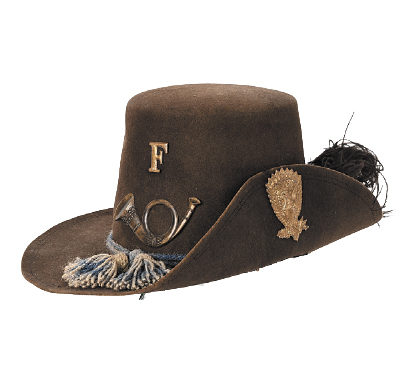
I first learned of the existence of this coat when a descendant of the Tennessean who brought it home as a war souvenir sent images of it to the Texas State Archivist. The archivist in turn forwarded copies to me for identification. At the time, I was a museum curator engaged in research on the material culture of the Texas Revolution and Mexican War. I had yet to encounter one surviving example of clothing worn by the common soldiery of the Mexican Army of the period 1846–1848. I couldn’t believe what I saw. Subsequent attempts to track the coat’s whereabouts met with no luck and I had given up hope of ever seeing it. In 1998, I left the museum field to become a dealer. Seven years later, I serendipitously attended an antiques show in Louisville, Ky. While gazing across the vast hall, I recognized the uniform the moment a dealer put it on a form. Rushing over, I literally camped out in his booth until we finally reached an agreement and the coat came home with me. In addition to being a missing link in the study of Mexican military dress, it is also of seminal importance in understanding the textile traditions of that nation. My association with the 4th Ligero coat spans nearly my entire adult life and both of my chosen careers. It also represents my lifelong passion for the study of early American costume and textiles.
—James L. Kochan
finial471.jpg
I began collecting American furniture fragments in 1977, soon after reading John Kirk’s influential book, The Impecunious Collectors Guide to American Antiques, where they were first introduced as an art form within the pages of a scholarly reference book. A short time later I had the privilege of visiting the home of Dr Henry P. Deyerle, a renowned collector of Americana from Virginia, where I first encountered this exquisite rococo carved mahogany finial. It originally adorned an ornate Philadelphia Chippendale case piece. It had been discovered by the legendary Philadelphia dealer Robert Carlen, coincidentally a close friend of my family. Carlen sold it to Dr Deyerle in 1975. Twenty years later I purchased the finial at the landmark Deyerle sale and it has remained in my private collection ever since.
—David A. Schorsch, David A. Schorsch-Eileen M. Smiles
Foote Patience PF bed rug 1.jpg AND Harriet Brainerd Sampler copy.jpg [2 images/one text entry]
About 1990, my father, Zeke, and I learned from Antiques and The Arts Weekly of an onsite auction at a Massachusetts farm associated with the Brainards, a well-known family with roots in Colchester, Conn. We thought the sale was worth an inspection, but we left disappointed, as only a red painted six-board blanket chest seemed worth our consideration. When runners later carried the blanket chest out during the auction, the chest fell, distributing its contents, among them a magnificent 1770–1780 Colchester, Conn., bed rug embroidered with flowers and vines and initialed “PF”. The runners unfolded the bed rug on the grass and let people walk on it. The auctioneer sold it because it was in the way and people were tripping on it. Colleagues of ours purchased the rug and, after much thought, sold it to us because it was worked by Patience Skinner Foote (1755–1790) of Colchester, who married William Brainard. The bed rug had never left the family and was very well preserved. We have owned three of these bed rugs over the years. Most are in museums. We also own an 1832 needlework sampler wrought by Harriet Brainard, Patience Foote’s granddaughter.
—Arthur Liverant, Nathan Liverant and Son Antiques
HR Ohira Vase.jpg
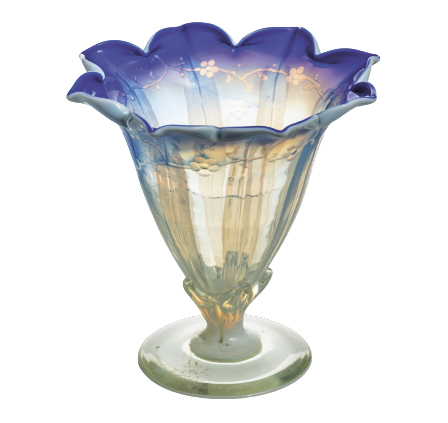
I was first introduced to the work of Japanese glass artist Yoichi Ohira (b 1946) when the Metropolitan Glass Club visited Barry Friedman’s gallery in October 2002. As a specialist in the art glass of Louis Comfort Tiffany, I was immediately drawn to the high level of complexity and artistry inherent in Ohira’s work. Since my children were young, the looming cost of their advanced education, in addition to the overall idea of having something breakable in a home with a pair of rambunctious boys, kept me from buying my first piece of Ohira that day. Over a decade and two college degrees later, both of my children have moved out and I, like many of my emerging Tiffany collectors, have taken advantage of the absence of my fully grown children to finally purchase examples of this master glassworker’s oeuvre. The vase shown here is from his “Laguna” series and dates to 1999.
—Arlie Sulka, Lillian Nassau LLC
IMG_1361.jpg
At 16, with a new driver’s license, I was sent to Pennypacker’s Monday Auction outside Reading, Penn., to try to purchase a table for my father, who was at work. I was terrified to not only drive that far but to raise my hand. I agreed to go if I could bid on this cow painting, too. I raised my hand at my limit of $600 and practically passed out. Mr Pennypacker stopped the auction and asked if anyone was going to bid against this child who had saved her money. All hands went down and the cow was mine. Somehow, I also bought the table. It was exciting, terrifying and unbelievably fun, particularly with someone else’s money. This is the piece I will not sell. I loved it then and I treasure it even more now because it represents the very beginning of my journey with antiques and the encouragement I was given by a father who was totally passionate about collecting.
—Diana H. Bittel
IMG_4984.jpg
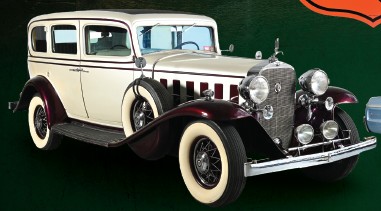
Remember show managers Fran Phipps and Betty Forbes? In the 1970s, during setup for the Connecticut Antiques Show, Carol and I drove a customized Mercedes 300SEL that we acquired in a trade for a sampler into the Hartford Armory. Fran stopped us at the door.
The conversation:
F: “Steve, I want to buy your car.”
S: “Fran, if I sold you this car, I’d have to get a new wife.”
F: “Wives are easier to get than a car like this. How much is it?”
After a few laughs, Carol and I decided to sell her the car.
The delivery:
A few days after the show we delivered the car, parking it in Fran and Betty’s driveway next to the house, facing the road. In the house I noticed this charming Eighteenth Century courting mirror and, knowing that Carol and I would cherish it, thought it would be the perfect gift, especially after Fran’s wives versus cars quip.
The conversation:
S: “Fran, I’d like to buy this courting mirror.”
F: “The mirror isn’t for sale.”
S: “Well, neither was the car.”
F: “——- OK.”
Note: The car was used almost every day but never moved from the spot where I left it. Fran later explained that she and Betty just enjoyed sitting in it while having cocktails.
—Stephen Huber, Stephen & Carol Huber
Img14751.jpg
I bought this butter churn for $50 when I was in high school. Though classes were in session, I was not in attendance. The principal of my high school, Mr Charlie Sanders, had a strong interest in antiques. He cleared the way for me to attend auctions during school days provided I showed him a copy of the auction listing and my parents’ permission. Most of my teachers supported this endeavor as long as I did not fall behind. My classmates often referred to this as work release. I called it a treasure hunt and it continues to this day. As a rare form of Samuel Irvine cobalt-decorated stoneware, this 10-gallon butter churn remains an important part of my collection of Cumberland County, Penn., artifacts. Every piece has a story. This one underscores the flexibility of my principal and teachers, and the encouragement that helped broaden my education outside the classroom.
—James L. Price
[812 for phily cat.jpgThis sterling silver cheese scoop was given to John Gorham as a gift for his 50th birthday and dates to 1870. We love the fact that it was owned by this great American silversmith and businessman, and made by his important firm. The rare pattern, called ‘Isis,’ reflects the Egyptian Revival taste in America and the great design sensibilities at Gorham. The Gorham Manufacturing Company was one of the most successful silversmithing firms in America. John Gorham (1820–1898) started working there for his father at the age of 17, became a partner in 1851 and in 1863 became president of the company. During that time the workforce increased from 12 to over 1,000 in 1870, when Gorham became the largest silver company in the United States. John Gorham achieved this by incorporating new technologies into production and addressing the new market of the expanding middle class.
—-Spencer Gordon, Spencer Marks Ltd.
LaFarge, J. Wood Interiorframe.jpg
Unlike many dealers, I do not personally collect the type of historical art that I have been dealing in for over 30 years. When we opened our gallery, my wife, Alison, and I established a rule that we would not compete with our business and our clients, so we have been buying the work of living artists to hang in our 1877 home. We also buy art to personally give to museums. The John La Farge painting “Wood Interior” is one such artwork. In 1971, as a sophomore pre-law political science major at Boston College, I enrolled in a required art history course. I discovered the art of John La Farge quite by accident one day while practicing Transcendental Meditation in Boston’s Trinity Church, decorated in 1876 with murals and stained glass windows by this important American artist. Four decades later, I have probably owned more works by La Farge than anyone in history, including “Wood Interior,” deaccessioned by the Museum of Fine Arts, Boston. Appropriately, we will donate it to my alma mater when Boston College opens a new art museum in 2016, complete with a special permanent John La Farge Room, decorated in part by earlier gifts from Alison and me, some given in memory of the artist’s son, the Jesuit John La Farge.
—William Vareika
MD55514.jpg
One of the finest examples of its kind I’ve seen, this Philadelphia silver presentation fire horn is stamped “R&W WILSON” for Robert and William Wilson. It is one of three pieces, all in my collection, that I remember focusing on as a young child in my grandparents’ living room. I have always been drawn to both objects and paintings, as my grandfather was known as a dealer of silver and antiques, while my father dealt in paintings. Since I interact with paintings daily, much of my personal collection revolves around objects. I don’t have any information on how or where this piece was acquired but no doubt it was in my grandfather’s business dealings. Being such a special object, he moved it to his personal collection where it remained. The horn is inscribed “Presented to the HUMANE ENGINE By the Neighbors & Friends Of the Company as a token Of their Respect & Esteem 1849.”
—Robert Schwarz, Schwarz Gallery
Milton-Avery…jpg
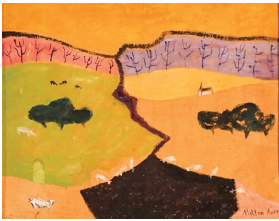
While my husband and I have never been collectors, we did have a tradition of turning to purchases of art on certain occasions. When we became engaged, I opted for a painting over a diamond ring. In 1981, when an investment my husband made resulted in a windfall profit, he decided he’d buy himself a very nice new car and asked if there was a purchase I would like to make. I still had no interest in jewelry or a fur coat. We returned to the Maker Gallery, where we had bought my engagement gift, visited its show of Milton Avery watercolors and I made my selection. This splendid 1947 painting happens to be double-sided, with a landscape on the reverse. It has hung in our living room since then and we both enjoy it every day. His car, by contrast, lasted ten years.
—Amy Finkel, M. Finkel & Daughter
Nakashima_Music_Stand…jpg
In the late 1990s, I went on a local house call to look at a weathervane. The weathervane was a 1950s reproduction. However, the dining room of this secluded Eighteenth Century farmhouse was furnished with furniture by George Nakashima. Living only miles from the Nakashima Studio, I had never been drawn to his natural, free-form style of woodworking. However, on this particular day, it was as if a light bulb turned on in my head. I wanted this furniture. It took another year to consummate the deal with the heir and then I was possessed. Shortly thereafter, Rago Auctions in Lambertville, N.J., was offering the Nakashima collection of a local gentleman, Maestro Roland Fiore. Among the dozen or so pieces I wanted, there was a walnut music stand signed and dated 1976, one of three Nakashima made in his lifetime. There was no question about it. If I was going to continue seeking Nakashima furniture, what were my chances of finding another music stand? Sculpturally, this one was superb. I was brave and paid a record price that day. I have never had a single regret about that purchase and it has given me great joy every time I walk into the room where it stands. At a garden party a year later, I told George Nakashima’s daughter, Mira, that I owned the Maestro’s music stand. Instinctively she asked, “What instrument do you play?” I squeamishly replied, “The piano.”
—Edwin Hild, Olde Hope Antiques
Plaque.jpg
We were initially drawn to this plaque due to its vignettes of everyday life in Germany, but on further inspection determined that the various scenes depict merchants charging exorbitant prices for grain, livestock and other foodstuffs. Sacks of grain marked “1817” hinted at the date the plaque was made, while an inscription at the top indicates that it memorializes hard economic times in Aalen, a town located in the state of Baden-Württemberg. Our research then revealed the catastrophic event that caused such hard times: a volcanic eruption. In April 1815, the eruption of Mount Tambora in the Dutch East Indies triggered three years of devastating global weather changes and pandemics. The most powerful volcanic explosion in history, the blast put so much ash into the atmosphere that crops failed worldwide from the cold weather and lack of sunlight. The year 1816 became infamous as the “year with no summer” and New Englanders nicknamed it “1800 and froze to death” as frosts in July and August killed their crops. Germans referred to 1817 as the “year of the beggar.”
—Philip Bradley and Lisa Minardi
.
Powers_daybook.jpg
Though I have yet to determine if Abijah Powers (1727–1795) of Greenwich, Mass., and his wife, Mary, are part of my genealogy, I was attracted to the graphology and my namesake within this early New England daybook. Abijah was a farmer and records his daily financials, from 1773 until his death. In the middle of the book, Abijah dedicates a two-page spread recording his and his wife’s birthdates. His is amended to show his death date, as well. A few notable accounts other than the typical “forteen Bushels of Rey [sic],” is the first day of the Revolutionary War, “April the 19, 1775, the slaughter of the Reagulars began at Lexinton [sic].” The passing of his son Benjamin, who fought for the revolution, “July the 3, 1776…died at Crown Point.” And “May the 19, 1780. That Day of Darkness and the Night that Followed.” Phenomena still not fully understood, but a day of darkness is believed to be a result of forest fires and heavy fog. At the time it was thought it might have been Judgment Day.
—-Steven S. Powers
Redware jar 300..jpg
Redware has always been a passion of mine from the time I started in the antiques business in the early 1970s. I would try to take home a piece or two a year, but rarely did this include a perfect piece. All that changed when I saw this circa 1820–40 redware jar, probably from Maine, at the Winter Antiques Show in the mid-1980s. This jar has outstanding form, glaze and condition. I had to have this piece, but the price was astronomical. Luckily, it did not sell. After the show I arranged to buy it over time — a long time. It became the standard I aim for.
—-Samuel Herrup
Tin Heart Patrick Bell..jpg
The antiques business is a very personal one where acquaintances are made and friendships are formed. Among the earliest such connections for me was with Florence and George Dittmar of Colts Neck, N.J. They were passionate collectors who became clients, mentors and dear friends through decades of interaction. Of the many items I admired from the first tour of the Dittmar collection was this charming tenth wedding anniversary gift from the Nineteenth Century in the form of a tin heart on a chain. I had seen many wonderful examples of these tokens of affection, but never such a heart. It was special to Florence, as well, and made me think of the Tin Man’s heart from Oz. After a long and wonderful friendship, George passed away. Florence followed a few years later. Their children, who had become friends as well, asked Ed Hild and me to select an item from the collection we would like to have as a memento of their parents. With no hesitation, I asked for Florence’s tin heart. It will stay with me until the end.
—Patrick Bell, Olde Hope Antiques
Toy Train_CMYK.jpg
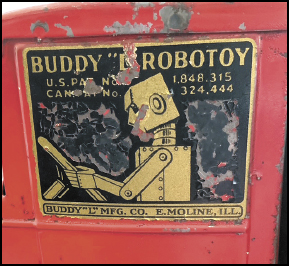
I’ve been fascinated by trains since I was 16. I rode freight trains all over America and fell in love with trains and railroads, big and small. I began buying and selling Lionel trains and soon learned about Ives, American Flyer and later Marklin and Bing trains, as well. My book on the subject, Antique Toy Trains, was published in 1976 when I was 22. I continue to collect trains and old toys, most of which are from the 1900 to 1940 period. It has been a lifelong hobby. Now I own many extremely rare toys and trains. Collecting is a disease, but it has brought me immense pleasure and I have many old friends from the toy world.
—Howard Godel, Godel & Co. Fine Art
Will flagon.jpg
November 17, 1973, will always be a date that we will remember. Our youngest son had his bar mitzvah that day and at the evening festivities we received a telephone call that we were the successful bidder at Park Bernet for this William Will pewter flagon. Only three other examples of this form are known. None are in private collections. The history of this form is interesting. It is called the Aaronsburg flagon because a similar flagon along with five other pieces of a communion set were found in a Pennsylvania church in their original wrappings in the mid-Twentieth Century. The flagon was engraved with the donor’s name — Aaron Levy, a Jewish man who gave the Lutheran Church this set. He founded Aaronsburg, Penn., in 1786. Besides its beautiful form and fine condition, this piece brings back fond memories.
—Bette and Melvyn Wolf
FOR WEB ONLY
1817-E.Mariner…jpg
When I was 21, my friend and fellow dealer Jack Jacobs offered me Eliza Marriner’s mourning sampler, worked in my hometown of Lewes, Del., in 1817. I had exactly zero Delaware samplers at that time and about as much business spending a personal high on an object I had no intention of ever selling. Like any collector when faced with something he has to own, I forced these minor details to the back of my mind and bought the sampler. I sold off 30 pieces of stoneware I had collected from the time I was 15 to raise the funds. Since then, I’ve added about a dozen Delaware samplers to my collection but this remains my favorite. It’s a purchase I’ve never second-guessed.
—John Chaski
2016-02-00.49.jpg
My grandparents on mother’s side of the family resided in a large Victorian house filled with many family treasures. In a back, closed-in porch filled with canning jars, etc, was an early to mid-Nineteenth Century red painted bucket bench from the Miller family of Lebanon County, Penn. It always appealed to me. In 1972, having moved into my grandparents’ house for a two-year stay, my collecting interests mainly involved smalls and not furniture. One day grandma commented on family members having interest. My response was that I’d pay her $600 for the bench. She said instead that I might have it. I said no, that I wanted her to offer the item to family members who would like it. If someone wanted to pay more than $600, it would be his. Well, I still have the bench but it was a serious struggle to get grandma to accept the $600.
—Greg K. Kramer
cb1.jpg
I bought this settee almost 25 years ago. It is one of the first pieces of Chinese furniture that I acquired and one that led to our current collection of about 50 pieces. It had the undisturbed, old lacquer surface that I liked, but what really intrigued me was the way the maker had dealt with the problem of fitting three chair crest rails into a single unit. It’s clearly a vernacular piece, made of elm, probably in Shanxi Province in the last half of the Eighteenth Century. It’s obviously seen a lot of use. While there are triple-backed settees pictured in several books on English and Continental furniture, none are pictured in any of the numerous books published on Chinese furniture, and none of the Chinese dealers who have seen it in our home have ever seen another. I bought it because I responded to its form and surface. That it’s a rarity is a nice bonus.
—Peter Eaton
Dollhouse.jpg
This 1848 Philadelphia three-shelf doll cupboard proved to be a complicated acquisition that required perseverance and luck. I viewed it for sale at Pook & Pook years ago and arranged a phone bid. On auction day, I was at the beach, my phone nearby. Suddenly, there was an influx of hundreds of small sharks that drew us to the water’s edge. Of course, it coincided with the lot coming up and I missed my bid. Still, I would not be denied. I told the auction gallery the phenomenal story and got the buyer’s information. Though my shark tale and offer were good ones, the buyer said no, adding that he wanted to keep his purchase. I hung my head and moved on. Four years later, the buyer found me by asking the auction house for the “shark lady” and then accepted my offer. I finally have my dream house. Like every homeowner, I’ve made improvements. I’ve added period dolls and decorations, installed lighting and hung curtains. And, no, the house is not for sale.
—Barbara Israel
Elephant head inkwell.jpg
One of our hobbies is visiting various museums. One day, when our son Jeremy was still fairly young, we visited the Brooklyn Museum and saw an inkwell in the form of an elephant’s head on display. We fell in love with its quality and design. We later found out these inkwells were made in multiples. When we came across one, we purchased it. It dates to circa 1800 and was made by the Meriden Silver Plate Company of Connecticut. The inkwell is quadruple-plated, meaning four times more silver than usual was used in the plating process. The piece was made during the height of the “great affordable design trend.”
—-Andrew, Hedy and Jeremy Chait, Ralph M. Chait Galleries
Floydsavage triumph.jpg
Charles Rinaldo Floyd (circa 1796–1845) was a miniaturist, portrait painter and watercolorist. Born in Georgia, he distinguished himself in the Seminole Wars and was an early settler of Florida. Beyond its rarity, this painting is a fascinating document by a white artist in the early Indian Wars. Floyd’s primitive abilities betray an intense hatred for Native Americans, an emotion typical of most early settlers in Jacksonian America. The native’s physiognomy is emphasized by color. The face is of a savage imbued with animal cruelty. The man’s arm is crudely drawn, but the preciseness of his tomahawk shows a fascination and familiarity by the artist with the enemy’s weapon. My uncle, a scholar of the Jacksonian period in America, willed this extraordinary document of Georgia and Florida history to me as one who embraces history through study and preservation, and as a dealer in historical prints and maps.
—-Don Cresswell, The Philadelphia Print Shop
GeorgianManorAnitiques.jpg
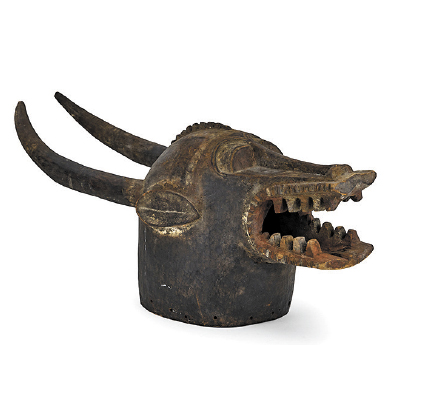
Although I deal in formal and traditional antiques, I personally love objects with a rustic or primitive feeling, especially made of pottery or wood. Several years ago, I found this enchanting carving and I was immediately attracted to it without knowing the enormous joy that it was going to bring to my life. It is a male power fetish sculpture, or nkisi, from the Congo. It is beautifully carved from a piece of hardwood and painted with white clay to symbolize dead skin. It is further decorated with metal buttons. I admire this piece for its reflective, inward expression. The square well on its stomach serves as a container for potent ingredients used in magic and medicine. The intense collaboration between the sculptor and the initiated priest, or nganga, transformed it into an object capable of healing illness, settling disputes and punishing wrongdoers. Fetishes were protective figures used by individuals, families or whole communities to destroy or weaken evil spirits.
—Ricky Goytizolo, Georgian Manor Antiques
IMG_0009-Edit.jpg
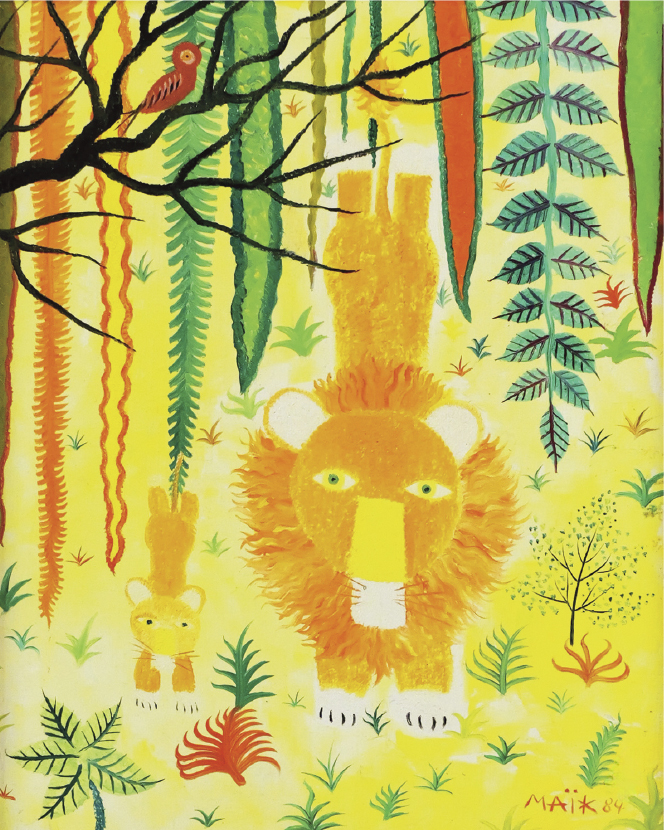
This standing lion, a North Italian work dating to the late Sixteenth Century, is a powerful example of late Renaissance art. It fits very well in our home amid eclectic objects.
—Jonathan and Paige Trace
IMG_2960.jpg
I have owned this Chester County, Penn., spice box since the 1980s. I have always loved line and berry inlay and always loved spice boxes, making this a two-for-one, so to speak. Even our logo is based on line and berry inlay, another reason I had to keep this treasure. With no regrets, I traded a Queen Anne Spanish-foot highboy that I had in my gallery for it. Transitional in style, it is walnut with holly, red cedar and locust wood inlay and dates to about 1740. This object was included in a spice box exhibit at Chester County Historical Society in the 1980s and is illustrated in The Pennsylvania Spice Box by Lee Ellen Griffith.
—-Skip Chalfant, H.L. Chalfant American Fine Art & Antiques
JW-Martin Castle.jpg
Jamie Wyeth collects martin houses and frequently used them as subjects during the late 1980s and 1990s. A friend gave Jamie an antique French Art Nouveau birdhouse as a gift and he created several paintings of it in mixed media, a new approach for him at the time. Now Wyeth uses this combined medium consisting of watercolor pigment and varnish on paper exclusively, replacing his prior watercolor on paper. Jamie told me he was particularly fond of the birdhouse in “Martin Castle,” 1989. Because of its detail and unusual style, he painted it frequently. I chose this example from his birdhouse collection for its beautiful colors and composition. One can feel his excitement and creativity in the painting. The sense of history in the birdhouse and the new medium inspired him.
—-Victoria Manning, Somerville Manning Gallery
Kinzle_858.jpg
Over the years I have put together collections that reflected my current interests. Forty years ago, I sold my cast iron toy collection to put a down payment on my first property. Later, I collected brass dial clocks, which I sold to fund my collection of fighting memorabilia. I sold that to begin a collection of Kentucky rifles and tomahawks. In the last six years, I have become interested in antique cars. I have always admired this Philadelphia tall case clock of circa 1750 for its rarity. Although the nameplate is missing, it is a Joseph Wills clock in a unique Philadelphia bombé case, truly one of a kind and predating most New England bombé forms. The noted antiquarian Charles Sterling initially discovered this clock. It passed through his estate and eventually into my hands. I have always considered it a superb early piece of Philadelphia history.
—Kelly Kinzle
Miniature Garden Seats.jpg
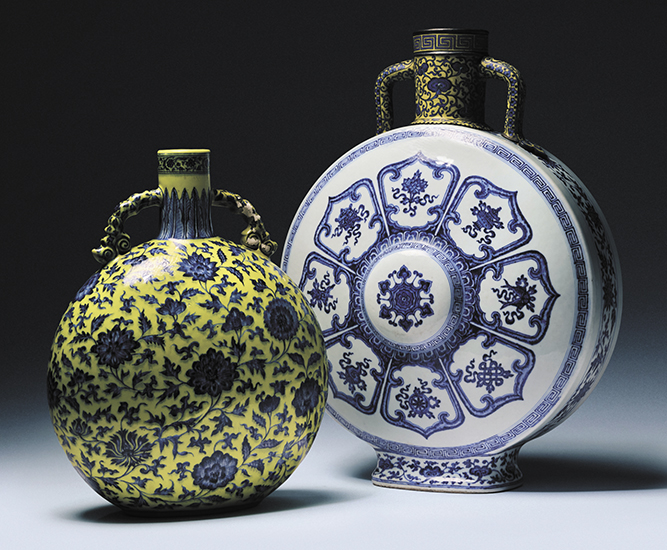
Thirty years ago, when I first discovered my fascination with Chinese porcelain, I purchased these child’s garden seats in London with the intention of selling them. I’ve never quite been able to. These seats hold a very special place for me. When I look at a piece of Chinese porcelain I ask, “Is it beautiful?” “Does it make me feel good when I look at it?” The rarity of the form, the soft pastel enamels and the pastoral setting of the decoration with its loose representation of the Eight Immortals gathered for a chat continues to give me great pleasure. I have moved three times since I purchased the seats and, wherever they are, they say, “Look at me.” They are part of a larger world of history, trade and beauty, but they are now part of my world.
—-Polly Latham
Nampeyo 2.jpg
This Hopi pot is arguably the finest work by the world-renowned potter Nampeyo. I am also touched by the beautiful story that accompanied the gift of the pot to Mr and Mrs Peters by Nampeyo. Family lore has it that the Peters were hiking the Hopi mesas with a guide who was Lesou, Nampeyo’s husband. They found a prehistoric pot in a cave and took it back to their cabin. The next day they found an unsigned note pinned to their door requesting that they return the pot to the cave. The Peters obliged and the following day they found this jar on their doorstep. They were told that Nampeyo had kept this jar as one of her most treasured works but she and Lesou gave it to the Peters in gratitude for their having returned the prehistoric pot. It is an honor to own this important pot.
—Marcy Burns
P1010001.jpg
This small dessert plate was part of a service ordered by the Chew family of Cliveden. Its bold yellow ground, which was the imperial color of the Chinese Emperor, was custom-ordered to “match my yellow sofa” which remains at Cliveden to this day, along with some of the Chinese export porcelain. Not long after starting my business, I stumbled across more than 30 pieces of the service at a small auction. As it happens, my parents had taken me to Cliveden as a child and I remembered seeing this distinctive porcelain in the dining room cupboard there. Fortunately, no one else recognized the significance of the china and I was able to win the lot. Unfortunately, like most antiques dealers, I could not afford to keep such a valuable set for myself so, except for one lone dessert plate, which I will never sell, so up for sale the set went!
—-Christopher T. Rebollo
Paul_Keene-Warrier-King..jpg
Working with individual artists and artist’s estates has its perils: the more you learn the more you want to own the work. I have worked with Paul Keene, and now his family, since the early 1990s and therefore have had plenty of time to develop a wish list I’ll never achieve. However, “Warrior King” was too compelling to ignore for long. Paul made this painting in Haiti in 1953. He had been awarded a John Hay Whitney Fellowship, which enabled him and his family to live and work in Port au Prince from 1952 to 1954. He was immediately captivated by the Haitian music, traditions, spirituality and color that surrounded him. Naturally, this fascination found its way into his paintings. “Warrior King” is a powerful example of what Paul called “the agitation of the surface” — echoing the cacophony of sound and visual stimulation of his adopted cultural environment. This formal development became the foundation for the creation of his paintings of the 1950s. You can see how I found this work irresistible.
—Ron Rumford, Dolan/Maxwell
RossQueenVictoria.jpg
Appointed Royal Miniaturist by the 18-year-old Queen Victoria in 1837, Sir William Charles Ross held the post for the rest of his life. Despite his lofty title, the Queen sat for Ross only a handful of times. The rest of his portraits of Victoria — there were hundreds — were based on the few life sittings. This is one of his earliest and most iconic images of the young queen, wearing a bracelet set with a miniature of her fiancé, Prince Albert. It was painted in 1839, the year before their wedding. This portrait was issued as a print, reproduced on pottery and copied by scores of lesser miniaturists. As a collector, I keep for myself only what cannot be sold. This portrait of Victoria, painted on ivory, is cracked many times. Its condition defies conservation. Regardless, the importance of the portrait warranted illustration in Victorian Miniatures in the Collection of Her Majesty the Queen, Royal Collection Publications, 2010.
—Elle Shushan
Sebastiao Salgado…jpg
My husband and I began collecting photography, as it was not a conflict of interest for either of us. We loved learning about the medium together. When we went to fairs, we would not say what we liked until the very end. If we liked the same thing, we would buy it. We tend to respond to documentary photography and powerful images. Sebastiao Salgado is an amazing documentary photographer. We were drawn to this 1986 work not only as a document of the inhuman conditions in the Serra Pelada gold mine in northern Brazil but to the composition of this work. It has a strong reference to the hand of God reaching out to Adam in Michelangelo’s Sistine Chapel.
—Betty Krulik
Sheeprug use.jpg
We purchased this wonderful smiling sheep rug early in our collecting years sometime before 1975. It came out of a household sale at Hat and Gavel Auctions held by the Wilbur Hossler Auction Company in Lititz, Lancaster County, Penn. It is dated 1897 and came with another similar fringed piece depicting a cat with a kitten on its back, dated 1901, done by the same unknown maker. This rug consists of woven wool, rag and wool yarn hooked on a burlap foundation. It has an applied machine-woven wool fringe on the side edges and plain weave cotton backing. The central smiling sheep is surrounded by floral and bird figures with an additional border containing triangular shapes filled with colorful circles. It hangs on the wall of our library-TV-family room, along with its friend, the cat rug. My husband, Don, and I enjoy these pieces every day. You really must smile as you pass this happy sheep, even if you aren’t in a good mood. I think I particularly enjoy this piece because I grew up on a farm in upstate New York where we raised sheep.
—Trish Herr, The Herrs Antiques
Suval-Multi-colored plate…jpg
Tobacco Leaf patterns in China Trade porcelain have always been desirable because of the lovely designs of overlapping colorful leaves. There are about six Eighteenth Century variations, but only one early Nineteenth Century design. This example dates to circa 1815 and is thought to have been part of a wedding service made for the British market. It is one of the most brilliantly painted export designs. My wife, Barbara, and I love it because it is, in a sense, timeless. Many who see it think it is contemporary. It could easily appeal to a collector of Modern works of art.
—John Suval, Philip Suval Inc