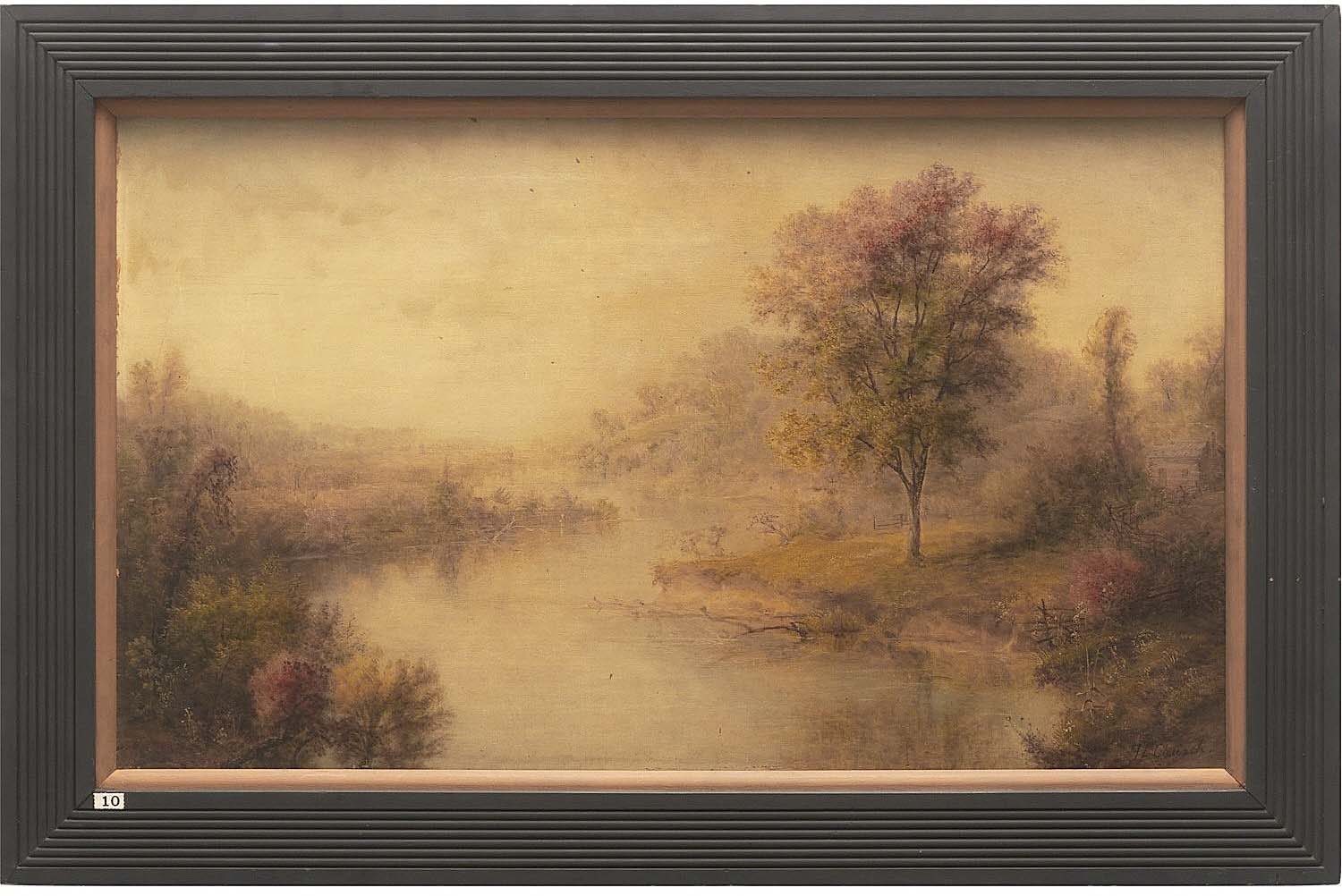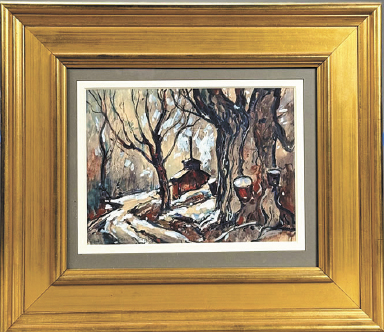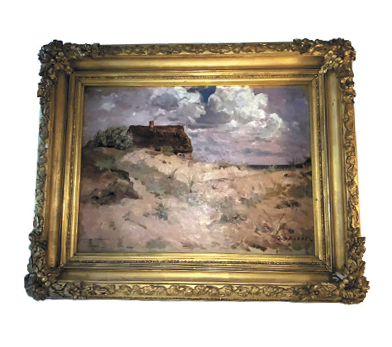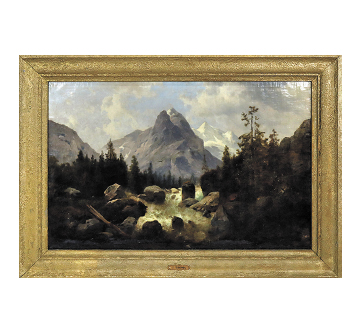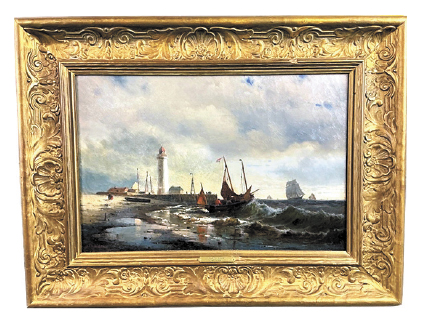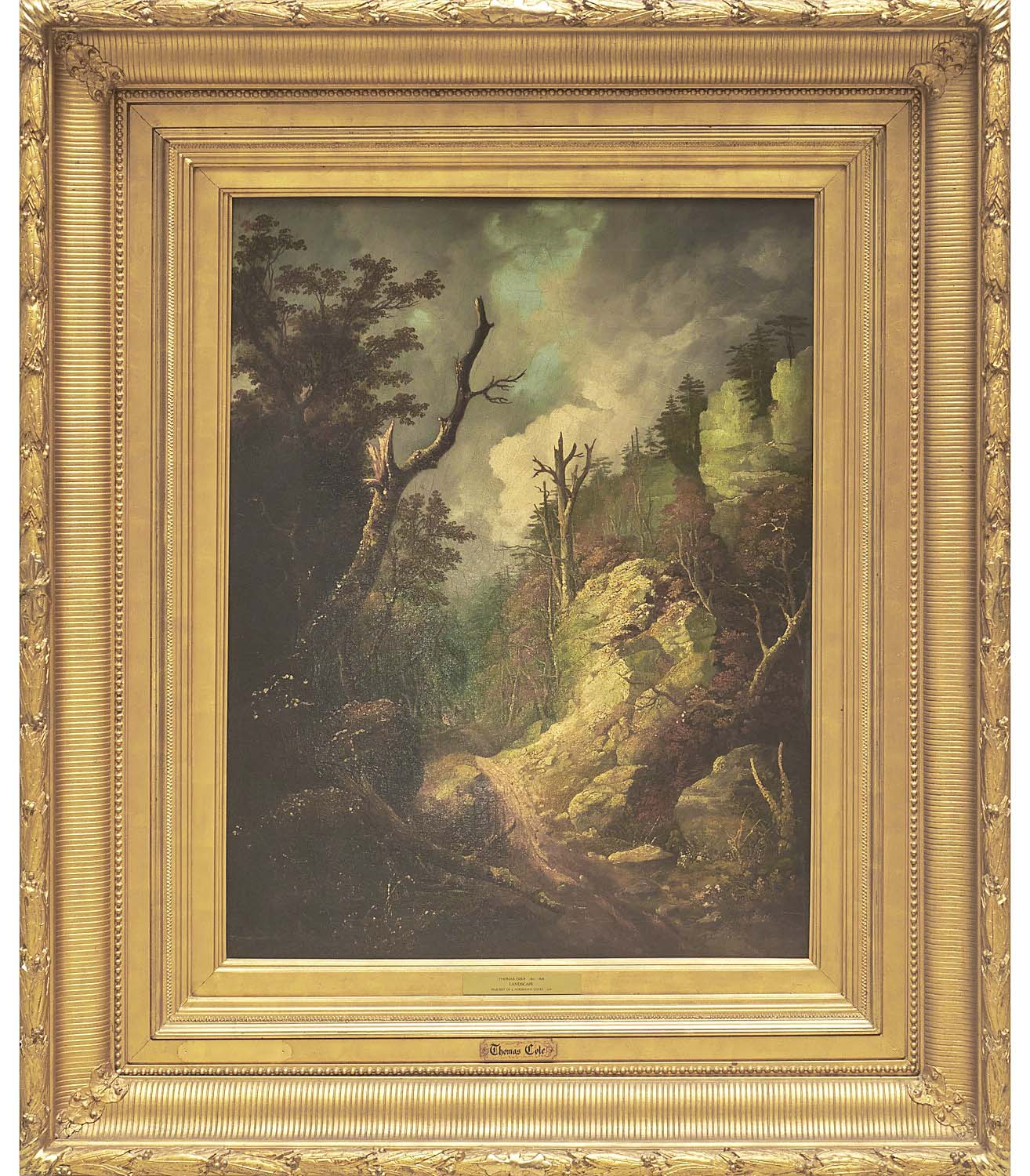
This Thomas Cole (American, 1801-1848) oil on canvas landscape, 46 by 39 inches framed, became the top lot of all three sessions when it sold for $28,160 on the second day ($700-$1,000).
Review by Carly Timpson
BOONTON, N.J. — Spanning three days, Millea Bros’ June 17-19 Select auction comprised 976 lots in just about every collecting category, including art and design across centuries and movements, silver, fossils, books, antiques, photography and furniture. Auctioneer and co-owner Michael Millea shared, “It was a good sale — a solid sale for us. It finished above our high estimate; we do try to estimate conservatively, but it was still good.” In total, the auction realized $2,040,000 with 89 percent of lots successfully changing hands.
“On the first day, the standout for me wasn’t the top lot, it was a group of furniture from a commission by architect and designer Peter Marino. We had a sofa, cabinet, couple desks, couple tables… It was one of those groups where we started bidding at $1,000 and people just chased it up. Each piece had very active bidding that just took off, so that was fun. It was nice furniture, nothing too special, but his name added to it helps. We’re really happy about the results for that group.”
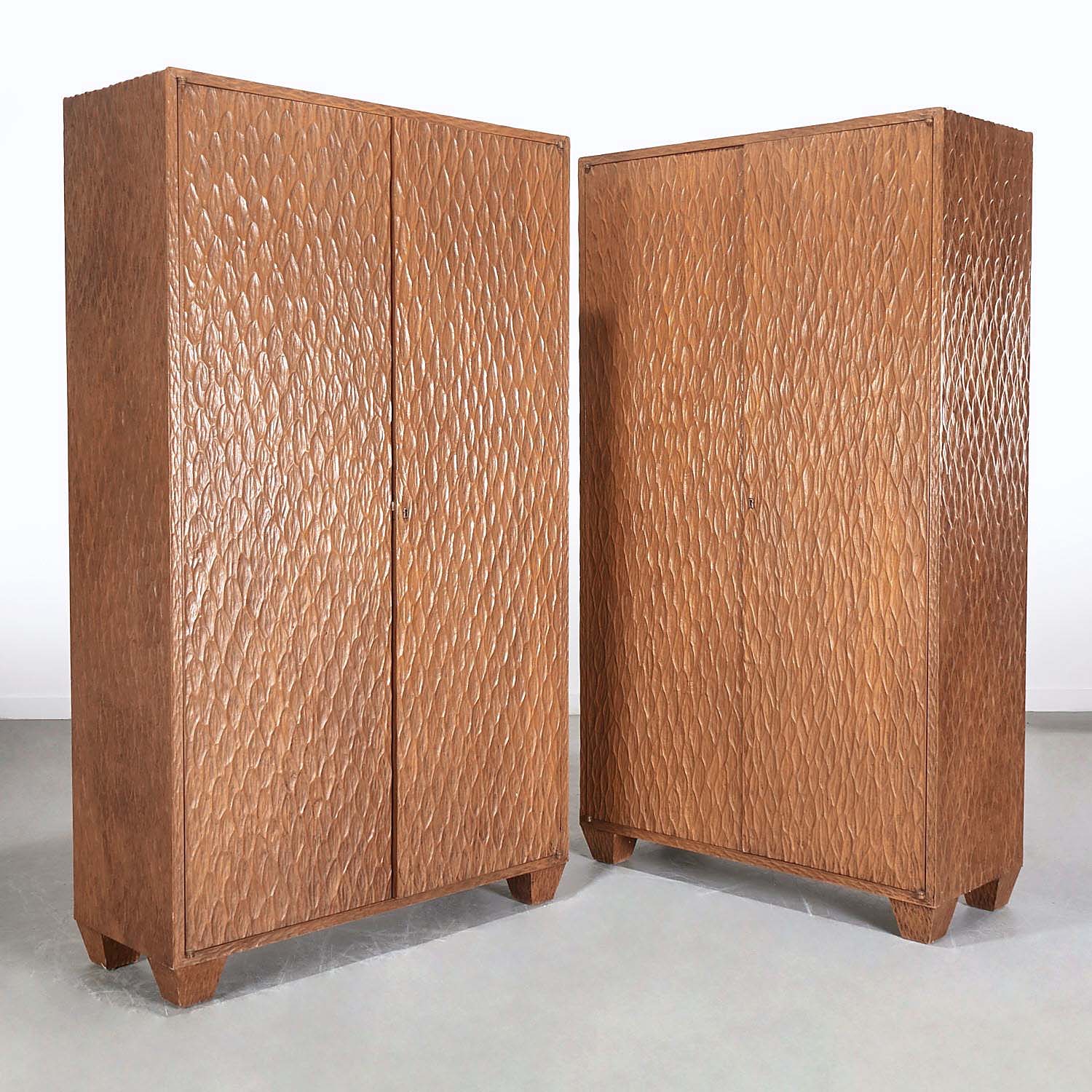
The top price for the collection was earned by a pair of cabinets that Marino designed in the style of French designer Jean-Michel Frank. With four shelves housed within textured, chip-carved case and doors, the pair was taken past its $1,800 high estimate to achieve $9,600. A hardwood console table in the Chinese taste, featuring a plank top on modular bases, rose far beyond its $500/700 estimate range to make $8,960. Another J.M. Frank-style piece, a club sofa upholstered in Pierre Frey’s blue and white Labyrinthe chenille and on block feet, also brought $8,960 ($1/1,500).
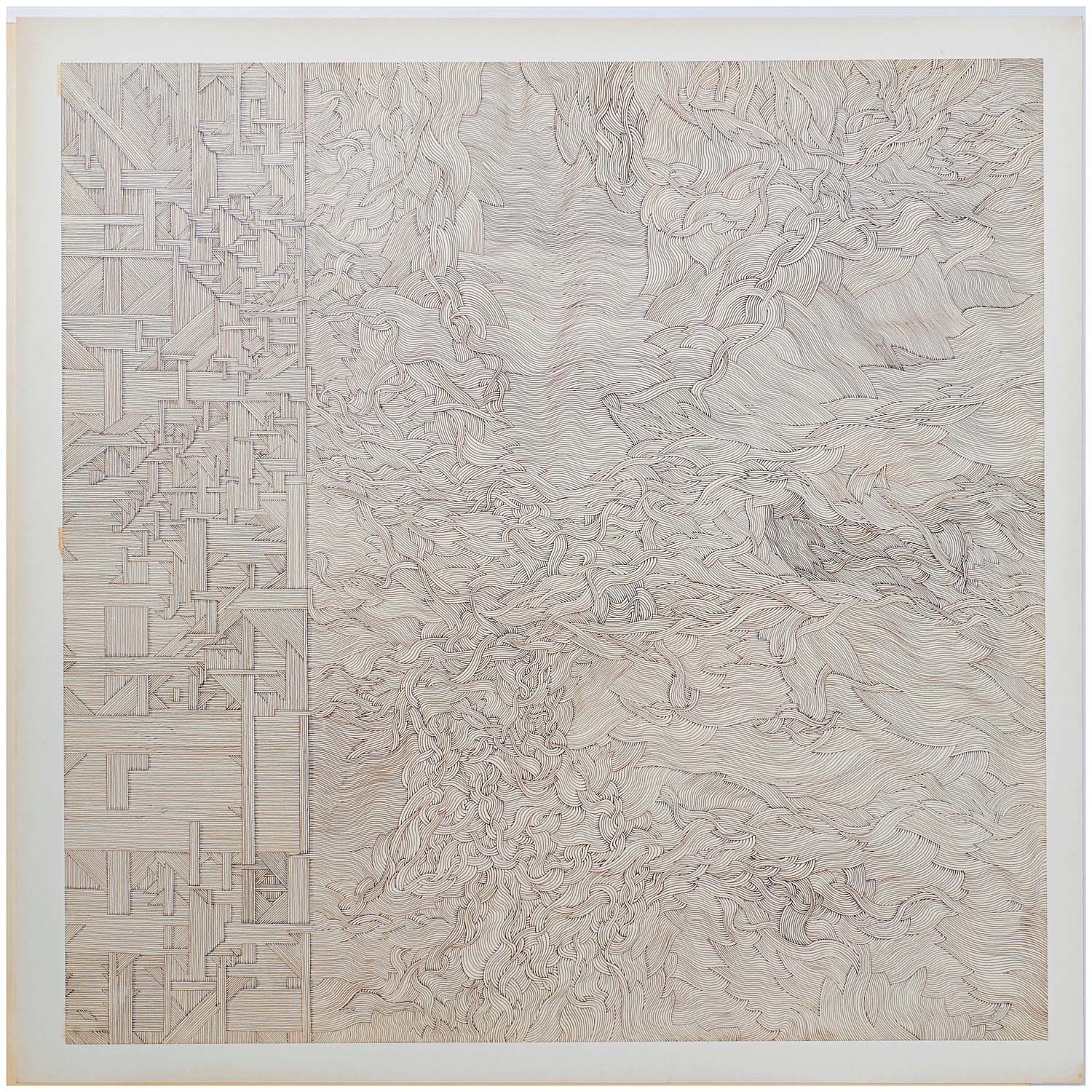
With fine geometric lines and waves, this ink on paper abstraction by George Morrison (American, 1919-2000), 1972, 23 inches square (sheet), was taken to $26,880 ($2/3,000).
Other items to find new homes on the first day included the lot that achieved the auction’s second-highest price overall. A geometric abstraction by George Morrison, illustrated in ink on paper in 1972, was pushed nearly nine times its high estimate to land at $26,880. The work, which was signed and dated to the lower left, had provenance to the Minnesota collection of Mr and Mrs Fred Weil, Jr, and was exhibited in the “George Morrison Drawings” exhibition that traveled from the Walker Art Center (Minneapolis) to Heard Museum (Phoenix), Art Museum of South Texas (Corpus Christi) and the Amon Carter Museum of Western Art (Fort Worth, Texas) between 1973 and 1974.
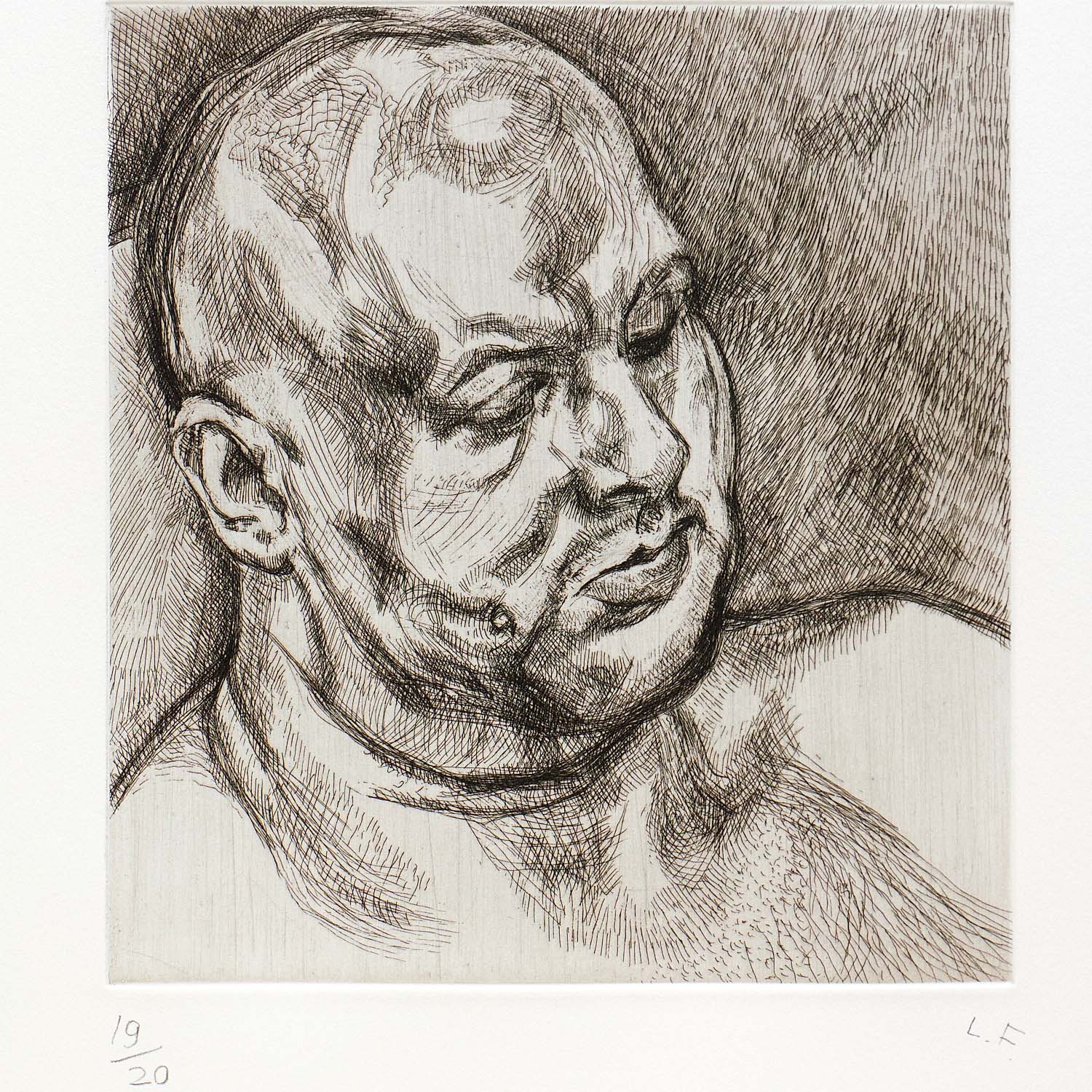
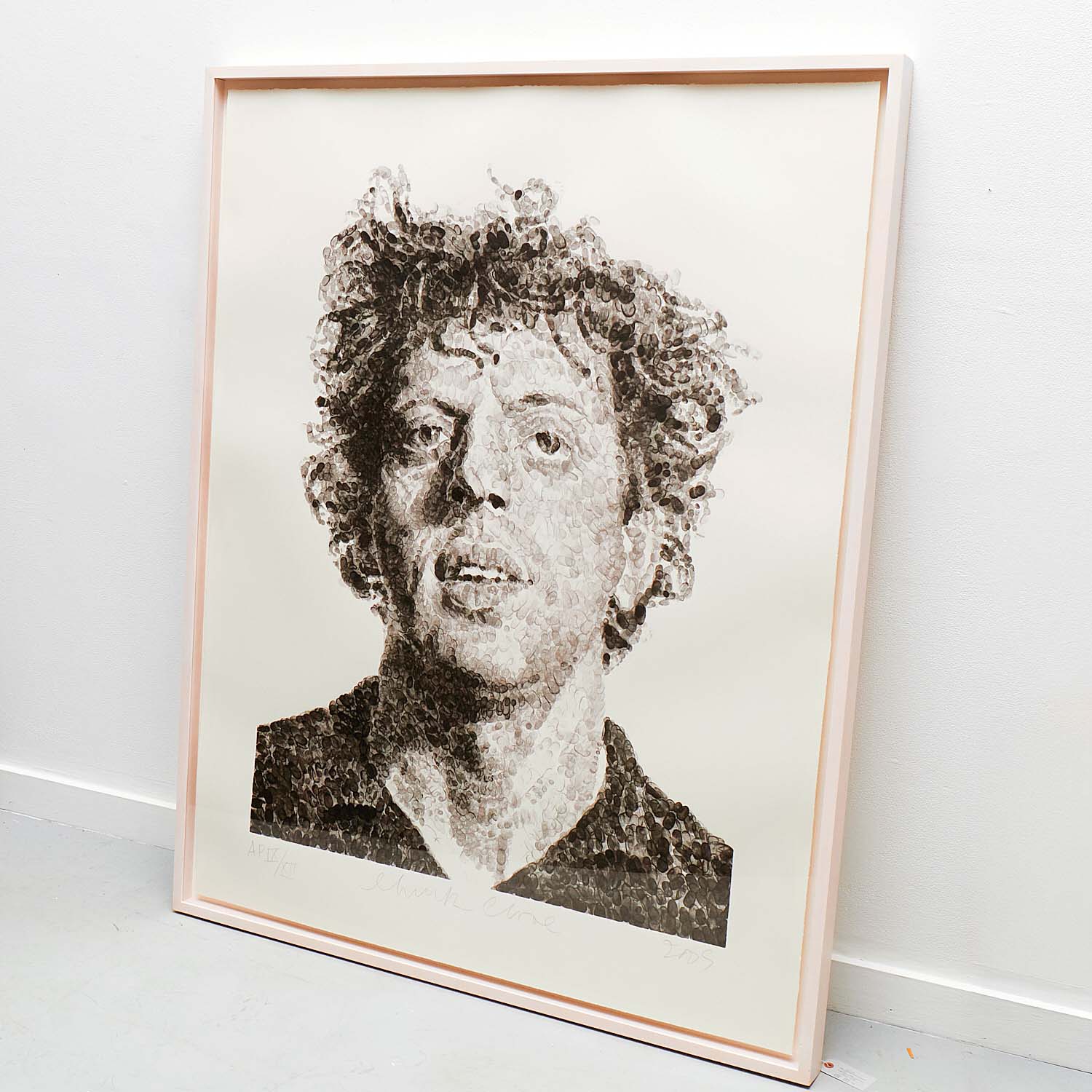
Postwar and Contemporary art maintained a strong showing in day one’s selections, and a silkscreen print of Chuck Close’s fingerprint-painted portrait of “Phil,” from 2009, followed at $12,800. Dotted in oil paints with felt stamps rather than his fingers, Close’s portrait of “Kara Walker” achieved $12,160 ($3/5,000). Splitting the bill in the same way were etchings by Lucian Freud: “Head of Man” (1992) came out at $12,800 and “Large Head” (1993) brought $12,160.
Prints were powerful, and a portfolio of eight etchings by Ed Ruscha, titled Flipping, Kicking, Howling, Rolling, Sitting, Standing, Climbing, Telling, also found a buyer. Published in 1988 by Sam Francis and The Lapis Press, this edition 29 of 40 portfolio was signed, dated and numbered on its justification paper.
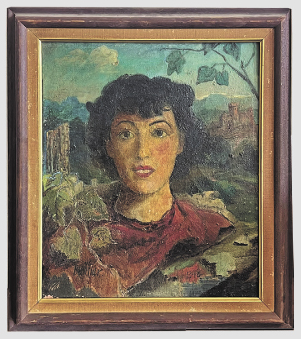
The auction’s top price overall came on day two, when a landscape painting by Thomas Cole was taken to $28,160. While it was not necessarily a surprise to Millea because it was a good painting and came from a museum, it soared beyond the conservative $700-$1,000 estimate. Given to the Newark Museum of Art in 1926, bequeathed by Dr J. Ackerman Coles, the painting was initialed to the lower right and was housed in a gilt frame that bore an attribution plaque. Deaccessioned to benefit the same museum and also from Coles was an autumn landscape painting by Frederic Edwin Church. This riverside scene had the same conservative estimate and was bid to $11,520.
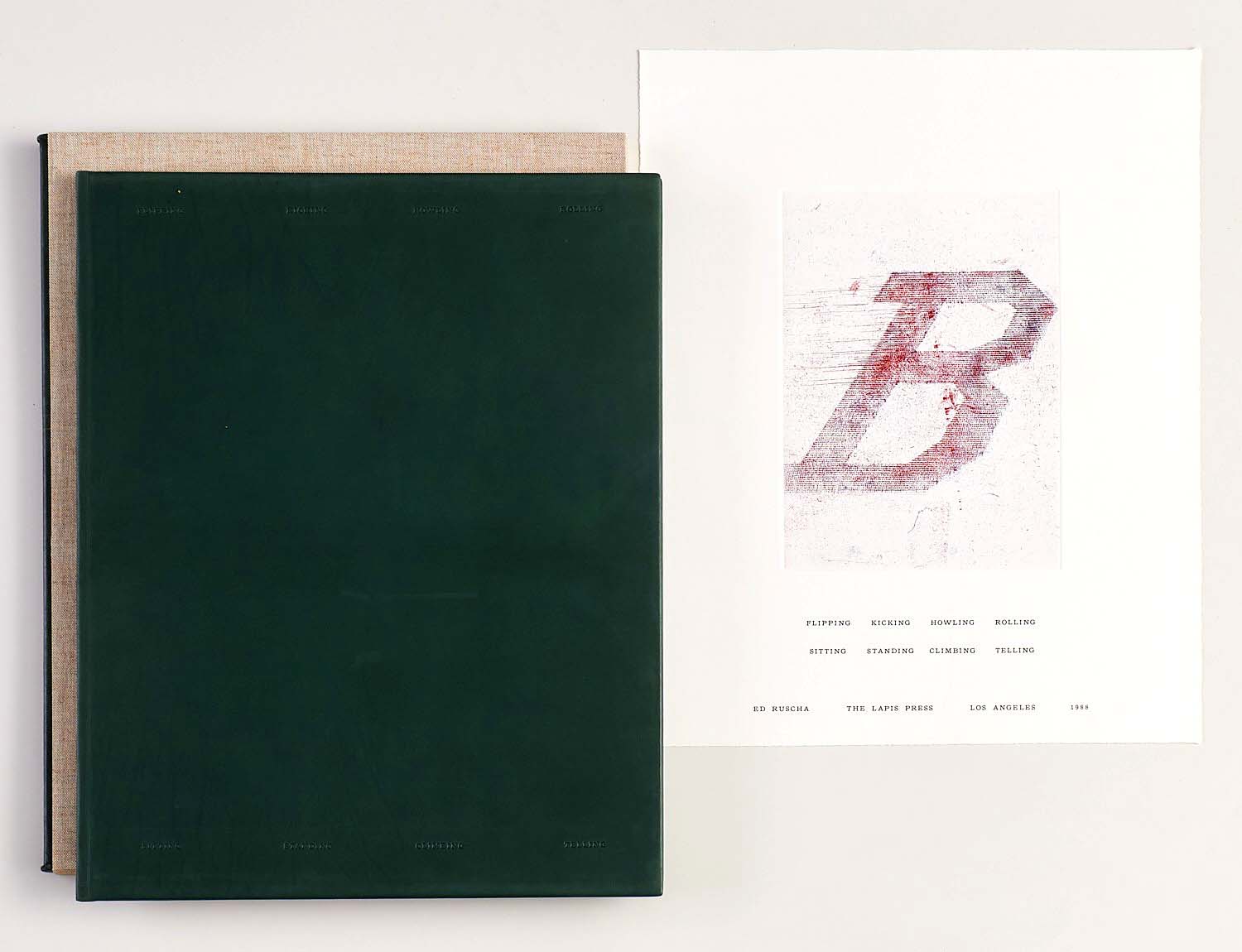
This signed 1988 edition of Ed Ruscha’s (American, b 1937) Flipping, Kicking, Howling, Rolling, Sitting, Standing, Climbing, Telling, Los Angeles: Sam Francis and The Lapis Press, included eight etchings on BFK Rives paper in a green-dyed goatskin-covered port
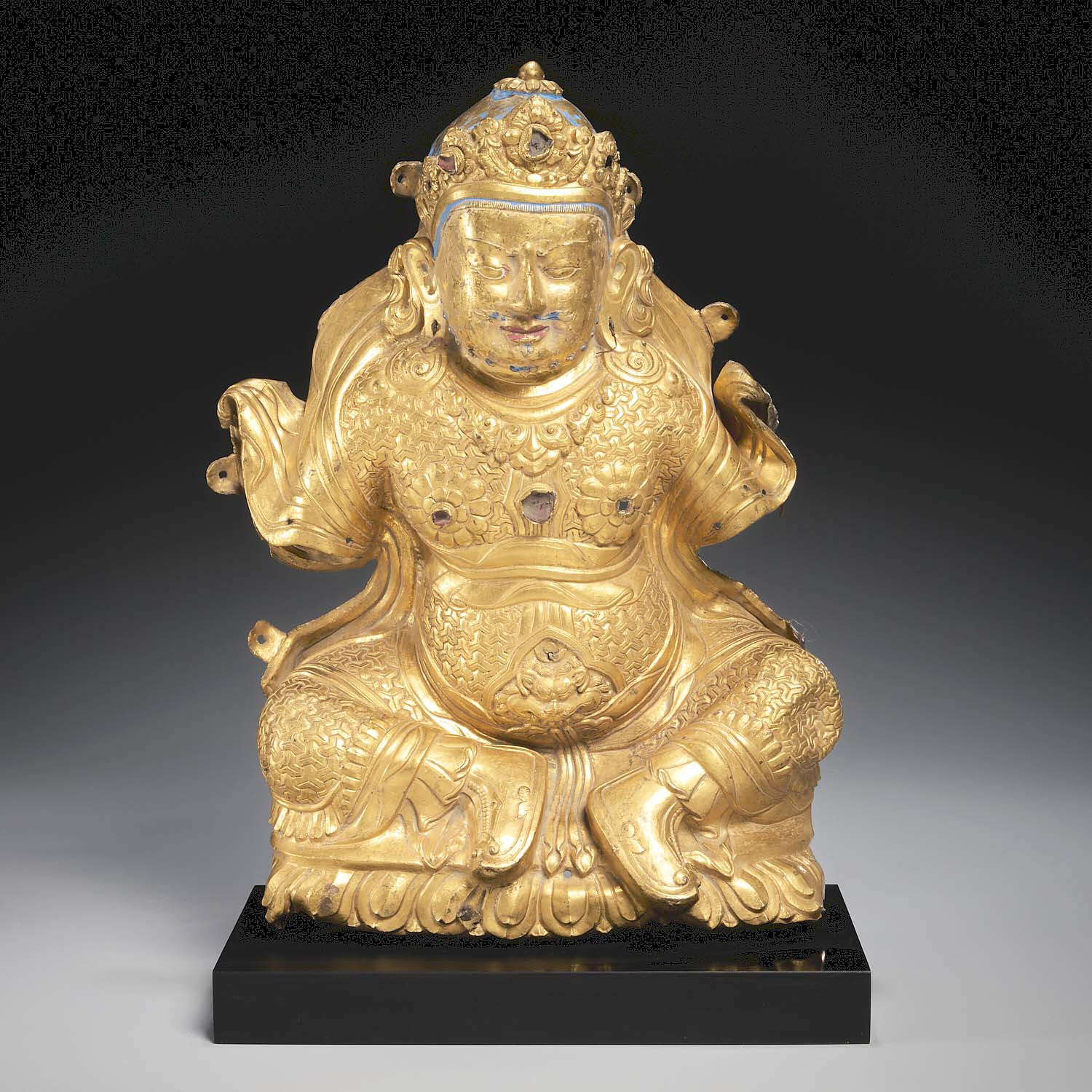
One lot that really stood out to Millea was a Sino-Tibetan gilt copper Jambhala figure. “We all thought it was very nice, but we were surprised at just how high it went. It was very old, very finely crafted and kind of on the bigger side, so that helped.” The Nineteenth Century deity was 18½ inches high and had polychrome details throughout. It departed from a Greenwich, Conn., estate and achieved $21,760 against an estimate of $600/800.
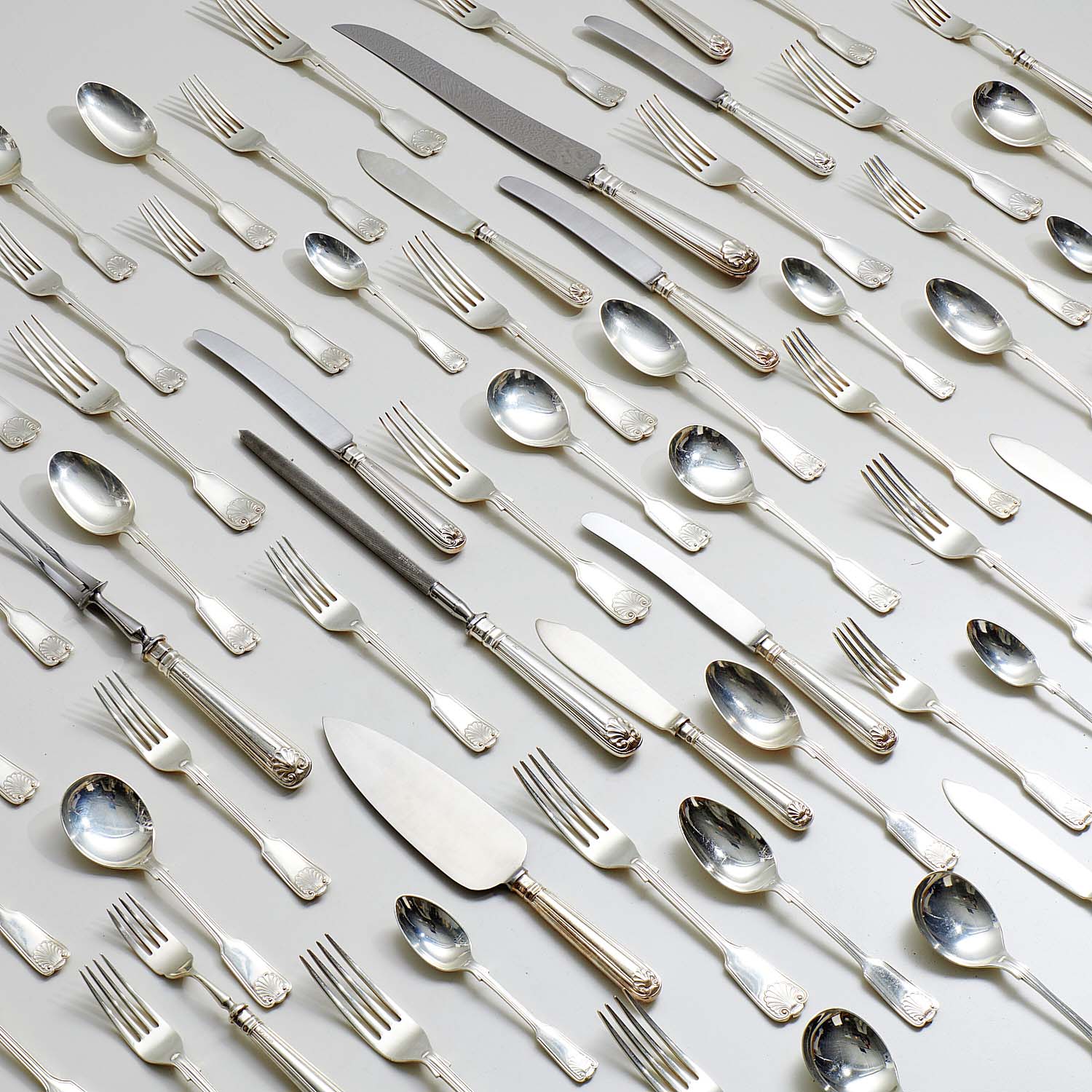
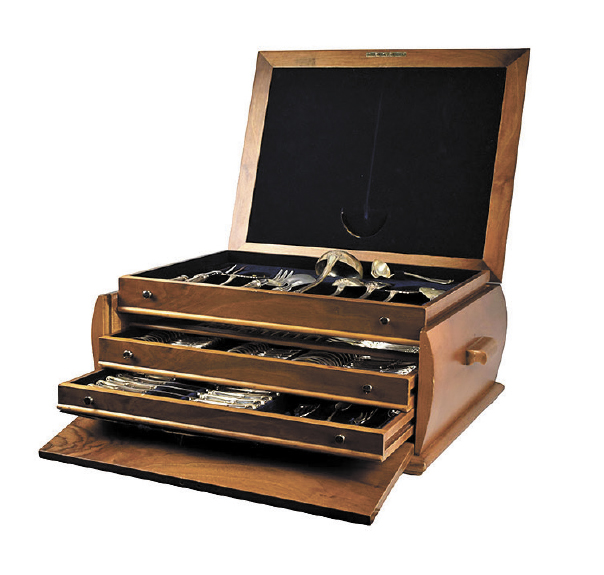
The second day had a lot of silver that did well, and while Millea said the outcomes were great, there wasn’t anything that stood out as exceptional or artistic. Leading the offerings, as is typical these days, was a large flatware service. Dated 1975-77, the 170-piece service was primarily from Garrard & Company in the Fiddle Thread Shell pattern, though dinner and luncheon knives bore the mark of Cooper Bros & Sons. At approximately 299 troy ounces, the set made $12,800.
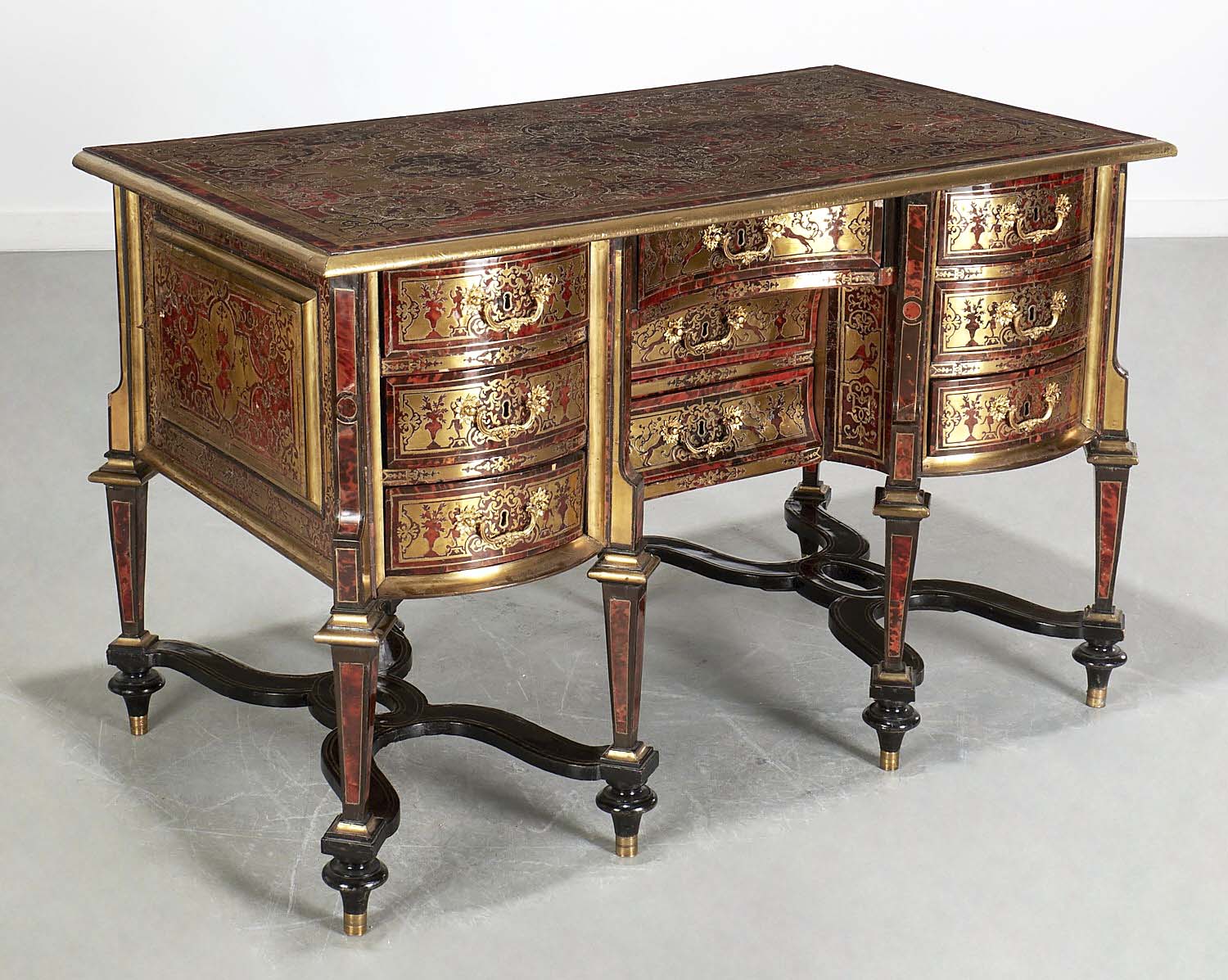
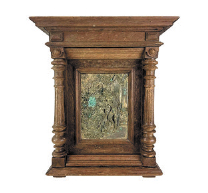
“The day I enjoyed selling the most was the third day, which had more of the antiques and traditional stuff. The traditional stuff is less finicky, more surprises,” Millea said. “There were pieces from a really great New York collection that’s being sold. This was kind of the tail end of it, but it included a Dutch Baroque cabinet and boulle bureau — nice European antiques, just really beautiful things.” The Dutch Baroque cabinet topped the day at $23,040. Made in Antwerp in the Seventeenth or Eighteenth Century, the cabinet on stand had intricate première partie and contre-partie marquetry inlays of arabesques, strapwork and mythological figures.
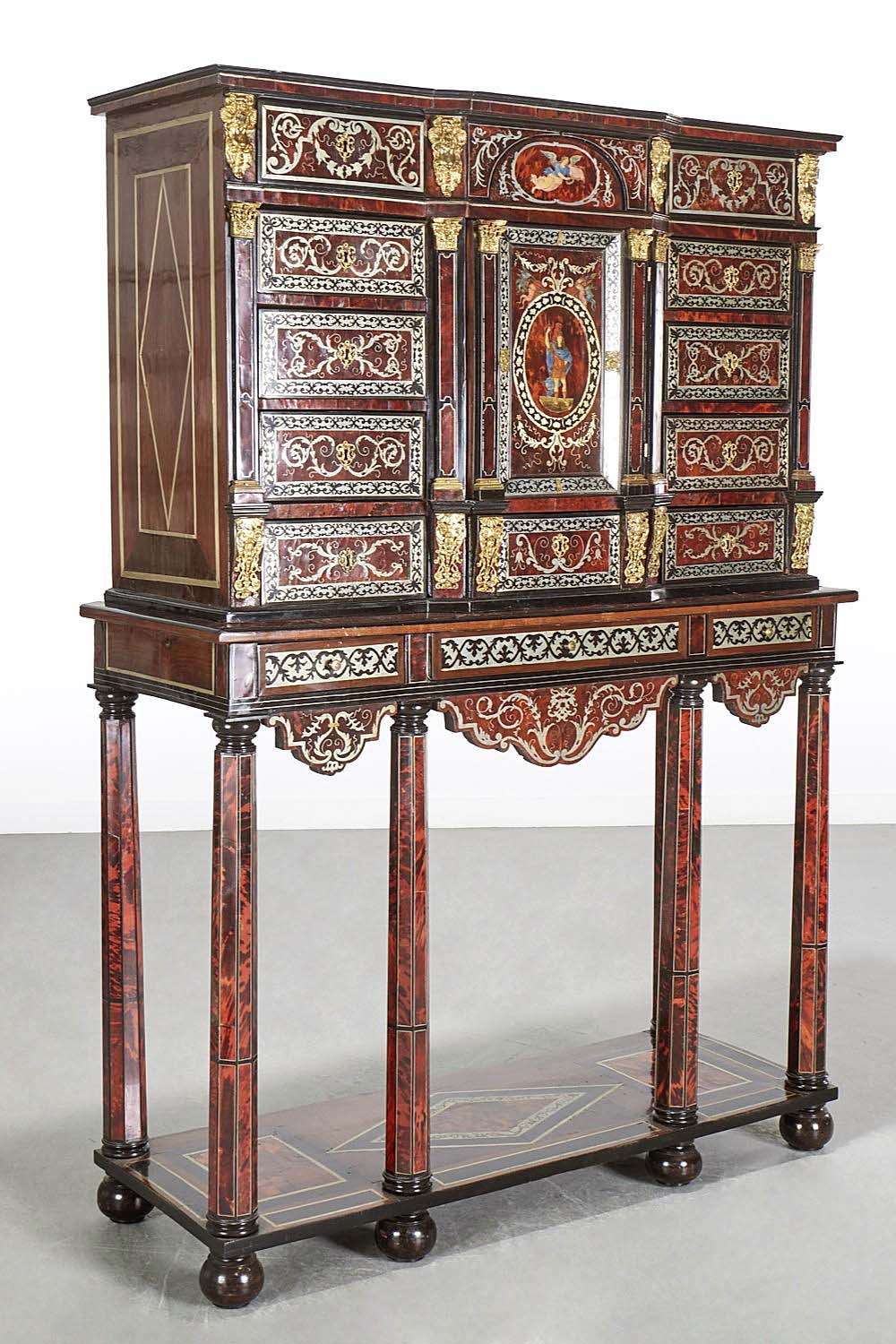
This Seventeenth/Eighteenth Century Dutch Baroque inland cabinet on stand from Antwerp, 68¾ inches tall by 48 inches wide by 18¼ inches deep, went out at $23,040 ($7/10,000).
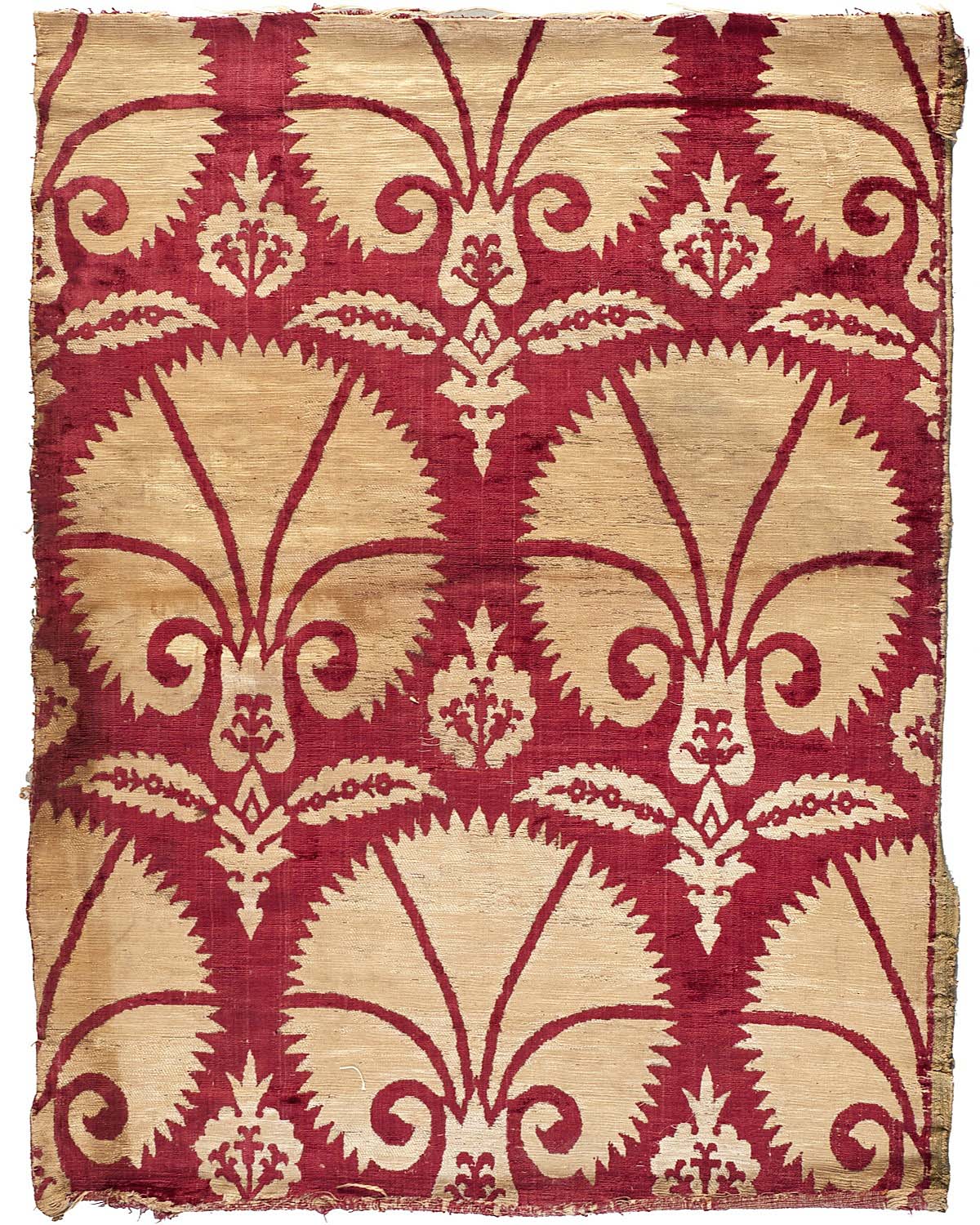
Additionally, “There was a run of Islamic art, ceramics and textiles that all did really well. They were from the Toledo Museum of Art. Among those, the top thing in that group was a velvet panel. It was from Ottoman Empire, the pinnacle of textile production. We thought it would do well, and it did that and better.” The voided velvet panel with a patterned fan carnation design was likely made in Bursa or Istanbul in the Seventeenth or Eighteenth Century, and it brought $12,800.
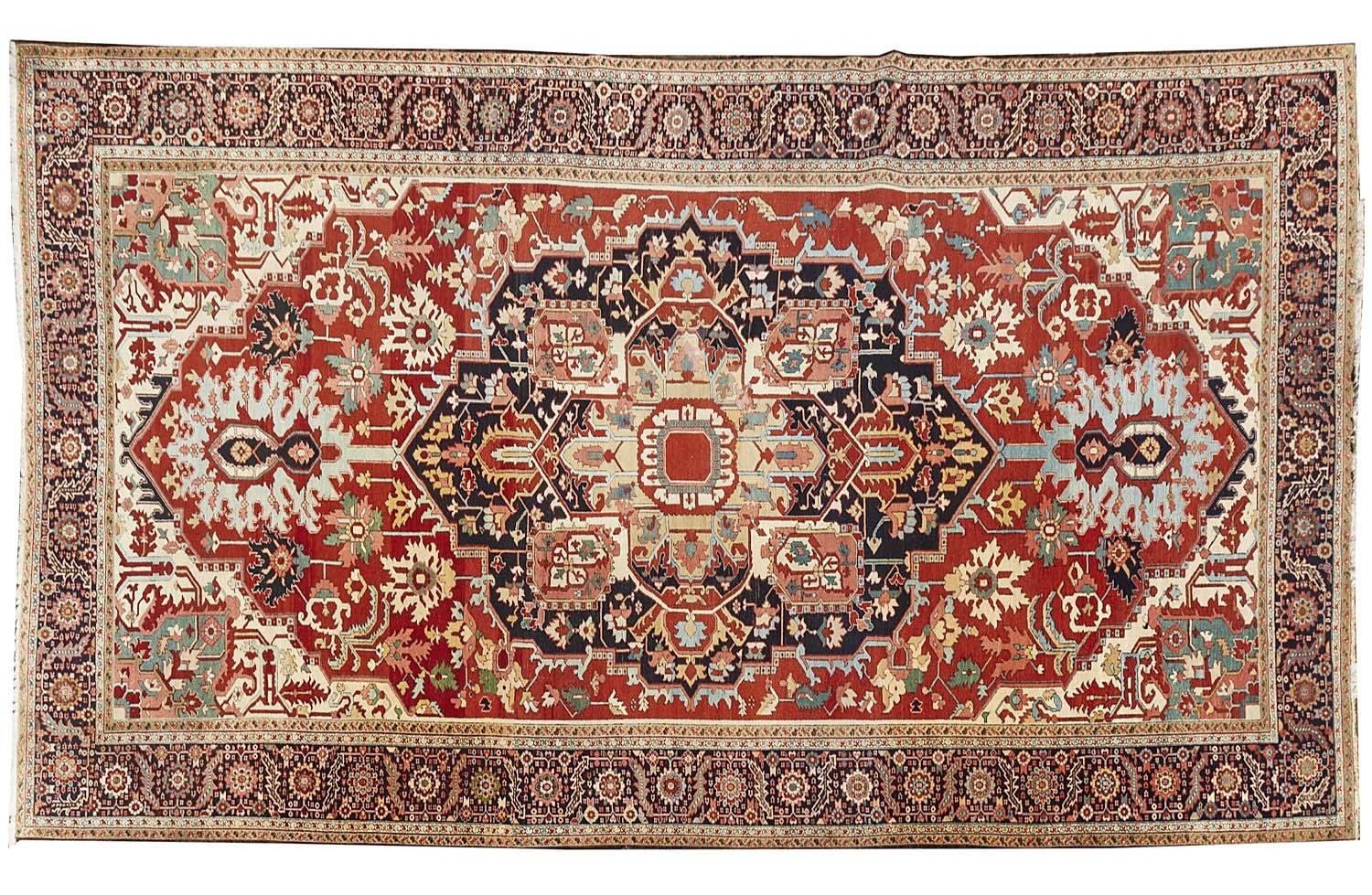
“There was a $10,000 rug and that doesn’t happen every day!” Millea explained, “It was a really nice Heriz, oversized Serapi carpet.” Bringing $12,800 with premium, the rug came from the Greenwich estate and featured a central octofoil medallion on red ground with herati and palmette dseigns allover.
In closing, Millea noted that “There were a few lots where it was only the phones! It was like the old days. No internet, just phones and a person in the room,” which was certainly exciting in this day and age where auctions are often dominated by online participation. “When it’s automated, it gives the bidder a lot of time, so it almost feels like it’s not an auction. To me, auctions are pressurized — it’s quick, you need to make a decision, but online bidding takes more time and allows people to think more about their bids.”
Prices quoted include the buyer’s premium as reported by the auction house. For information, www.milleabros.com or 973-377-1500.