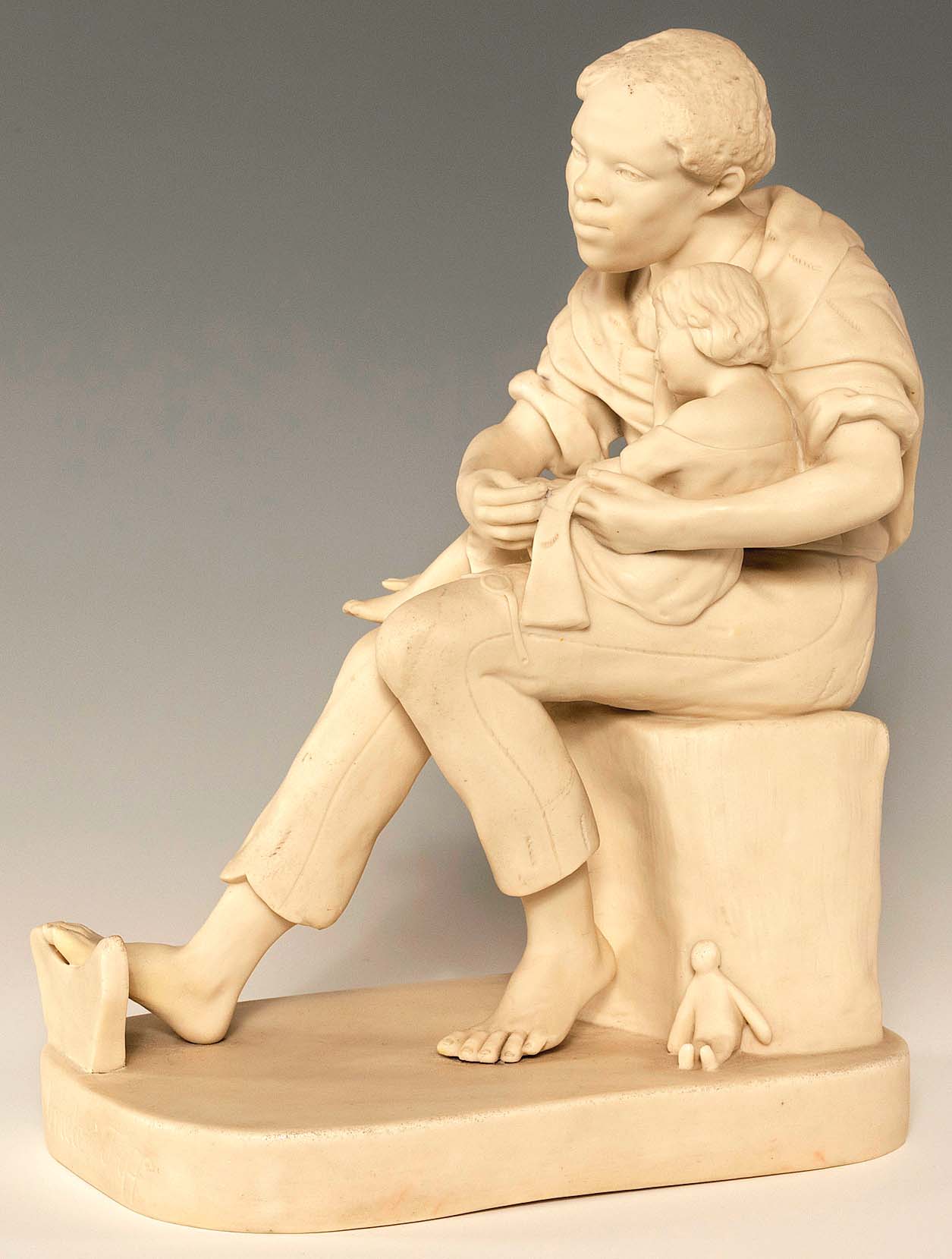
Setting a record for the artist and the medium, this Parian statuette of “Uncle Tiff” by Eugene Warburg (1825-1859), circa 1856, 12 by 9 inches, was bid to the sale-high price of $95,592 ($10/20,000).
Review by Carly Timpson
YORK, PENN. — Hake’s Auctions conducted its Anti-Slavery to Civil Rights auction, which featured 366 lots in categories such as political buttons, broadsides, fine art and utilitarian pieces, among other selections, on June 23. In total, the auction realized $472,188 and several new records were set. Scott R. Mussell, Americana director at Hake’s, shared, “I was pleased with the results of the sale — we saw spirited bidding from across the globe, with institutions and private collectors alike finding material to boost their holdings. This material is so important to preserve; it’s inspiring to see collectors at all levels participate,” adding that he “was pleased to see so many institutions reach out or bid. It’s good to see they’re still seeking that kind of material.”
Though the auction included consignments from around the country, a significant collection represented was that of Rex and Patti Stark, who had a vast inventory of eclectic American political material and Anglo-American political ceramics, including the piece that finished with the sale’s top price. Mussell explained, “Rex Stark built this collection over 40 or 50 years, going to England and bringing this stuff back. His real heart and soul was in the transferware, anti-slavery material and political china. More of his collection will be sold in our August 8 auction. Later there will be another Anti-Slavery sale but I don’t have a set date for that.”
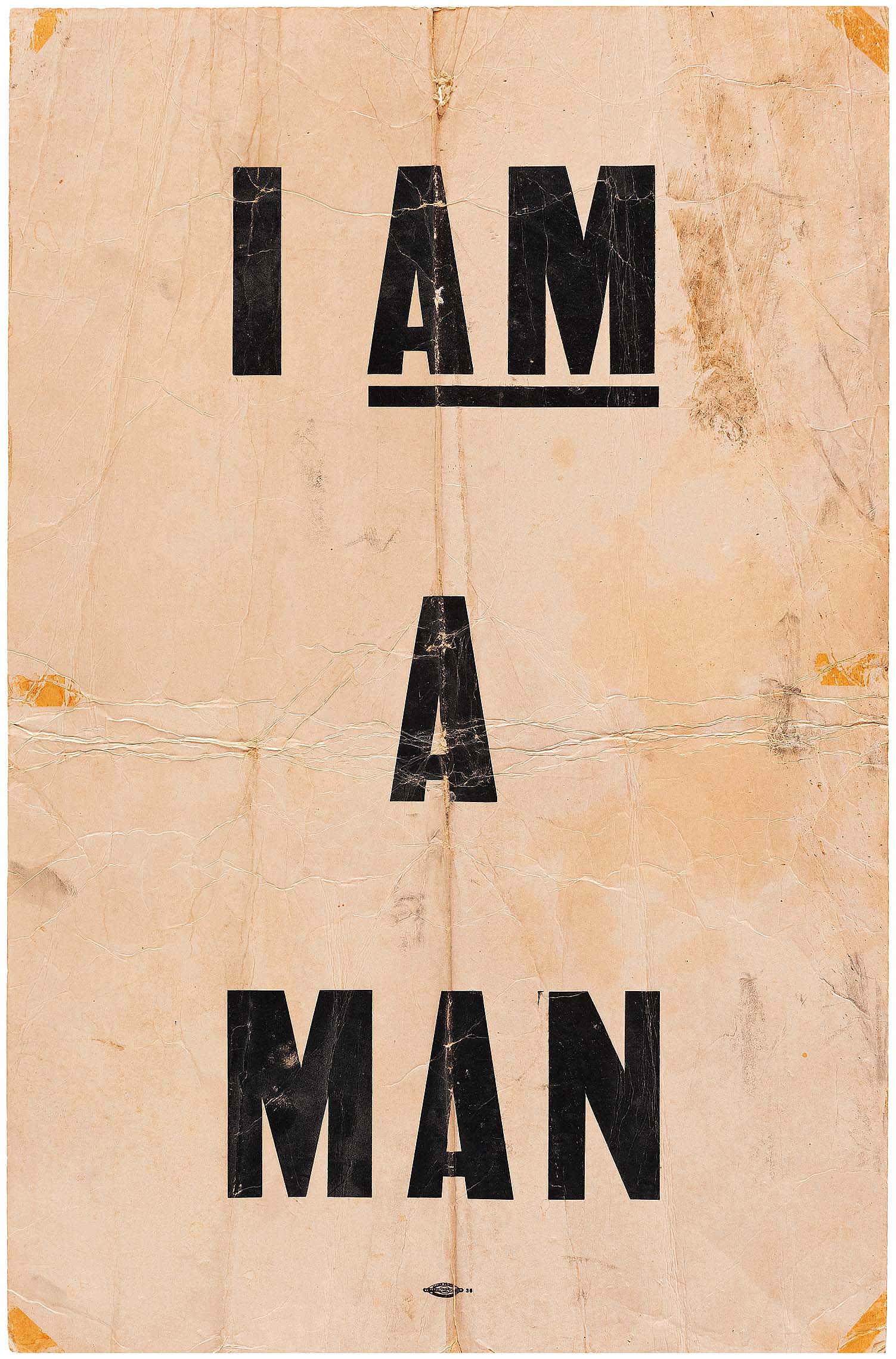
This “I Am A Man” placard from the 1968 Memphis Sanitation Workers Strike, marked with the Allied Printing union bug, 21¼ by 13¾ inches, climbed to $58,427 ($10/20,000).
Rising well beyond its $10/20,000 estimate to become the auction’s top lot overall — and setting two world records in the process — was a Parian statuette by Antebellum African-American sculptor Eugene Warburg. Warburg, who was born in New Orleans to an enslaved mother and father of German descent, was manumitted in his youth and trained as a stone cutter and memorial sculptor as a free man. Later, after traveling to Europe to further his career as an artist, he was commissioned by the Duchess of Sutherland, a British abolitionist, to do a series of works based on Harriet Beecher Stowe’s novels Uncle Tom’s Cabin (1852) and Dred: A Tale of the Great Dismal Swamp (1856). Part of this commission was a statuette of Stowe’s paternal character from Dred, Uncle Tiff. The circa 1856 figure depicted Uncle Tiff rocking the white child he cares for, and it rose to the sale-high price of $95,592. “Provenance helped it, as did Warburg himself and his story,” Mussell noted. “It was driven by a combination of institutions not having a lot of material like that and people having respect for the story.” As the catalog description noted, this work was an “exceptionally rare example of an African-American sculptural subject by an African-American artist.” As such, it broke records for the artist and for any Parian figure.
Another world record was set when a circa 1968 “I Am A Man” placard from the Memphis Sanitation Workers Strike sold for $58,427. Mussell stated, “It’s one of the most iconic pieces of American history, period, and I’m happy to see it get the respect it deserved.” The thin cardboard sign was used by protestors and was designed with text that corresponded to the Martin Luther King Memorial March for Union Justice and to End Racism in Memphis, Tenn., on April 8, 1868, following the assassination of King. “Black Power” was scrawled in red ink on the reverse. Mussel noted that “This particular example is a fascinating study, with its buttonhole at top being connected to press photos of marchers who affixed these to the top buttons of their shirts, to the ‘Black Power’ notation on the verso reiterating the strike as a watershed turning point in the movement emphasizing the post-assassination lean towards Black Empowerment.” While the example was creased and had some staining, these marks are signs of “honest wear from hard use, commiserate with the struggle at hand remaining eminently displayable and powerful,” Mussell added.
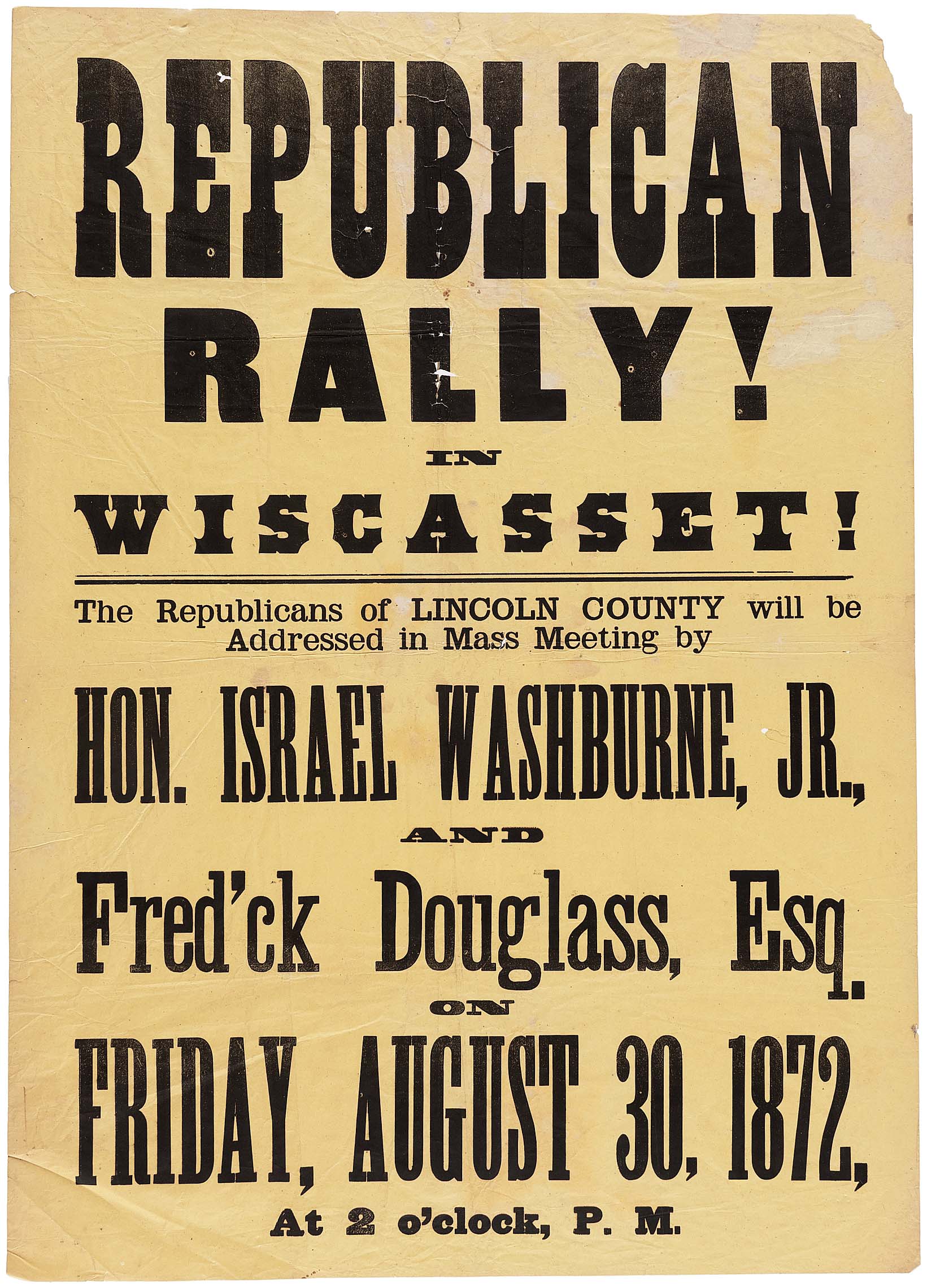
This broadside announcing “Hon. Israel Washburne, Jr, and “Fred’ck Douglass, Esq” as speakers at a Maine Republican rally in 1872, 29 by 21 inches, was claimed for $25,486 ($10/20,000).
The printed paper category also included several notable broadsides from the Stark collection, led at $25,486 by a circa 1872 example advertising a Republican Party rally in Wiscasset, Maine, publicizing Frederick Douglass and former Maine governor Israel Washburne as guest speakers. At this rally, Douglass spoke in support of the reelection of President Ulysses S. Grant, and stated, “I decide, my race decide, that the party that saved the Union and gave Liberty to the slave is the only party entitled to the support of the levers of Liberty and equality.”
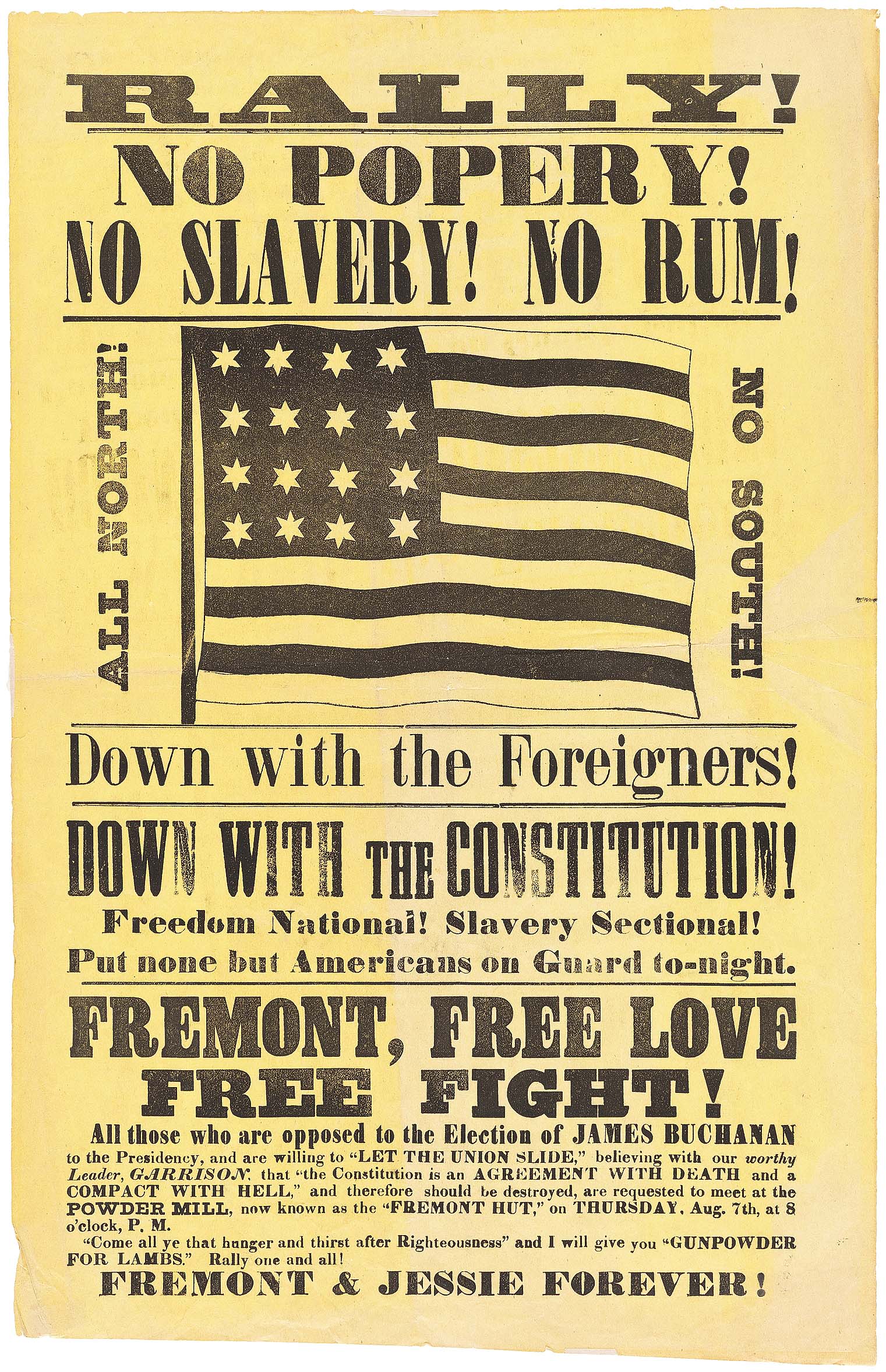
Made a few years earlier and in support of the opposing side, an unconventional pro-Buchannan broadside climbed to $10,038 and was identified by Hake’s as one of the “most impressive and interesting broadsides of the period.” The satirical poster ridiculed the stances of Republican John Frémont and abolitionist William Lloyd Garrison with statements such as “No Slavery! No Rum!,” “All North / No South” and “Down with the Constitution.” However, the broadside’s true position was made clear by inviting “All those who are opposed to the Election of James Buchanan to the Presidency, and are willing to ‘Let the Union Slide’” to meet to “Rally one and all!” The interest in this Buchannan poster “speaks to the times and how radical things were…and perhaps how things don’t really change,” Mussell said.
An unexpected highflier from the Stark collection was a circa 1820s tea caddy with a central wax figure of an enslaved man in chains and kneeling atop a pedestal framed in silver inlay beneath the caddy’s keyhole. The octagonal caddy was made of tortoiseshell and horn with inlaid bone panels and an ornate silver top hinge. The container, which was made by makers in the Birmingham area, was likely a woman’s protest of slavery, drawing attention to the connection between sugar consumption and the transatlantic slave trade. The abolitionist statement piece, rare in its luxury and sentiment, was bid well beyond its $6,000 high estimate to achieve $16,285.
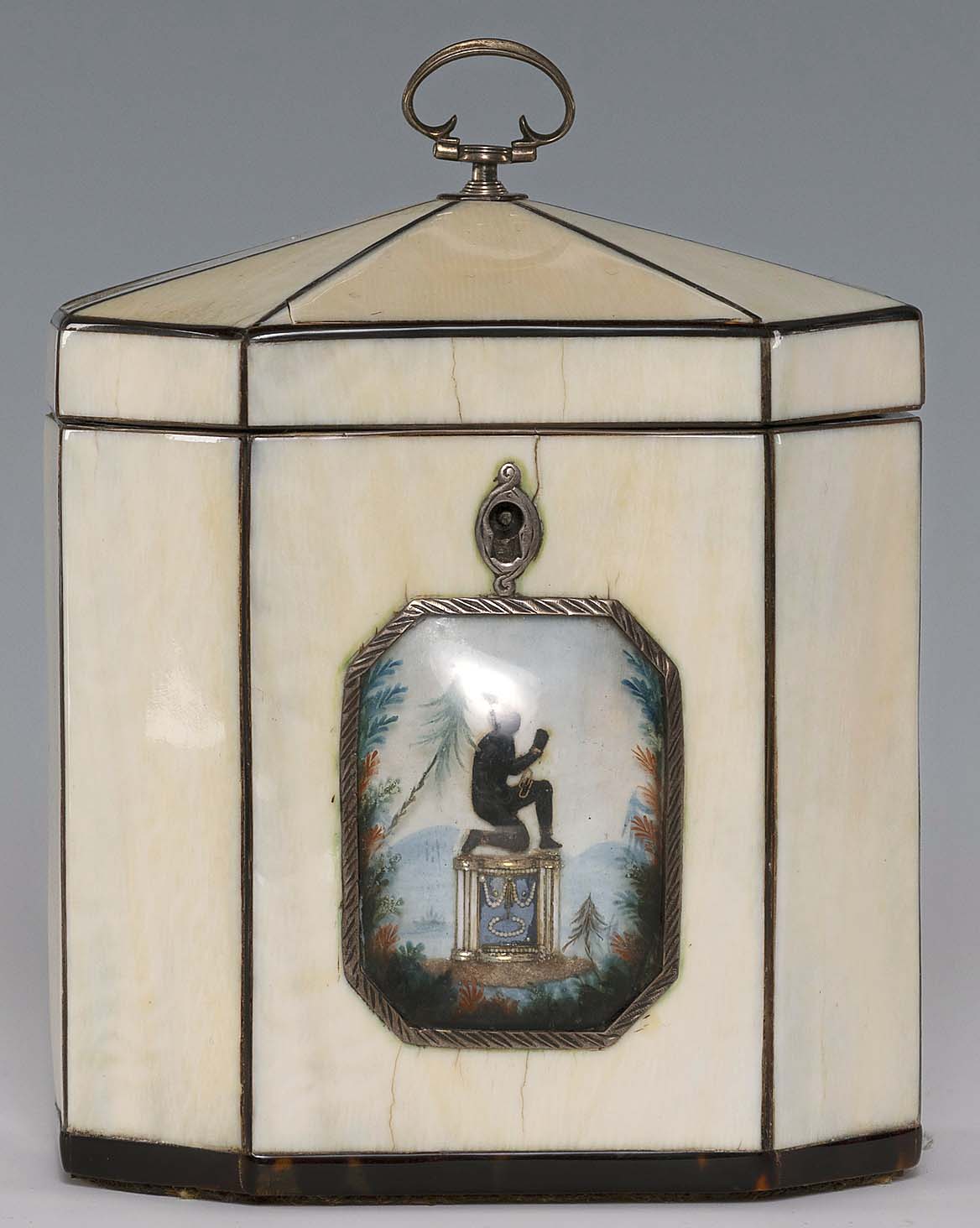
This tortoiseshell, bone and horn inlaid tea caddy, British, 5 inches tall by 4 inches wide, had an ornate silver top hinge and featured an anti-slavery scene with a wax figure in front of a painted bone background, all under domed glass. It served up a $16,285 result ($4/6,000).
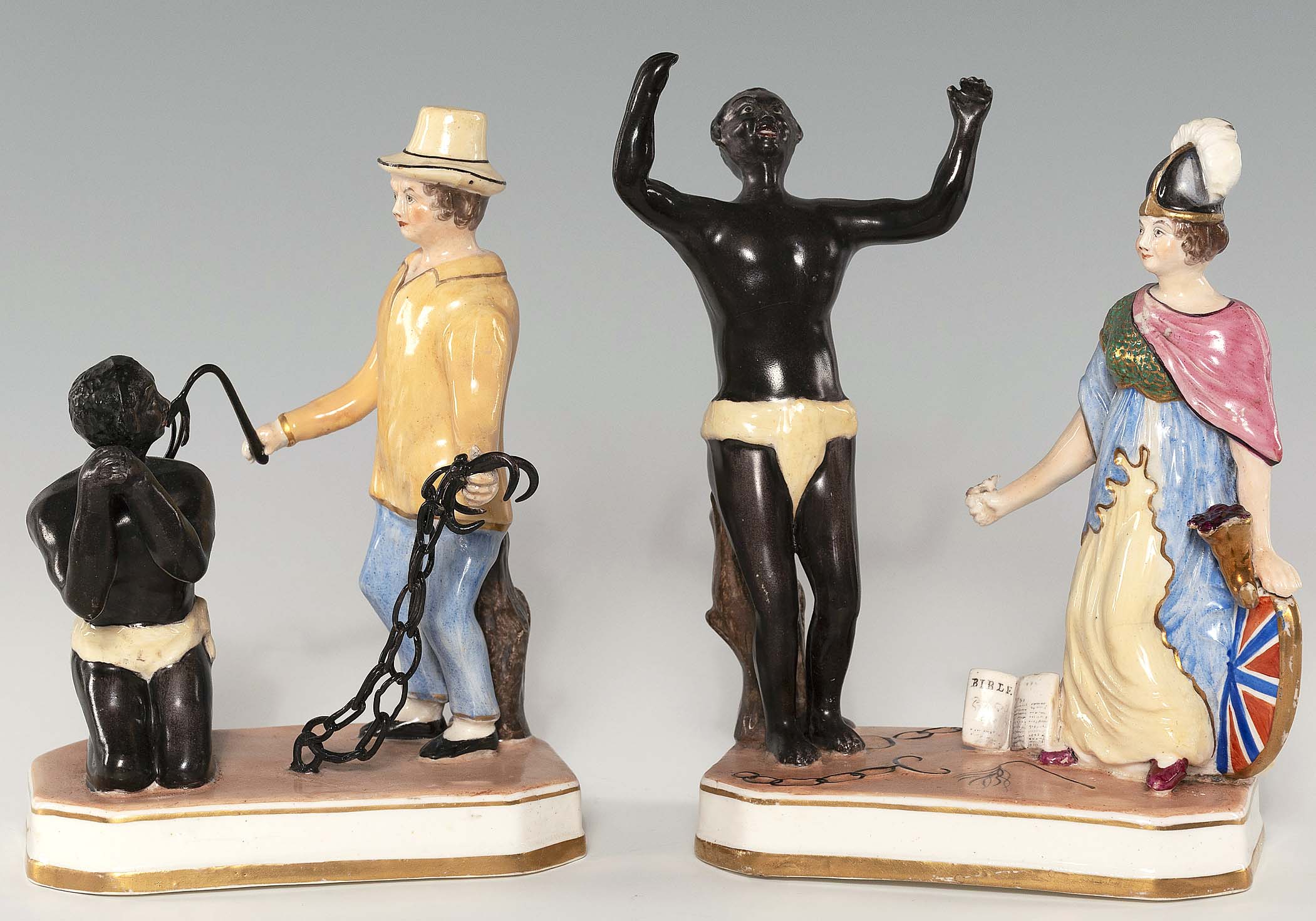
A pair of Staffordshire before-and-after figural groups from the Stark collection sold separately. Selling first for $3,515 was a jarring depiction of a kneeling enslaved man being whipped by a white man who was also holding chains. Made circa 1820, this example paired with the circa 1930s model showing a jubilant emancipation scene that made $9,125. The man in this grouping was shown standing with his arms raised in triumph, above discarded tools of oppression and beside Britannia. According to Staffordshire Figures 1780-1840, these are the only examples known of the two models.
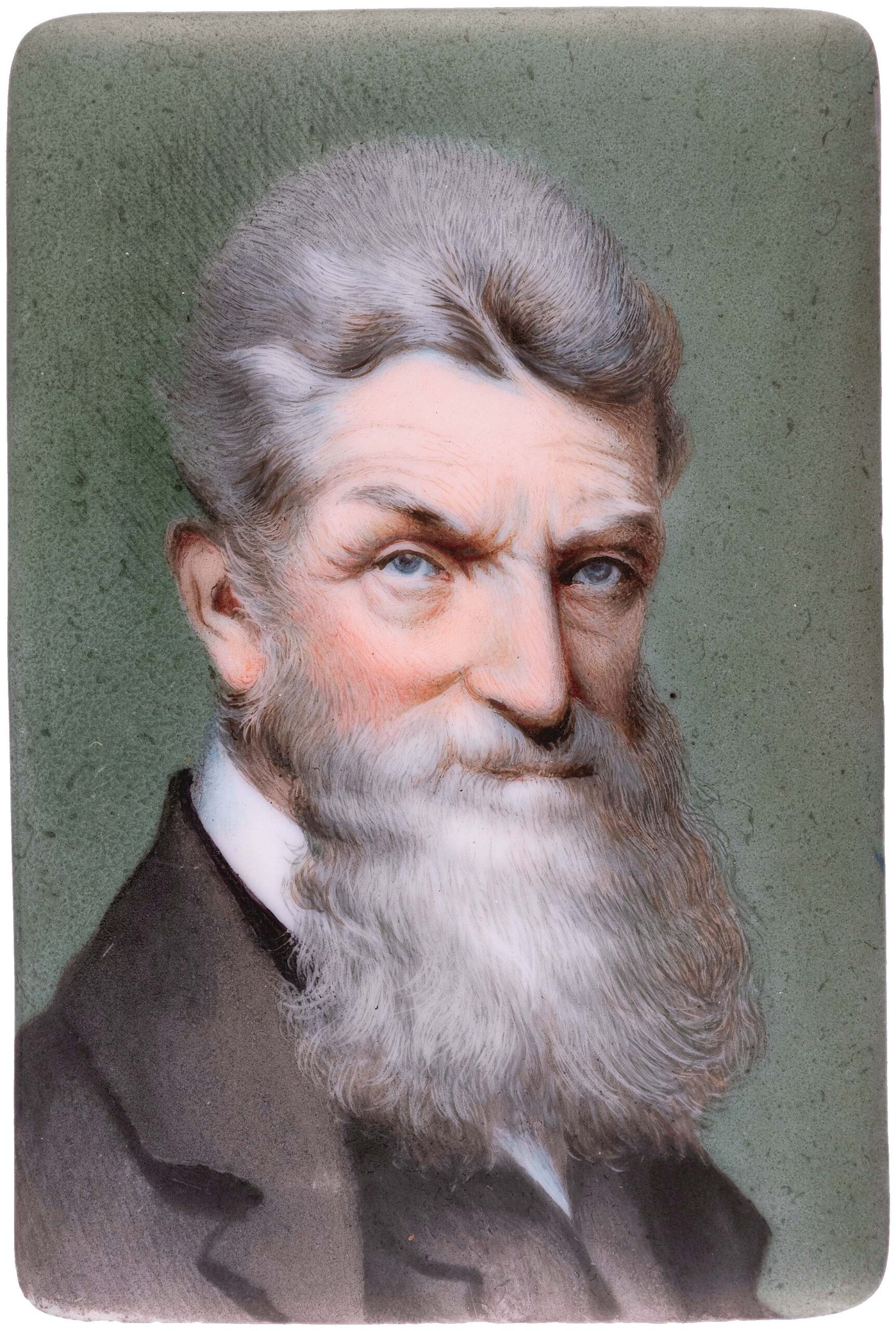
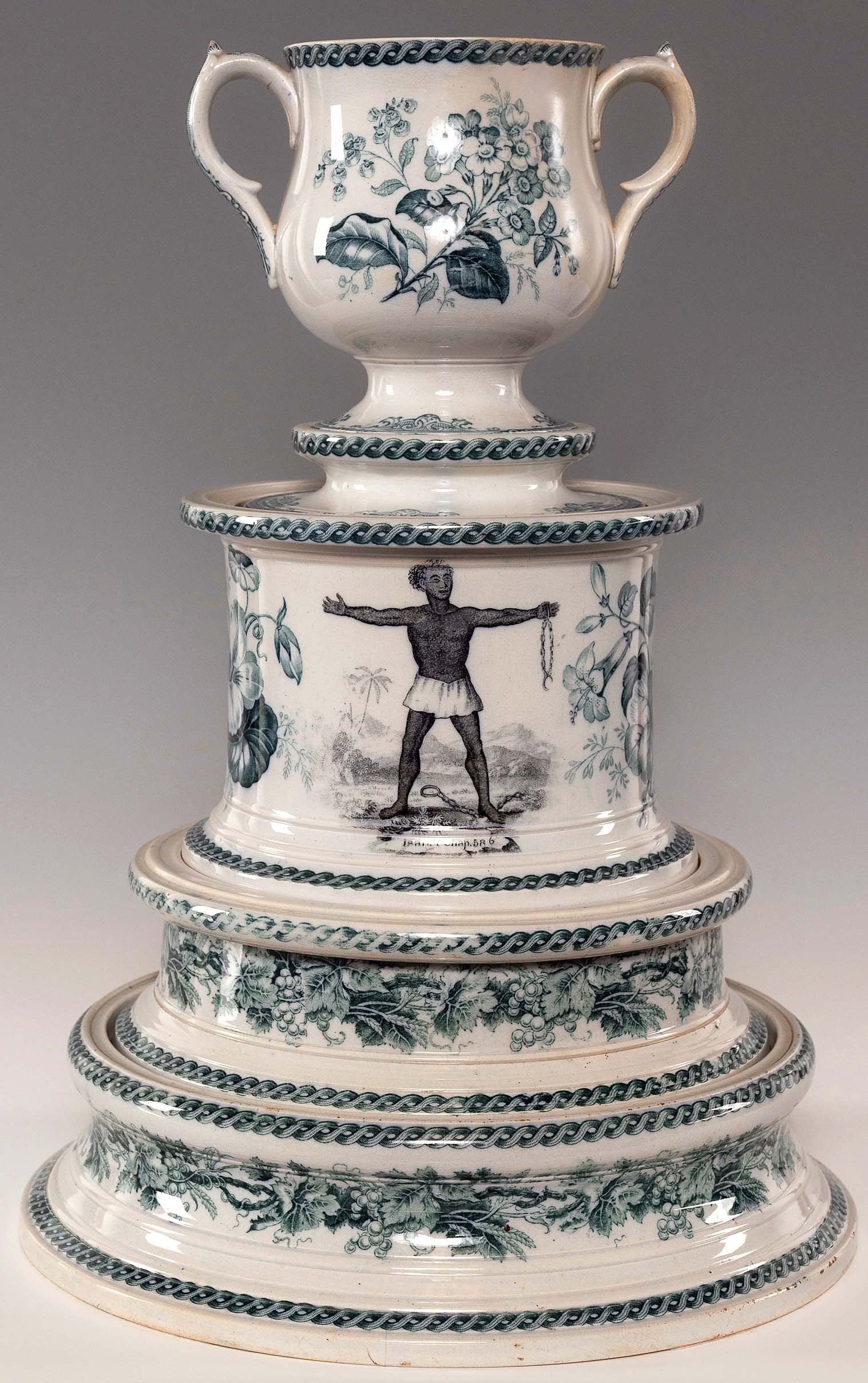
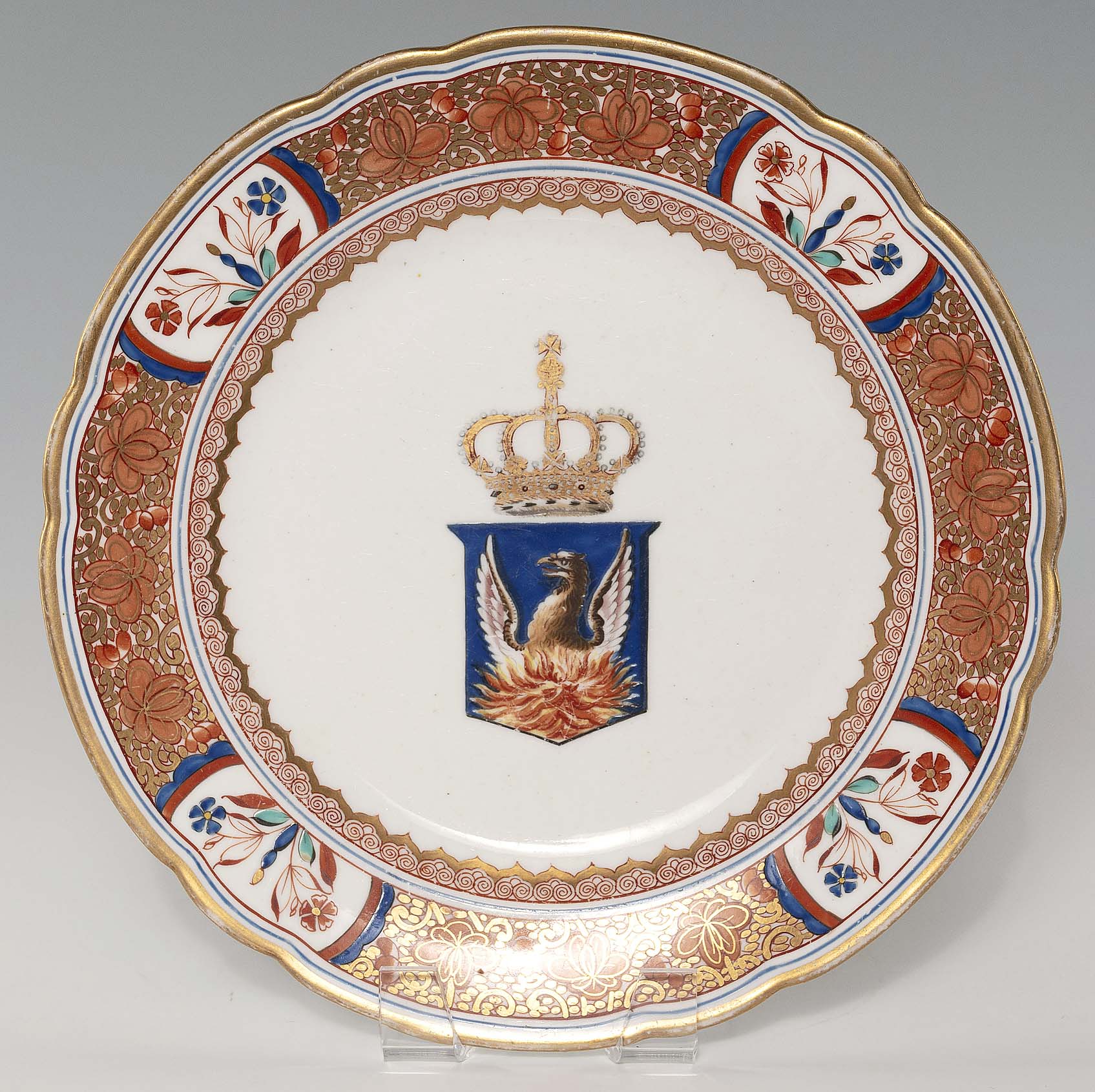
Other highlights from the Stark collection included a circa 1859-60 portrait of abolitionist John Brown on tile, after a daguerreotype by M. Lawrence ($6,691); a tiered transferware set with anti-slavery images and a reference to Isaiah 58:6 — “let the oppressed go free” — among botanical decoration, circa 1840s ($5,027); and a circa 1815 Spode bone china plate in the Kaiemon pattern of Henri Cristophe, who was formerly enslaved, after his ascent to King of Haiti ($3,944).
Described by Mussell as a “glossy, well-made button showing a full-color depiction of Theodore Roosevelt and Booker T. Washington at a historic October 16, 1901, White House dinner,” a 1¼-inch button with W.F. Miller back paper brought $14,401. Showing a scene from the first time a Black person was invited to dine at the White House, the button had “Equality” printed in an arc between the two men. The catalog note indicated that this example is “Among the most sought after TR buttons, of the highest historical importance and infrequently offered.”
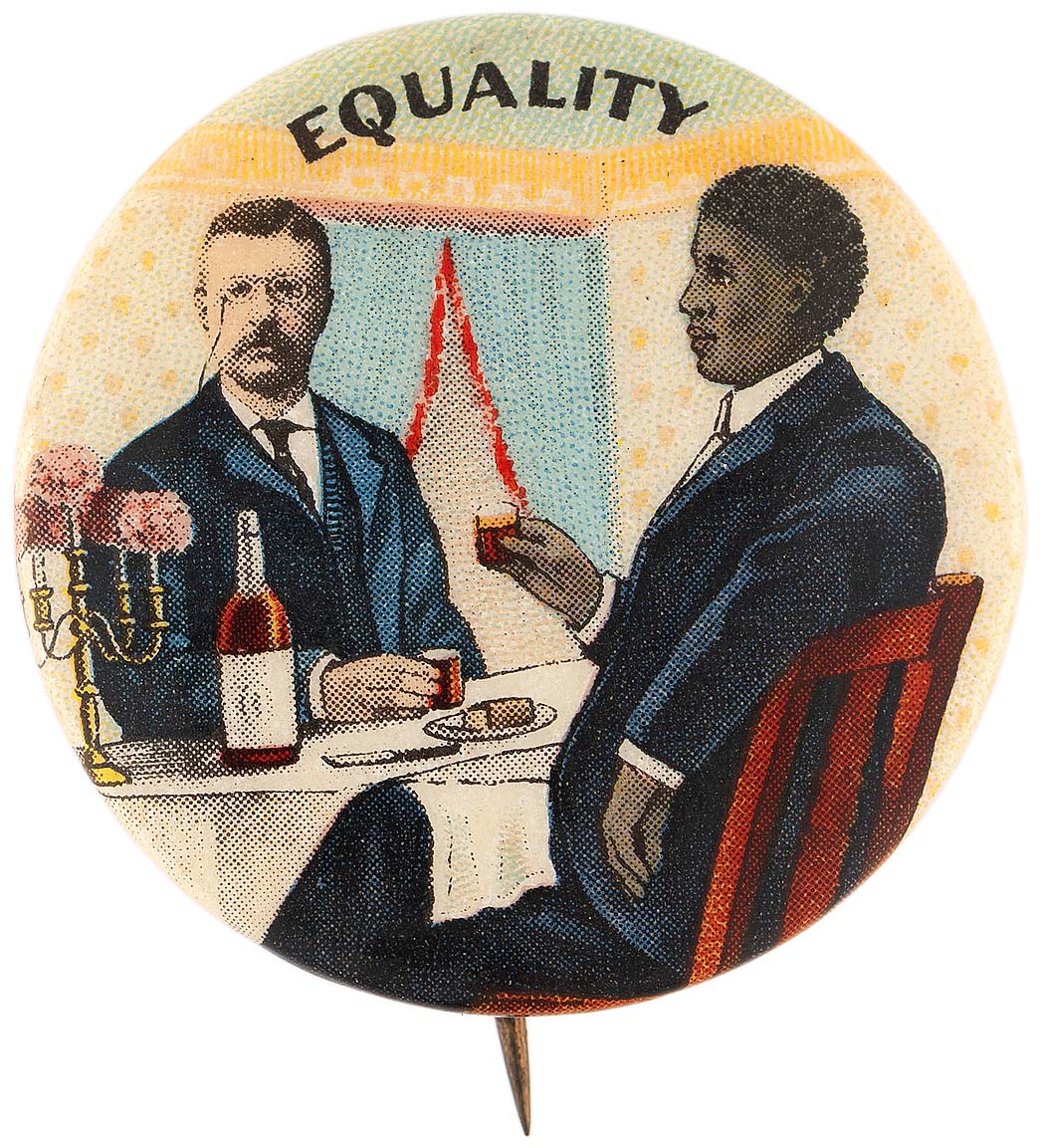
This “Equality” pin depicting Theodore Roosevelt and Booker T. Washington dining at the White House, 1¼ inches, was claimed at $14,401 ($7/10,000).
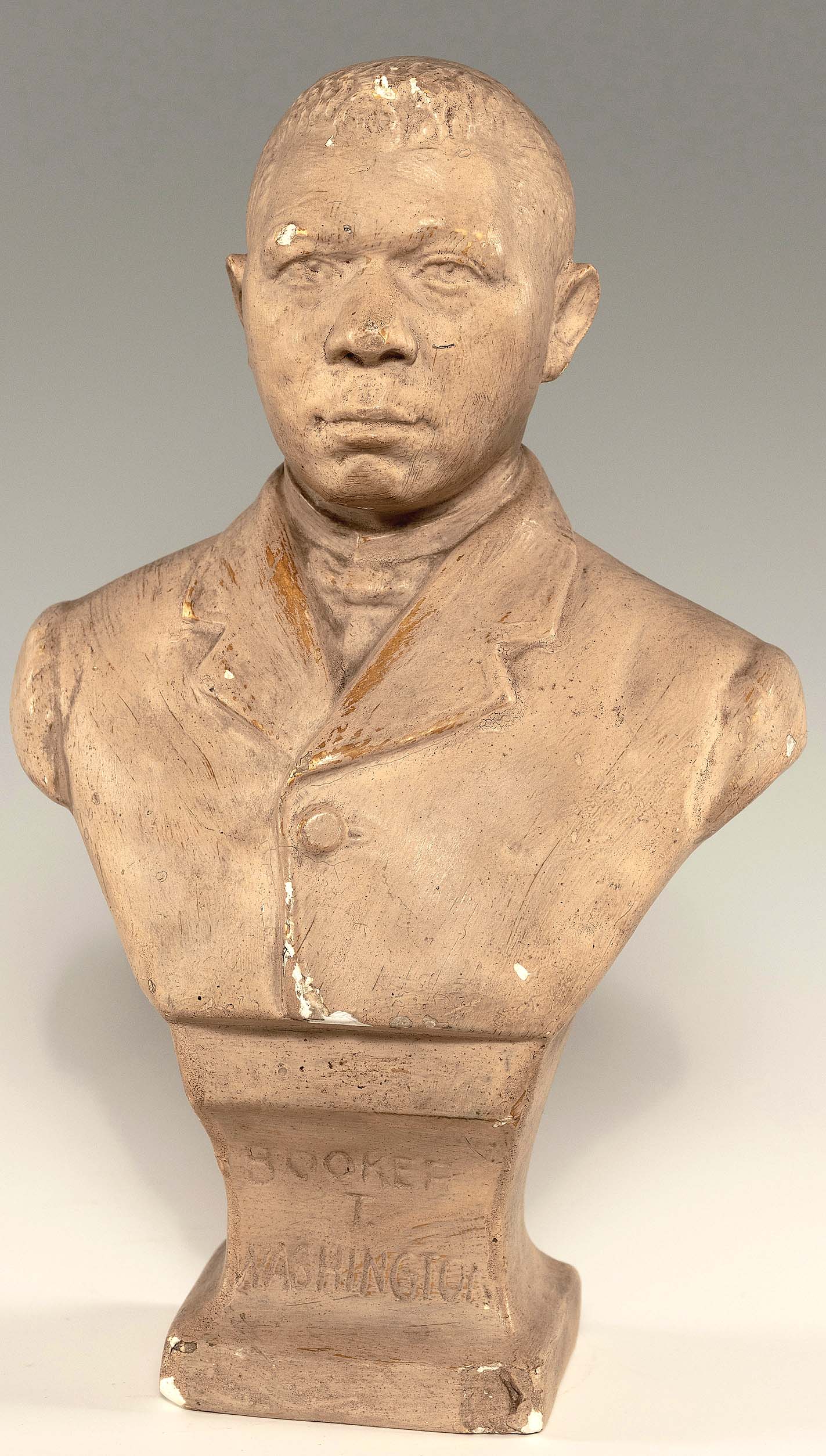
Washington was also the subject of a plaster bust made by African-American artist Isaac Hathaway, who devoted his career to producing works of notable Black subjects. This plaster bust, painted in a light tan/buff color, included a plinth, which was marked “Booker T. Washington” on the front and “Copyright / By / Isaac Hathaway / Wash. D.C. / 1909” on its reverse. It more than tripled its high estimate to achieve $7,199.
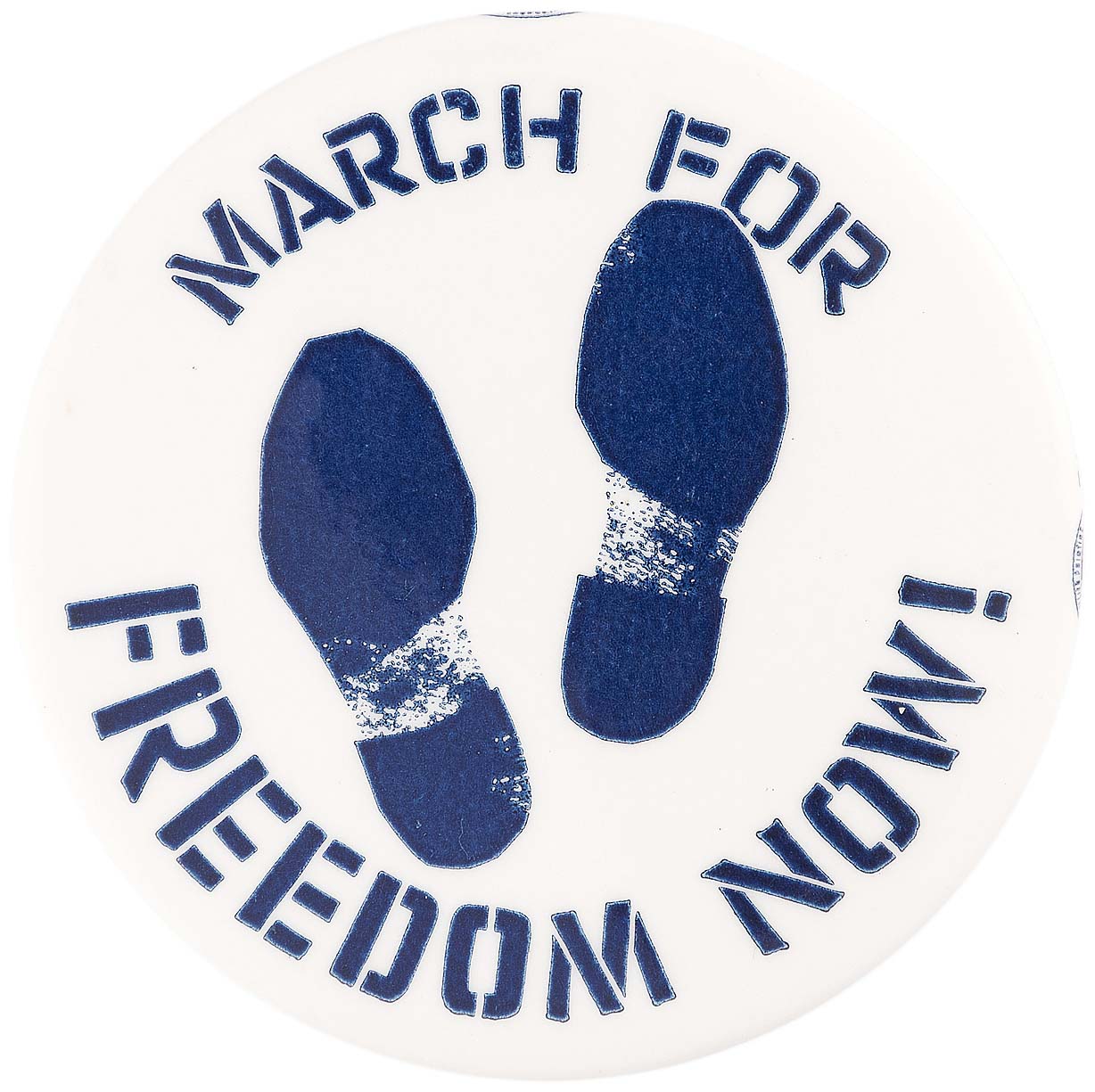
“The ‘March For Freedom’ button with the footprints was just a really phenomenal design. It was from the 1960 Republican National Convention. There was a demonstration outside with Martin Luther King, Jr, and there’s a picture of him wearing it,” said Mussell. The button was cataloged as “a choice example of this rare pin,” and it was bid to $4,774, almost quadrupling its high estimate.
In the end, Mussell said that he was really glad to see both anti-slavery and civil rights material get the respect they deserved, adding that the “one-two punch” of the auction’s top two lots coming from each category was especially fitting.
Prices quoted include the buyer’s premium as reported by the auction house. For information, www.hakes.com or 717-434-1600.