Photo by Joseph Coscia, Jr.
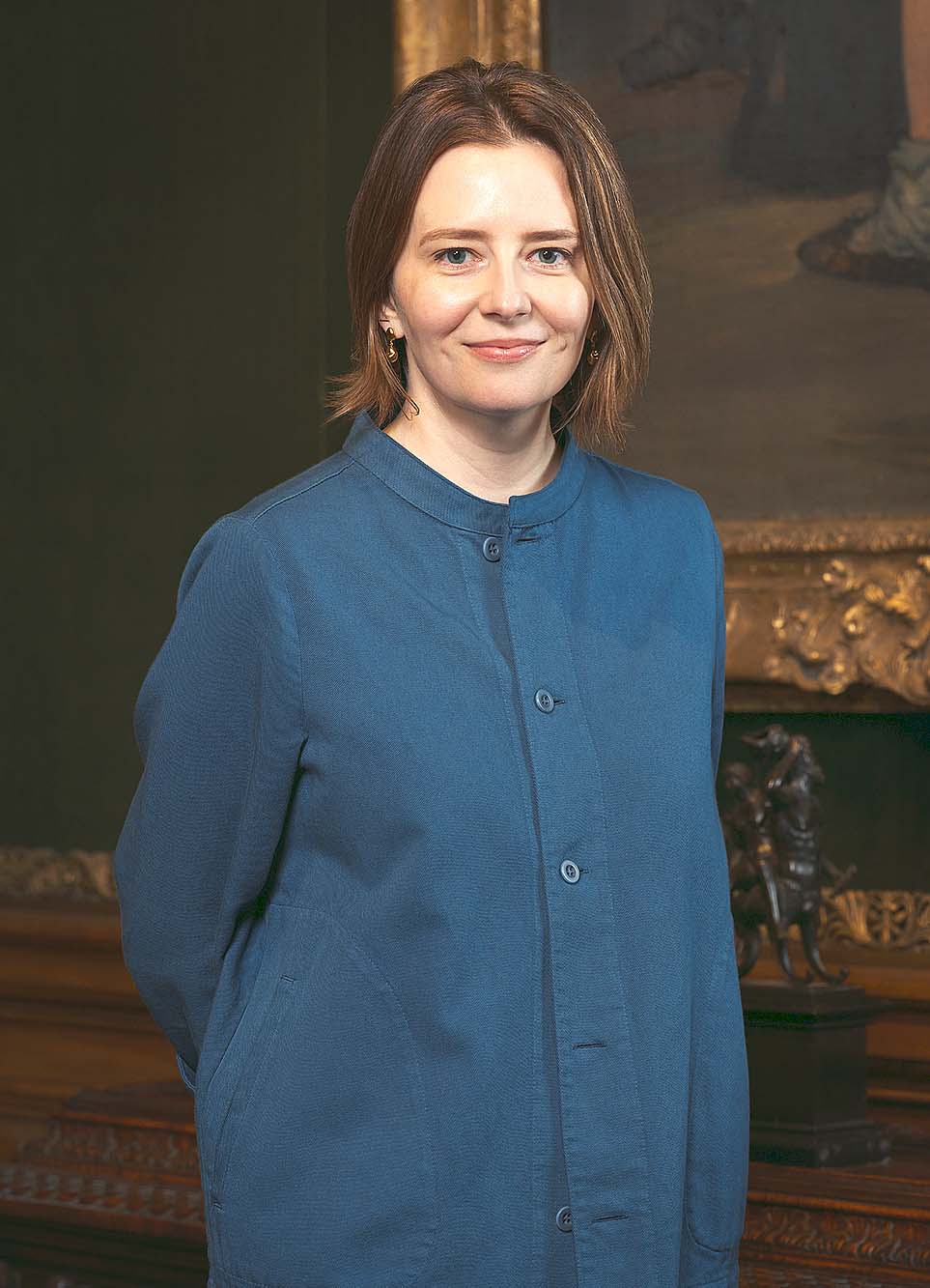
Caitlin Henningsen was recently appointed the Ayesha Bulchandani head of education and public engagement at The Frick Collection and began her work in September. Having a strong background in gallery teaching and public programming, Henningsen has been at the Frick since 2007 when she began as a curatorial assistant. Assuming the position of interim head of education earlier this year, she already has begun overseeing the relaunch of the museum’s in-person gallery interpretation and other programs. Additionally, she has been intensively researching household staff at 1 East 70th Street (now home to the Frick Collection). Her research will be published in the book Untold Stories: Domestic Service at the Frick Mansion, 1914 -1931. We reached out to learn more about her vision for the Frick’s education programming.
What are your top priorities in this role this fall?
Two of my goals for the fall are to learn as much as I can from our audiences about their experiences at the Frick post-reopening and to launch an afterschool program for teens that exposes them both to the collection and to the work of the museum — what’s involved with running a place like the Frick, how many hands are involved and what it might be like for them to pursue a career in the arts. The museum can be a meaningful “third space” for young people — not home, not school — and I’m excited to work toward this with my colleagues at the Frick.
What drew you to the role?
The Frick stands out among New York City museums as an intimate collection of unparalleled masterpieces in a unique historic setting. As an educator, I often think about the quite human goal articulated in the museum’s founding language: that it should be a place for “all persons whomsoever.” I am excited to step into the leadership of the education department in pursuit of this goal, and I look forward to continuing to collaborate with colleagues across the Frick — from our curatorial, music and horticulture teams, to membership, visitor services, the Frick Art Research Library and beyond — as we engage
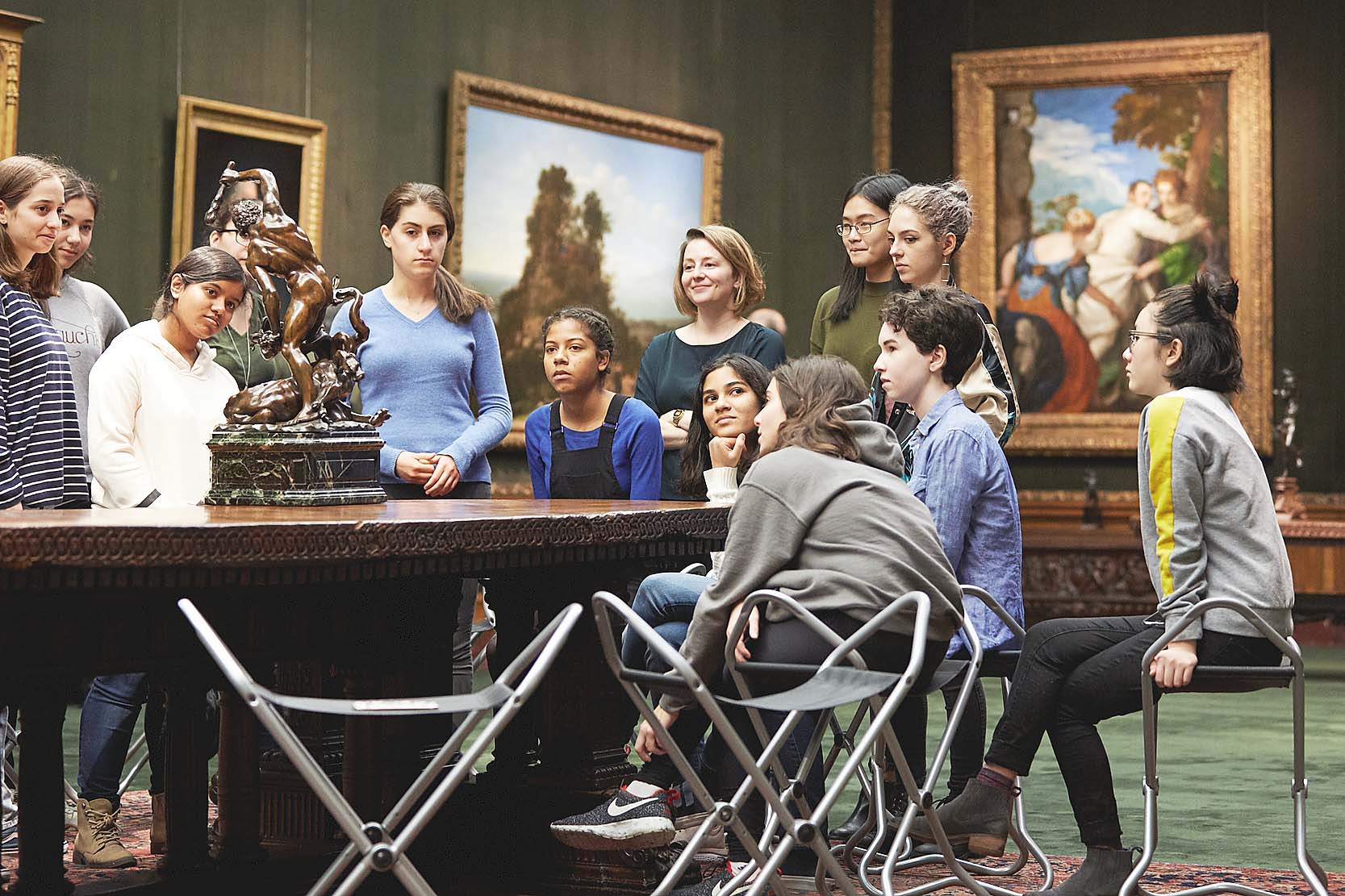
Caitlin Henningsen (center) engages with a group of visitors in the galleries during a school program. Photo by George Koelle.
How do you plan to build on the education programming?
I’m often asked whether we plan to continue offering our conversation-based online programming. These are programs created during the lockdown phase of the pandemic when folks were looking for opportunities to expand their world from home, and over time they remained enduringly popular. They can connect participants with the Frick despite not living nearby, while others who identify as housebound consider them vital opportunities to engage with other art-lovers. We are continuing them, even as we expand in-person talks, panels, guided visits and studio programs.
Can you share learnings about museum education since you joined the Frick as a curatorial assistant in 2007?
I always loved being in the galleries interacting directly with visitors around the collection. As an educator, that’s much of my day, and it’s reinforced my belief that no prior knowledge is required to find meaning in a work of art. To paraphrase the educational philosopher Maxine Greene, all you need to look at a work of art is your lived life.
Can you speak to the appeal of gallery teaching and engaging with the public?
As a young museum employee, I was inspired by the teaching of a colleague who created a program (still offered) called Art Dialogues, inviting participants into a long, focused look at a single artwork. It’s a form of engagement that I love, building a shared interpretation of a masterpiece like Rembrandt’s “Self-Portrait” in a small, temporary community of art lovers. That kind of sustained engagement is a habit many of us want to cultivate deliberately these days, given the fast pace of our world.
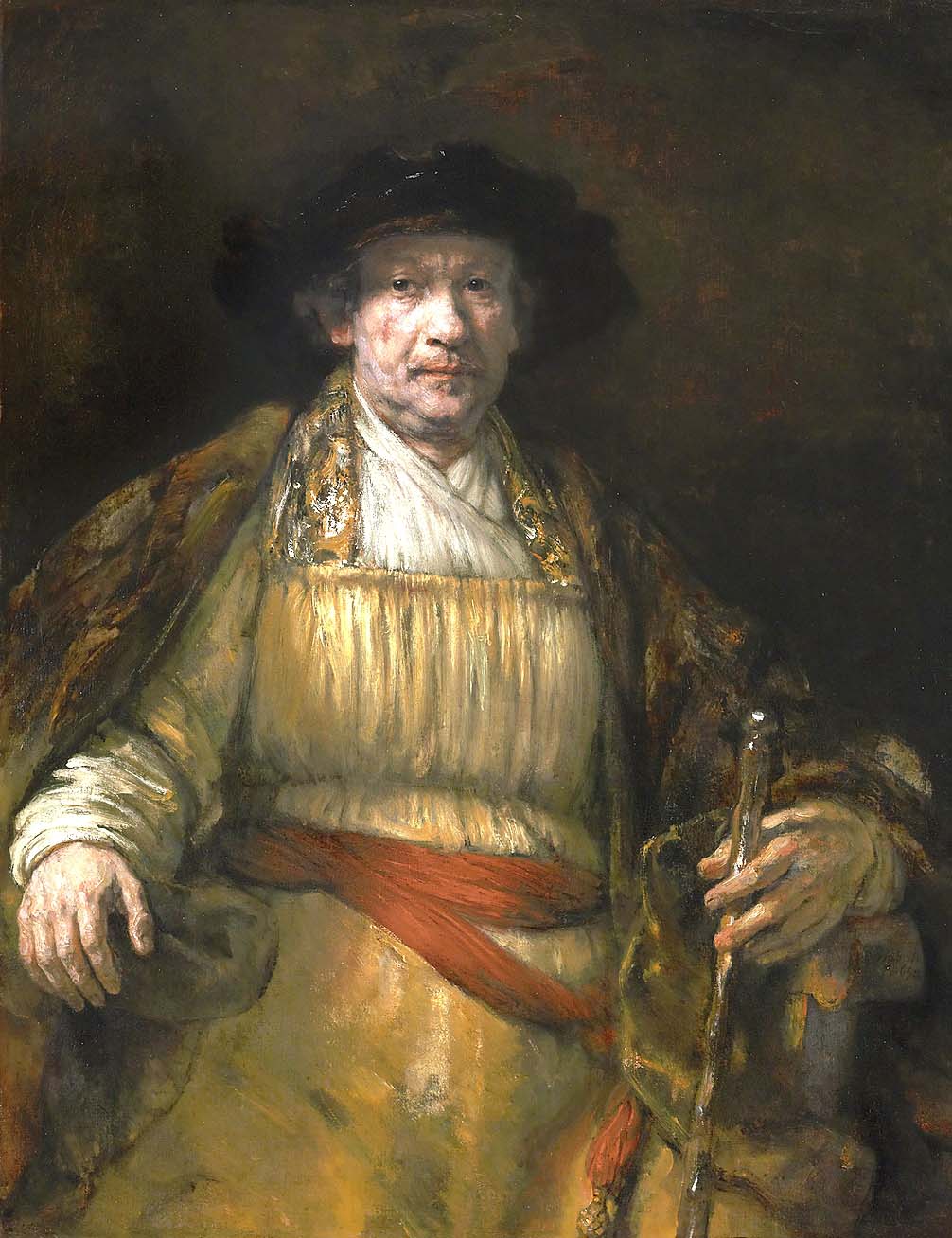
“Self-Portrait” by Rembrandt Harmensz. van Rijn (1606-1669), 1658, oil on canvas, 52⅝ inches by 40⅞ inches. Henry Clay Frick bequest, accession number: 1906.1.97. The Frick Collection. Photo by Michael Bodycomb.
We’d love to hear more about the Louis Vuitton First Fridays program and how it’s working for your audiences.
Louis Vuitton First Fridays are a blast! You can choose your own adventure — I like to toast the end of the week in the Garden Court, listening to a jazz trio, then try my hand at sketching or check out a gallery talk on a famous painting. It’s a fantastic opportunity to experience the Frick for free, especially if you’ve never visited. And for busy New Yorkers, evening museum hours are essential!
Why is supporting emerging scholars so important to the Frick’s mission?
In our programs for emerging scholars — whether we’re talking about the annual graduate student symposium or an internship, study day or library workshop — we are nurturing the future of the field. Our aim is to provide those students and early-career scholars with opportunities to train their eyes and to bring their research into the public sphere.
Tell us more about your forthcoming book covering domestic service at the mansion before it became the museum.
I’ve always been interested in life behind the scenes. In a few places in the historic galleries you can see old call buttons that were used to summon staff. I started to wonder who would have answered those calls, and what their lives were like. Their stories are New York stories. Most were immigrants and they came to this city looking for change, for opportunity, for advancement. I hope readers will have an even richer appreciation of the city’s history and the Frick’s place in it.
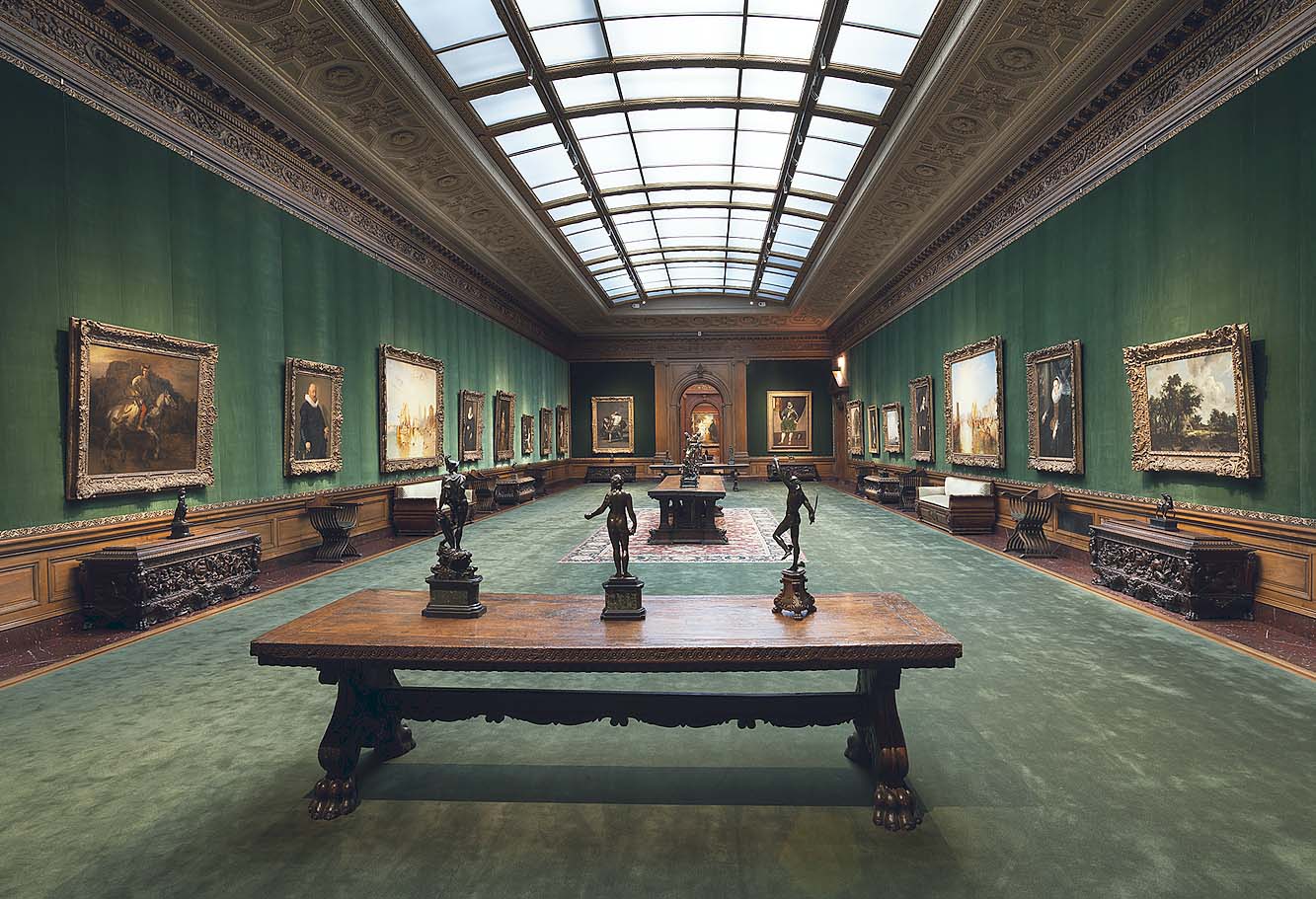
West Gallery of The Frick Collection. Photo by Joseph Coscia, Jr.
Can you share why this project was important to you?
I set out to better understand the working life of the house. We’ve seen this place, The Frick Mansion, 1 East 70th Street, as the home of Henry Clay Frick, Adelaide Childs Frick, his wife; and his daughter, Helen, but there were up to 30 other people working at the mansion every day, and I’ve been working to understand who they were, what their lives were like both before and after they worked at the Frick Mansion so we get a more holistic sense of this place.
I think people are curious to know who contributed to a place, who took care of it. I think even comparisons within the study of art the way that there are sometimes artworks that don’t have a named creator. A workshop might be behind it and we don’t know the individual names of those people, but it’s fascinating to understand how an outfit like that works collaboratively and cooperatively to create a work of art or to create a place like The Frick.
[Working here,] I learned a lot about Henry Clay Frick and about how he built his collection, learning even about the dealers he was working with and the people who influenced his taste and facilitated his collecting. Over time I started to ask more questions about the house and realized I didn’t know the names of the people who worked at the mansion. I was tantalized by these particular buttons — once you know the house well, you can find them. They are mother-of-pearl buttons, kind of hidden in the wainscoting, and they are inscribed with titles like butler, housekeeper, pantry, secretary… I started to ask myself about them. These buttons are part of a broad enunciator system that connected the Frick to their staff so with a push of a button; you could summon a maid or bring in a footman, have a cup of tea or escort a guest out. I really started to wonder who was on the other side of the button, who answered that call, and it was surprising to me that we didn’t know very much about who those people were. So, my work has been about trying to attach names to some of those responsibilities. That’s the gap I sought to fill with my research.
—Andrea Valluzzo