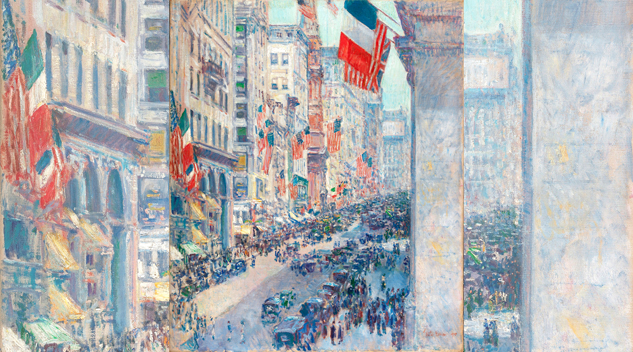
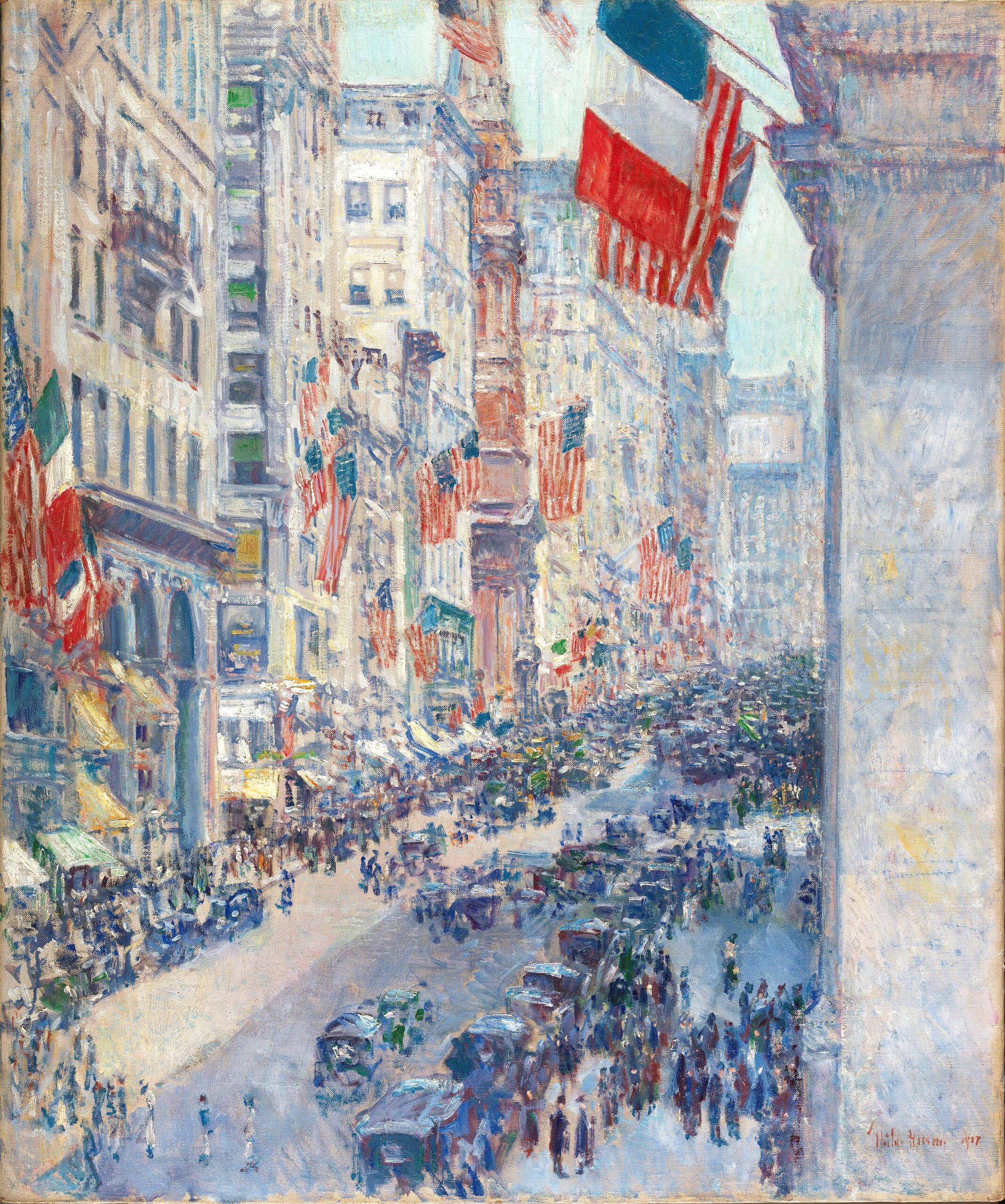
“Up the Avenue from Thirty-Fourth Street” by Childe Hassam (1859-1935), 1917, oil on canvas, about 36 by 30 inches. The Middleton Family Collection.
By Jessica Skwire Routhier
PHILADELPHIA — “A Nation of Artists,” Philadelphia’s two-museum extravaganza in commemoration of the United States’ 250th anniversary, begins and ends with flags. The display at the Philadelphia Museum of Art (PMA) opens with silken regimental flags of the American Revolution, and visitors enter the Pennsylvania Academy of the Fine Arts (PAFA) through a gallery dedicated to the American flag across time and media. Flags peek out from portraits, street scenes, quilts and even the highly conceptual and abstract work of the later Twentieth Century. The dual exhibition is broadly conceived, diverse, and even challenging at times, but the flags leave no doubt about its reason for being. The exhibition is on view through the semiquincentennial year at the PMA and at PAFA, closing July 5 and September 5, 2027, respectively.
One of the standout flags in the exhibition, on view at PAFA, is a painted version by Pop artist Jasper Johns, one of his famous meditations on the stars and stripes from the 1960s. At the time, critics did not know what to make of these flag paintings. Were they patriotic or patronizing? What did it mean to render this crisp, seemingly unambiguous symbol in Johns’ expressive, broken brushwork? Was this even an appropriate use of US flag imagery? For his part, Johns “embraced the ambiguity,” as it reads in a handbook accompanying the exhibition, “expressing his interest in ‘things which are seen and not looked at.’” Collapsing the object this way — is it a flag or a painting? — and putting it on the walls of a museum forces also forces a collapse in the acts of seeing and looking. Viewers can take this message and strategy with them throughout the exhibition at large, in both venues.
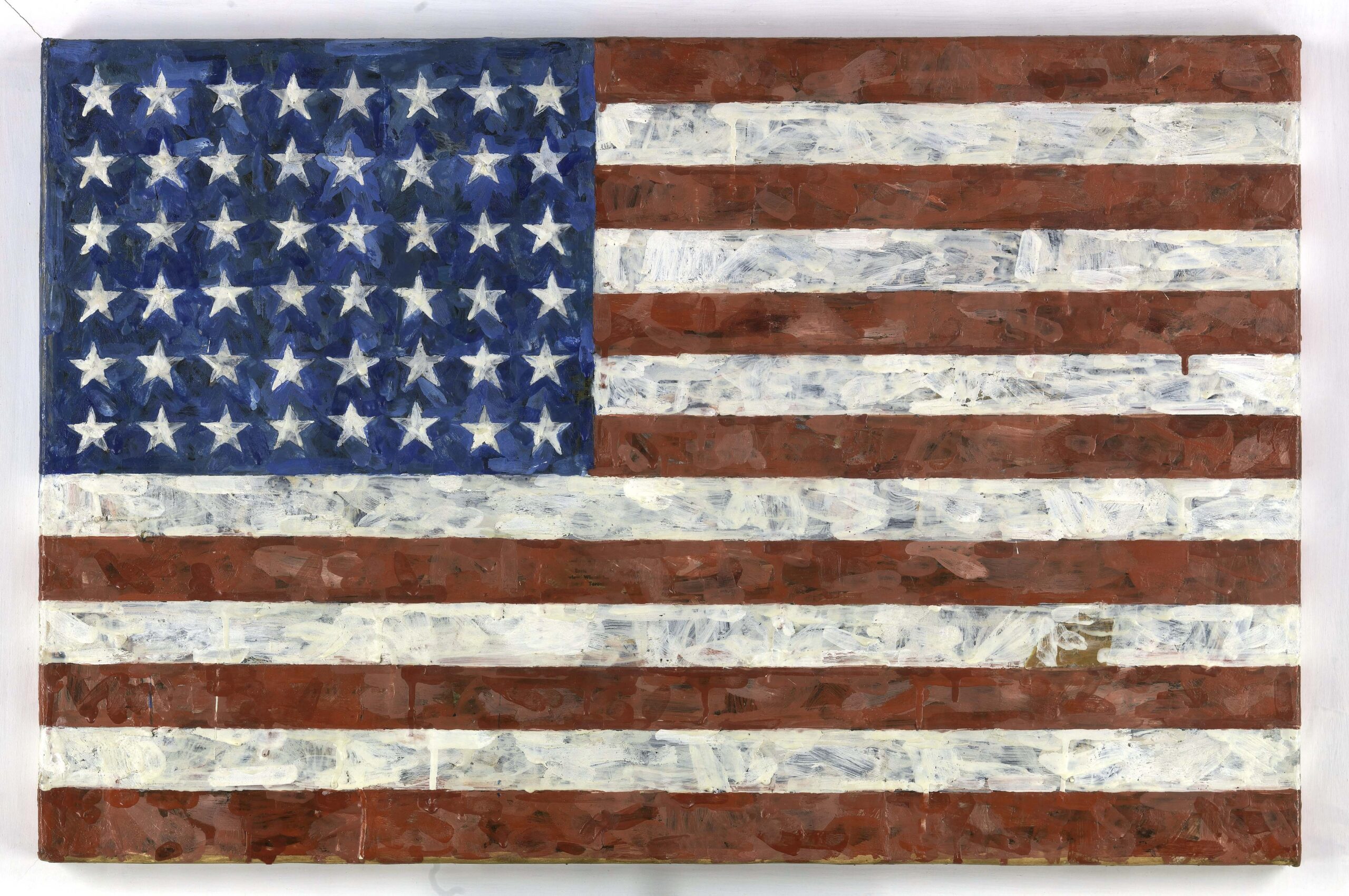
“Flag” by Jasper Johns (b 1930), 1960-66, encaustic and printed paper collage on paper laid down on canvas, 17½ by 26¾ inches. The Middleton Family Collection.
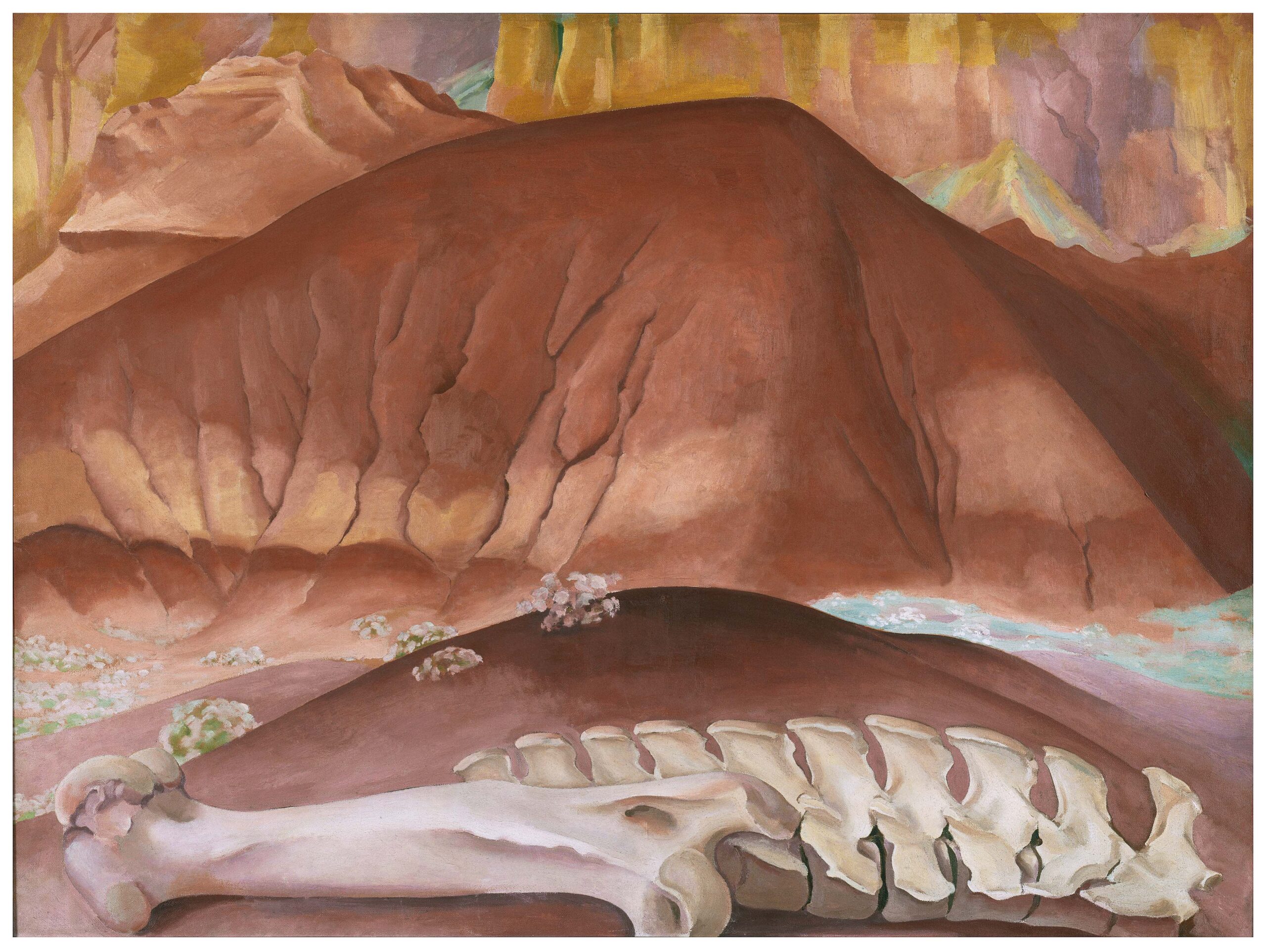
The opportunity to both see and look at Johns’ “Flag,” as well as many other objects at both the PMA and PAFA, comes through a third venerable Philadelphia collection: that of John S. and Leigh Middleton. PAFA curator Lea Stephenson called the Middleton family collection a “who’s who of American artists” and an “encyclopedic American art collection,” marveling at how both she and Kathleen Foster, the Robert L. McNeil, Jr, senior curator of American art, and director, Center for American Art at PMA, were able to select artworks to address “the gaps we wanted to fill in the show for each institution…the artists that we don’t have in our collection[s] that [we] really wanted to highlight.”
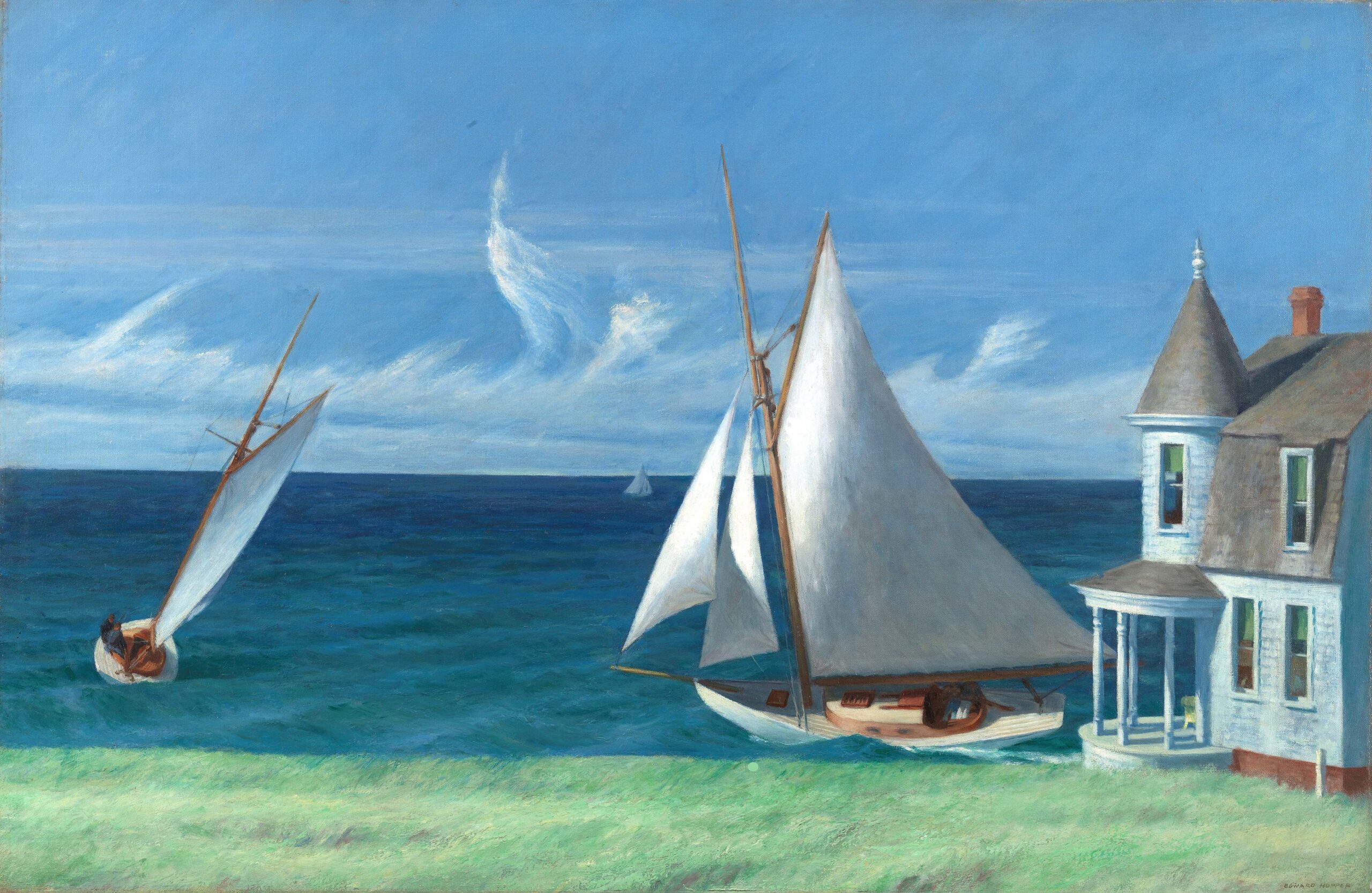
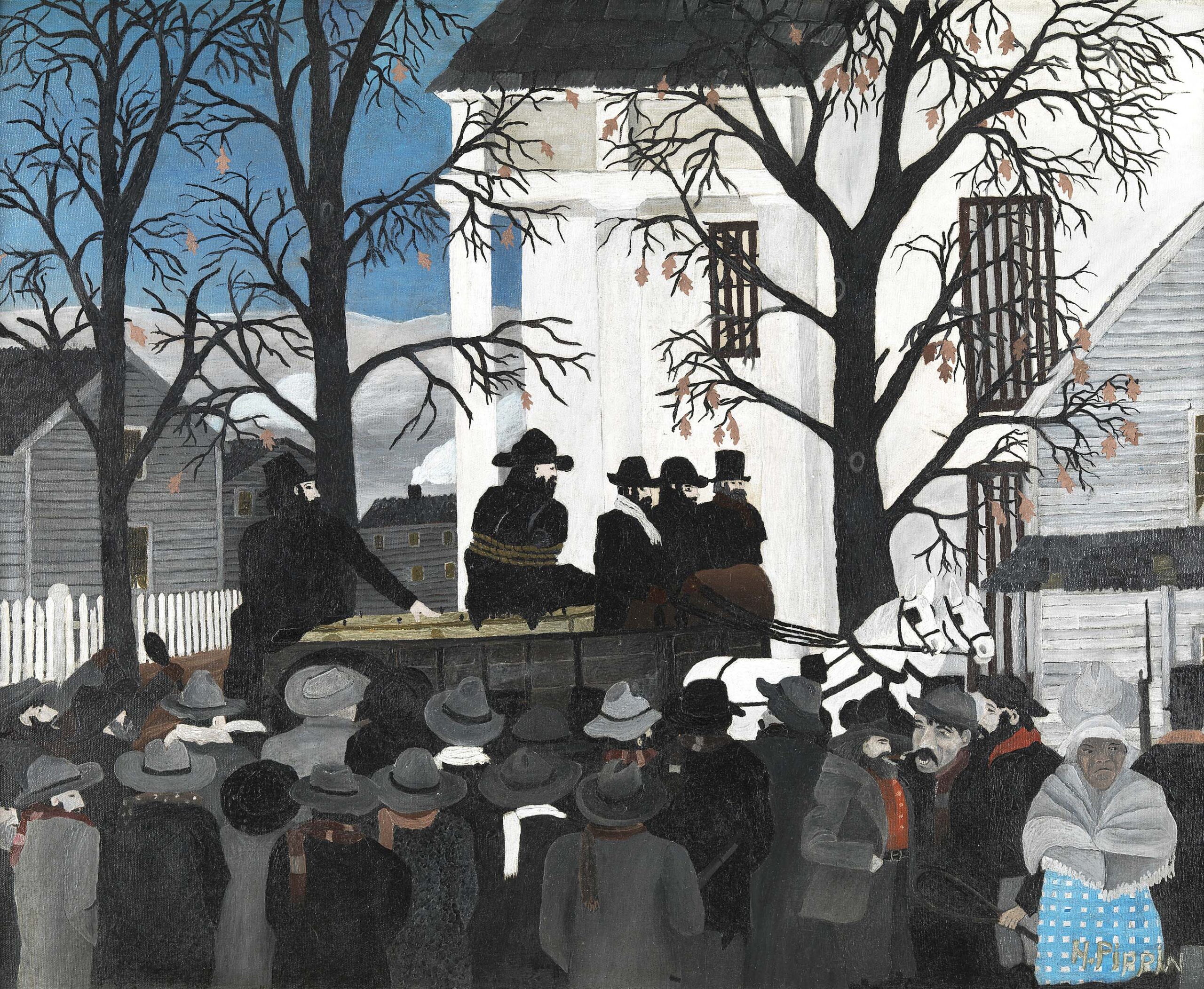
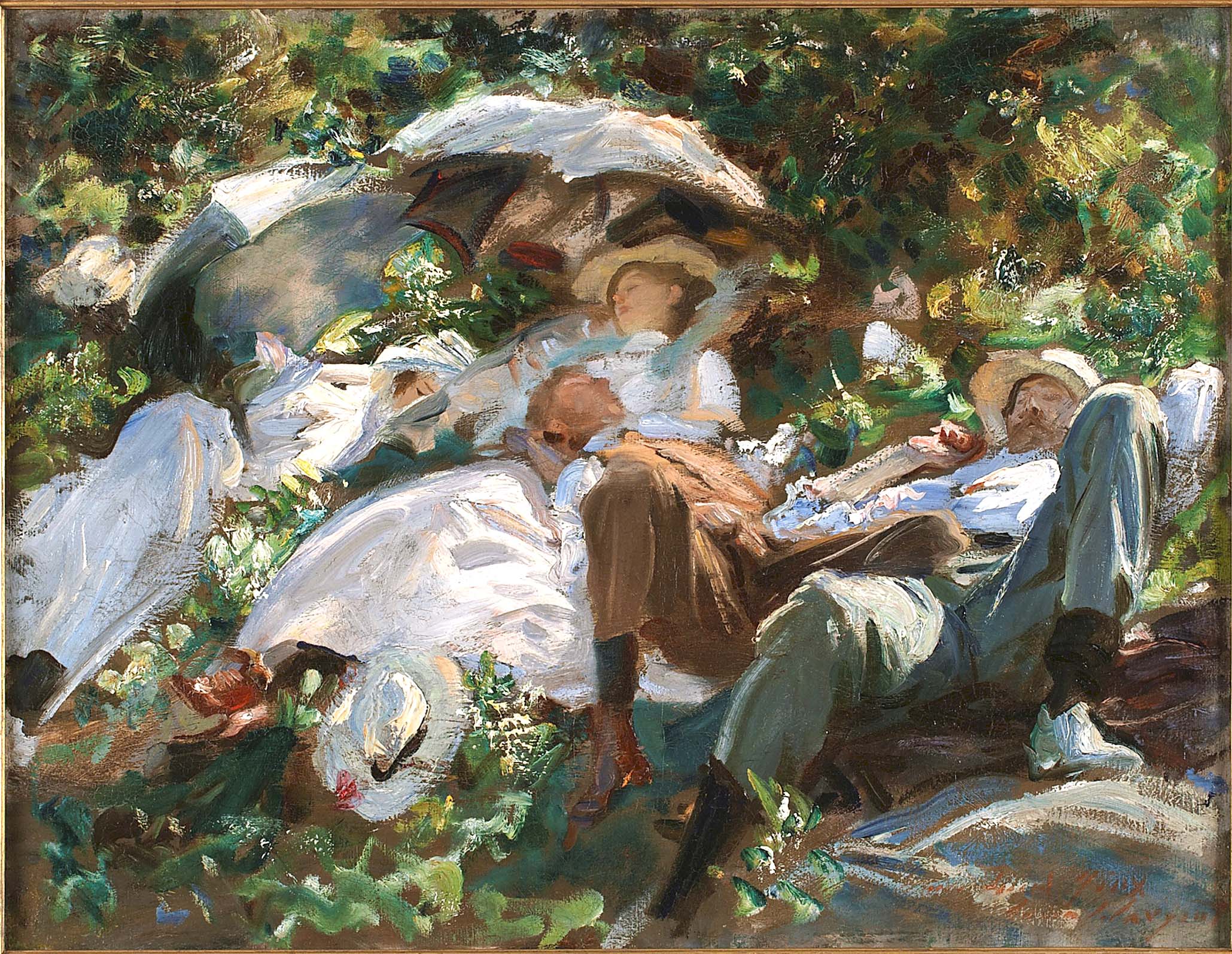
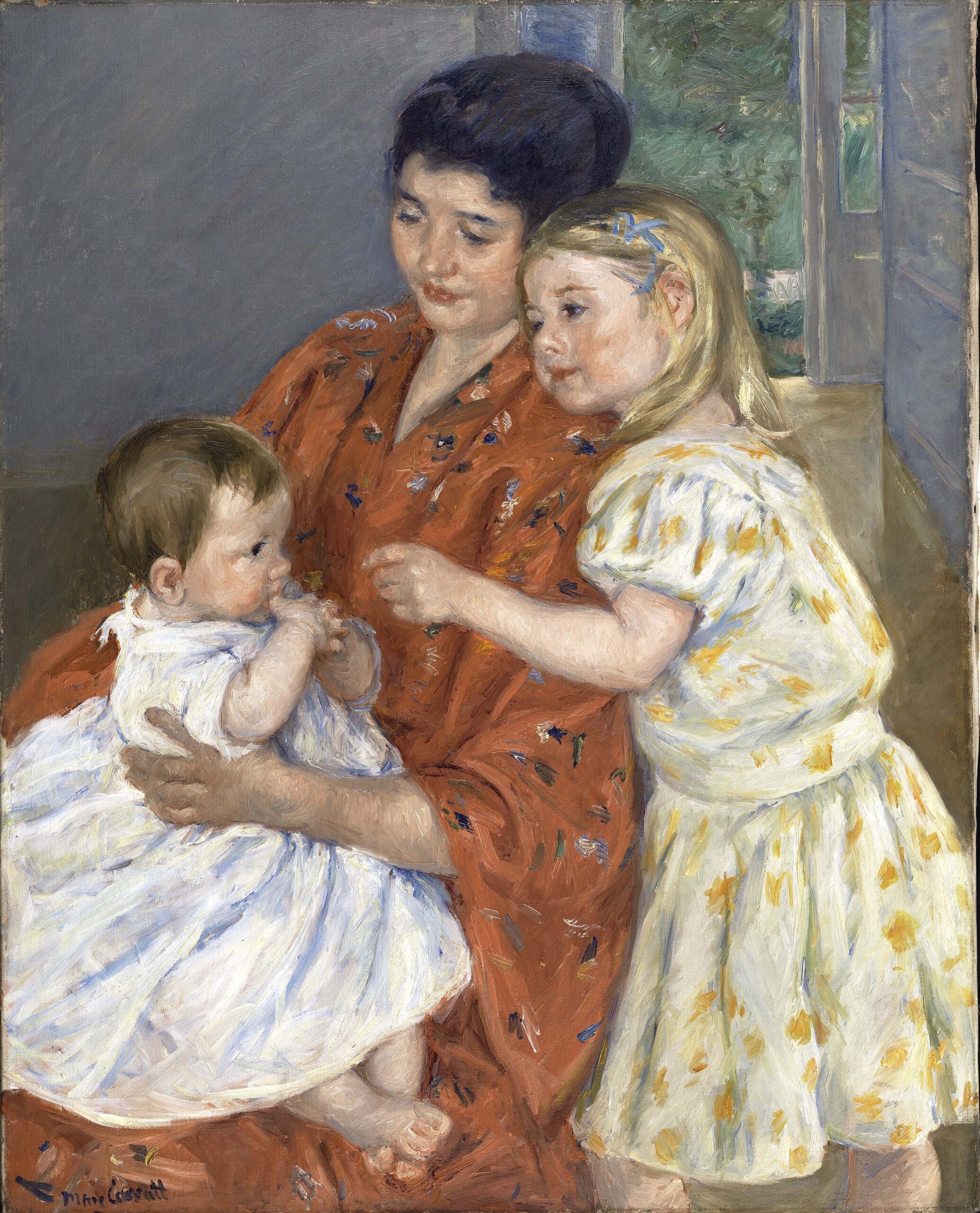
At the PMA, the Middleton family collection has fleshed out the regimental flags with Childe Hassam’s painting of 34th Street bedecked for Independence Day along with works by Edward Hopper and John Singer Sargent. At PAFA, Middleton works include not only Johns’ “Flag” but also Thomas Moran’s “Mists in the Yellowstone” and paintings by Mary Cassatt and Jackson Pollock.
A businessman and philanthropist as well as an art collector, John S. Middleton is also the principal owner of the Philadelphia Phillies baseball team, and, like most who care deeply about the sport, he is not shy about working it into his metaphors (or similes, as the case may be). The press release quotes him saying: “Like baseball, art has the power to bring people together and surprise us when we least expect it,” which seems true enough. He also stated: “Our aspiration is that this exhibition is for everyone — no prior knowledge of art or history required.”
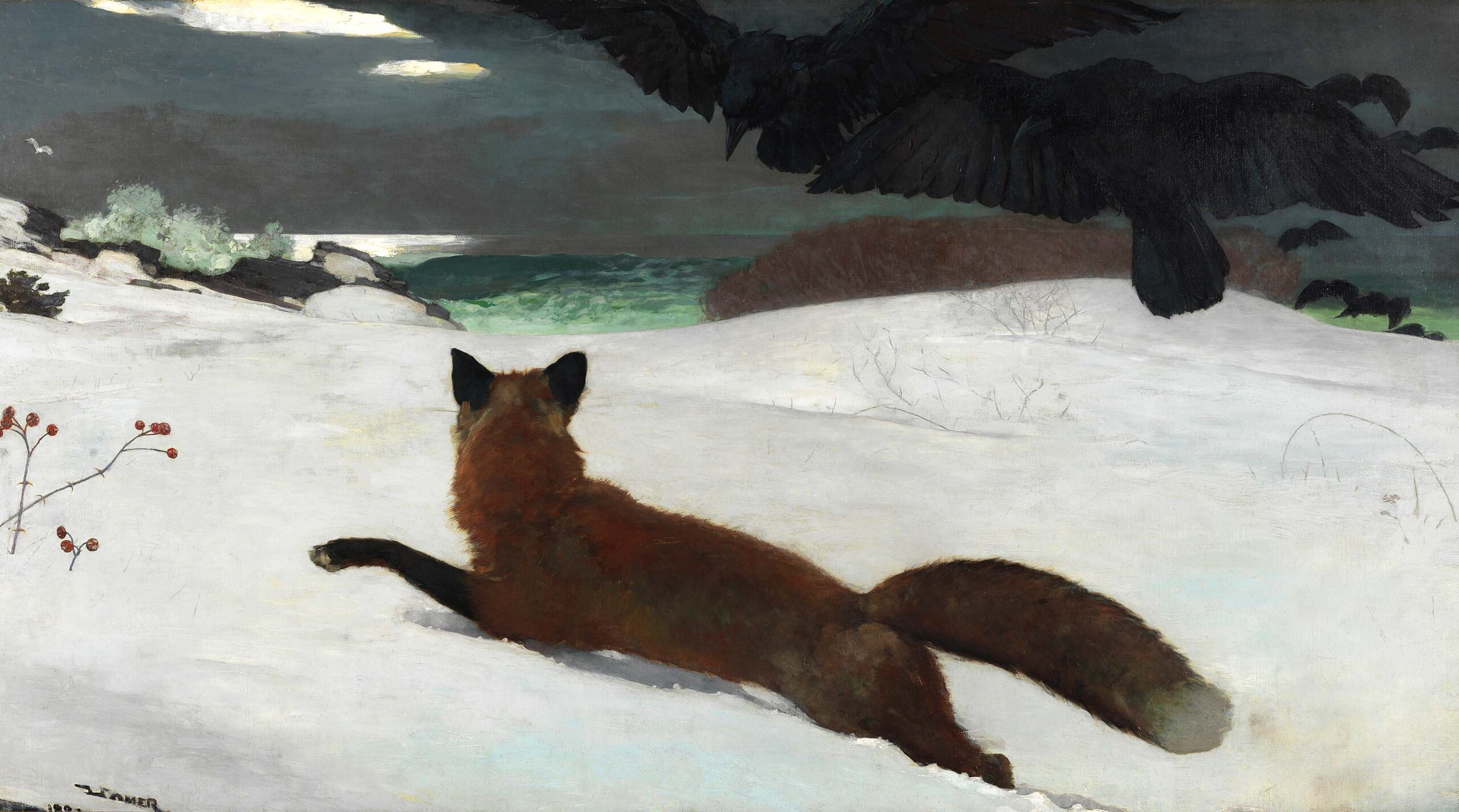
“Fox Hunt” by Winslow Homer (1836-1910), 1893, oil on canvas, 53 by 83¼ by 5 inches. Pennsylvania Academy of Fine Arts, Joseph E. Temple Fund, 1894.4.
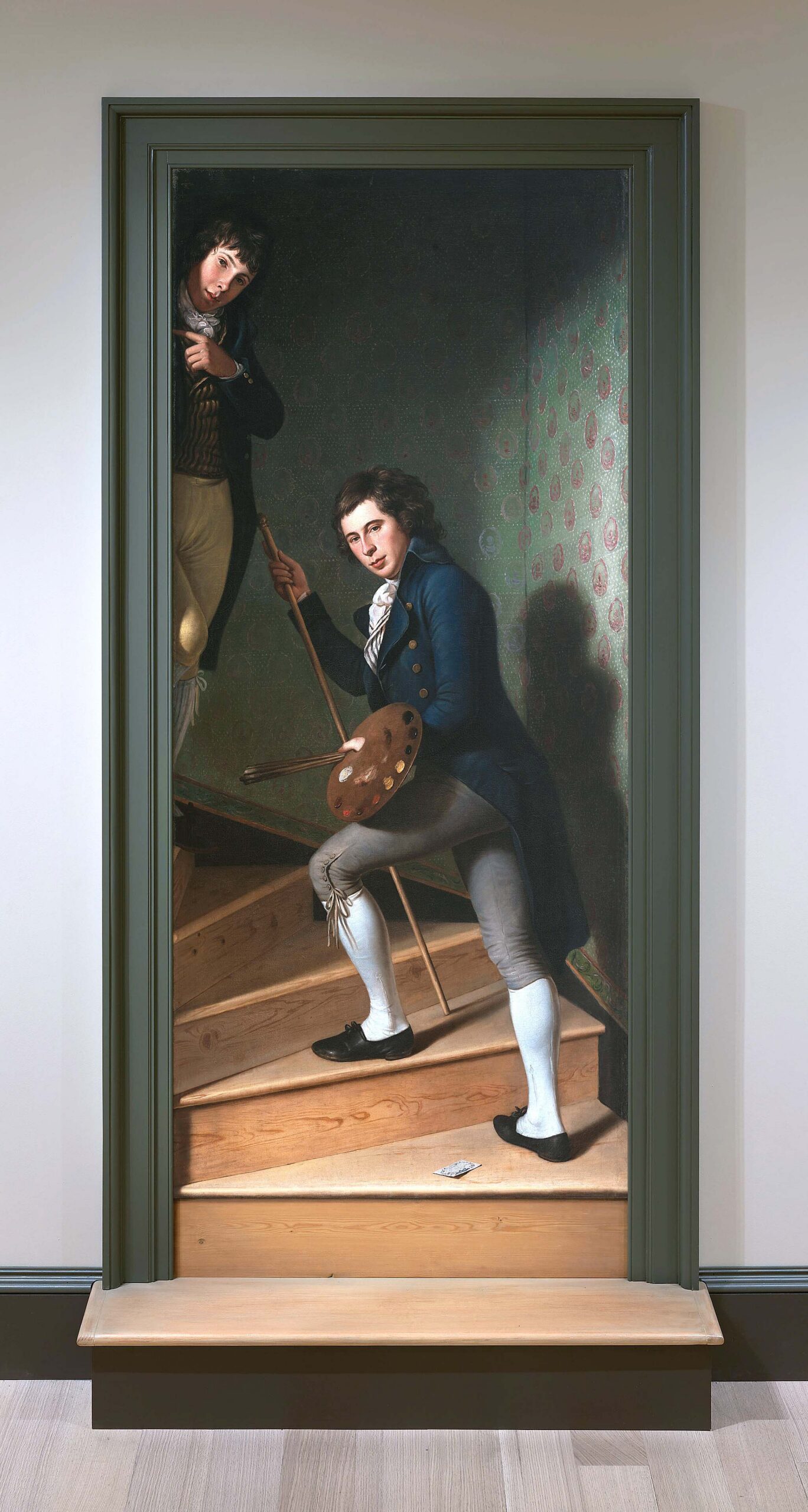
The accessibly written handbook and the crowd-pleasing displays — all those flags, dramatic sight lines, lots of Instagram-ready “greatest hits” like Winslow Homer’s “The Fox Hunt” and Charles Willson Peale’s genre-defying “Staircase Group” — certainly support this goal. But this is not a dumbed-down exhibition. The selections and combinations that the curators, with the help of the Middletons, have presented in the galleries are thoughtful and provocative. Cumulatively, the works on view paint a picture of a “nation of artists” that was and is diverse, inquisitive, rebellious and forward-looking.
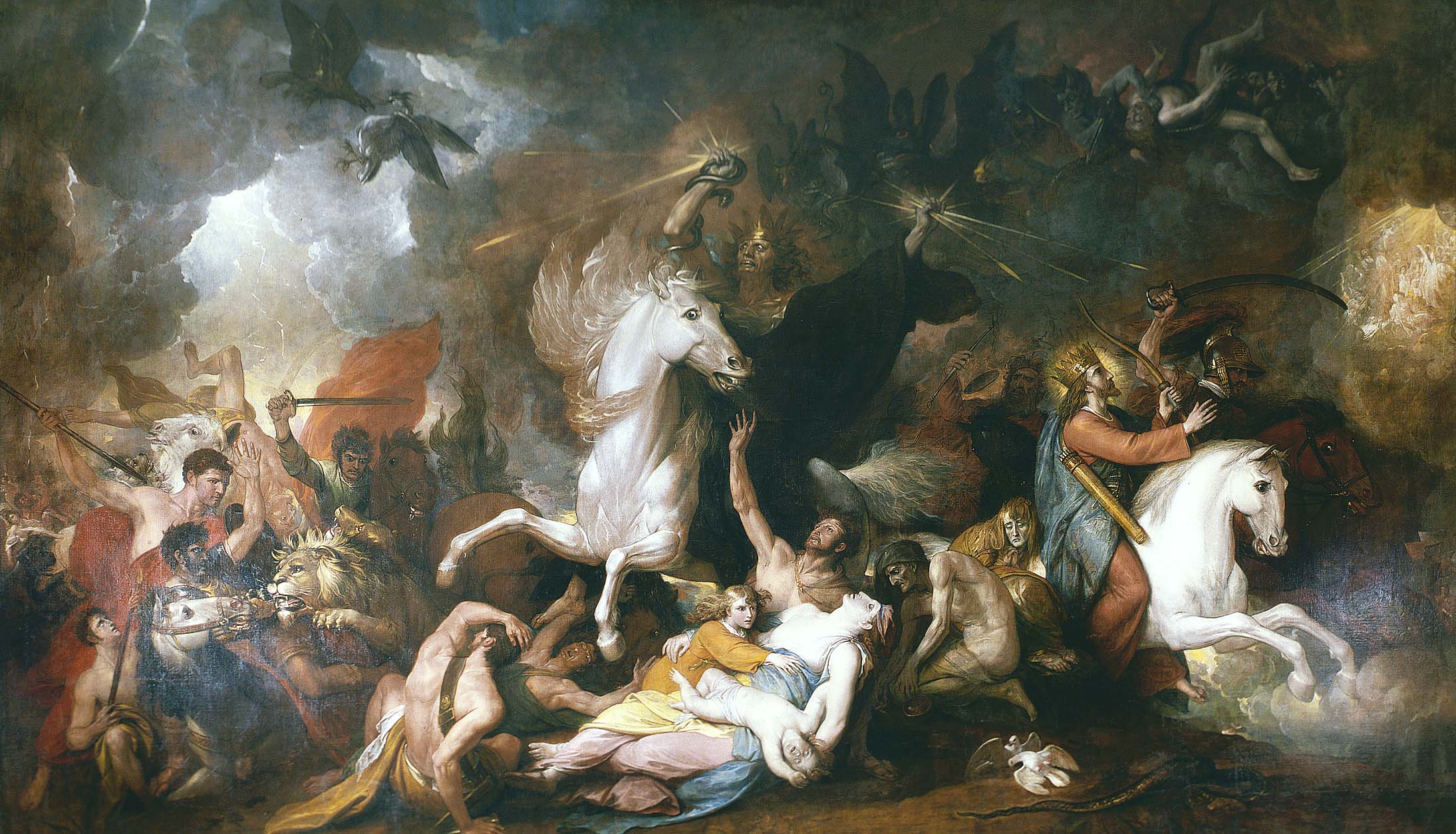
“We wanted to highlight…open-ended questions,” said Stephenson, “in terms of who was an American artist and what is American art, thinking about how we are really re-shifting definitions.” She noted a strong international and cross-cultural thread throughout the exhibition, beginning with Benjamin West (who moved to England before the Revolution and remained loyal to the crown) and moving on to contemporary artists like Gisela McDaniel, who is descended from the Indigenous Peoples of Guam. A Nineteenth Century view of a Cuban plantation staffed by enslaved people, Stephenson added, provides a stark contrast to works by Betye and Alison Saar that offer very different views on Black bodies and personhood. “We didn’t want to constantly hit our readers over the head with labels, but to really let them find some of these dialogues and connections across the centuries to address these sometimes politically fraught moments.”
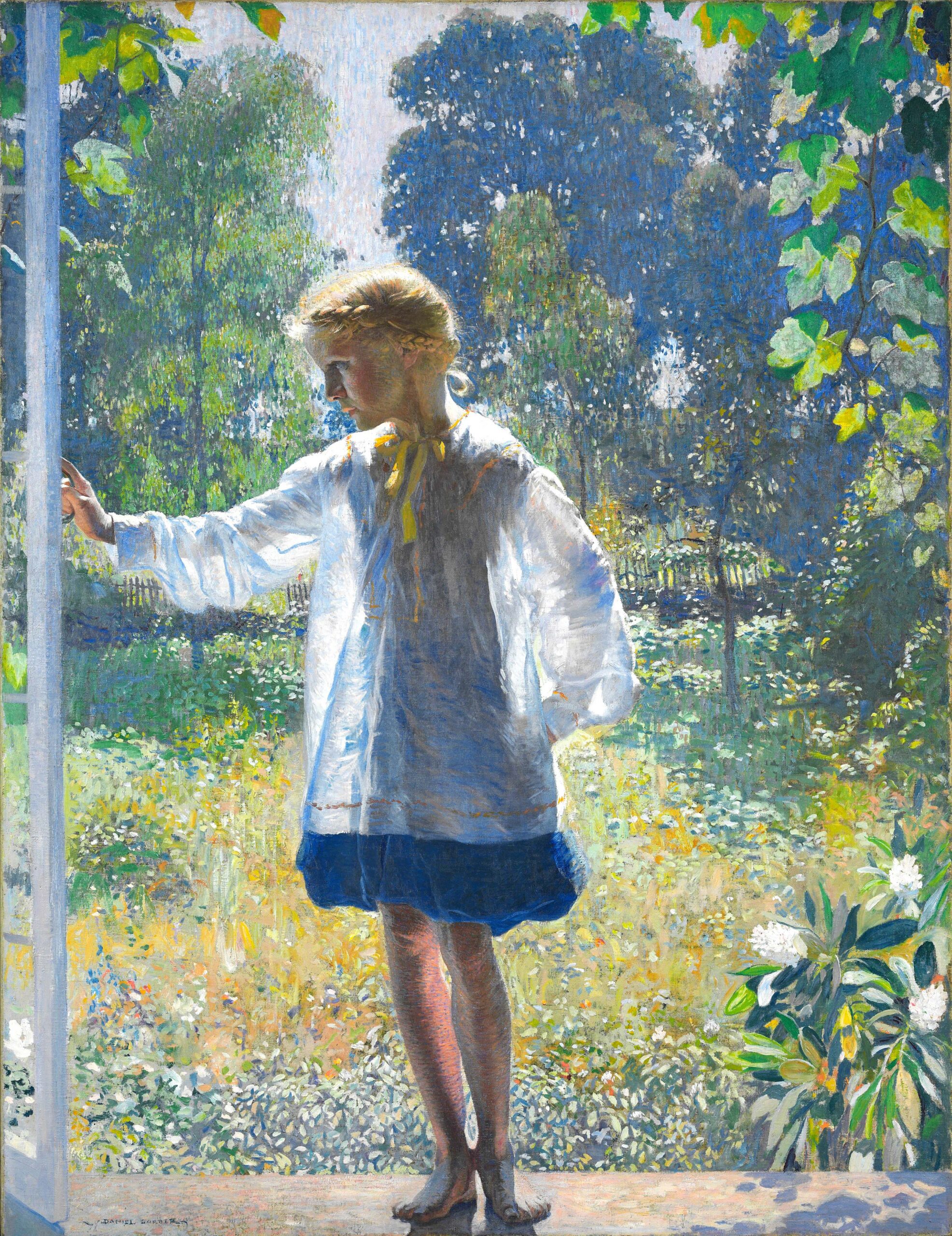
“Tanis” by Daniel Garber (1880-1958), 1915, oil on canvas, 60 by 46¼ inches. Purchased with funds contributed by Marguerite and Gerry Lenfest, 2011, 2011-60-1.
The moment in which we are currently celebrating the nation’s 250th birthday is also a fraught one, of course, characterized by debates over the very questions this exhibition asks: Who is American? What makes something American? What does the flag mean, and does that change depending on who is flying it? These have also been trying times for both of the museums who are posing these questions in the context of “A Nation of Artists.” The PMA is just on the other side of a failed renaming/rebranding experiment in late 2025 (it was the “Philadelphia Art Museum,” or PhAM, for less than a month, after which its CEO was abruptly let go and the name change reversed); while PAFA, also in 2025, stopped granting degrees in the fine arts, the purpose for which it was originally founded in 1805.
PAFA, for example, is forthright about its own history. It is justifiably proud of being the first art school and museum in the US, and of the fact that it admitted both women and Black students early in its history. But it is candid that this did not happen right away, and that in the interim both women and Black artists occupied subordinate roles in the various cultural and artistic projects of founder Charles Willson Peale (seen in his grandly-titled self-portrait “The Artist in His Museum” of 1822). It also uses the display of Thomas Eakins’ famed painting “The Gross Clinic” — an operating theater with a young, bloodied boy on the table — as an opportunity to discuss how “the artist’s legacy at PAFA as an instructor…has been tinged with controversy around his personal relationships with models,” according to the painting’s exhibition label, and how “‘The Gross Clinic’ opens questions about the depiction of a patient’s body — exposed and vulnerable to the viewer’s gaze.” For its part, the PMA has had to grapple with the extent to which its collection was originally built around a very narrow definition of Americanness and find ways to expand both their collection and its interpretation of it for this moment of reckoning.
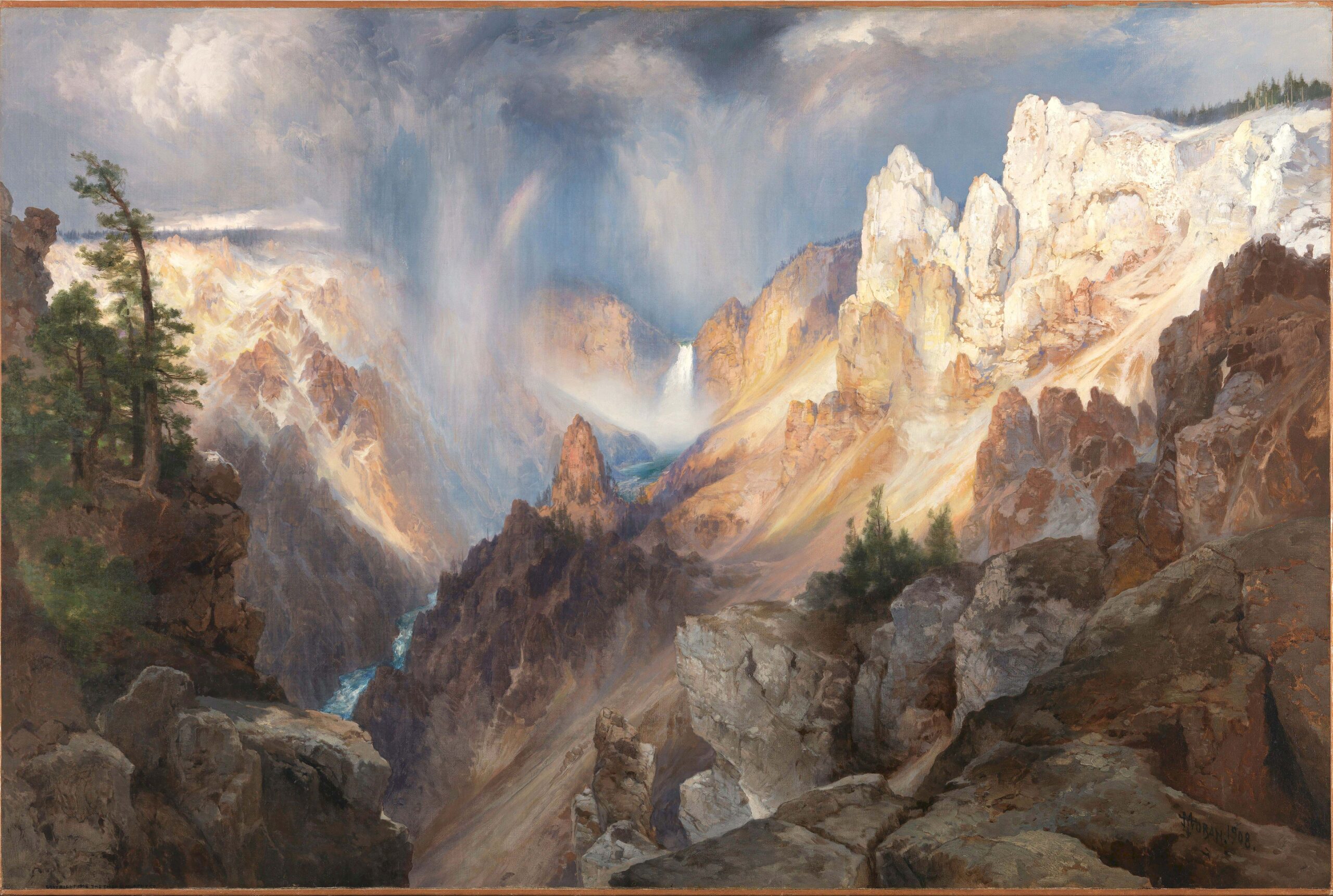
“Mists in the Yellowstone” by Thomas Moran (1837-1926), 1908, oil on canvas, 30 by 45 inches. The Middleton Family Collection.
These institutional existential crises, past and present, reflect the similar identity-questioning that many Americans are going through on a larger scale in the mid 2020s, as we question the resilience of our hand-forged democracy and how long we can still claim to be John Winthrop’s “shining city on a hill.” But if nothing else, “A Nation of Artists” is also a reminder that there is much to celebrate, on both a local and a national level. In addition to the nation’s 250th, there is PAFA’s own 220th anniversary, as well as the reopening of its Historic Landmark Building, which this show re-inaugurates. PAFA’s collection had toured the country while the building was being renovated (I wrote about the traveling exhibition for the February 6, 2024, issue of Antiques and The Arts Weekly), and so the present exhibition can legitimately be seen as a kind of victory lap.
The history of the PMA, meanwhile, is intimately connected with national anniversaries, having first been conceived along with the Philadelphia Centennial Exposition of 1876, making 2026 the museum’s own 150th anniversary. Both institutions have pulled out all the stops in preparation for “A Nation of Artists” — acquiring or commissioning new works of art (Indigenous artist Rose B. Simpson’s “Delegate” is installed in juxtaposition with West’s “Penn’s Treaty with the Indians” of 1771-72 at PAFA; Eakins’ “The Gross Clinic” was jointly acquired by both institutions in 2007), conserving many others, bringing works out of deep storage and, of course, collaborating with the Middletons on key loans. The scale and ambition of what these two venerable American institutions have achieved, against not-insignificant odds, gives hope that there is much worth saving about our social, cultural, civic and democratic experiment after all.
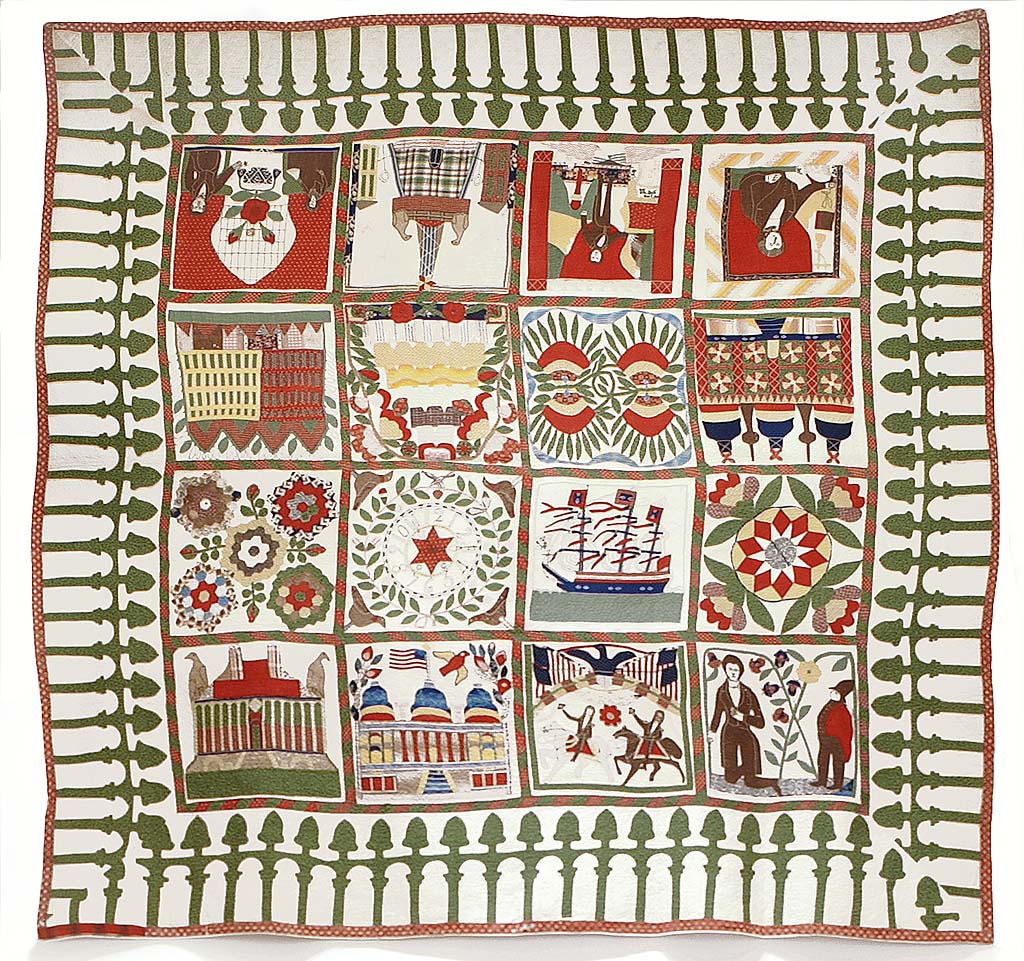
“James Buchanan” quilt, made in the US circa 1857, woven and printed cottons with appliqué and embroidery, diagonal quilting, 8 feet by 8 feet 3 inches. Philadelphia Museum of Art, on loan from The Dietrich American Foundation.
To return to and end with flags, just as both exhibitions do, two final examples illustrate the diversity of artwork on view and the perplexing mutability of our national symbols, as captured in the art on view. Lent to the PMA by the Dietrich American Foundation, an 8-foot-wide pieced quilt was made in 1860 to honor President James Buchanan, who had taken office in 1857. One of its squares shows a flag atop what seems to be a fanciful rendition of the US Capitol Building (though its dome would not be complete until 1866). Elsewhere, two men on horseback (one presumably Buchanan) doff their hats against a backdrop draped with stars and stripes. Buchanan, who supported state’s rights and slavery, is no hero for our time, but we can imagine that in these years before the Civil War those who made and used this quilt might have seen him, and whomever his successor might be, as the possible savior of the Union. The quilt is part of a tradition of presidential quilts that continues to this day, generally stitched by women, just as many flags themselves were.
In an altogether different work, a lithograph made by Indigenous artist Jaune Quick-to-See Smith in the wake of the 9/11 attacks, there is only the suggestion of a flag: a streak of red, white and blue projecting from the palm of a striding figure dressed in Plains garb, whose head and feet are cut off by the edges of the paper. Peeking from the corners of the print are the distinctive round ears and gloved hand of Mickey Mouse superimposed atop patterned, gridlike forms. These shapes might seem to echo quilt squares but are also related to the traditional form of the Native American parfleche, or carryall. Like quilts, parfleches were made by women and could serve purposes well beyond their ostensible function: as art objects, aide-memoires, political statements or vehicles of tradition. Along the bottom of the print are the words “What is an American?”
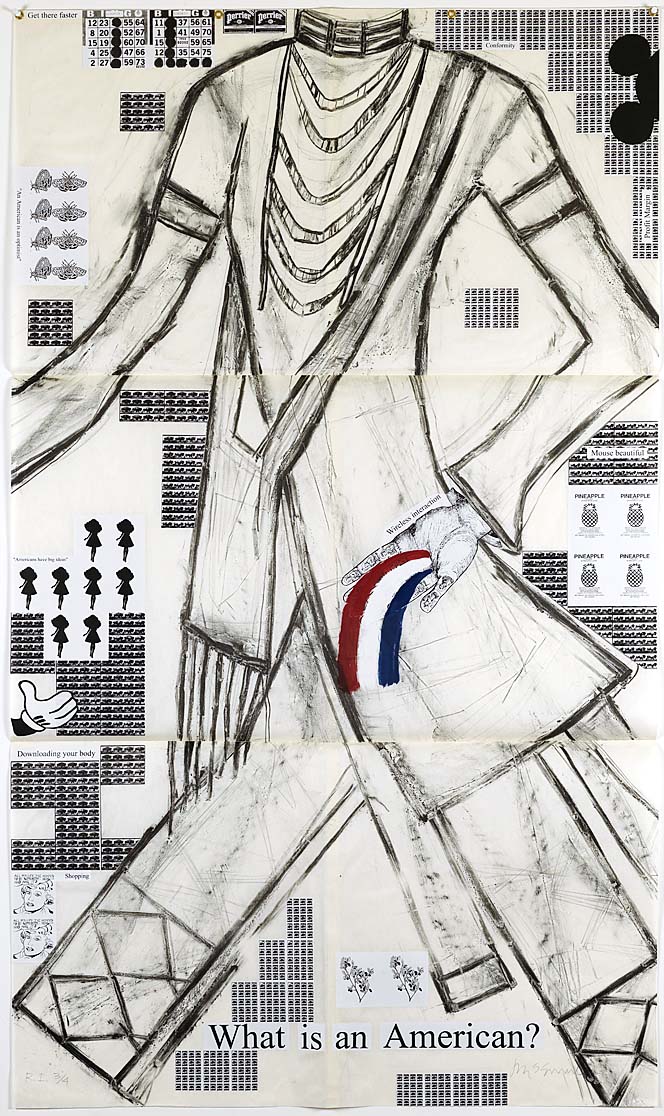
“What is an American?” by Jaune Quick-to-See Smith (b 1960), 2001-03, lithograph, chine collé, monotype, edition 3/4, 68 by 40 inches. Pennsylvania Academy of Fine Arts, gift of Ofelia Garcia, 2015.42.11.
Both of these works, created some 140 years apart, were made by women in historical moments charged with fear of the future and characterized by extreme politics. Both feature a cacophony of symbols, overlapping timelines and stereotypically American imagery, including flags; in this they have much in common with the exhibition of which they are a part. There are no simple messages here, no trials or challenges to our national character that we can say have now been fully resolved or overcome. What the exhibition, and the artworks within it, instead reveal is that we have not yet tired of working through the question of what exactly it is that makes us American through our art and our public institutions — and that the endurance of both those things is indeed something to celebrate.
The Philadelphia Museum of Art is at 2600 Benjamin Franklin Parkway. For information, www.philamuseum.org or 215-763-8100.
The Pennsylvania Academy of the Fine Arts is at 118-128 North Broad Street. For information, www.pafa.org or 215-972-7600.