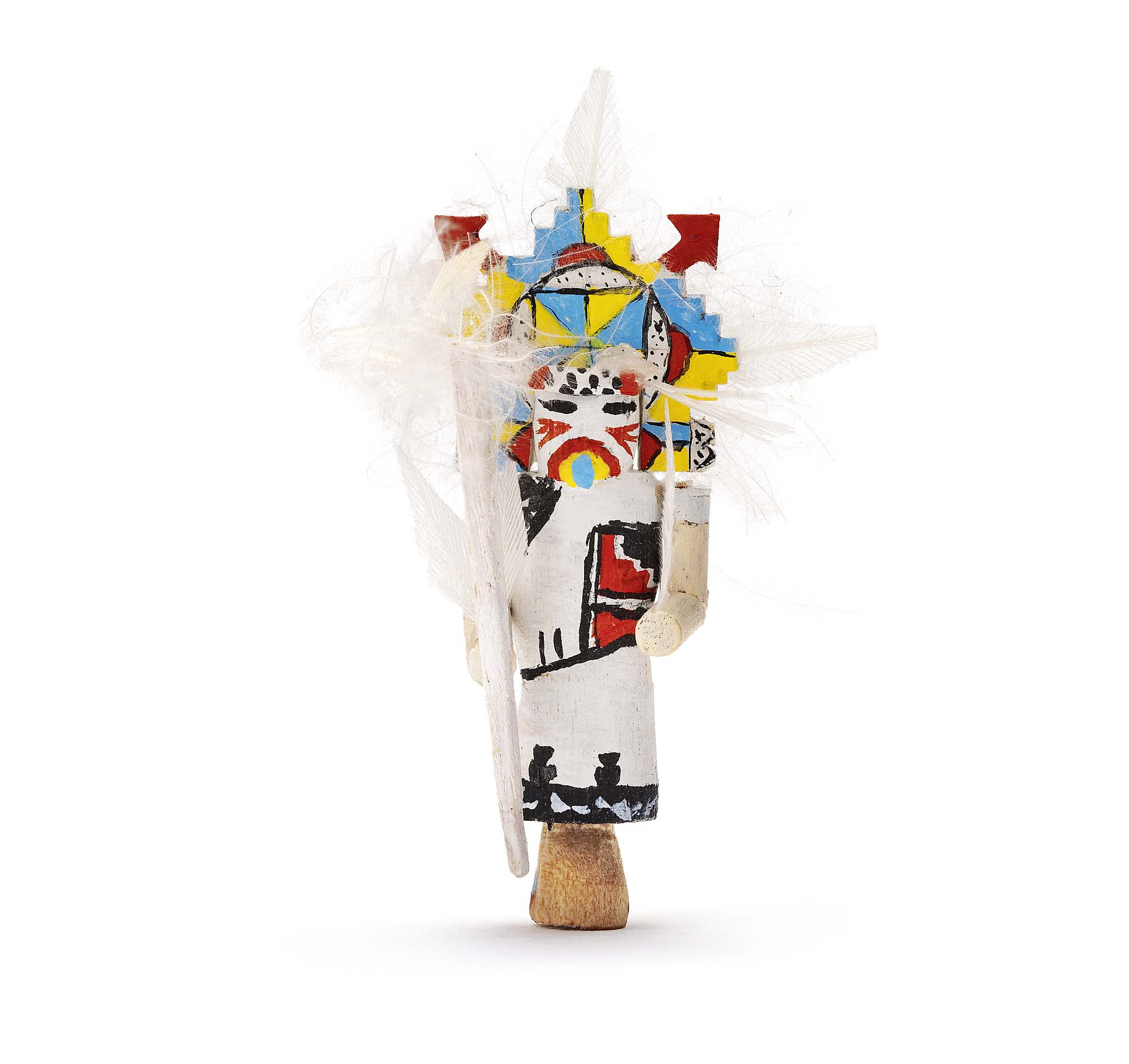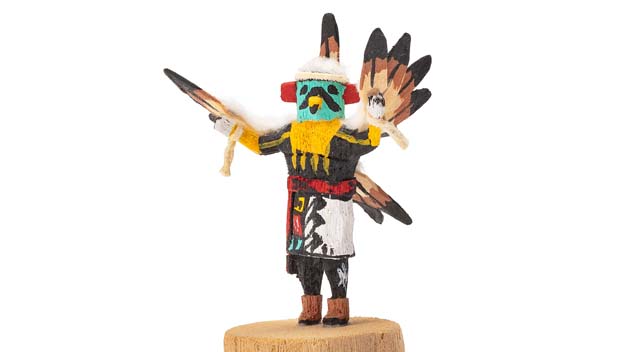
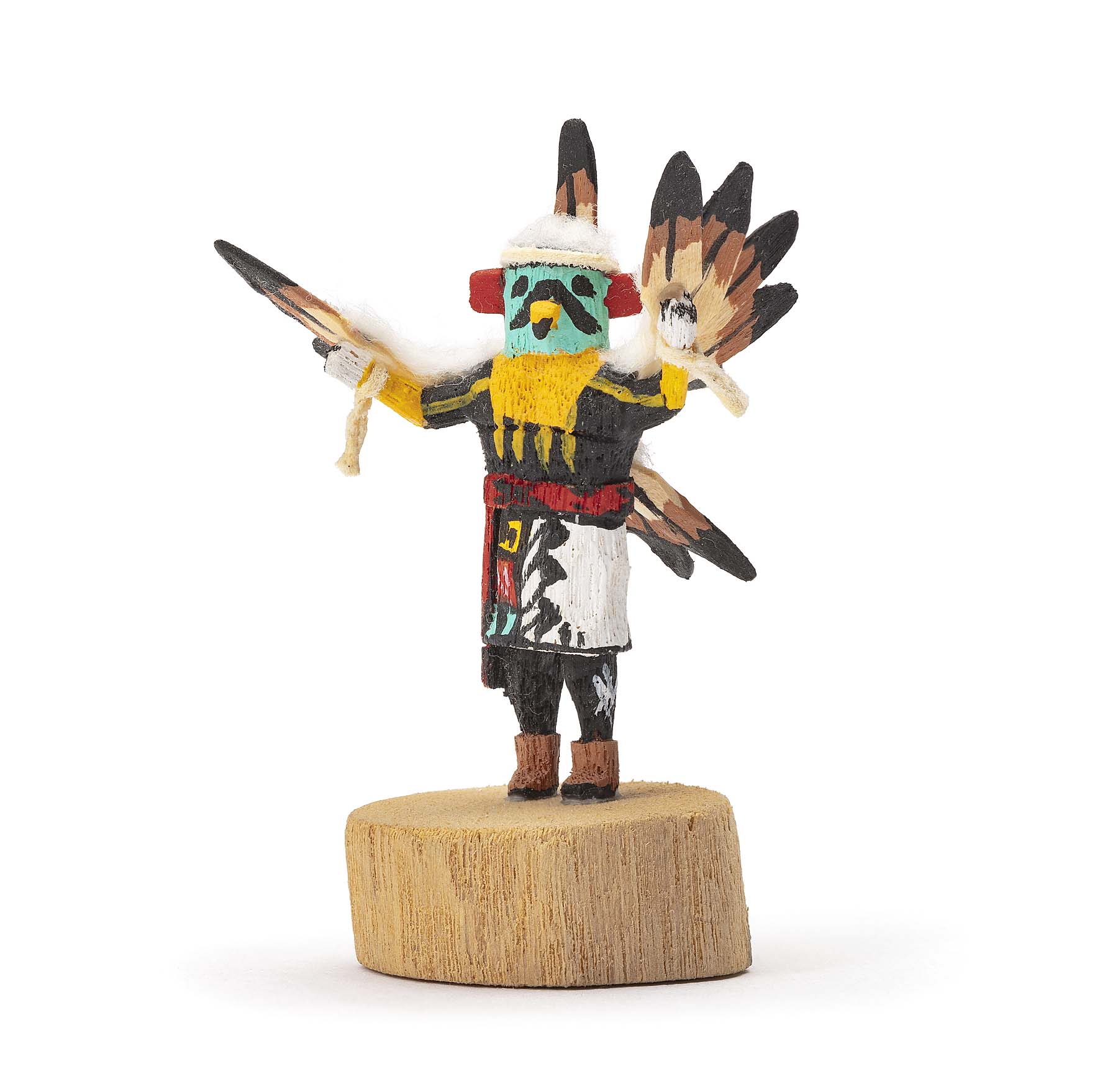
This eagle katsina carving by Ron Hinshaw (Pueblo of Laguna), 1980s, is depicted holding a narrow white suede strip, and the figure’s painted waistband represents a traditional Hopi sash.
By Laura Layfer
KANSAS CITY, MO. — At The National Museum of Toys and Miniatures on the campus of the University of Missouri-Kansas City, the concept of play is considered an art in and of itself.
With a collection that dates from 1690 to the present day, there are board games, Barbie dolls and stuffed animals that invite participation — a form of experiential art — while others in miniature such as soldier figurines, dollhouse interiors and utilitarian wares portray historical time periods, movements and styles.
Each of these objects, regardless of size or stature, are intended to spark curiosity and imagination for individuals of any age. It is in this context that “Native Arts in Miniature,” on view through January 25, examines both the multidimensional art and the multi-generational family of artists that share in the practices of a singular craft.
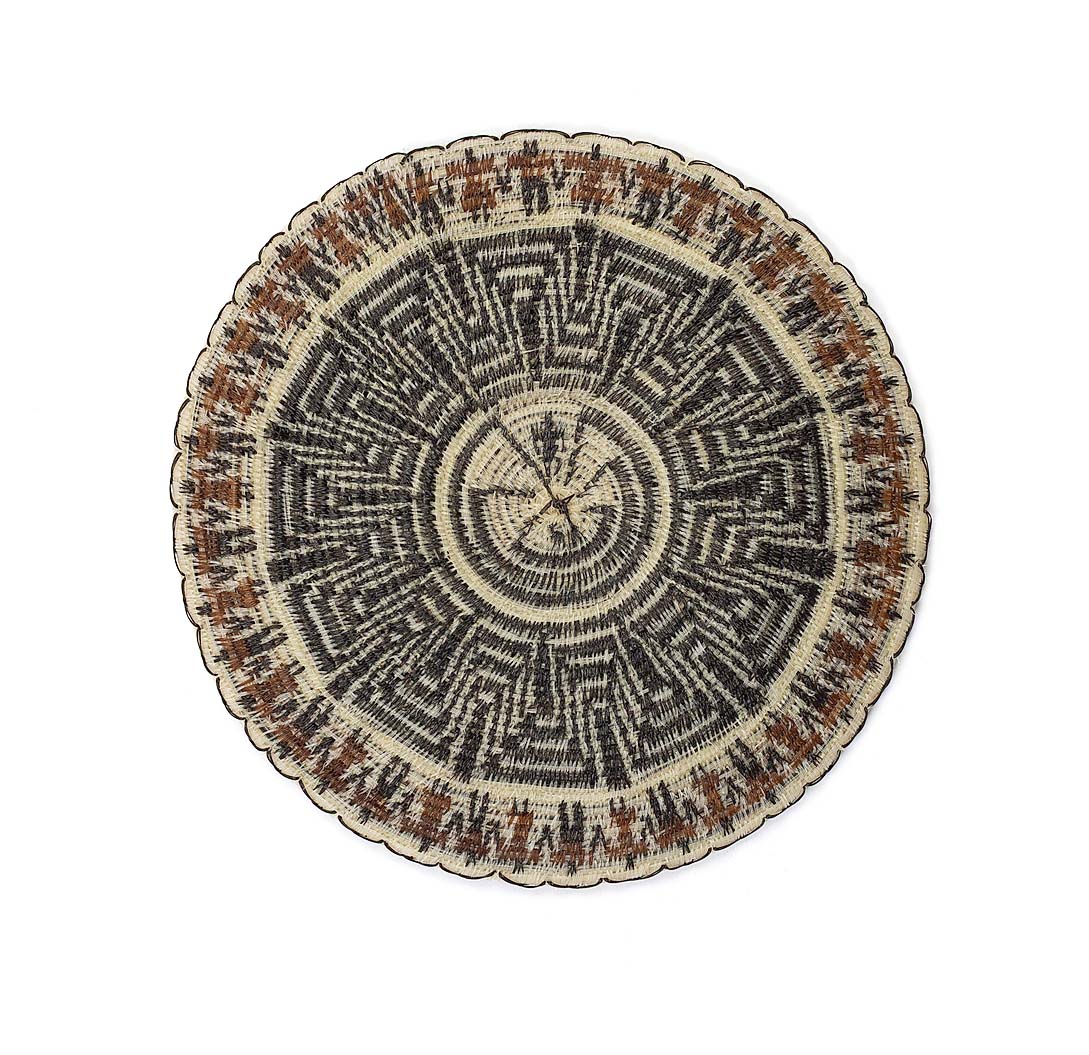
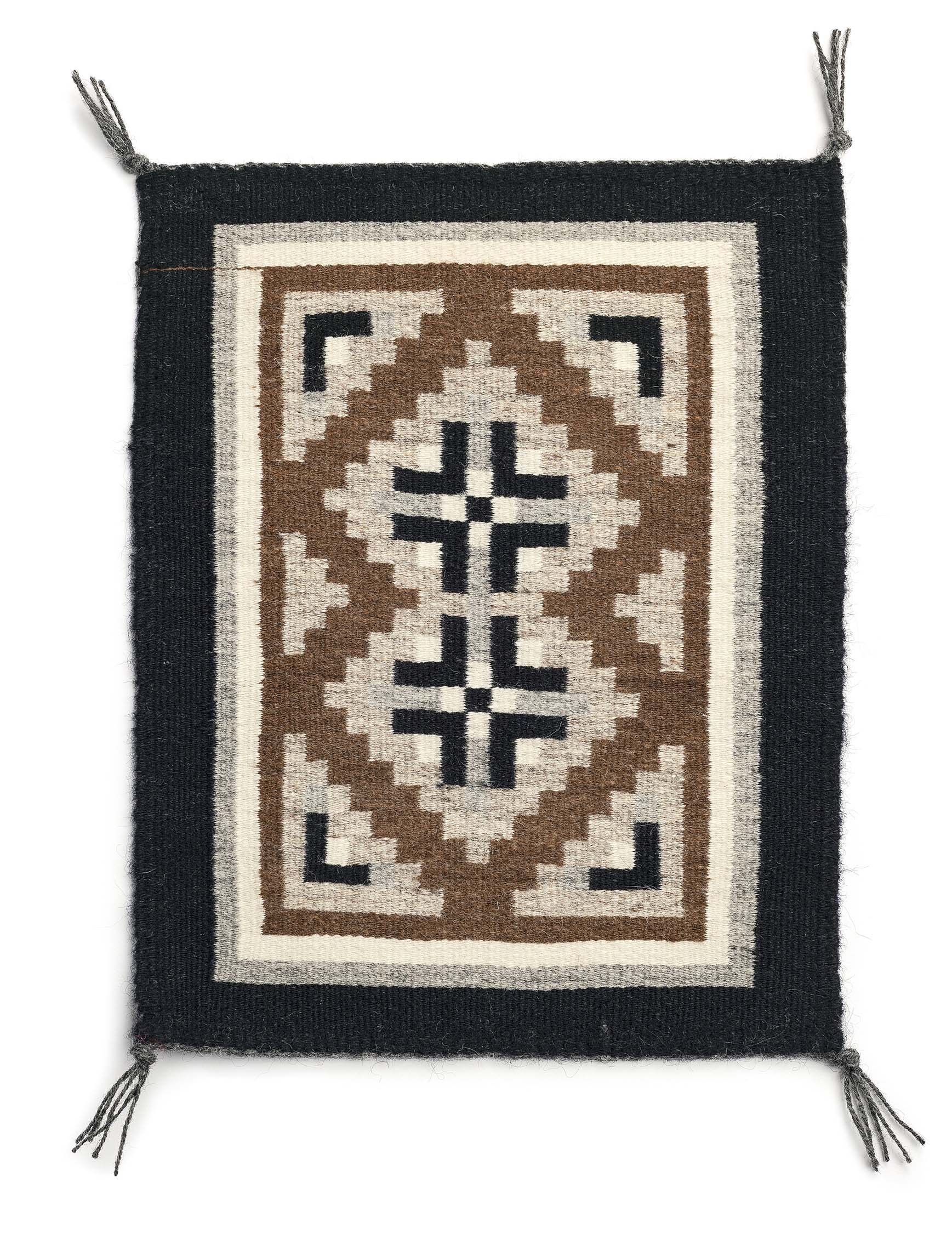
The exhibition highlights tribal traditions through more than 200 handmade works of decorative art on display that range from ceremonial sculptures and ceramics to woven textiles and baskets. The acceptance of new mediums, methods and ornamentation seen in the creative output of contemporary Native artists is as much an homage to their predecessors as it is to their own potential protégés.
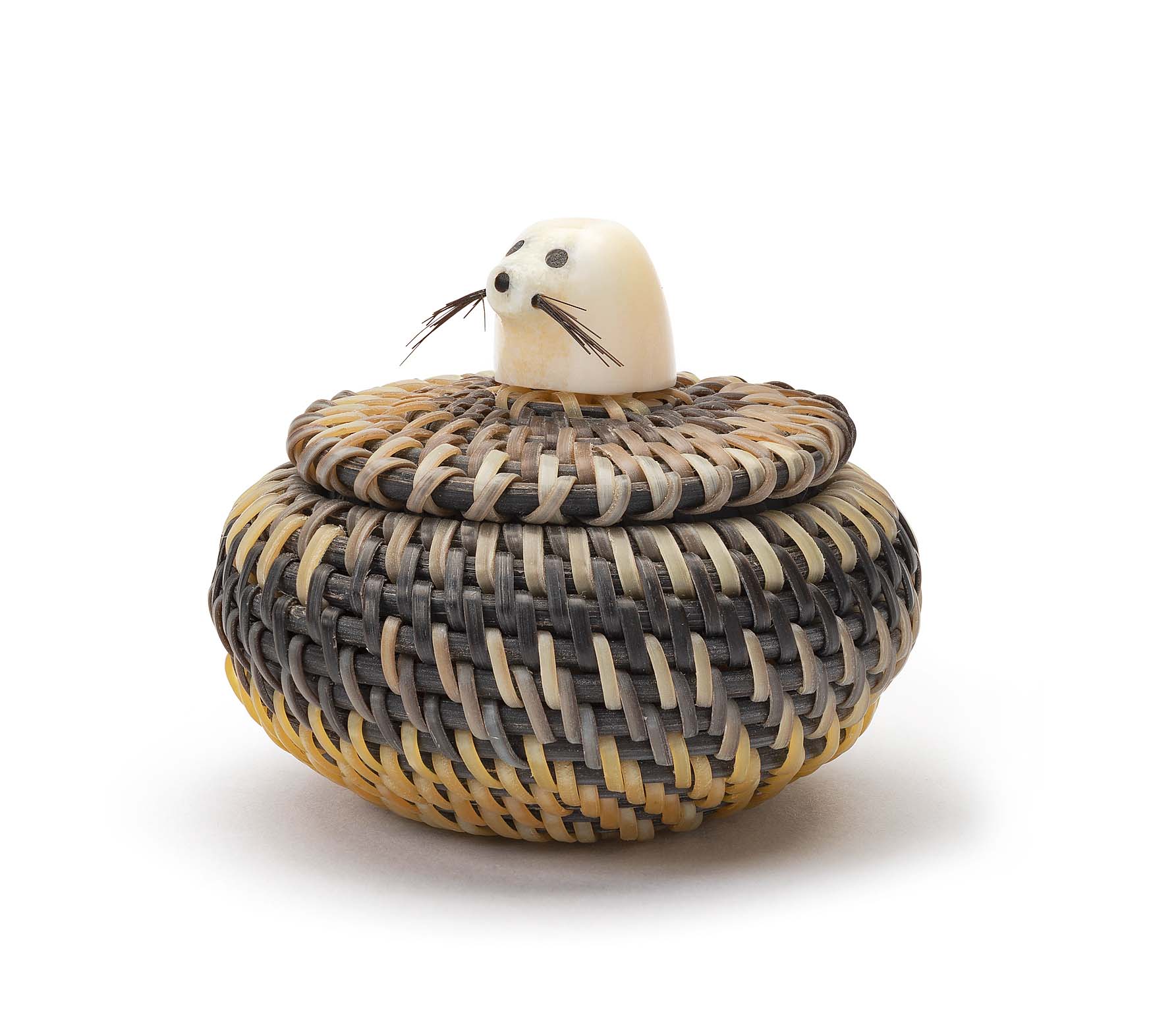
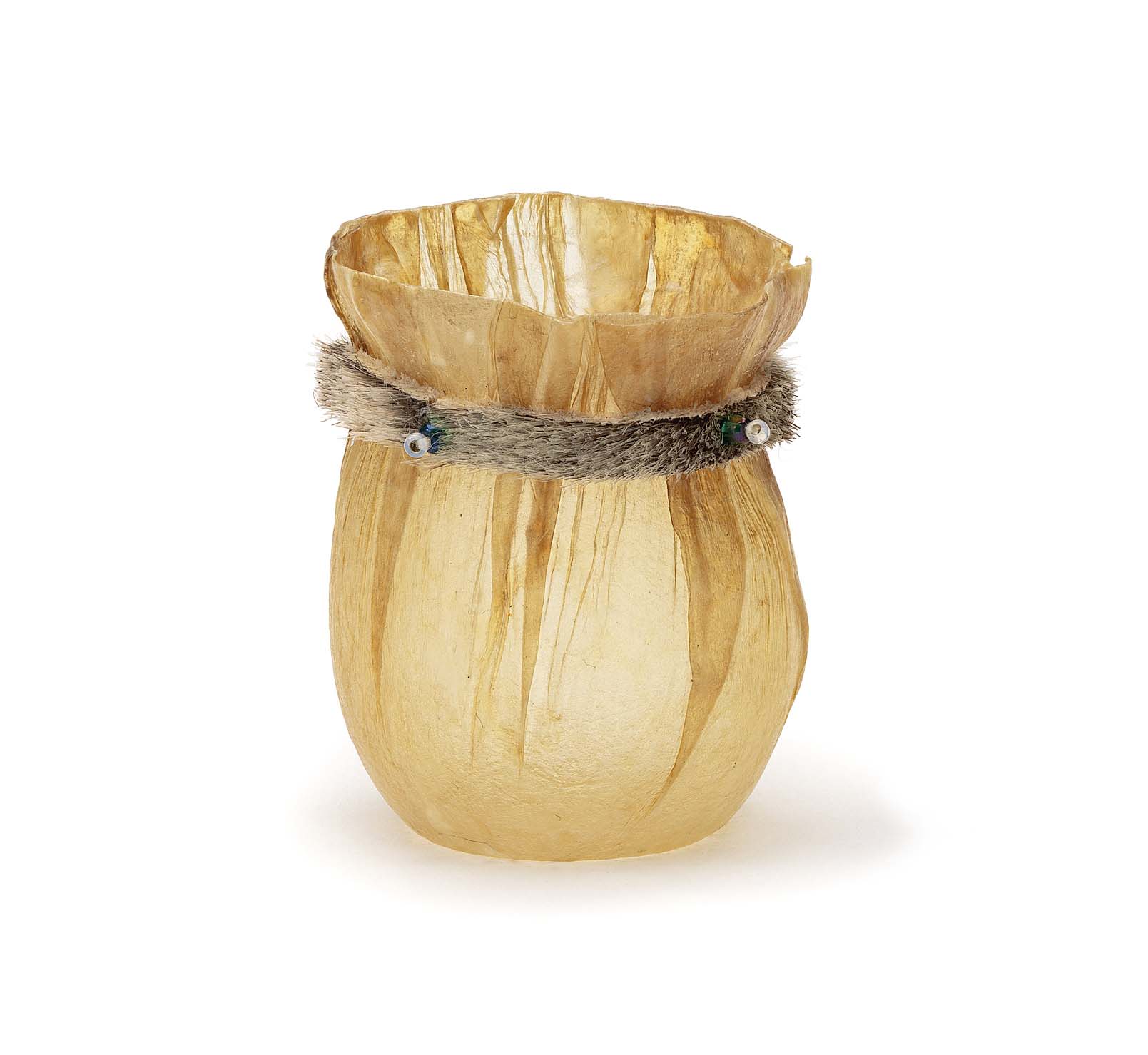
Baleen basket by Donald Johnston (Qagun Tayagungin), 2023.
The museum was founded in 1982 by Kansas City locals Barbara Hall Marshall and Mary Harris Francis, and was initially housed in the Tureman Mansion, a historic residence on the university grounds. The two women had grown up in the same social circles but did not bond as great friends and colleagues until later in life once recognizing a shared passion for collecting small objects. Their tastes differed in the subject matter, however. Marshall’s interest was in the art of fine-scale miniatures (most often made in 1:12 scale, meaning 1 inch to 1 foot ratio, and inspired by an existing object), whereas Francis favored historic toys for more interactive play. Yet, they supported each other and continued to acquire pieces together after establishing their museum. Currently, following multiple expansions over the years, the museum collection, which consists of more than 100,000 objects and continues to grow, occupies a 33,000 square foot building.
Dr Madeline Rislow, museum curator and senior manager of learning and engagement, said that one of the benefits of miniatures is the intimacy it requests from viewers. “Because they are so small, you can’t be passive — you have to be close up.” A favorite motto of hers is how one can “explore the world in one museum” during a visit. It’s that sentiment that led her, along with colleagues, to add a new stop to their annual roster of art fairs visited: the Santa Fe Indian Market (SFIM). Known as the premier Native American art show and now in its 104th year, the fair brings together more than 200 tribal nations across the United States and Canada. Though Marshall had previously attended and purchased at SFIM, there was little research or focus that had ever been done on those works and only a small portion occasionally on display in the galleries. After that initial visit to SFIM, the museum started to rethink and expand its definition of miniatures that helped pave the way for the current exhibition.
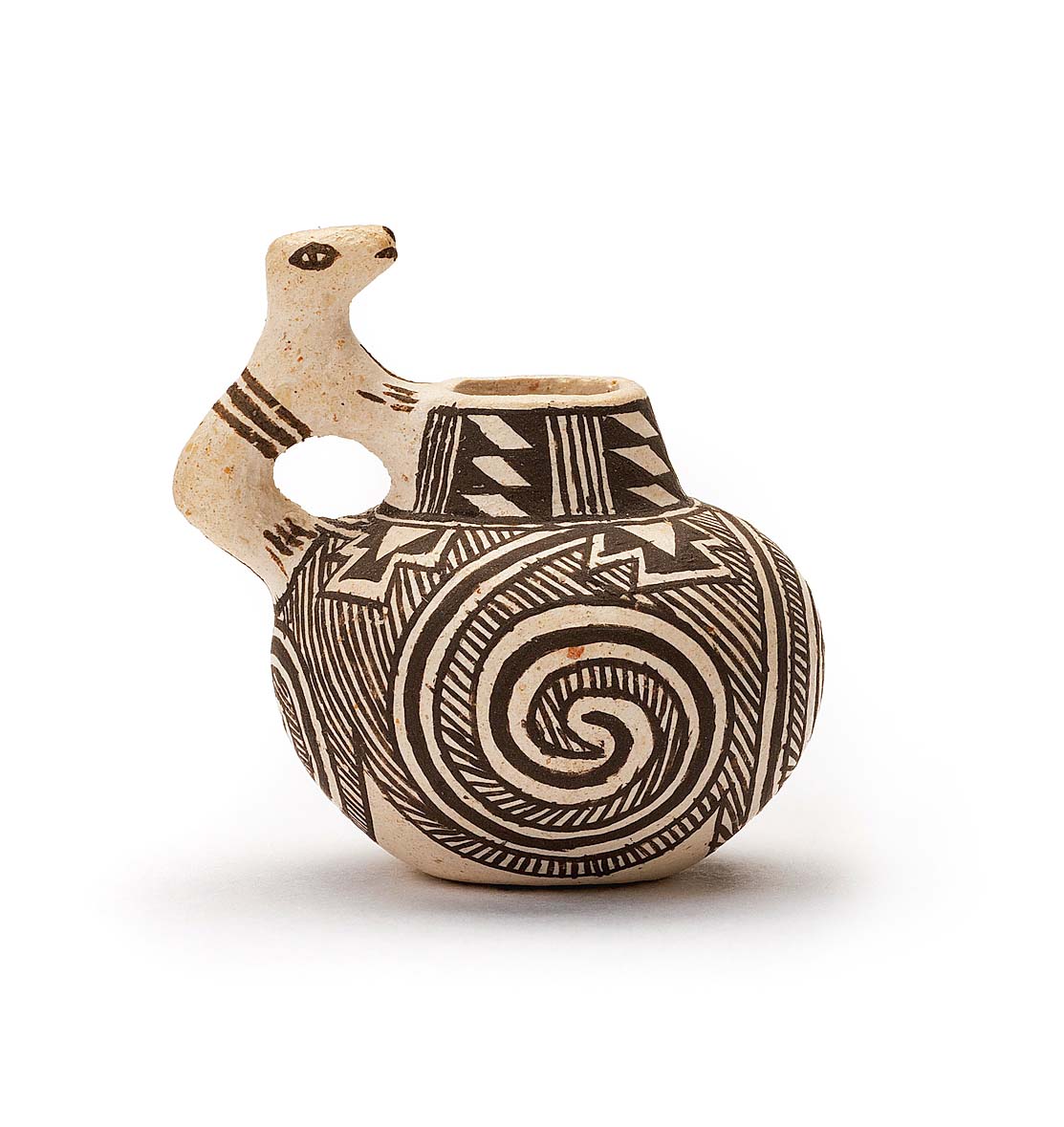
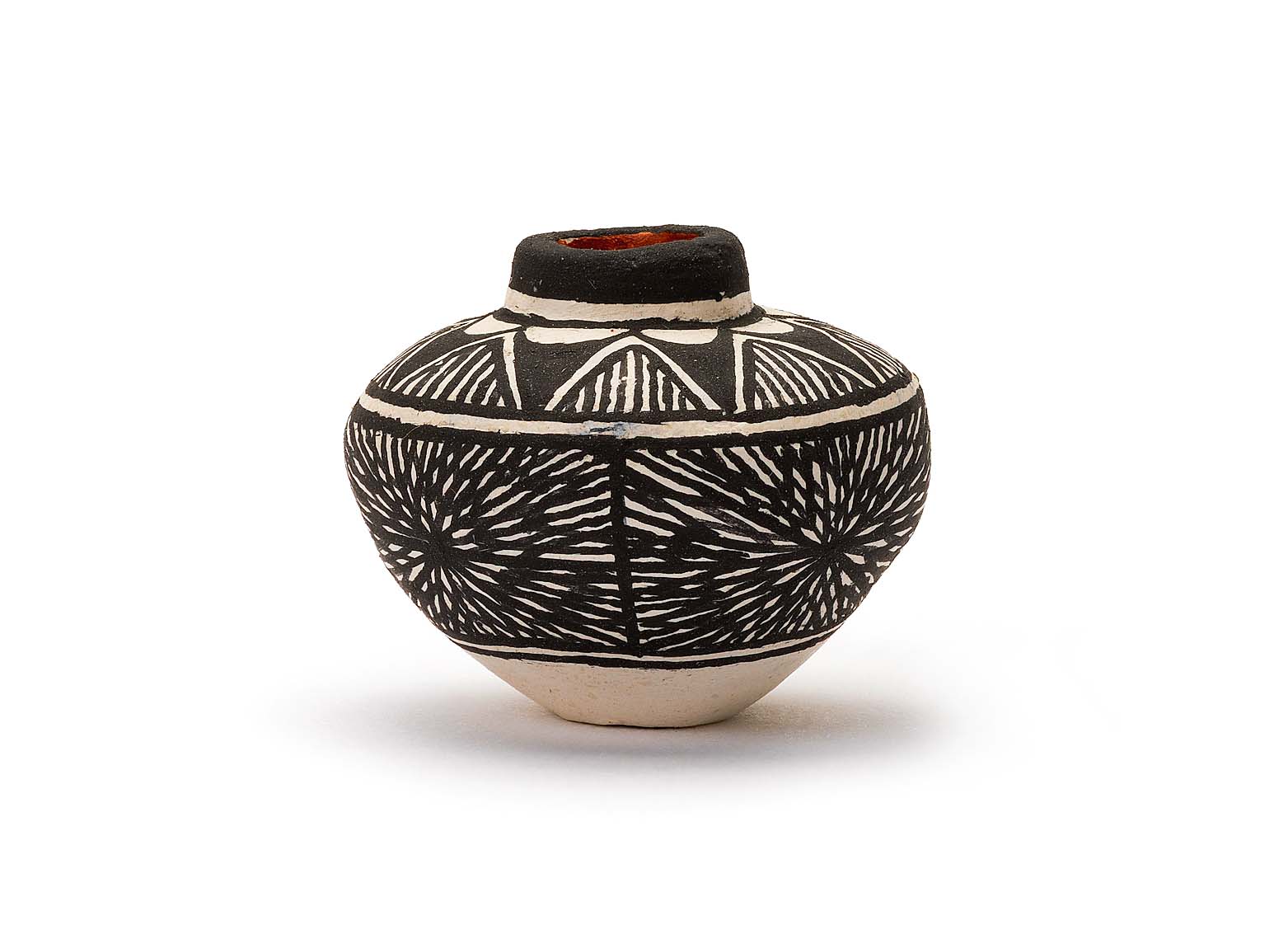
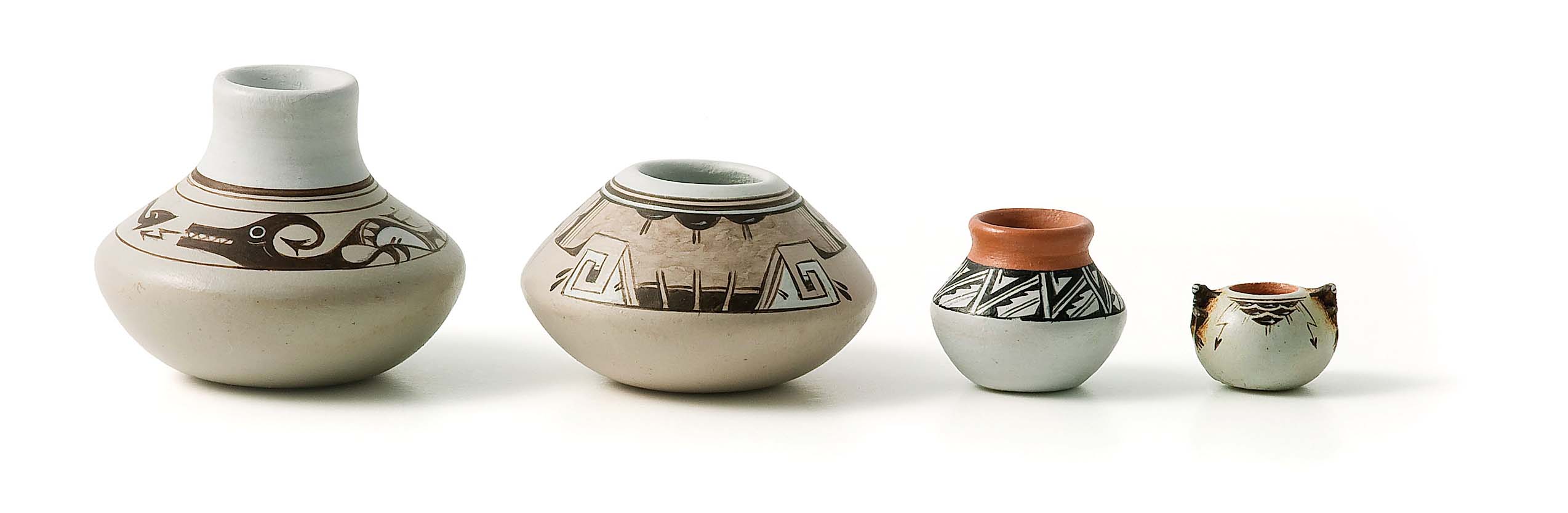
Anasazi jar by Thomas Natseway (Pueblo of Laguna), 2000. This black-and-white miniature is inspired by a circa 1600s Anasazi vessel and features an animal effigy handle.
This began with understanding and accepting those miniatures in Native arts that did not follow the standard 1:12 scale. Pottery, for example, is considered miniature if it is 3 inches or less. By stretching the scale, so to speak, a diverse selection of miniature works were now able to be introduced and welcomed into the museum. “We realized that we had an opportunity to cohesively present a very important part of the story of miniatures here and re-frame the conversation,” said Rislow, “and that it was something we could and should pursue.” To prepare, an advisory group was formed to serve in guiding the direction of the exhibition. The group was comprised of Native people, different ages and tribal affiliations, and even included a university student. There developed three overarching themes to focus on within the exhibition: generations, traditions and innovations.
Conversations with many of the artists met through the market were followed by introductions to other family members — sons, daughters, grandchildren and grandparents. They all became a gateway to not only learning about those earlier works that Marshall had initially acquired for the permanent collection, but to see the value in the process as much as the final product. In Hopi culture, katsina carvings of katsinam depict initiated Hopi men who have been enlightened by the deities to dance and deliver health and wellness to the community. The katsina have been part of Hopi ceremonies for centuries and were first carved from cottonwood. They became a marketable form of art in the Nineteenth Century when sales of sculptures began to be offered outside of the Hopi nation.
A turkey katsina carving, done in 1980 by Lawrence Namoki, a member of the Hopi people, exemplifies the playful performance of these treasured works. The dancing animalistic figure with one leg up and arms out is bright in turquoise and its sand-colored hues are familiar to Western regions.
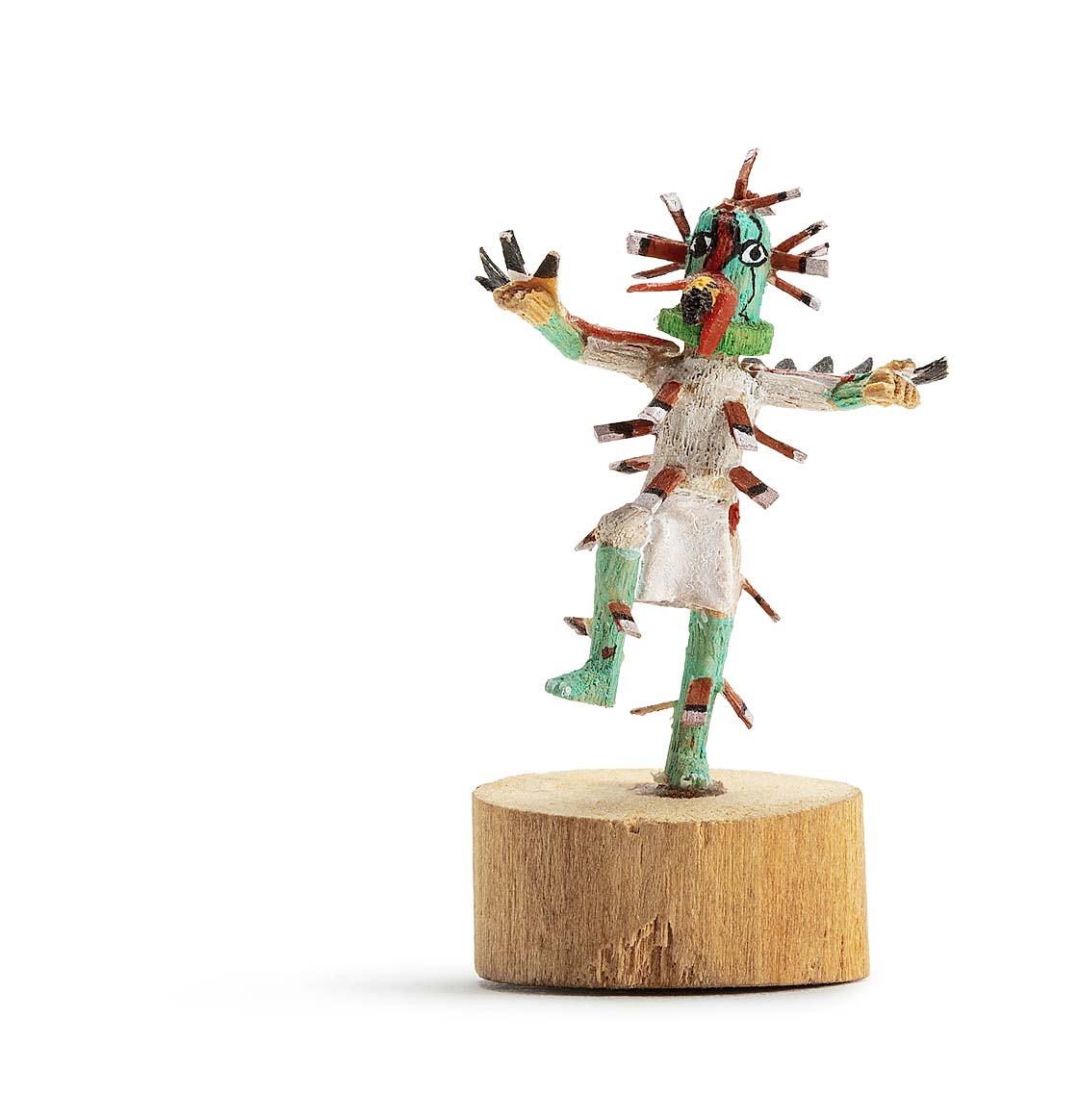
Turkey katsina carving by Lawrence Namoki (Hopi, First Mesa, 1949-2020), circa 1980.
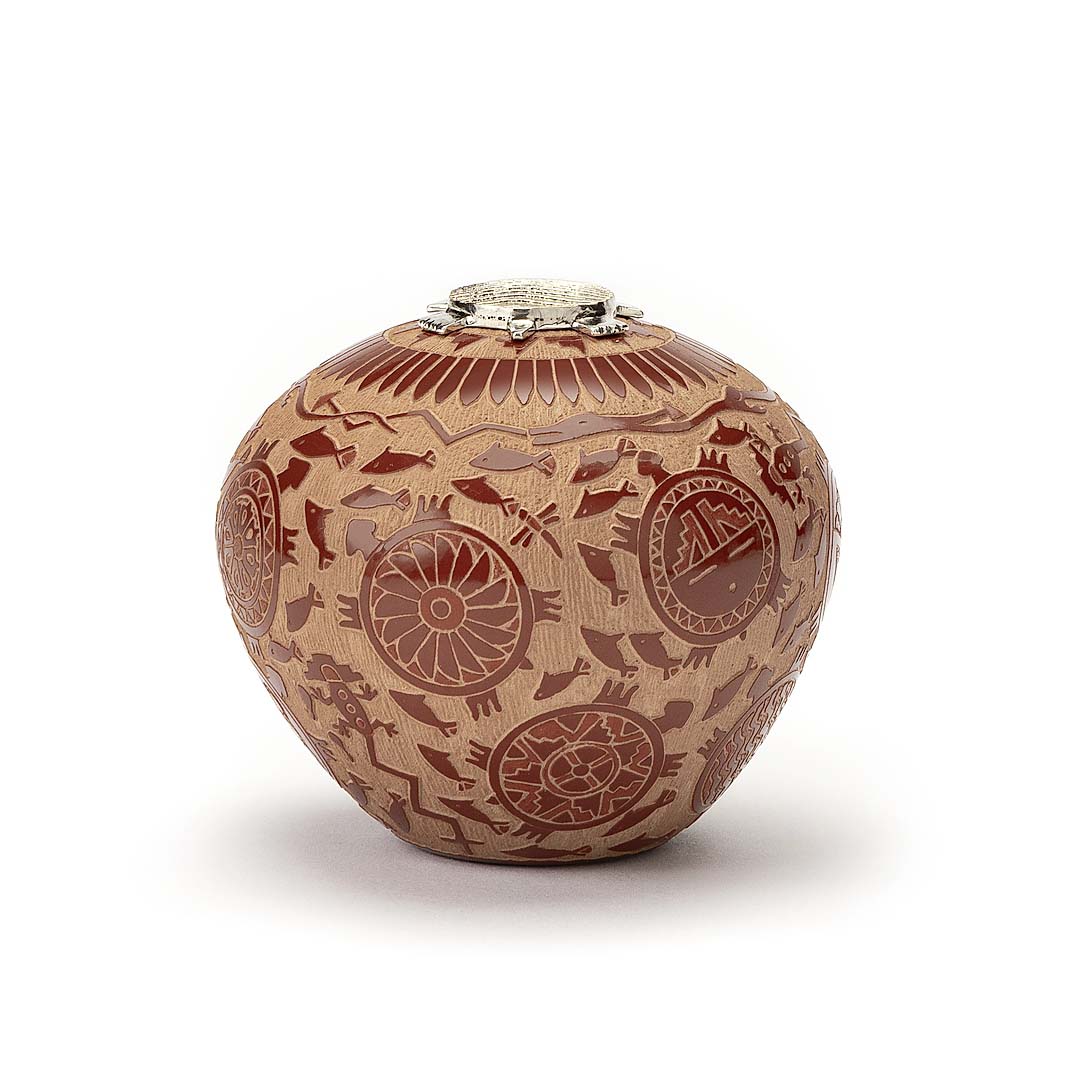
Another Hopi sculptor, Preston Duwyenie from Arizona, began carving katsina dolls as a young boy, having learned from his grandfather. It was not until the 1970s and 80s, however, that miniature scale katsina dolls gained popularity. Duwyenie started in clay and later discovered his passion for metalwork. He is known today for making ancient seed pots with pieces such as the example with etched water designs and a silver turtle lid that is in the exhibition. This pot was designed along with his wife, Debra Duwyenie (Santa Clara Pueblo), as her etchings done in a circular and linear movement signify the continuity of their family and lineage. Some of Duwyenie’s children are now also artists working alongside their parents.
Pottery from Southwest peoples is fired in an outdoor pit rather than an indoor kiln, and they are typically not modeled from actual full-sized vessels. The Anasazi pitcher with animal effigy, done in 2000 by Thomas Natseway (Pueblo of Laguna), measures at less than 1 inch, an unusually small size, even for miniatures. Natseway is a well-known miniature potter who employs the ancient technique of hand coiling that was passed down from relatives, yet the black-and-white paint motifs on the surround of the vessel exemplify a definitively modern aesthetic quality to his oeuvre.
Influences taken from art movements such as Op Art of the 1960s is a featured aspect of the exhibition, given that many of the decoration on wares in the gallery have an optical and illusionistic ornamentation. A seed storing pot by Sharon Lewis (Pueblo of Acoma) is made from pieces collected near her community and has a delicate dragonfly for a lid opening/topper. Here, the solid white sections are emboldened by abstract details that both dizzy and focus the eye with areas filled in by stripe patterns around and along the base. Lewis consistently includes dragonflies in her work because she feels they are whimsical as well as part of a story her grandfather once told her about a dragonfly leading their ancestral people to water.
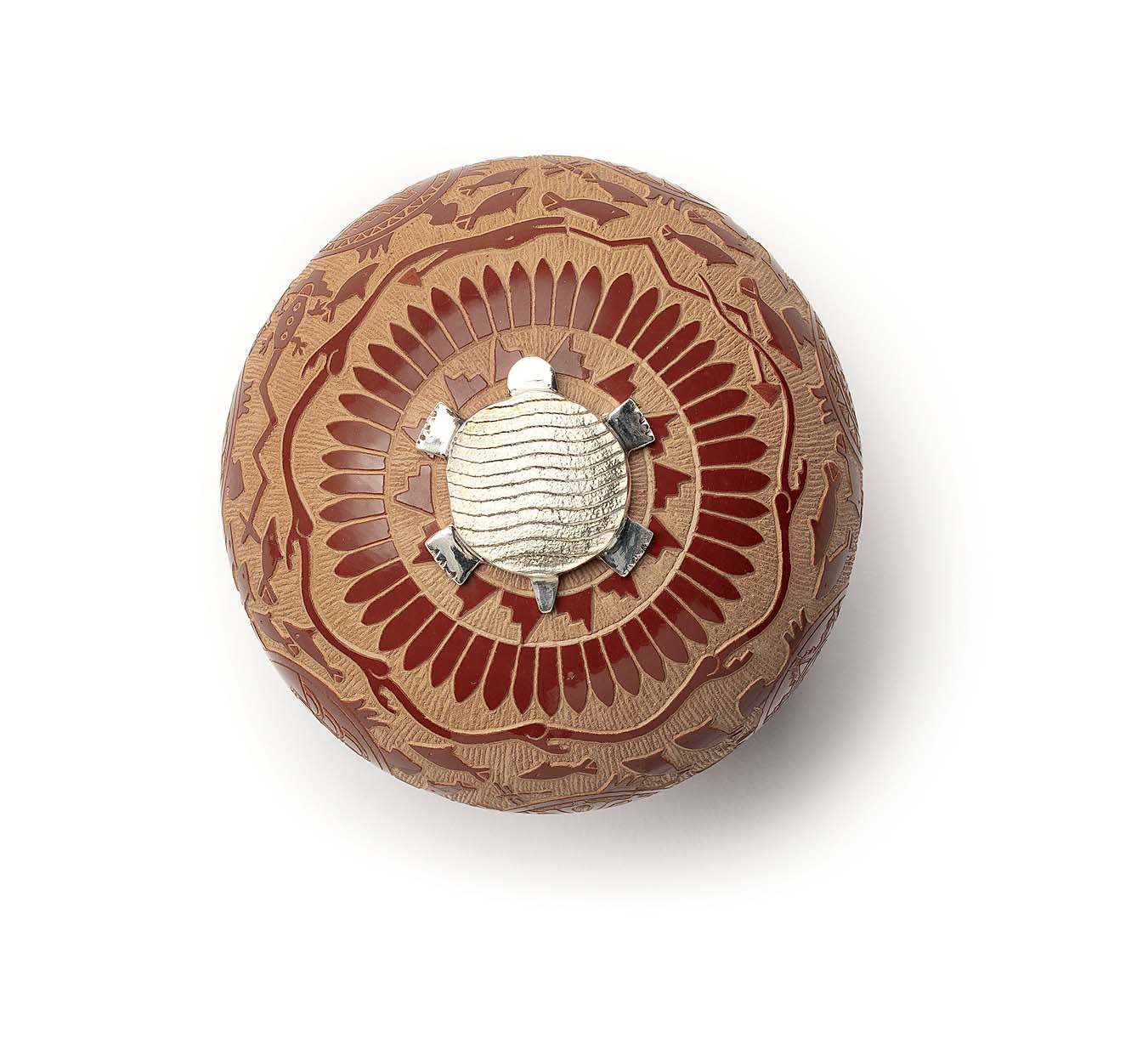
Detail of the lid of a seed pot with etched water designs and silver turtle lid, Debra Duwyenie (Santa Clara Pueblo) and Preston Duwyenie (Hopi), 2025.
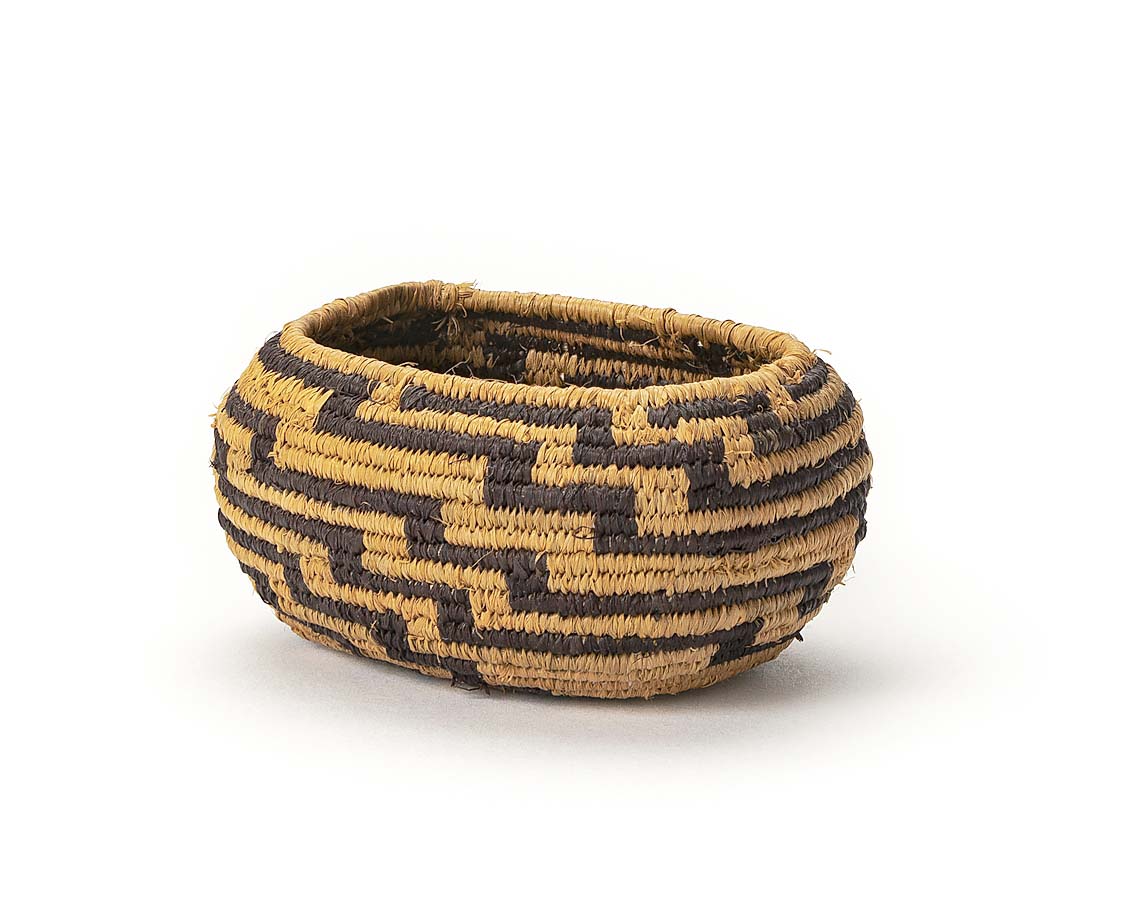
Blending past with present emerges as a common thread traced through the work of many of the artists included in the exhibition. Some do it from story while others base it on style. The latter surfaces in a geometric traditional coiled waxed linen basket by Caroline Emarthle-Douglas (Northern Arapaho/Seminole), as this basket is of an oval shape — a less common form for baskets, according to the artist. The black zigzag spiraling of lines appears to aid in balancing the larger opening and overall width of this work where a traditional technique holds the weight for a less conventional shape overall.
Most living artists with a work on view were asked to share what they’d like people to know about their work. Their quotes, along with digital documentation in video format, are offered in the interpretations accompanying their pieces in the show. The museum chose four artists to do more extensive, recorded interviews that can be watched on screen stations as visitors meander through the gallery.
These testimonials, such as the one done by Glenda McKay (Athabascan-Inupiaq), who makes dolls, bags, toys and clothing, offer emotional memories that add context to the meaning of the work. McKay talks about watching her mother and aunts sitting around chatting while they did needlework, beadwork and sewing. Intrigued from a young age, she began her work in miniatures out of necessity because her own material budget and supply was minimal.
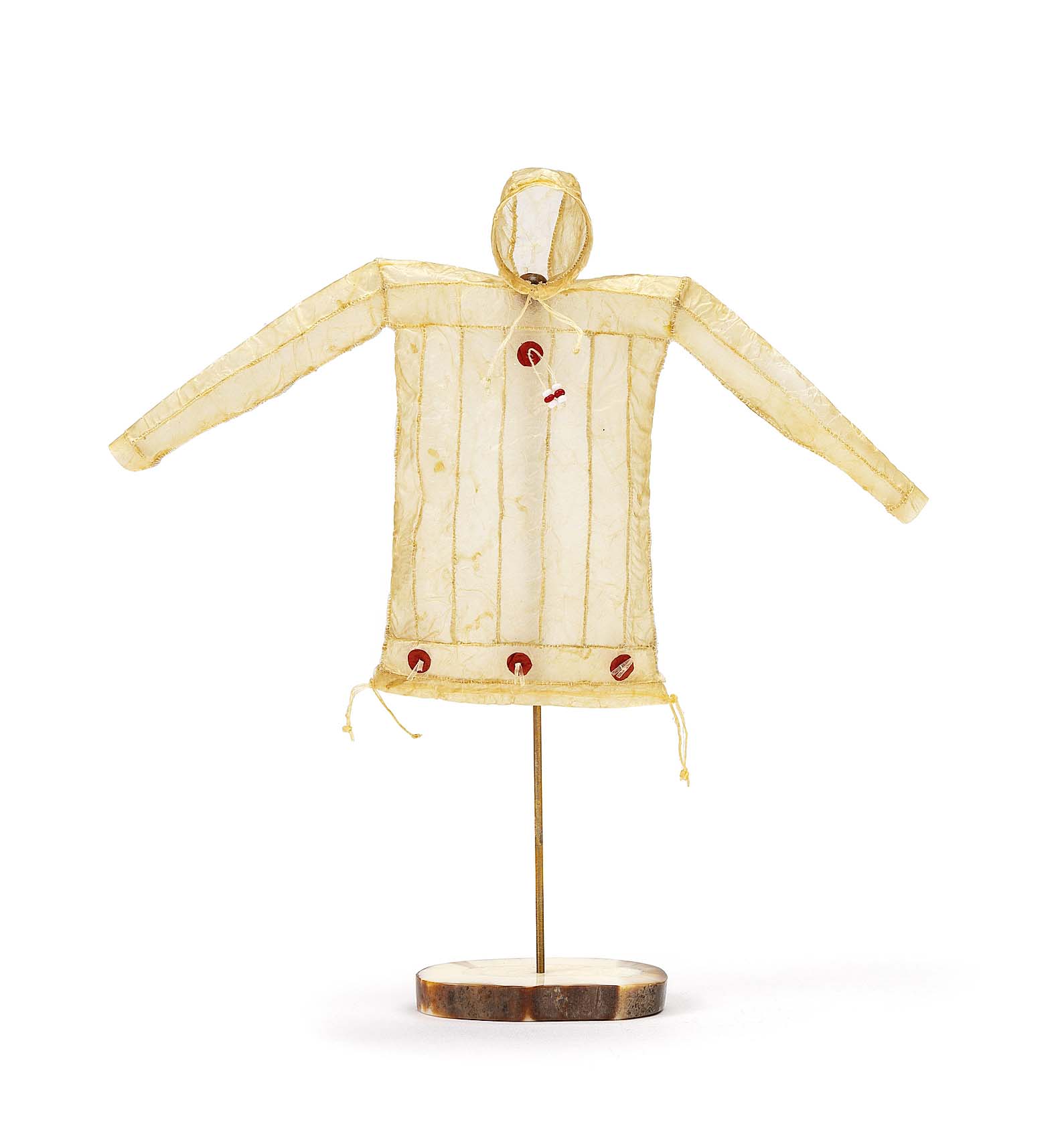
Walrus stomach parka by Glenda McKay (Athabascan-Inupiaq), 2024.
Her walrus stomach parka is a delicate and delightful article of clothing shown on a stand with red beads of adornment to toggle the closures down center front and a hood pull at top of the garment. By contrast, her La Look seal hunting figure is strong and almost fierce with heavily embellished beadwork at the cuffs, collar, belt and boots to adorn his clothing. It is a statement on the boldness and the beauty of the wearer and perhaps the wear that McKay herself knows well. She does all of her own hunting and tanning for the hides. And, as for her impressive collection of antique beads that she has amassed — she wants it to be known in the closing statement of her interview that she will be paying it forward to another artist one day to come.
In 2027, the museum plans to open a dedicated and permanent Native Peoples Gallery, enhanced by a robust collecting budget for new acquisitions in this category. As it happens, the funding that curatorial staff had initially set aside for loans for this exhibition did not need to be used in its entirety. In the end, relationships with Native artists led to valuable new research on the museum’s already existing Native arts collection. Their outreach to reserves and native lands will clearly continue to fuel new and groundbreaking study in the field.
The National Museum of Toys and Miniatures is at 5235 Oak Street. For information www.toyandminiaturemuseum.org or 816-235-8000.