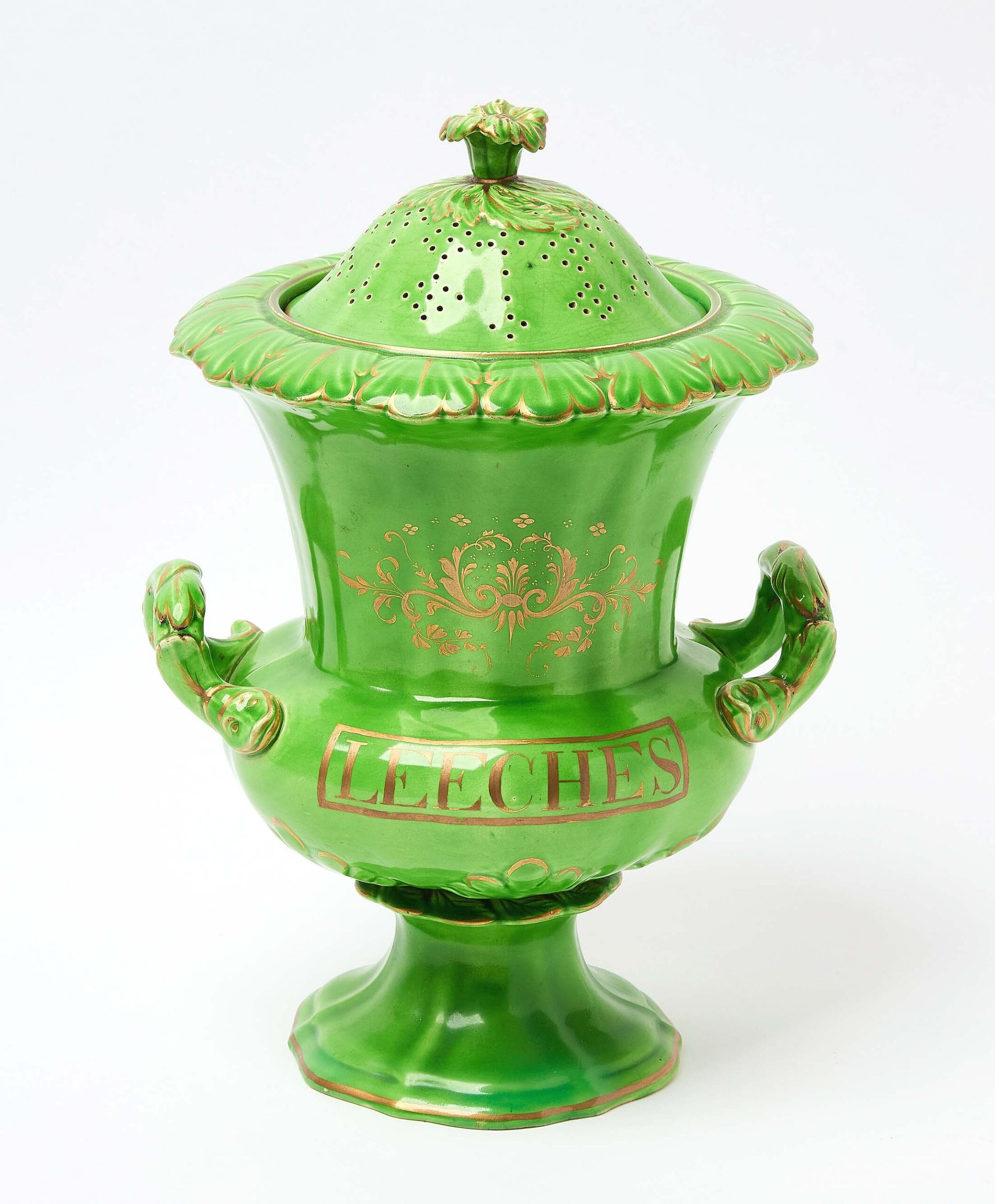
Earning the sale’s top price was this vibrant green apothecary leeches jar, English, Nineteenth Century, 14½ inches tall with a 10-inch rim opening diameter. It was taken to $23,940 ($1/2,000).
Review by Carly Timpson
BRANFORD, CONN. — Showcasing the breadth of American material culture, a vast assortment of antiques crossed the block in New England Auctions’ May 6-7 auctions, which included May Americana in session one and Historical, Medical Antiques, Medallions & Books for session two. The sales drew strong results across a wide range of categories and collector disciplines. “It was a solid sale, and exceeded our expectations,” said Fred Giampietro, owner of New England Auctions. In total, the 684-lot auction realized $596,928 and the sell-through rate exceeded 98 percent.
The Americana session on day one was anchored by several distinguished private collections, including the Dr Joseph Moffatt Elm Tree House and the Bruce and Doranna Wendel collection. New England Auctions’ head of cataloging and research, Meghan Higgins, shared that the session “saw enthusiastic bidding across folk art and American antiques,” noting that highlights included furniture, carnival material, weathervanes, clocks, rifle and “a strong showing of gameboards from the Wendel collection.”
“Day two’s Medical, Scientific, Historical & Books session proved equally compelling, “added Higgins. “The estate collection of Jerry Phelps [Kentucky] drove standout results across the apothecary category, with a green apothecary leeches jar with leech head handles, a Staffordshire leeches apothecary pedestal jar, and an apothecary pedestal jar in urn form among the top performers.”
The green leeches jar, selling for $23,940, was the sale’s highest price overall. Featuring foliate decoration to its rim borders, finial and handles, the vibrant green jar had a gilt “Leeches” label and decoration, including leech head details to the handle ends. Made in England in the Nineteenth Century, the pedestal jar was stamped “3Q” to its underside.
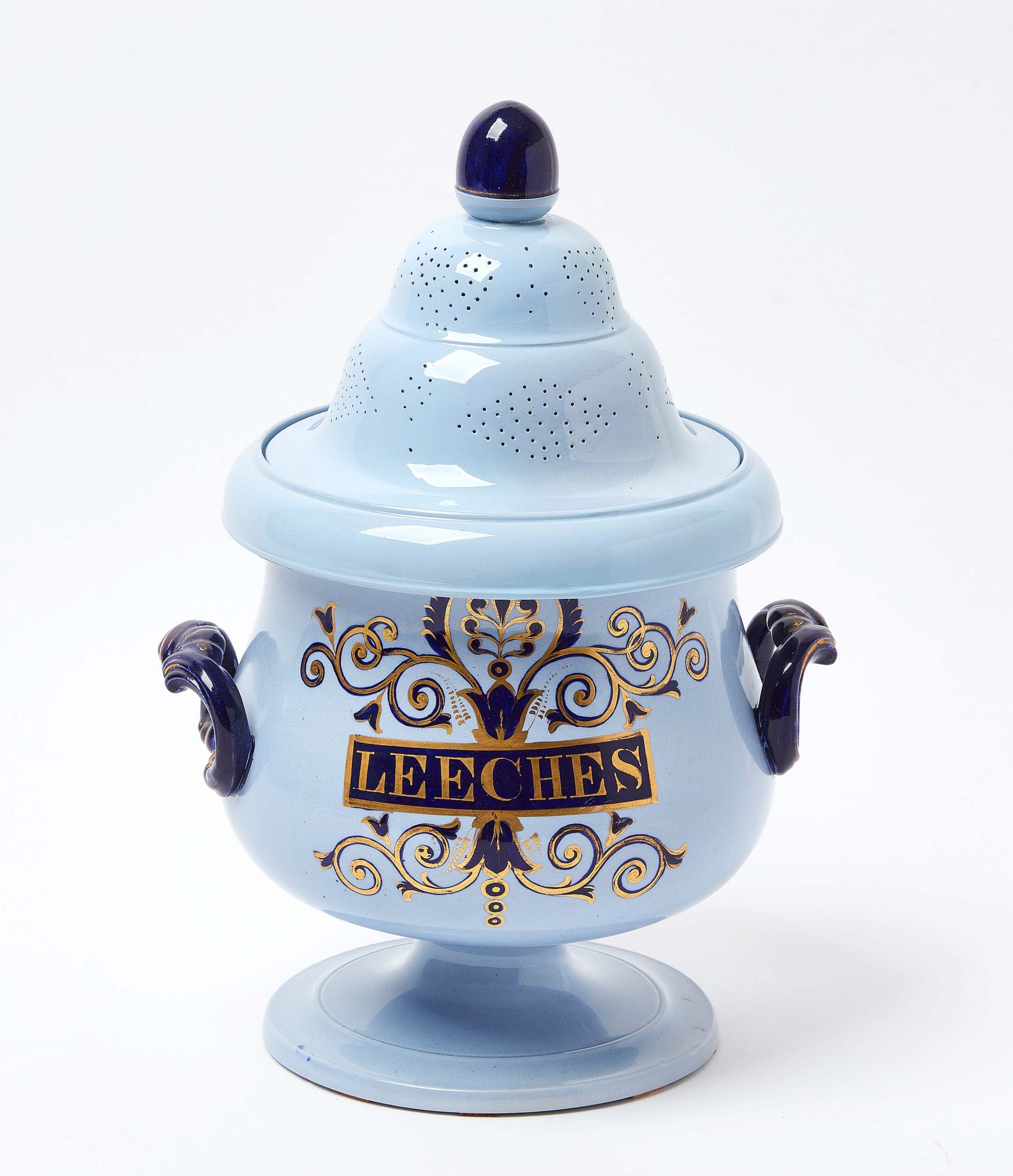
Manufactured by Jacob Furnival & Company circa 1860 in Cobridge, Staffordshire, England, this 15-inch-tall earthenware leeches jar in blue glaze with gilt lettering and details earned $17,640 ($800-$1,500).
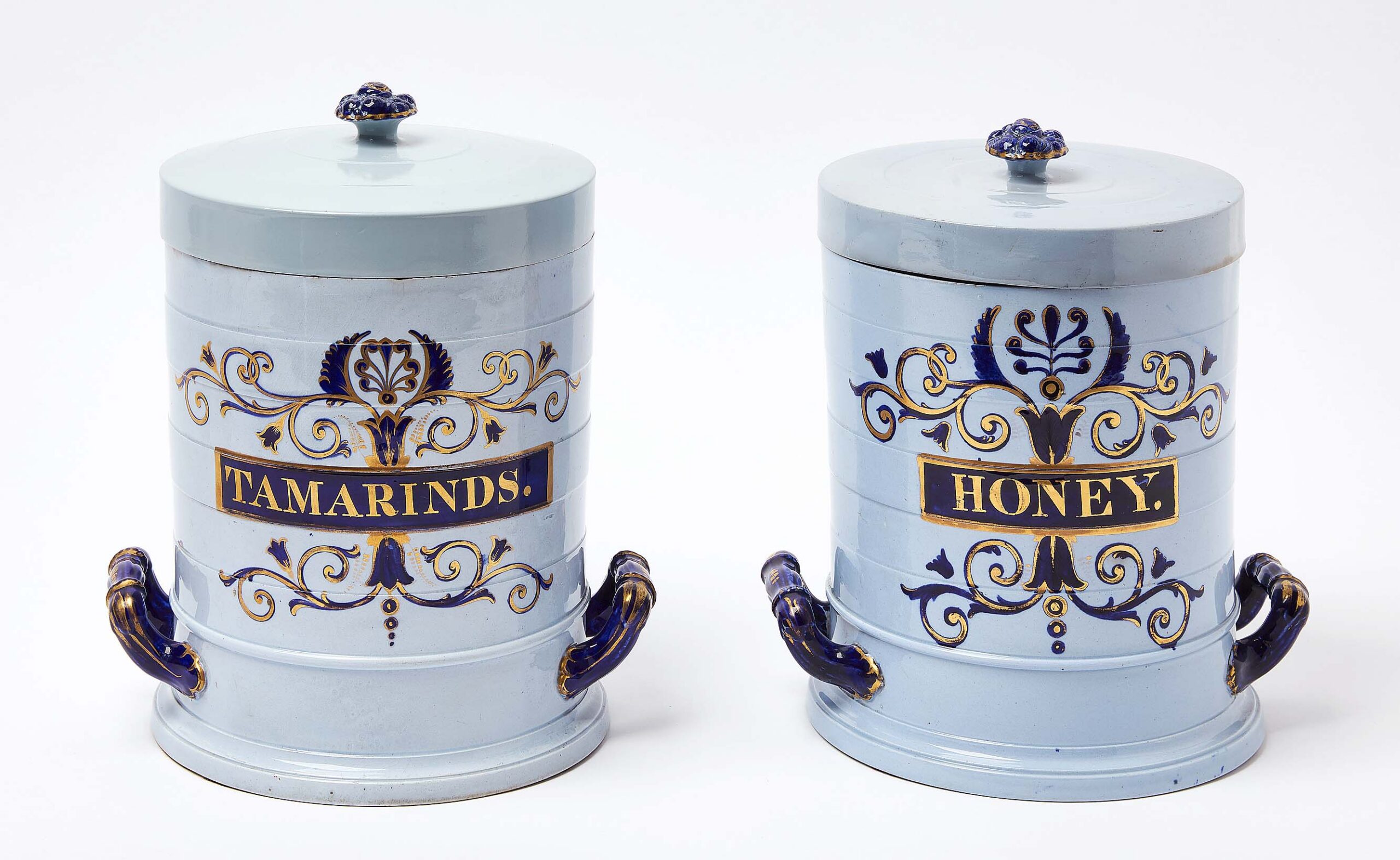
Achieving the auction’s third-highest price of $17,640 was the Staffordshire leeches jar, which was made circa 1860. In light blue glaze with dark blue handles and finial, the jar had a gilt label and scrolling vine decorations. Its underside was stamped “Jacob” for manufacturer Jacob Furnival & Company (Cobridge, Staffordshire, England). Also from Staffordshire was a coordinating pair of light blue earthenware apothecary jars labeled “Tamarinds” and “Honey” with similar gilt and dark blue details. However, neither of these three-quart jars had a maker’s mark, though they were both impressed with a “3” for size. The pair rose well past its $1,000 high estimate to earn $11,340.
An earthenware leeches jar of urn form with sculptural lion handle masks brought $12,600 against a high estimate of $1,500. This cream-colored example featured burgundy glaze accents to its lid, neck, base and pedestal and had gilt lettering and cartouche decoration. Also unmarked, it stood 15 inches tall.
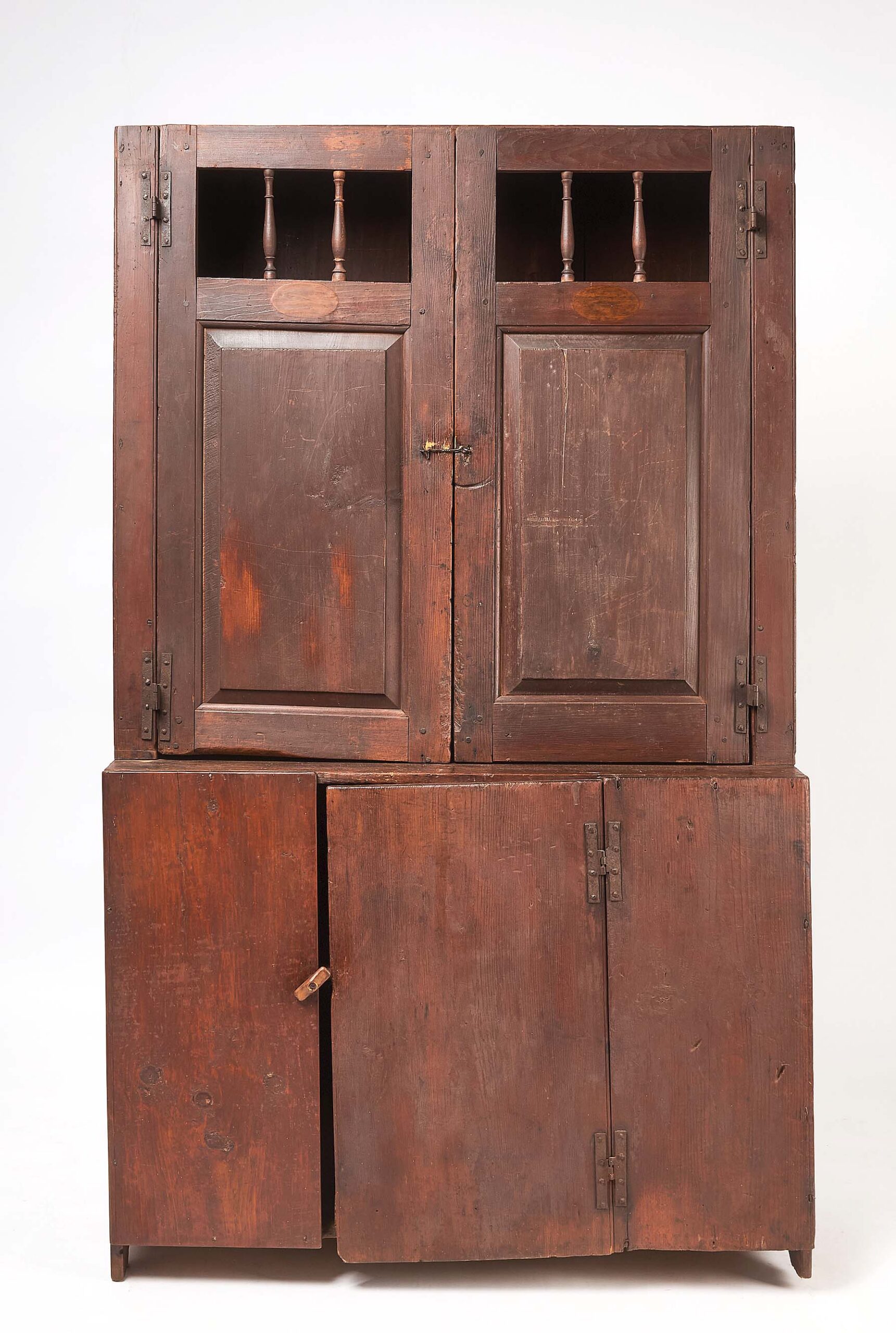
At $20,160, an early step-back cupboard sold on the first day was the auction’s second-highest price. In old red paint, the wooden cupboard had an upper section with two doors having turned window details over raised panels, and the lower section had a single flat panel door. Retaining its original wrought iron hinges, the circa 1790 piece was from New England.
Other great results from day one included an Uncle Sam panel from a carnival’s strength test game. In cast iron with old layers of red, white and blue park paint, the circa 1908 panel was attributed to Caille Brothers. Though this example was missing Uncle Sam’s outstretched hand and the central meter that would display the user’s strength reading after shaking it, bidders proved it was a strong find and pushed it to $10,710 — nearly nine times its high estimate.
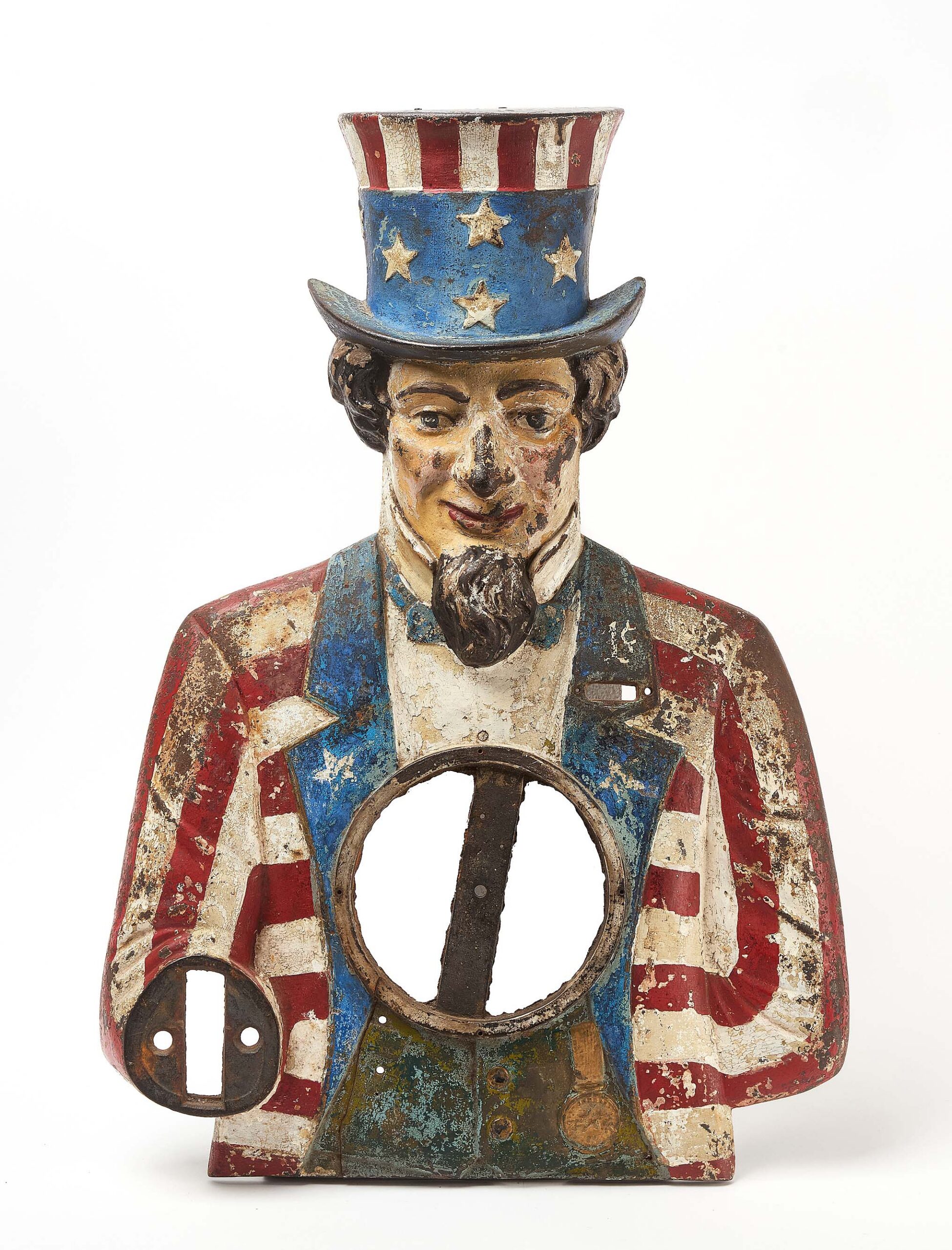
This painted cast iron Uncle Sam strength tester panel, attributed to Caille Brothers, Chicago, circa 1908, 28½ by 19½ inches, was a strong buy at $10,710 ($600-$1,200).
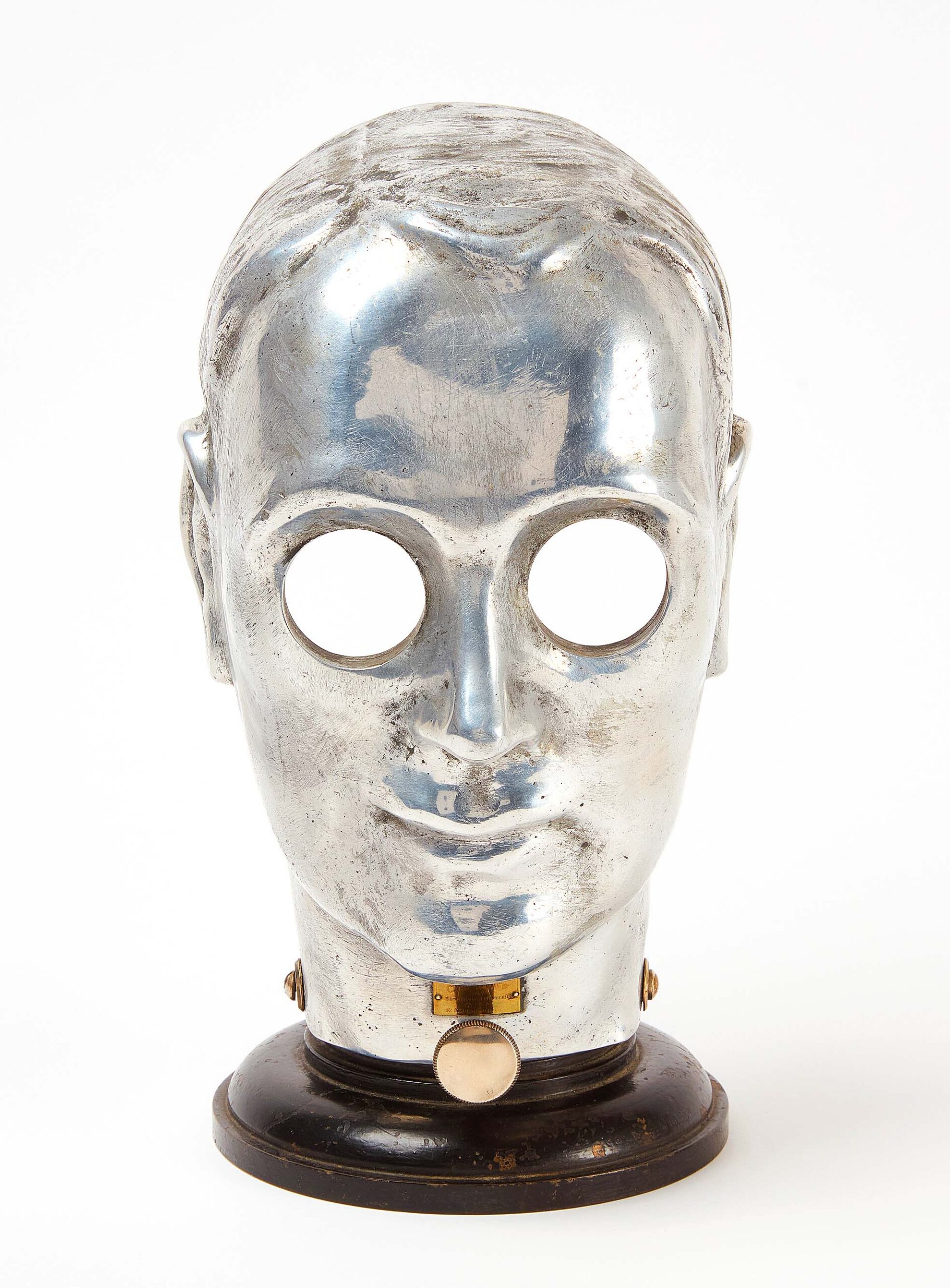
An obscure medical training device once used to help student doctors learn to perform eye surgeries, called an ophthalmophantome, or “eye phantom,” found a new buyer for $8,515. This example, made by Carl Reiner in Vienna circa 1900, was in cast aluminum on a painted steel base with adjustable bracket for ideal positioning. According to several online sources, cadaver or animal eyes, typically those from a pig, would be held in the device’s porte-oeil (eye-holders) and used to practice various surgeries or extractions.
Another notable find was a pair of pipe or ember tongs that once belonged to Thomas Jefferson. The tongs, with accordion action, were mounted in a shadowbox displayed with a note signed by James Terry, “a noted antiques dealer and collector of Jeffersonian material,” according to the catalog. The note indicates that the tongs were Jefferson’s, “purchased of Miss Cornelia Jefferson Taylor (his great grand-daughter) at ‘Lego’ near Charlottes-ville, Va. April, 1905.” The lot had provenance to Skinner Auctions (1993) and sold in this sale for $6,300.
“From painted cupboards and gameboards to Native American antiques, early maps, presidential documents, rare medical instruments and literary treasures, the two sessions together illustrated exactly what makes New England Auctions a destination for collectors across every discipline,” Higgins closed.
New England Auctions’ next sales are Native American, June 17, and Estates & Collections, June 18.
Prices quoted include the buyer’s premium as reported by the auction house. For information, www.newenglandauctions.com or 475-234-5120.