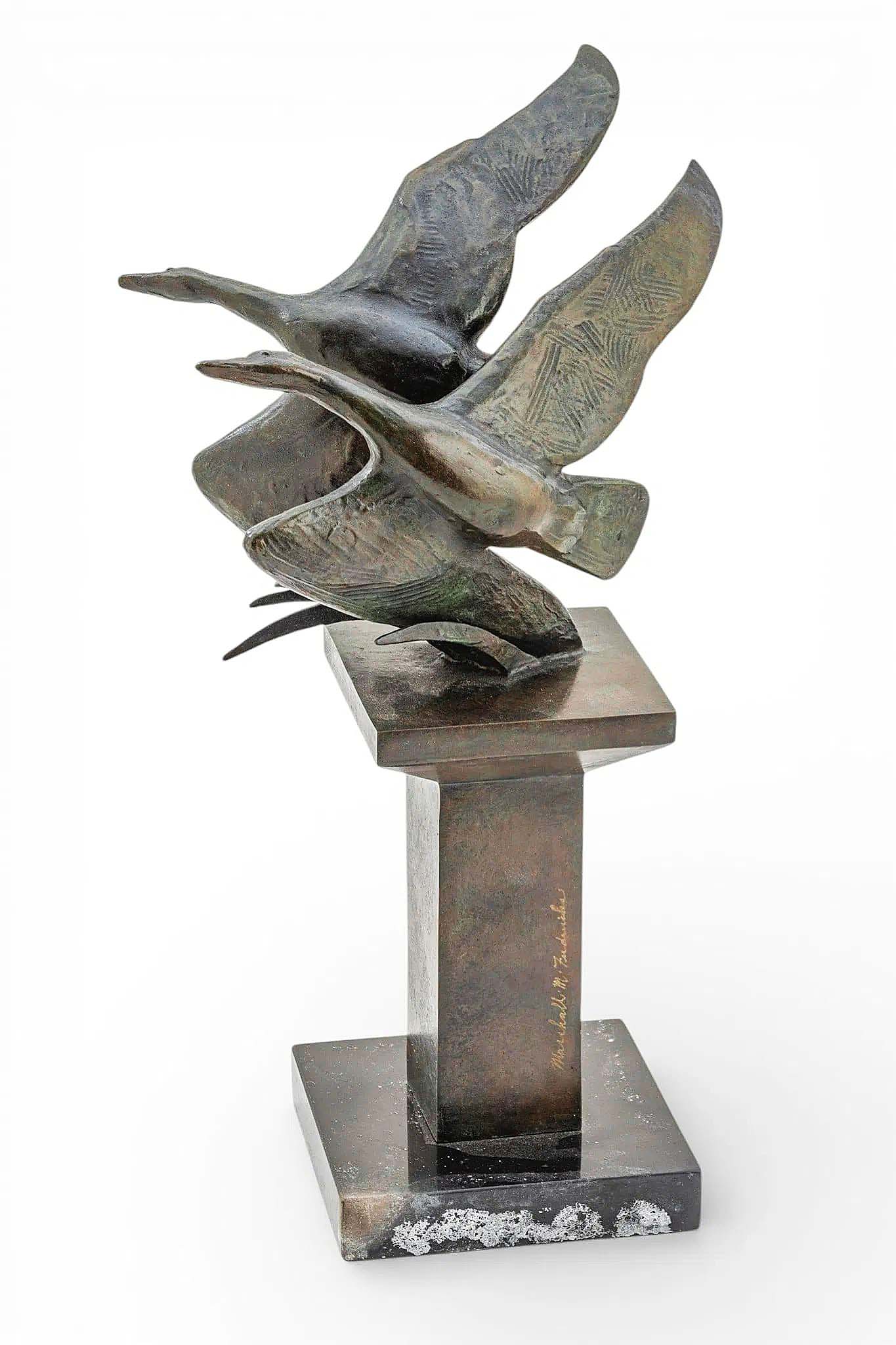
The top lot of the auction was Marshall Maynard Fredericks’ bronze “Flying Wild Geese” sculpture, on a stand, which flew past its $15/30,000 estimate to attain $62,000.
Review by Andrea Valluzzo
DETROIT — Rare and major sculptures by Marshall Maynard Fredericks along with a grouping of Kindel furniture made to emulate examples in Winterthur’s collection led the action in a two-day auction at DuMouchelles April 16-17.
“This was a truly exceptional sale on every level,” said Robert DuMouchelle, general manager. “From world-record results on Marshall Maynard Fredericks bronzes and remarkable Carl Milles sculptures, to a resurgence in demand for fine traditional furniture and some genuinely surprising finds, like the McDonald’s stained glass windows, our bidders showed tremendous enthusiasm across the board. A 90 percent sell-through rate with so many lots surpassing their high estimates tells you everything about the depth and quality of what we brought to market.”
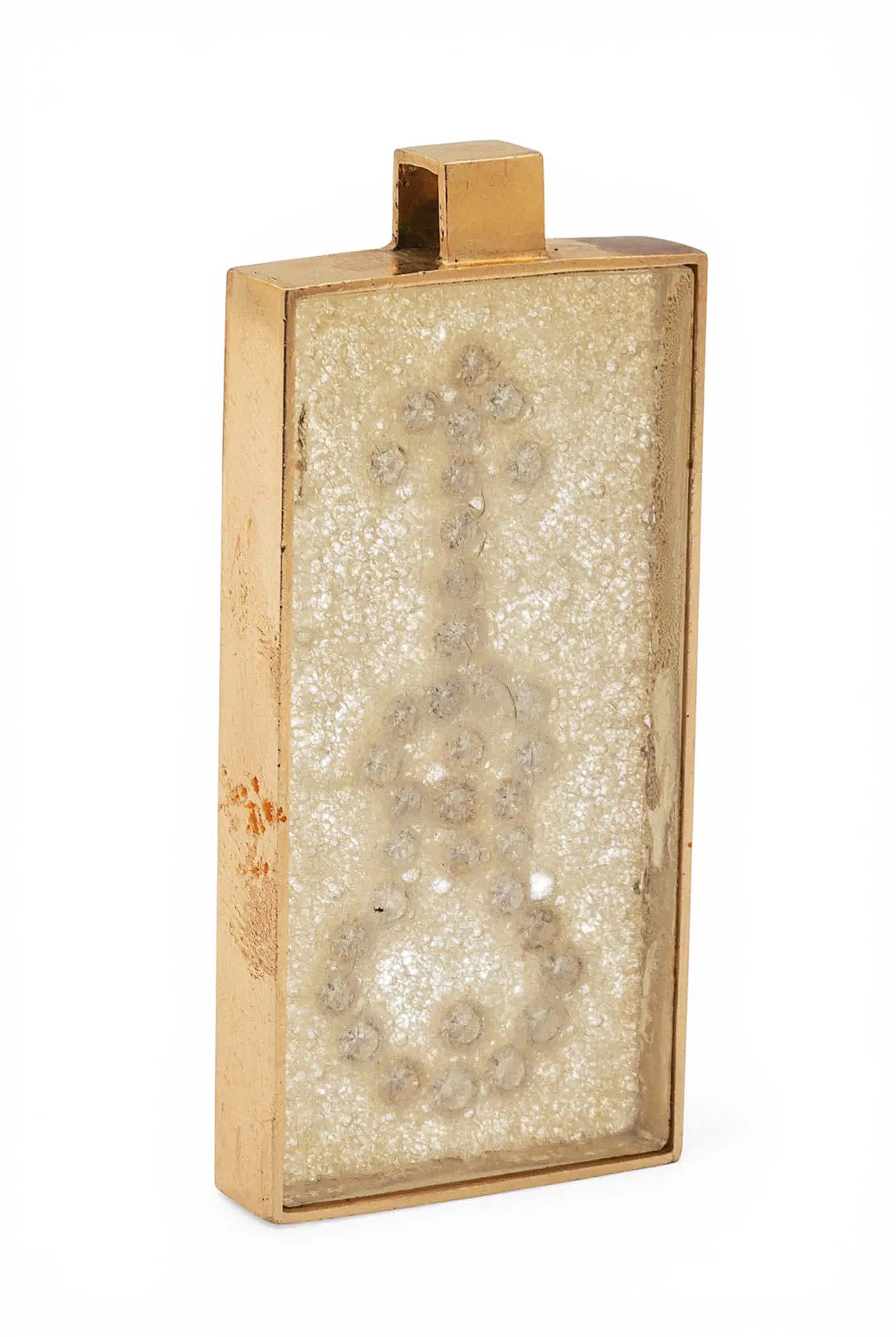
The first day kicked off with jewelry offerings. The first lot across the block was an Ippolita 18K yellow gold toggle link Bastille bracelet in a hammered finish that sold over its $1/2,000 estimate at $3,410. Two lots later, another standout was an Arman 18K yellow gold and diamond violin pendant with 35 full-cut diamonds. The two-inch-long pendant realized $5,580.
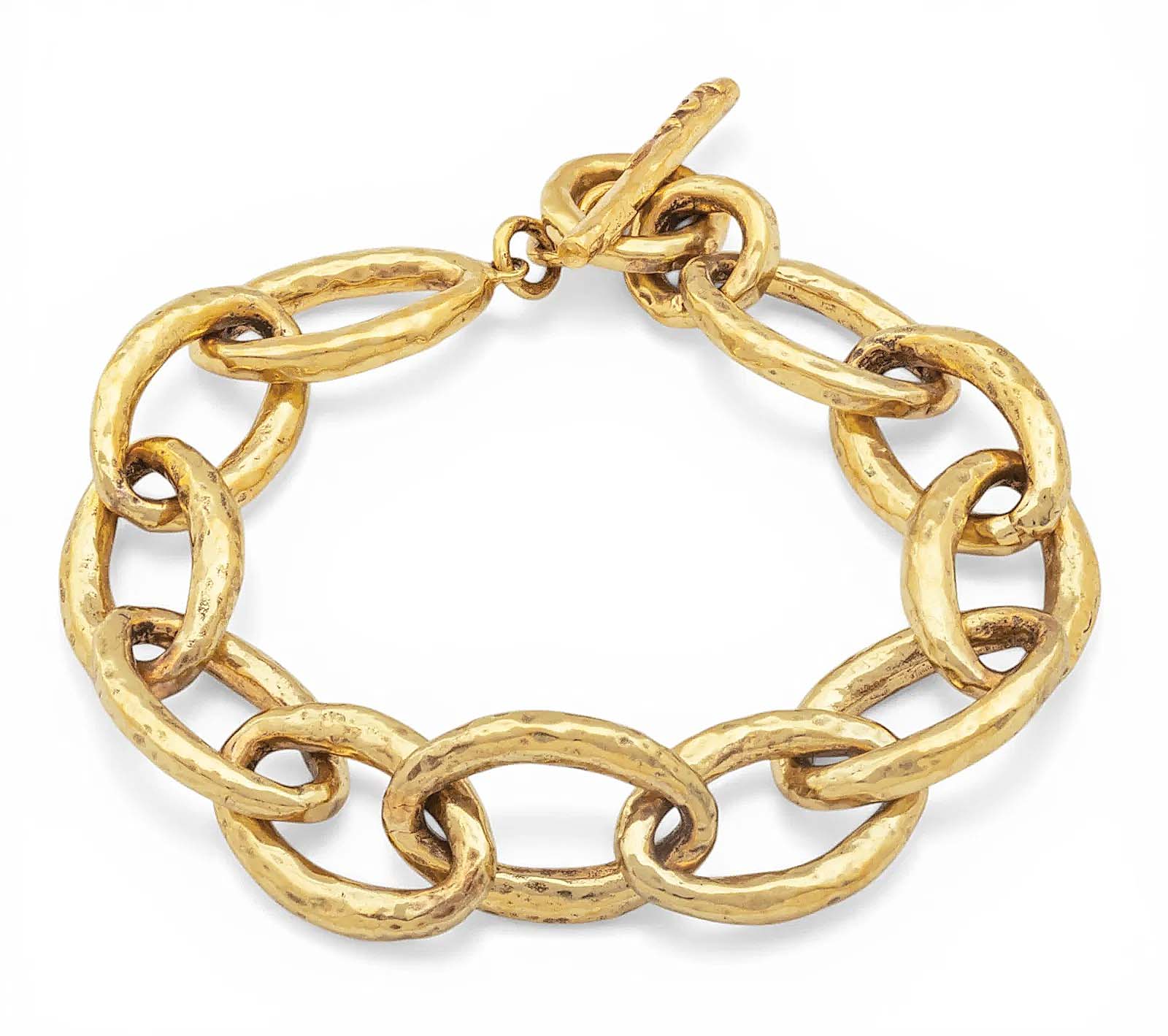
This Ippolita 18K yellow gold toggle link Bastille bracelet in a hammered finish that sold over its $1/2,000 estimate at $3,410.
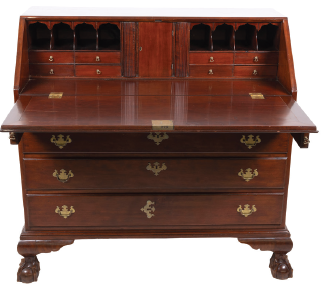
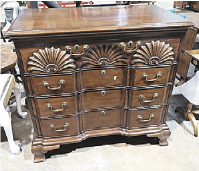
The star offerings of this session, however, were the case pieces by the Kindel Furniture Company. The Grand Rapids, Mich., company was licensed in 1983 to create a line modeled after furniture in the collection of Winterthur Museum, Garden and Library in Delaware. Despite the moniker “reproduction,” these mahogany furniture pieces remain highly sought after today.
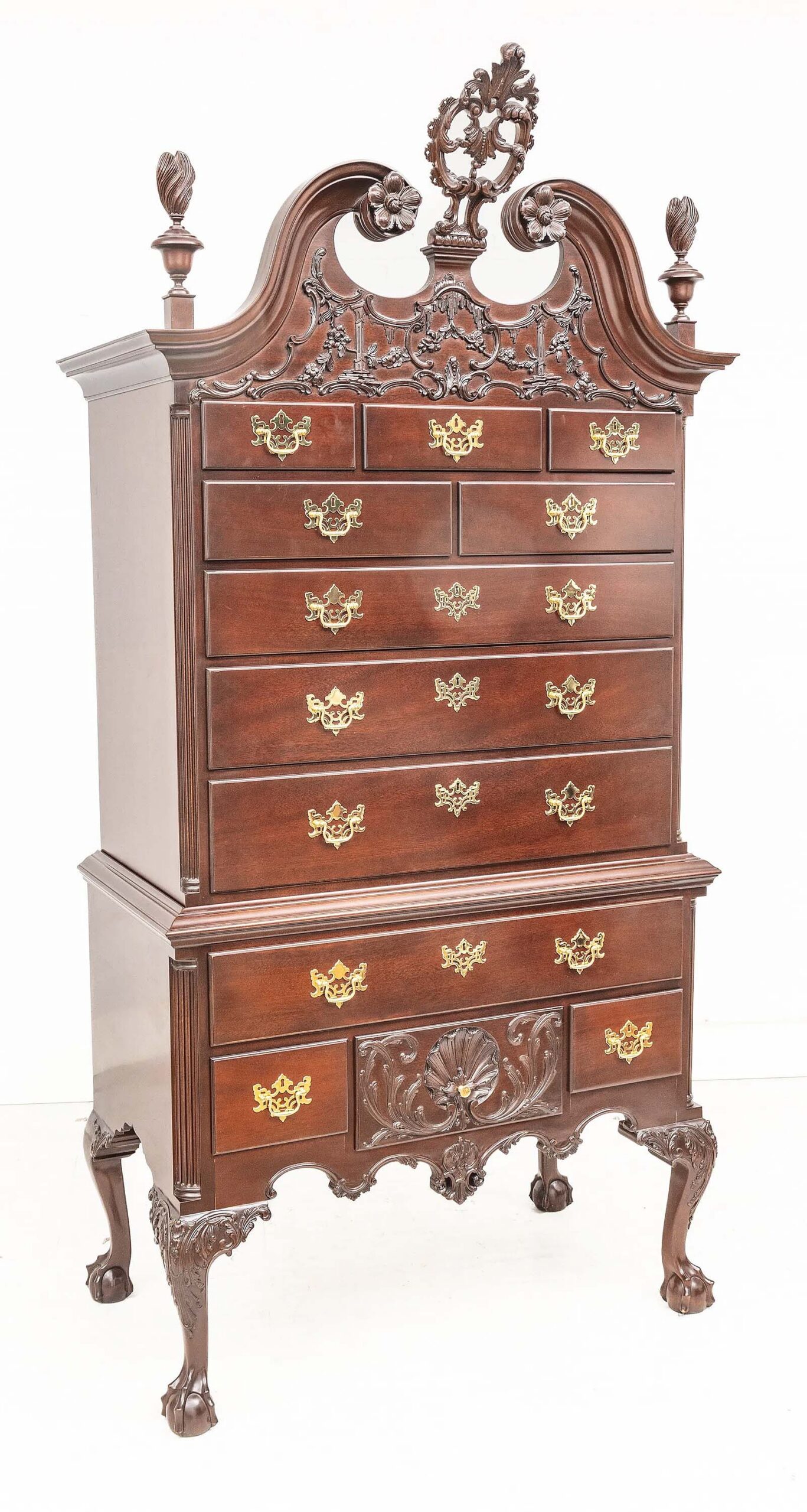
Leading the grouping was a Philadelphia Chippendale-style highboy that more than doubled its $4/6,000 estimate to attain $16,210. It had a carved filigree finial that centered a scroll arch, side flame and two urn form finials.
From the same consignor, a member of the Kindel family, came a mahogany king-size bed with machine-carved headboard and a veneer flame footboard. Not from the reproduction collection, the bed exceeded its $1/2,000 estimate to earn $12,400.
“The Kindel furniture pieces carried remarkable pedigree — consigned directly from a descendant of the founding Kindel family of Grand Rapids, Mich., they are in pristine condition,” DuMouchelle explained. “Several, including the hand-carved highboy, are Winterthur Museum reproductions of the celebrated Van Pelt design from Philadelphia — among the finest examples of American colonial craftsmanship ever reproduced.”
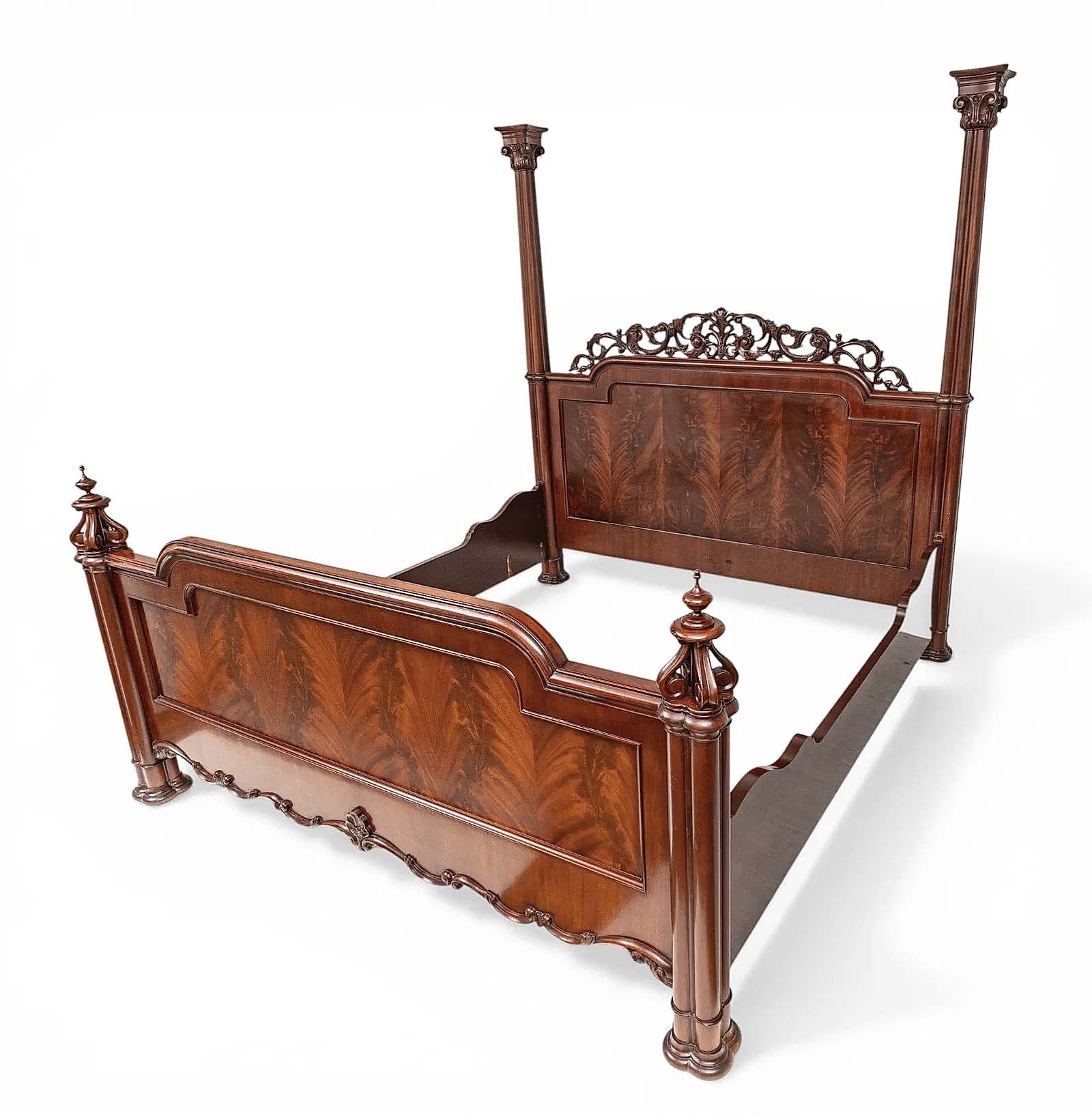
This Kindel Furniture Company mahogany king-size bed with machine-carved headboard and a veneer flame mahogany footboard peformed well at $12,400 ($1/2,000).
“What we’re seeing is a genuine generational shift. Over the past couple years, prices for fine traditional furniture have been climbing steadily,” he added. “We’re seeing long-time collectors bring their adult children — newlyweds and first-time homeowners — to our previews and sales. These younger buyers are drawn to quality, sustainability and lasting value, and they’re discovering what their parents always knew: a beautifully made piece of traditional furniture brings a warmth and character to a home that mass-produced simply cannot replicate.”
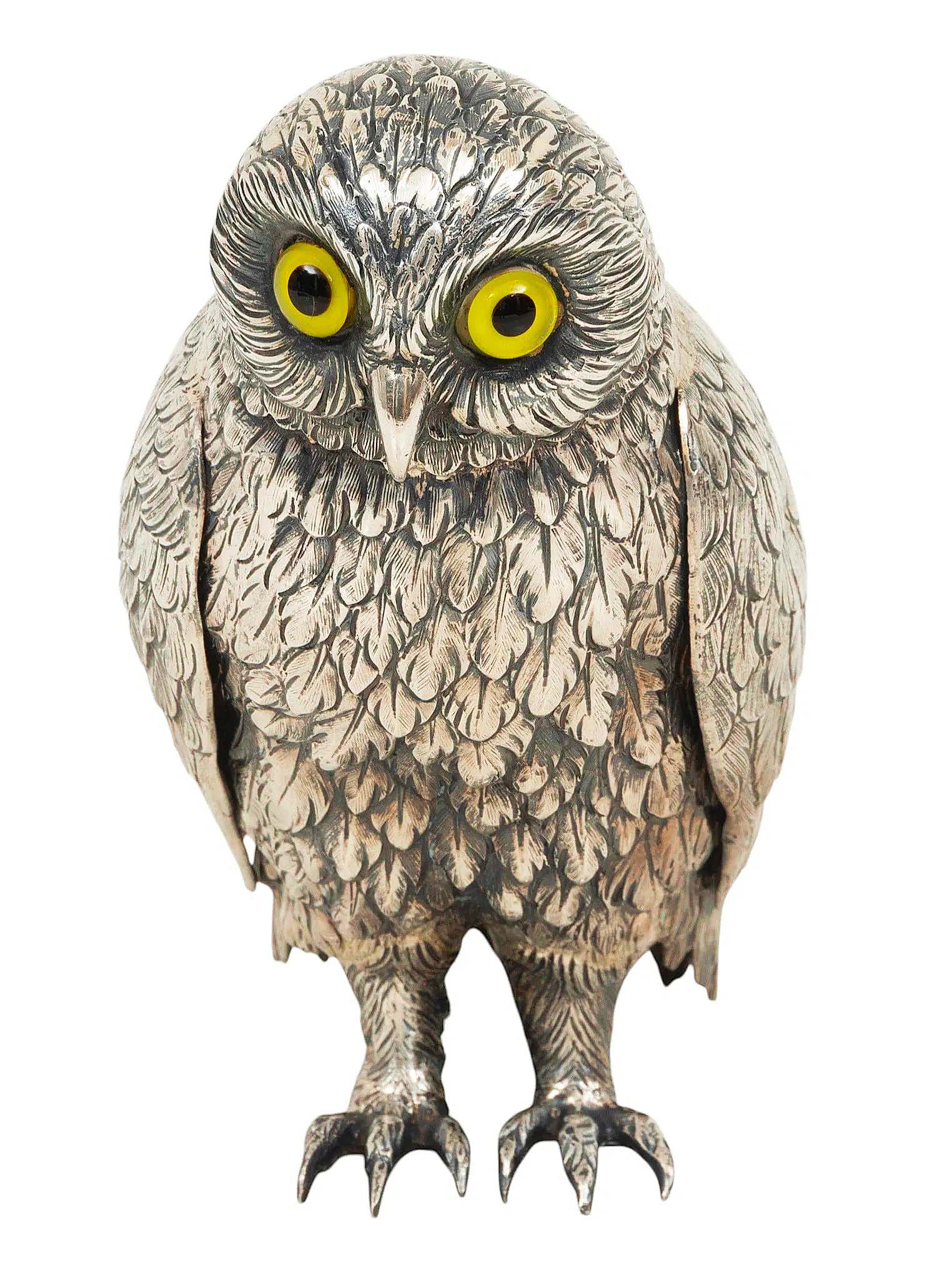
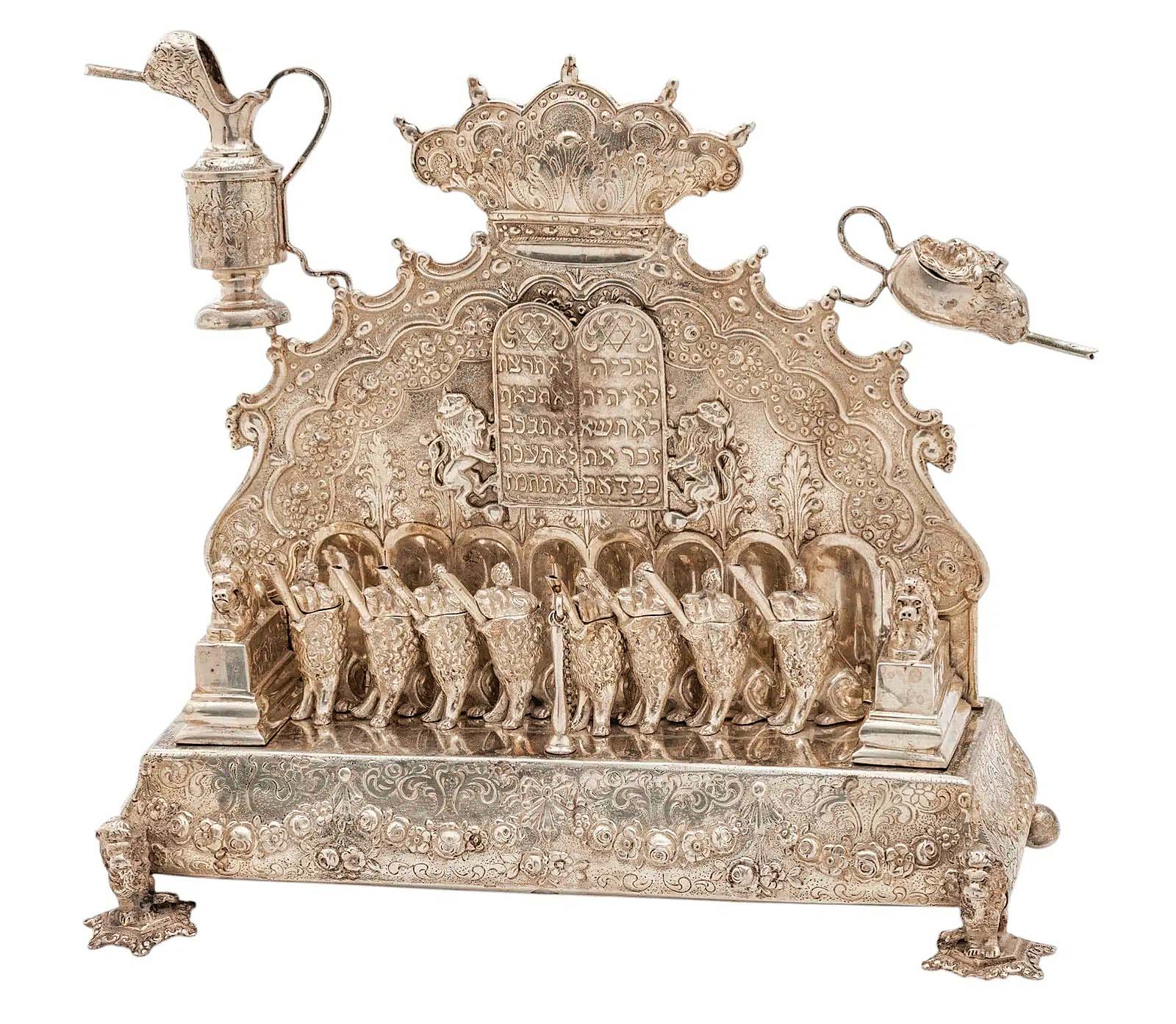
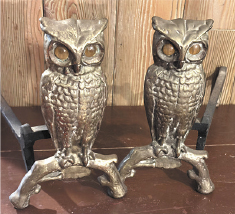
Quite a few lots outperformed their estimates, including an elaborate Nineteenth Century silver menorah lamp that brought $4,340 against a high estimate of $1,000. Handmade with much detail, it was raised on feet with a Torah in the background and it contained a shamash, a “helper” used to light the other lamps. Besting its $500/800 estimate was a German sterling silver owl with glass eyes, that realized $3,100.
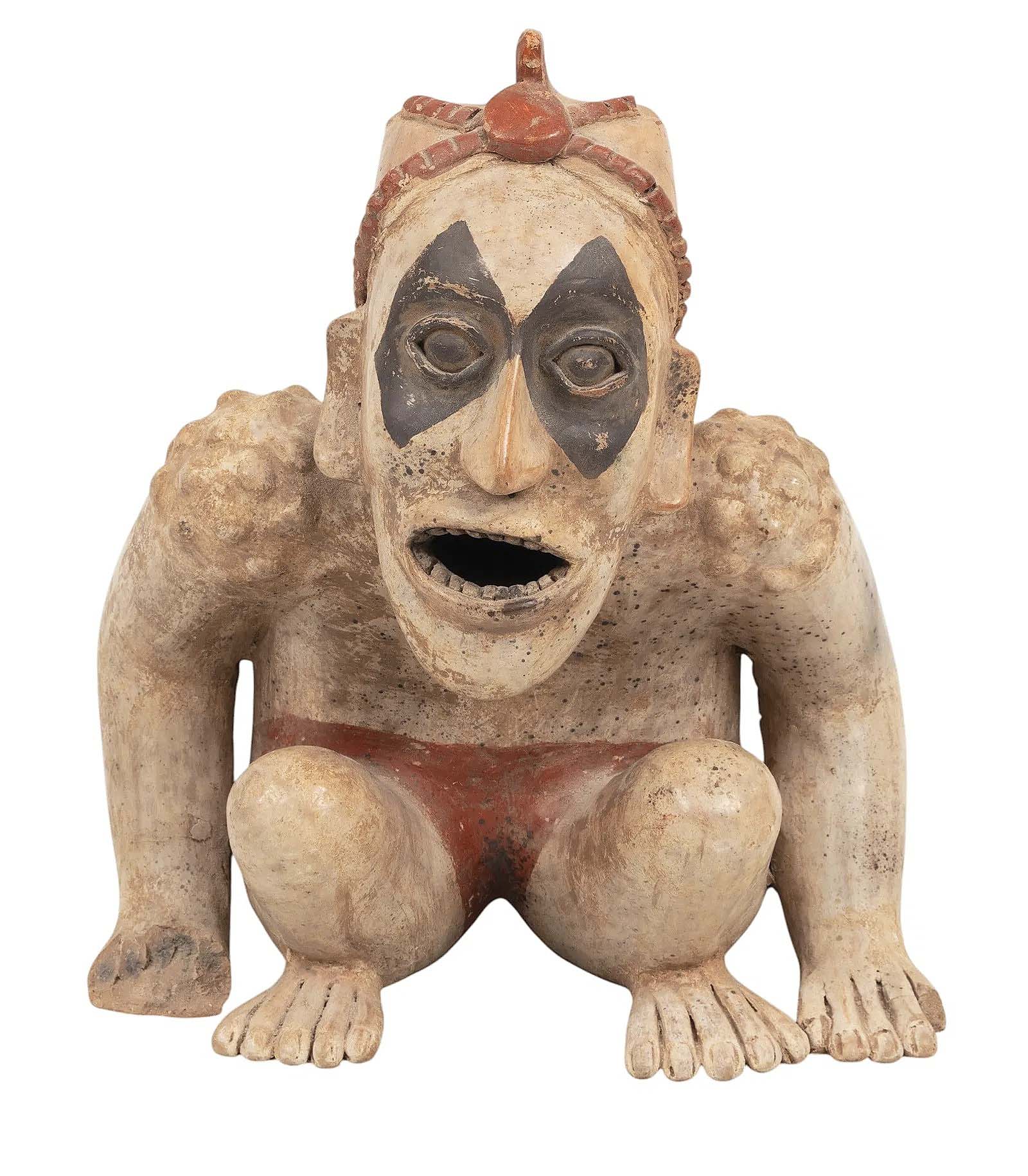
An additional highlight in the first session was a Pre-Columbian Ameca-Etzatlán terracotta squatting hunchback figure with deep black decoration around the eyes and red highlights, which took $4,650.
Flying to top-lot status on day two was a bronze sculpture of “Flying Wild Geese” by Fredericks, one of his most sought after works. Aptly capturing the artist’s love of nature and wildlife, the sculpture easily flew past its $15/30,000 estimate to attain $62,000, selling to an online bidder. Contributing to its value, this circa 1960-70 was an early casting and noted for its high level of naturalism and warm brown patina. DuMouchelle reported that the result for this lot was “a testament to its significance due to its extraordinary provenance from the personal collection of a retired Cranbrook instructor who knew Fredericks and his work intimately. Fredericks taught at Cranbrook for nearly a decade and his monumental bronzes remain installed across the campus, giving his work a deep emotional and historic connection to this region.”
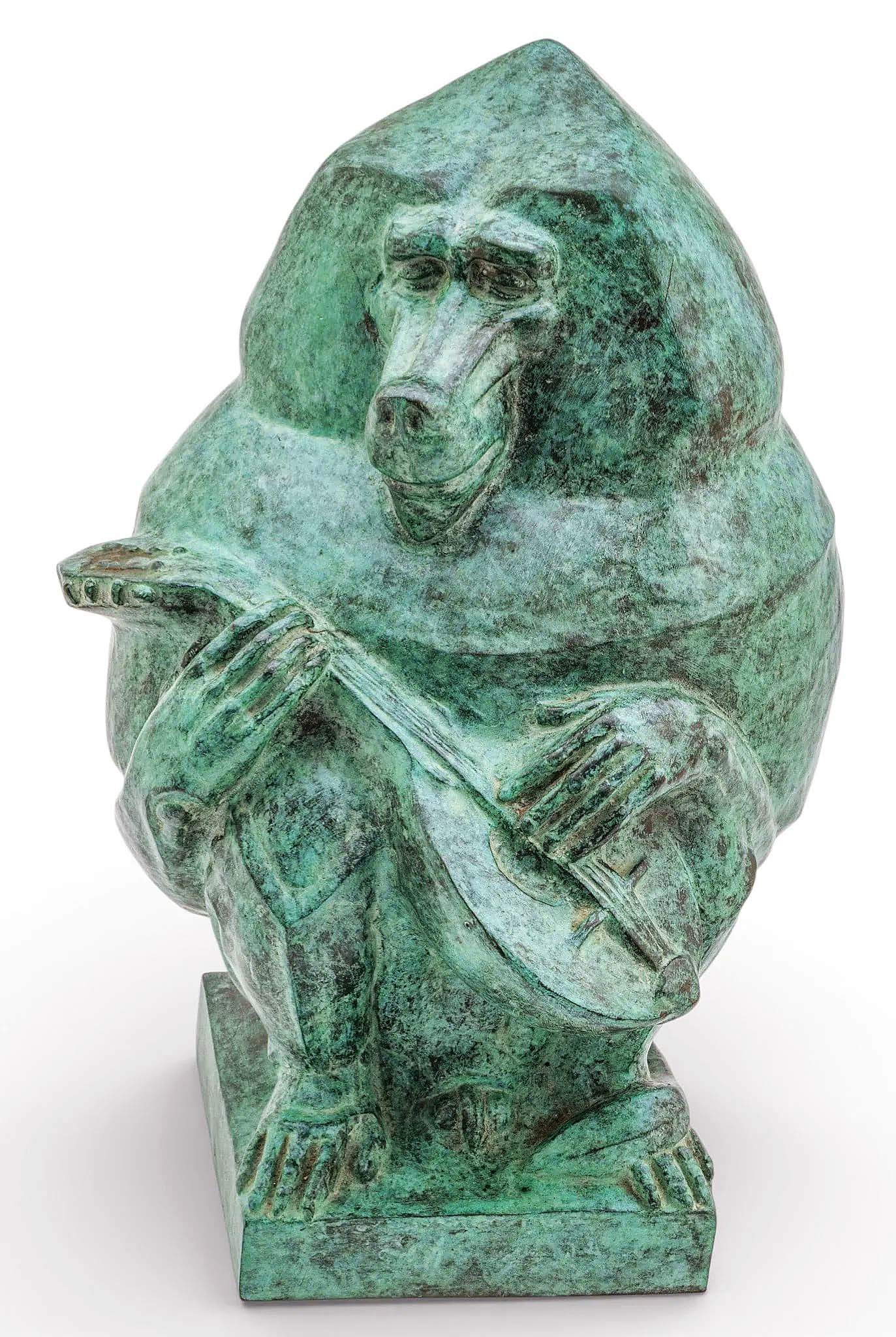
Another bronze by Marshall Maynard Fredericks was “Baboon Playing A Mandolin,” 14½ inches tall by 10 inches wide by 9 inches deep, which sold to a live bidder in the salesroom for $37,200 ($20/30,000).
Two of Fredericks’ bronze babboon sculptures, having a whimsical touch all the while being equally well-sculpted, were also offered in the sale. Each, finished in a fine green patina, attained $37,200. The first up was a rare example, “Baboon Playing A Mandolin”; it sold to a live bidder in the sales room, who, DuMouchelle said, “was visibly elated,” adding that “these are works people fall in love with.”
Immediately afterwards, a 12-inch-tall prototype for the 1939 World’s Fair in New York City was offered. The early bronze was made in 1934 when Fredericks was commissioned to design a baboon fountain for the Glass Industries Building at the Fair. Records indicate he made at least five baboons and a baby baboon for the fountain. “This cast not only represents one of the artist’s earliest examples but also is one of the earliest examples of his use of a green patina,” according to the catalog writeup. “The signature on this work also differs from his later methods as it was inscribed in the mold as opposed to his later method of signing after the patina had been applied.” The casting stayed in the artist’s collection until much later when he let a good friend add it to their already significant collection of Fredericks’ bronze sculptures and jewelry.
“Every Fredericks lot set a world auction record — a remarkable sweep that reflects the collector demand for his museum-quality examples. The competition was fierce: bidders in the room, on the phones and online were all vying for the same pieces, and the energy was electric,” DuMouchelle said.
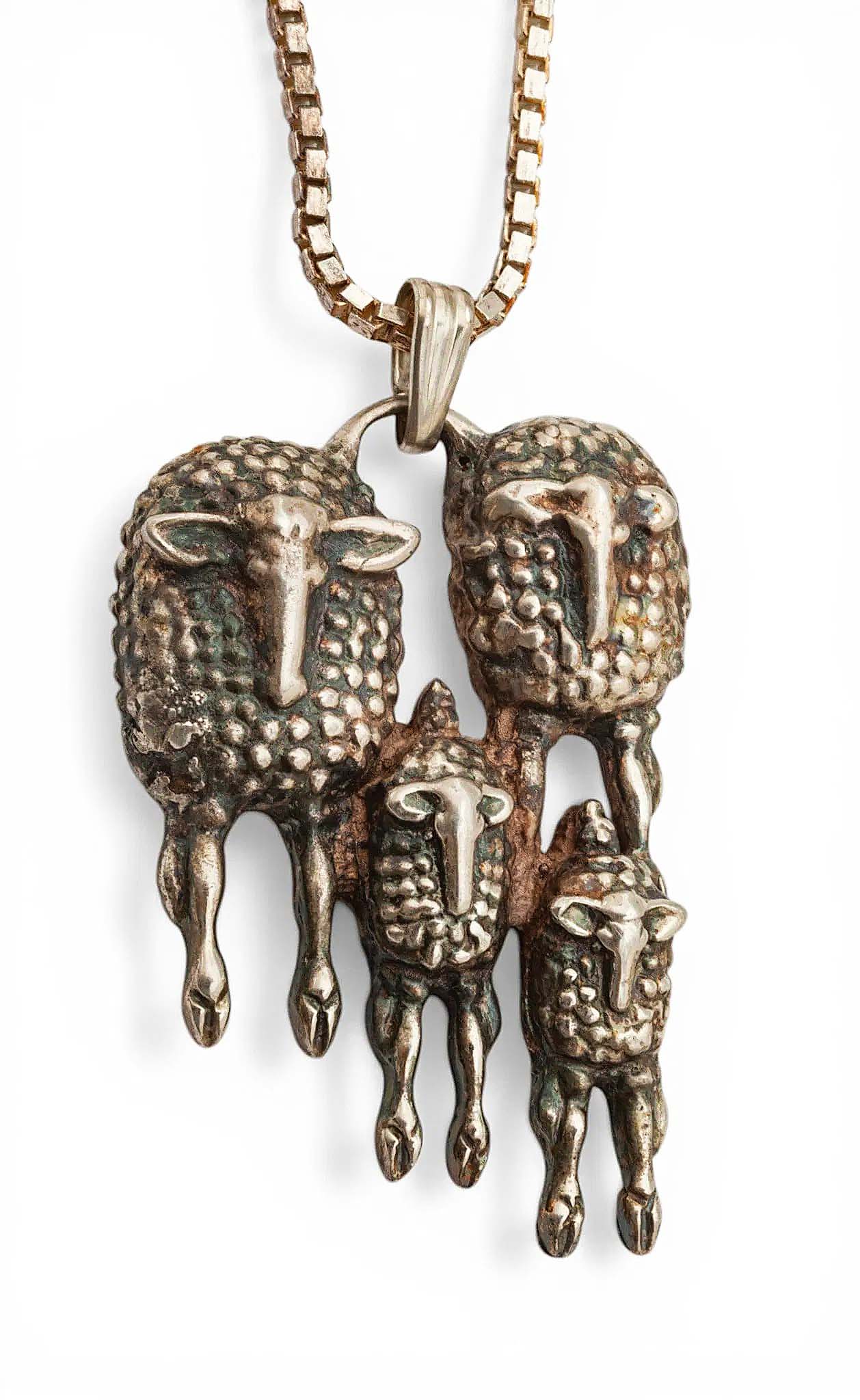
This sterling silver sheep pendant by Marshall Maynard Fredericks from 1975 brought $3,720 ($1,5/2,500).
Also by the artist was a sterling silver pendant from 1975 that depicted four sheep in bas relief, which sold over it $1,5/2,500 estimate at $3,720. “The sterling silver sheep pendant is a wonderful reminder that Fredericks’ artistry extended well beyond bronzes. This intimate piece passed directly from the artist to a Birmingham, Mich., collector who was a close personal friend — the kind of provenance that is increasingly rare and enormously appealing to serious buyers,” DuMouchelle shared. According to the catalog, a comparable example is held in the permanent collection of the Marshall M. Fredericks Sculpture Museum at Saginaw Valley State University (University Center, Mich.), underscoring its significance.
Fredericks’ mentor in Sweden and later at the Cranbrook Academy of Art was noted Swedish sculptor Carl Milles, who was also represented in this auction. His circa 1927 bronze “Standing Wild Boar” sold far over its $1/3,000 estimate at $9,920.
“What made this lot so compelling is the story it tells,” DuMouchelle commented. “‘Standing Wild Boar’ is almost certainly an early working prototype for the celebrated Diana fountain at the Tändstickspalatset — the Matchstick Palace — in Stockholm, a monumental seven-part group uniting the goddess Diana with hunting dogs, does and this very boar. Subtle but telling differences in the tail and musculature distinguish this cast from the finished fountain figures, strongly suggesting it predates the final composition.”
Its exceptional provenance — from the personal collection of a long-serving Cranbrook instructor, also played a key role in setting its value.
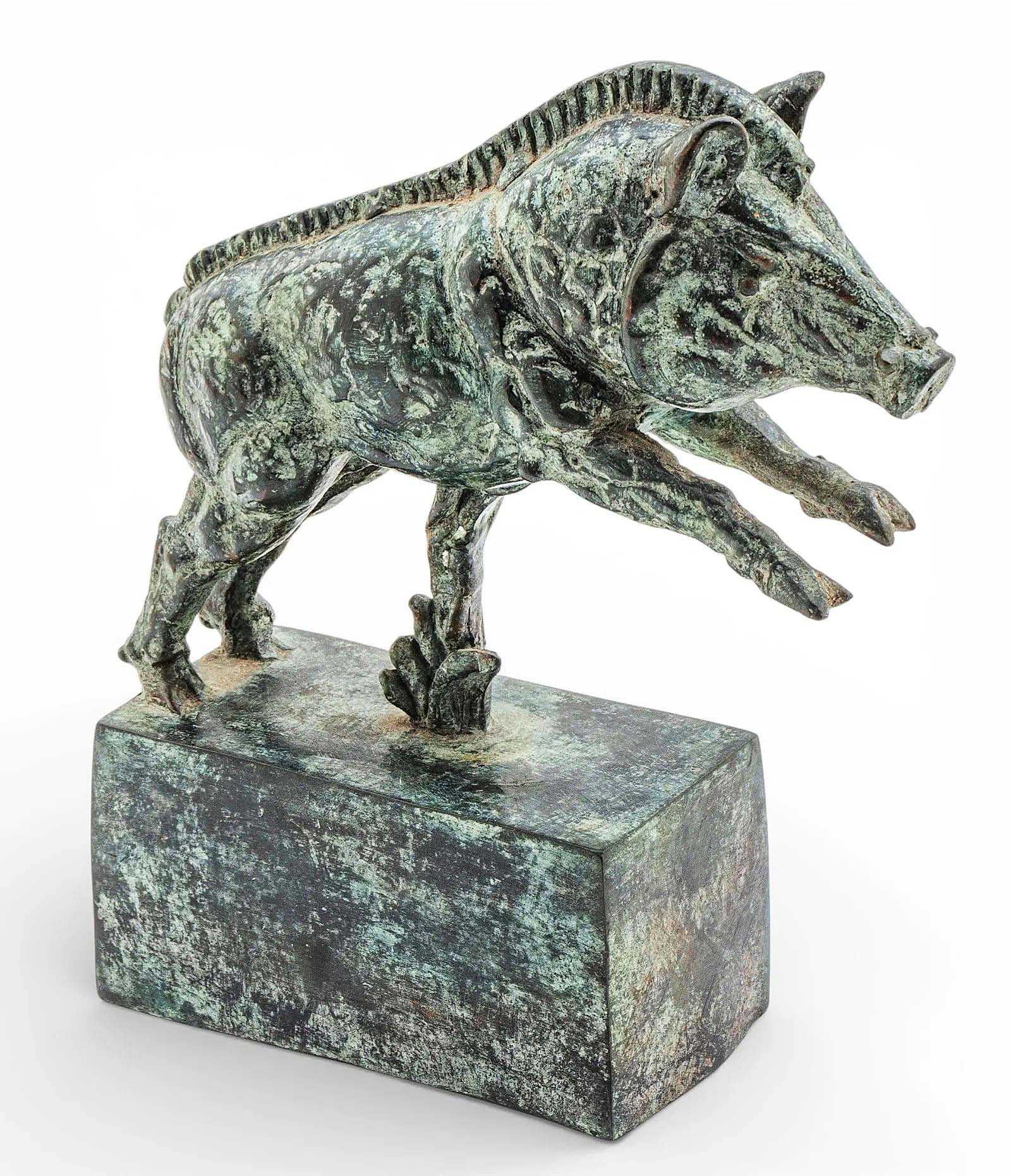
This circa 1927 “Standing Wild Boar” casting by Carl Milles, 8 inches tall by 7 inches wide by 2½ inches deep, sold far over its $1/3,000 estimate at $9,920.
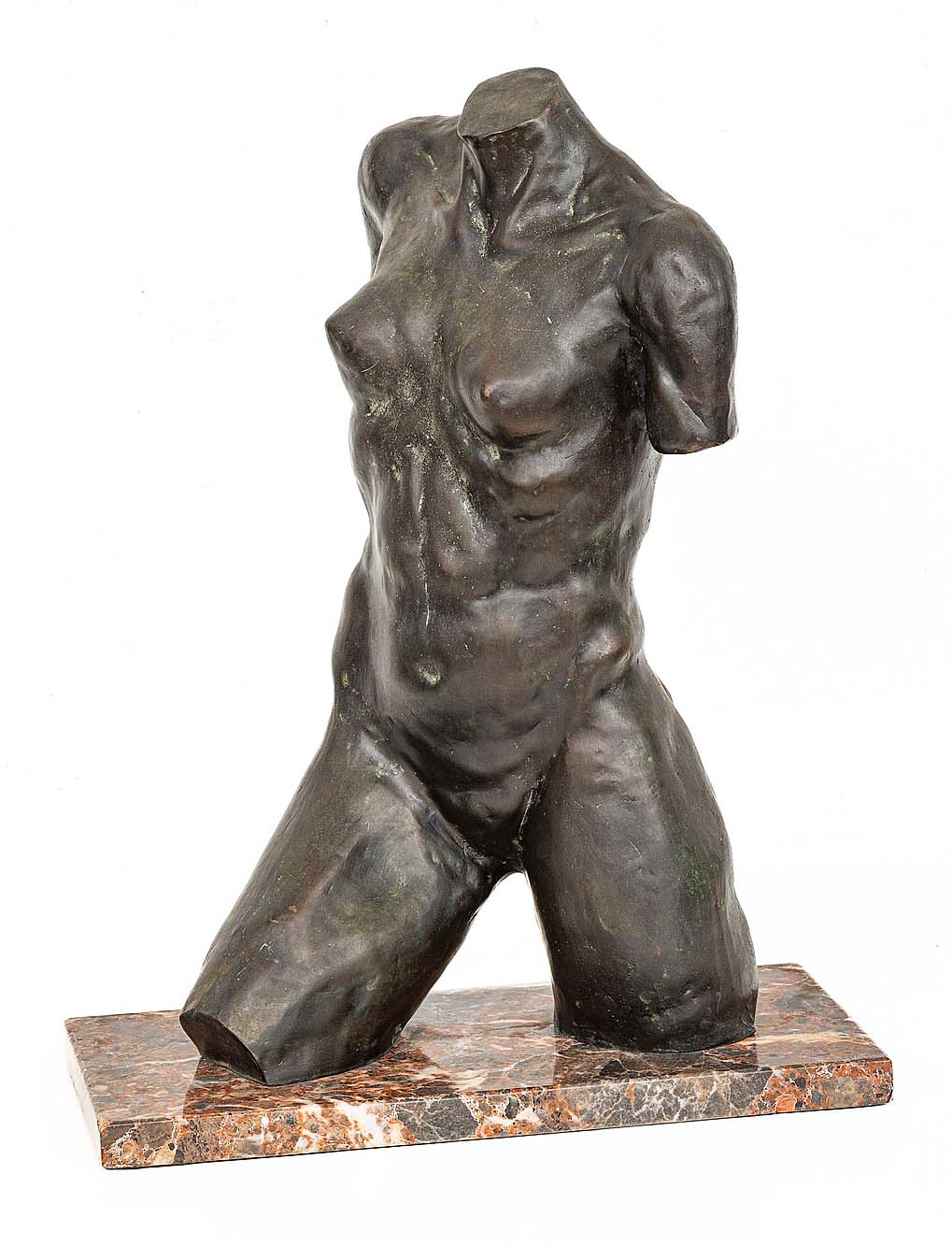
Other sculpture highlights included a circa 1920-30 cast of Auguste Rodin’s “Torse Féminin Debout (Torso of a Standing Female),” which sold for $13,640. This piece was a posthumous lost wax cast and bore the “F. Barbedienne Fond” foundry stamp — the gold standard in fine art bronze casting. It descended through family to a private collector in Lake Ann, Mich., and was snapped up by an astute long-time DuMouchelles client from Maine, who bid by phone.
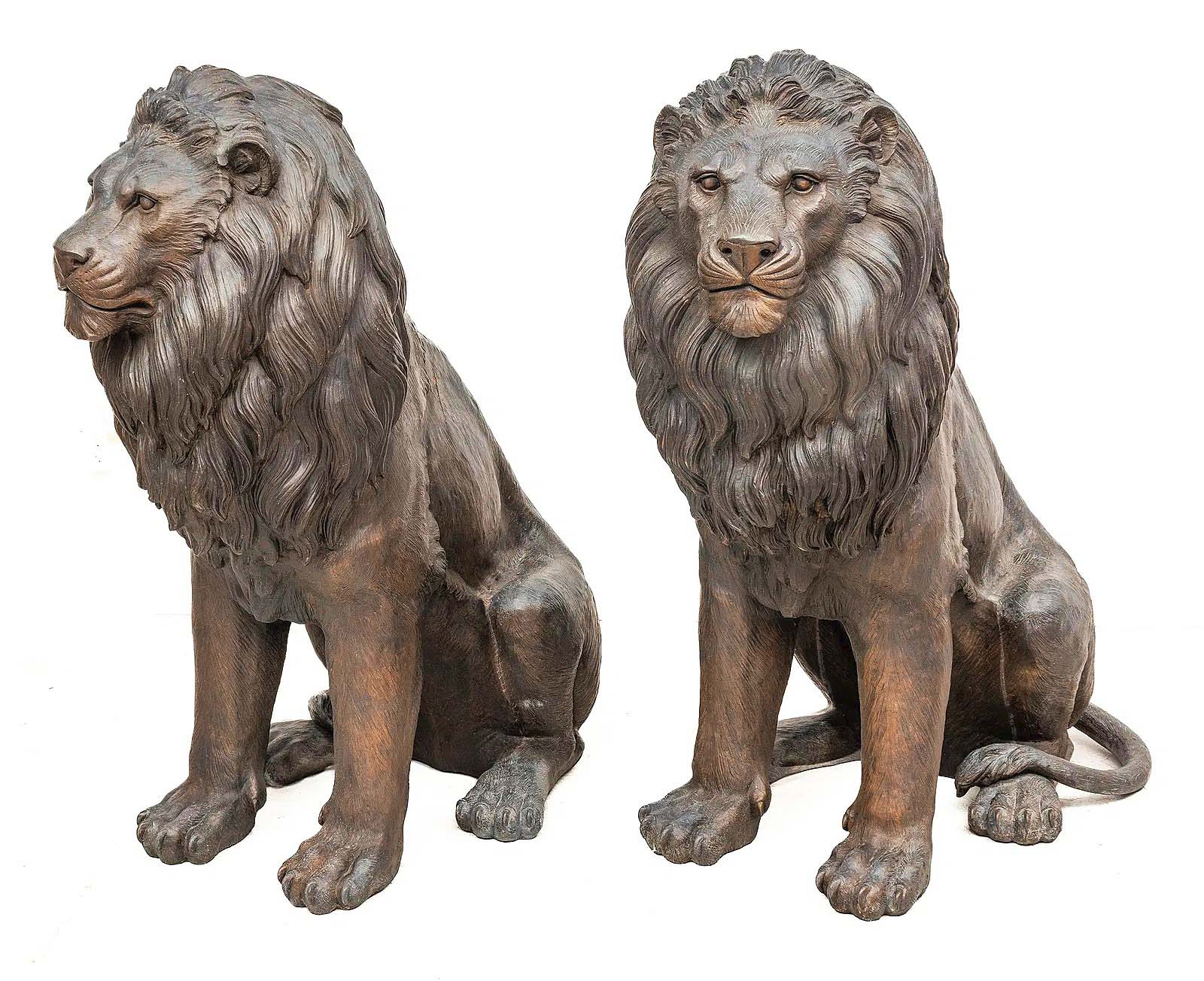
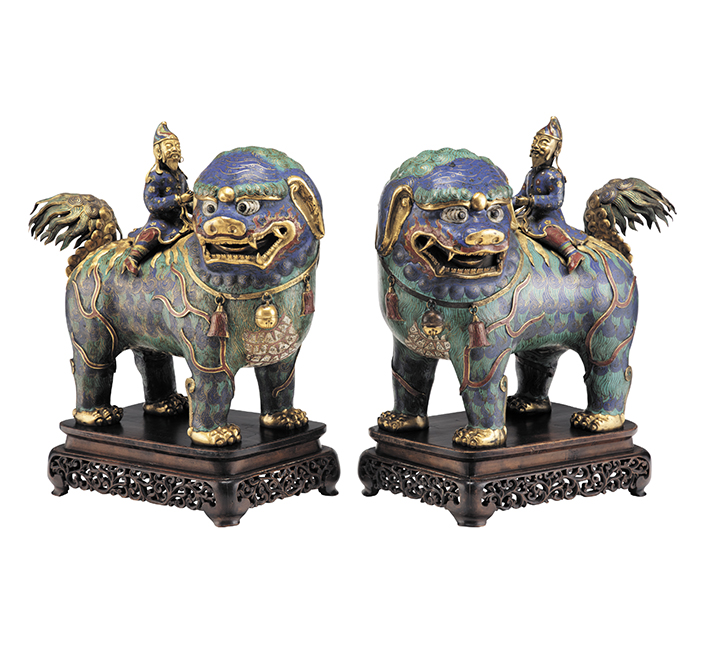
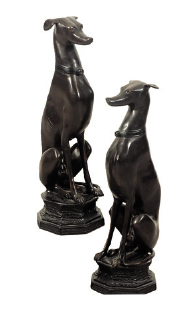
Additionally, a pair of Twentieth Century bronze guardian lions doubled its high estimate to secure $8,680. The life-size pair was made using lost wax casting and came from the Kindel family collection.
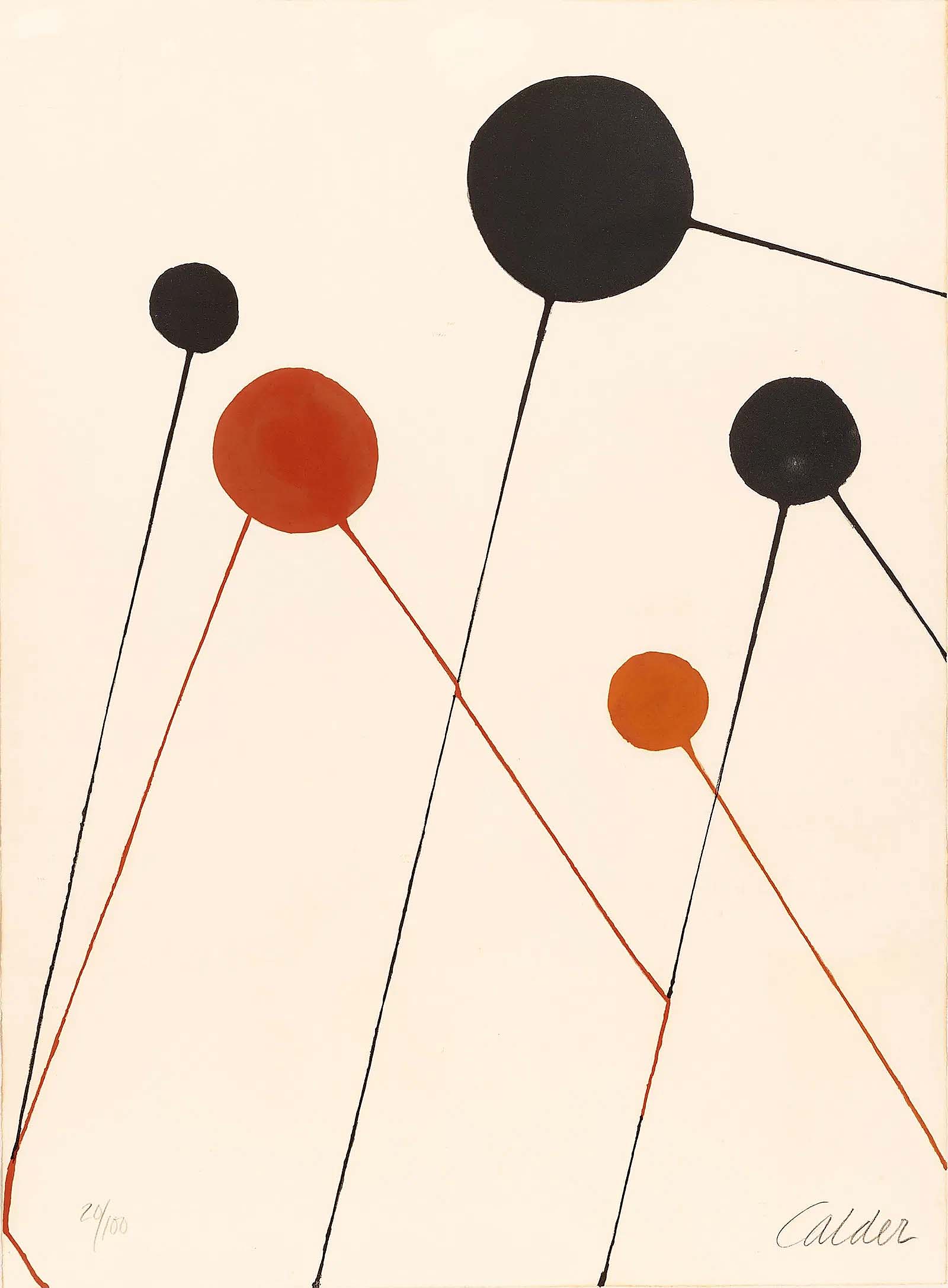
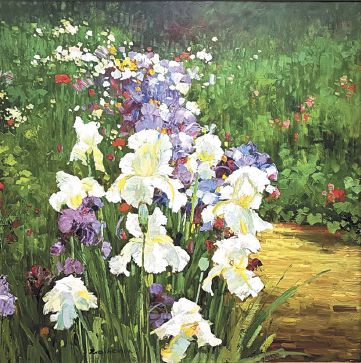
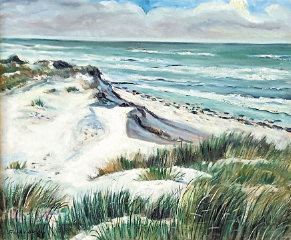
The selection of fine art on offer was not restricted to sculptures, as a curated grouping of paintings were on offer, led by a Howard Chandler Christy oil on canvas. The circa 1945-50 “Blue Water Landscape” sold for $19,840. Also performing well was a 1968 Alexander Calder lithograph in colors on wove paper, titled “Balloons,” which took $7,440. Doubling its high estimate was “Beginnings (Origin),” an acrylic on canvas by Detroit artist David J. Rubello (b 1935). Estimated at $800-$1,500, it made $3,720.
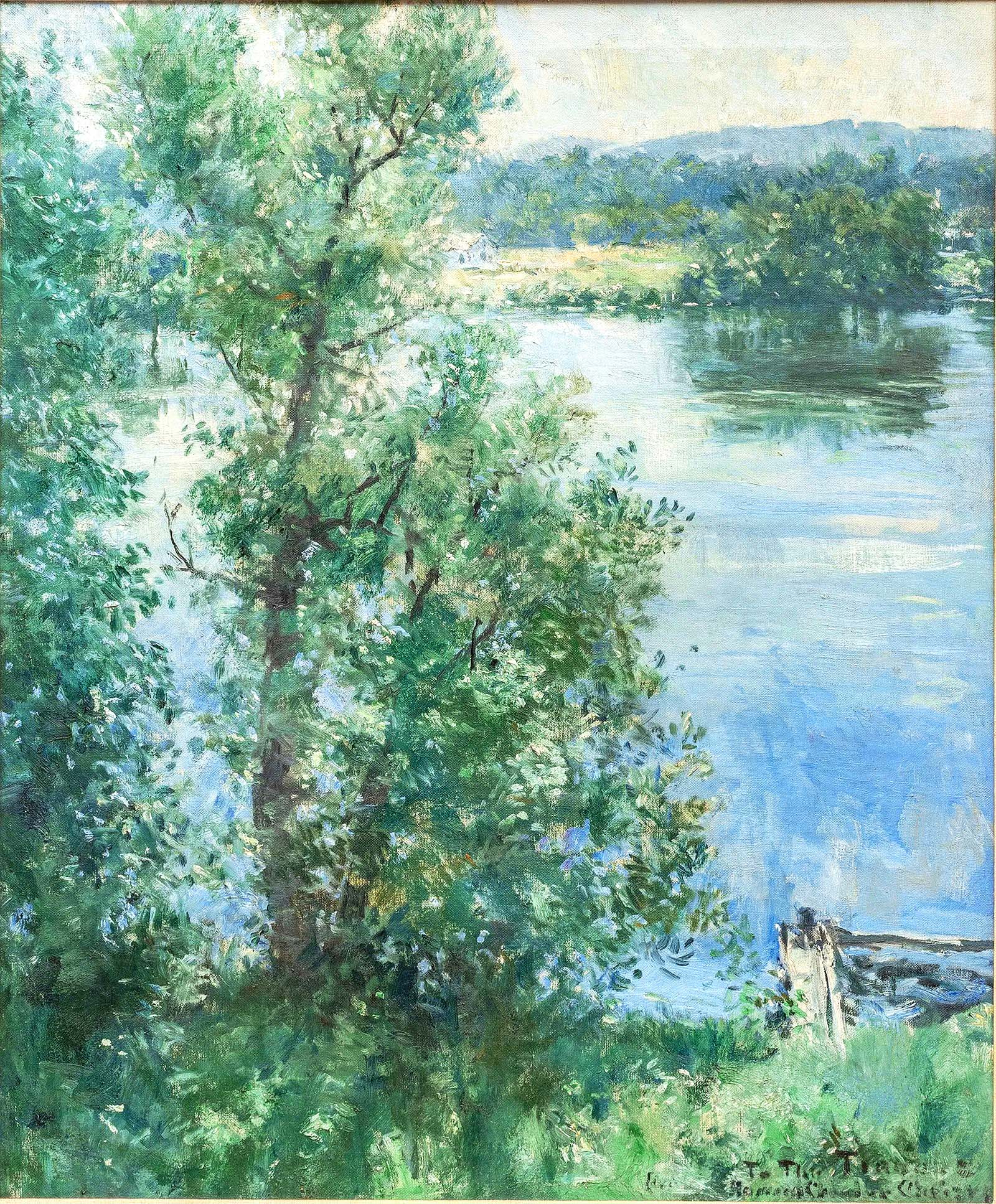
Topping paintings in the sale was this circa 1945-50 Howard Chandler Christy oil on canvas titled “Blue Water Landscape,” which attained $19,840 ($10/20,000).
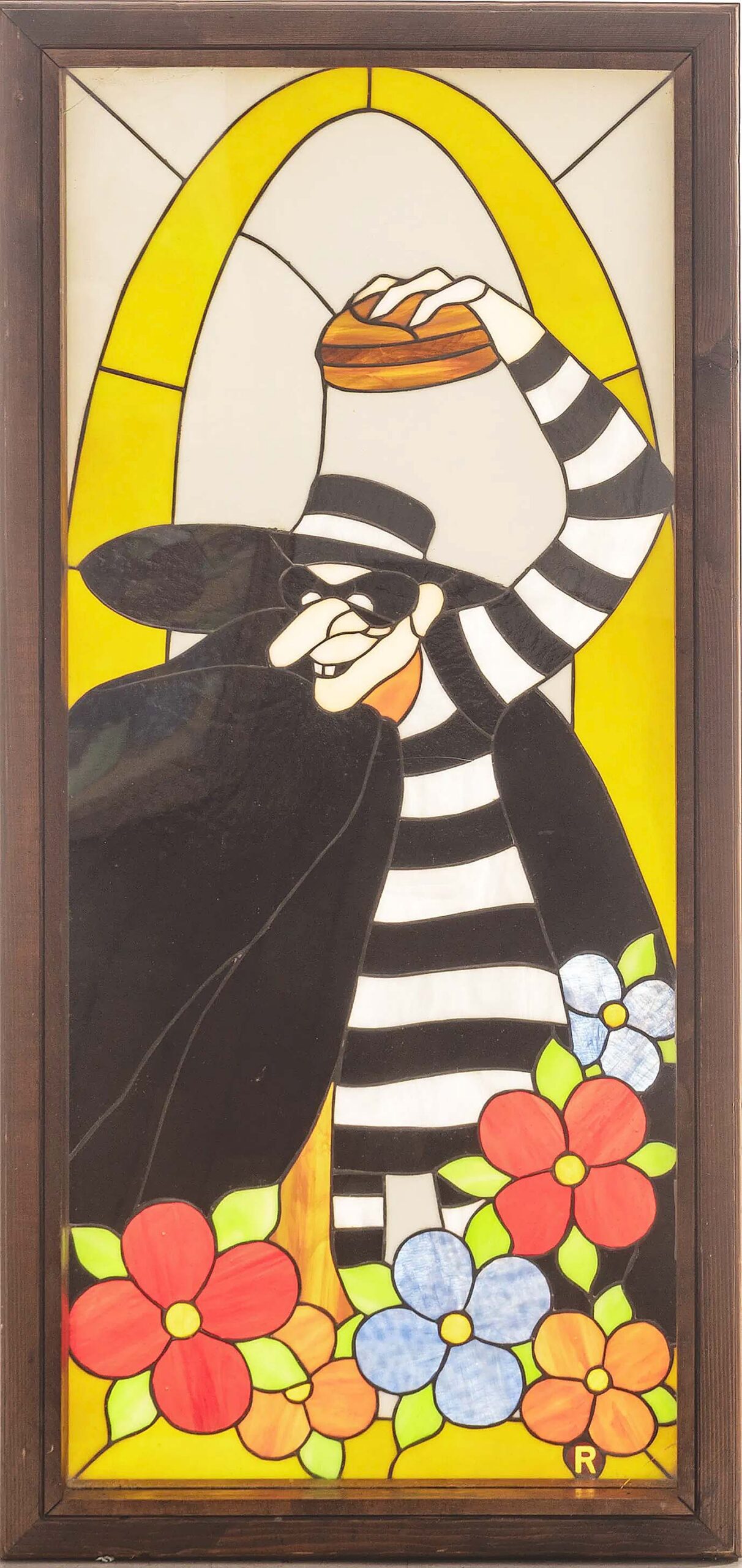
Those of a certain age will fondly recall the advertising campaign McDonald’s undertook in 1971, introducing mascot characters like Ronald McDonald, Mayor McCheese and Ronald McDonald’s villanous foil, the Hamburglar. They were used in restaurant commercials, on product packaging and in stained glass windows for its locations. Nostalgic artifacts featuring the characters are highly collectible today, and five of the 1970s-80s stained glass windows from the Ronald McDonald House in Detroit were featured in this auction.
“The McDonald’s character stained glass windows were unique pieces that we had never encountered before. Their pop-culture history created one of the most spirited and joyful bidding battles of the entire sale,” DuMouchelle said. “The windows, dating from the 1970s and 80s, were consigned to benefit the Ronald McDonald House in Detroit, so the proceeds will go to a wonderful cause. Sales room, phone and internet bidders were competing hard, and each lot sold well over estimate. The undisputed star was the Hamburglar window, which stole the show and realized $6,820.”
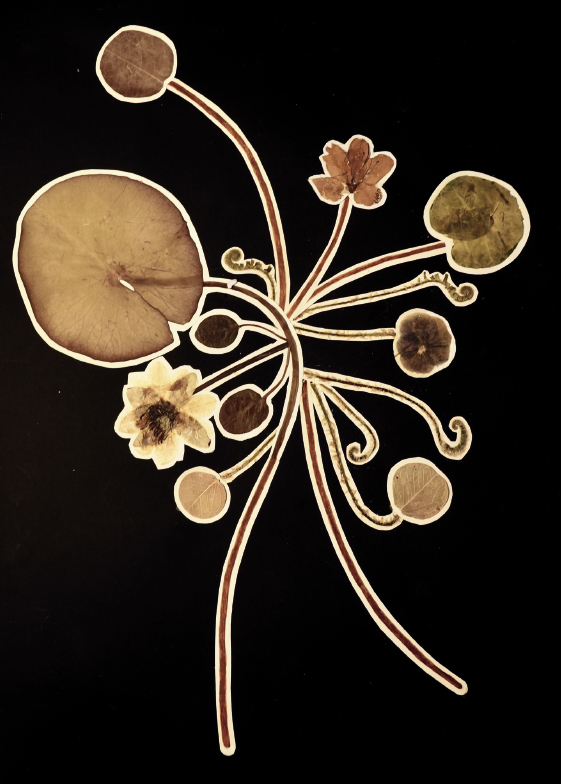
Rounding out the offerings in the second session was a two-piece set of Royal Copenhagen (Danish) Flora Danica porcelain serving plates, depicting the Ajuga Genevensis and Potentilla flower species, which took $3,100 ($500/800).
DuMouchelles’ next auction will be a live auction May 14-15 with an online-only session May 16.
Prices quoted include the buyer’s premium as reported by the auction house. For more information, www.dumoart.com or 313-963-6255.