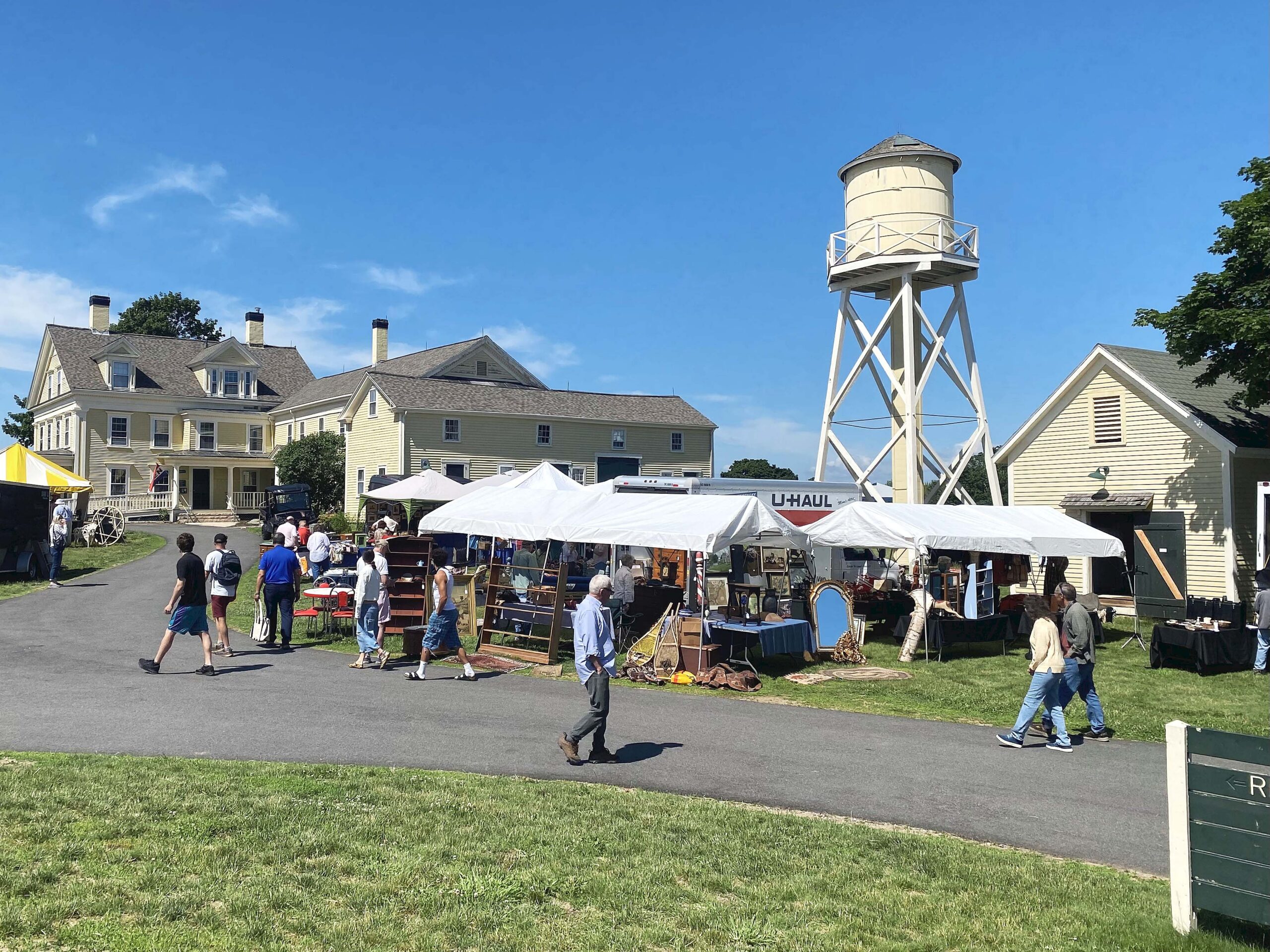
View of the historic Laudholm farmhouse and water tower from its barn.
Review & Onsite Photos by Z.G. Burnett
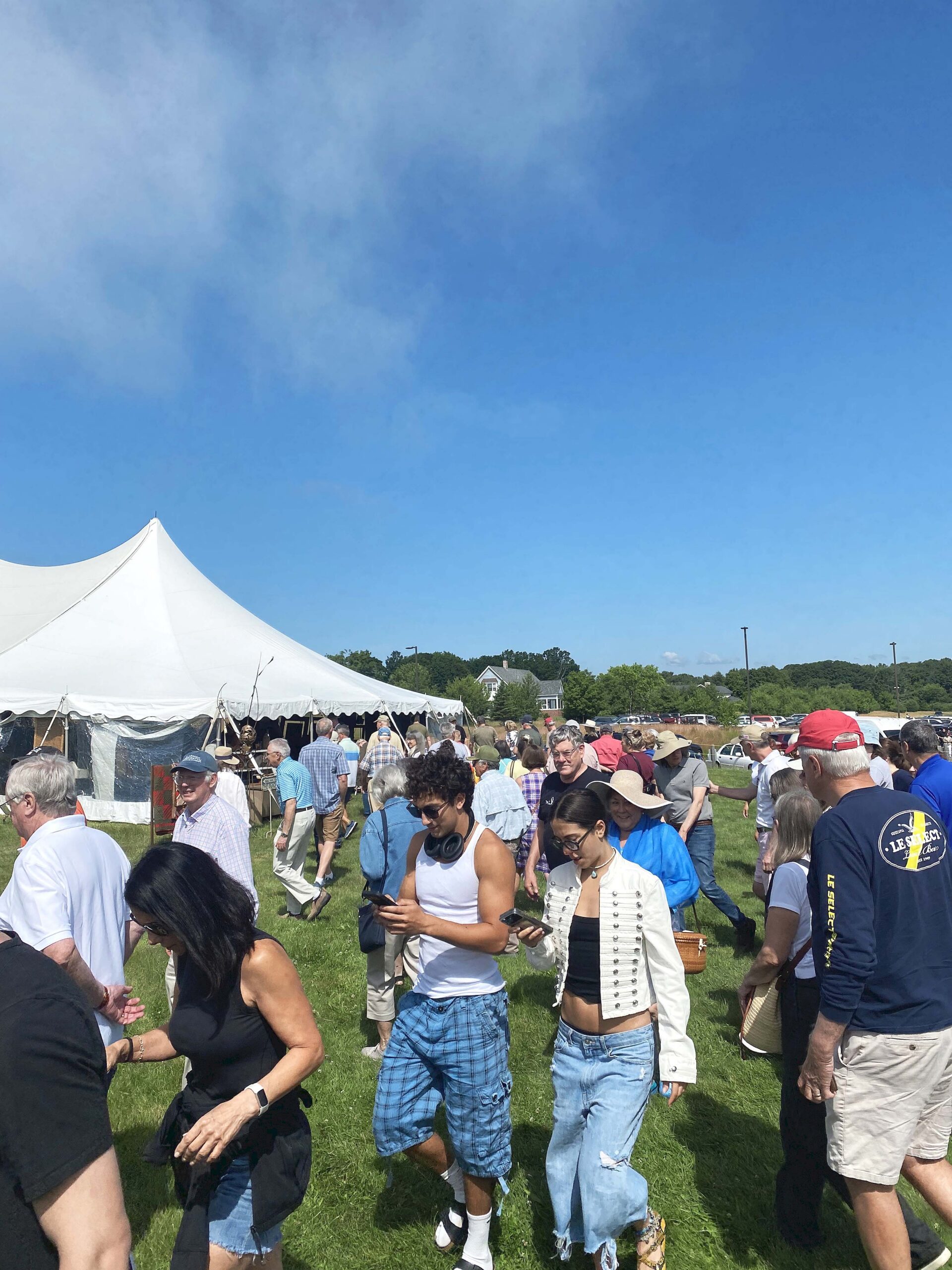
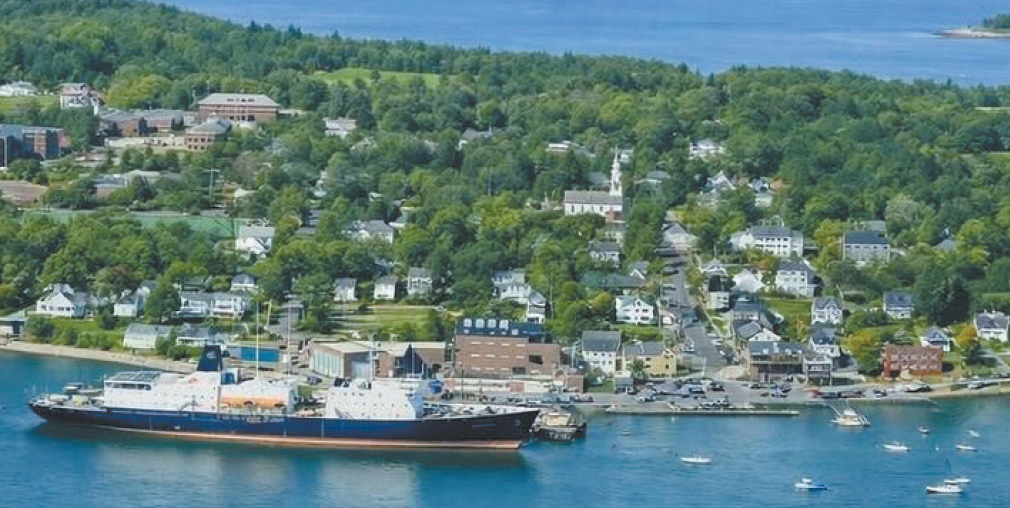
WELLS, MAINE — Visiting Laudholm Farm on the grounds of the Wells Reserve is an event in itself, with the site’s historic house and barn, walking trails and coastal views. Set the scene with sunshine, add more than 70 dealers posted across the campus and the day was made for Goosefare Promotions’ 25th Wells Antiques Show on June 26. “The gate was great,” organizers reported. “It was a little better than last year, which was also great.” This slight reserve belied a patient but lively crowd that rushed into two tents, one large barn and many outdoor booths, seemingly all at once after the guard ropes were removed, with more customers filing in throughout the day.
The large number of dealers in attendance ensured a variety of offerings and price points to suit all levels of collecting. There was no end of decorative, fine and folk art available. Many dealers reported a majority of their sales being of “smalls” and other goods that could be easily carried to customers’ cars. Others did well with furniture, particularly case pieces and tables that went to young buyers and families in search of functional antiques. Sold tags were spotted on all types of merchandise within the first 15 minutes of opening.
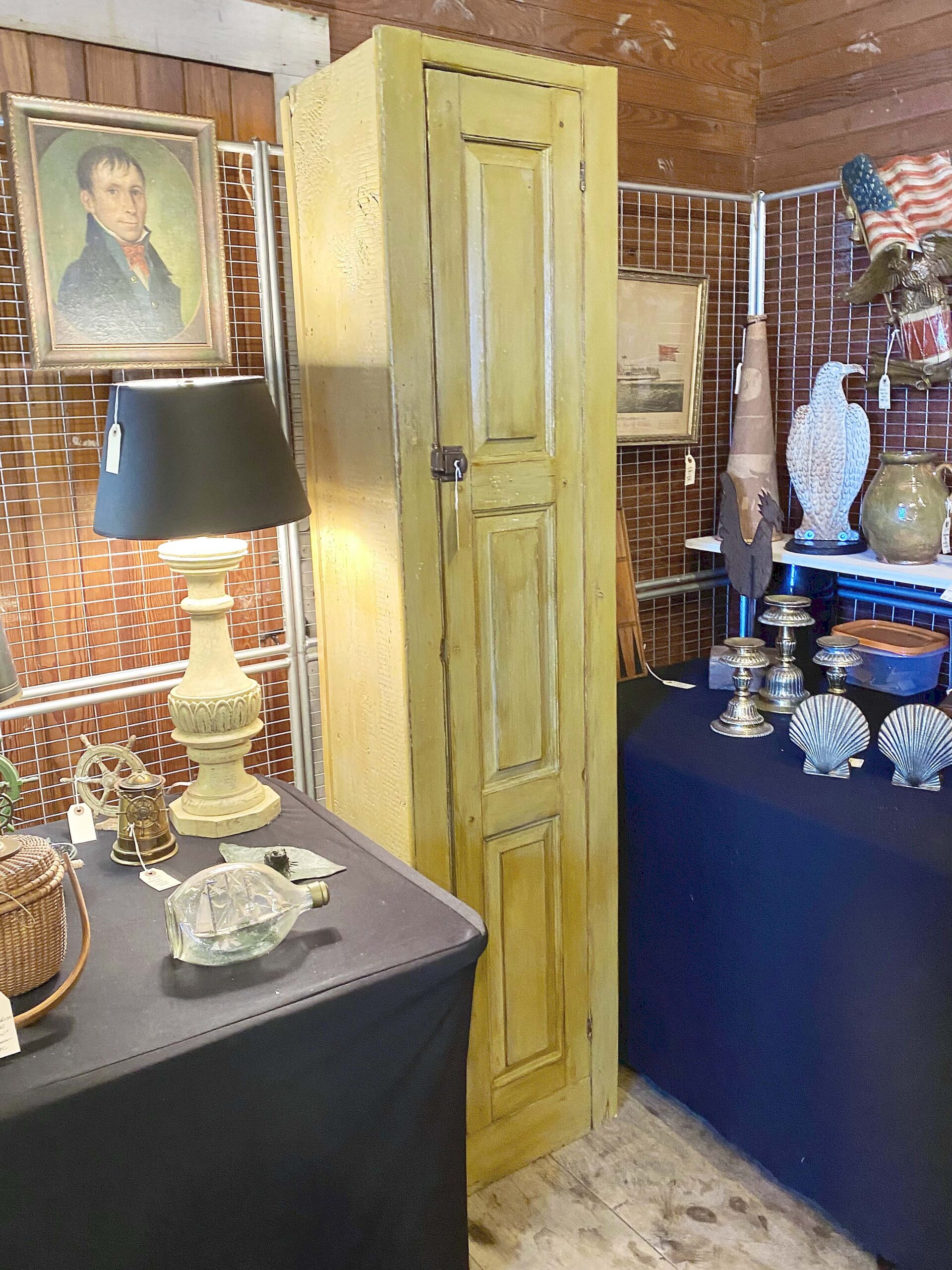
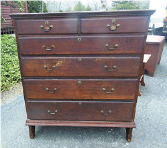
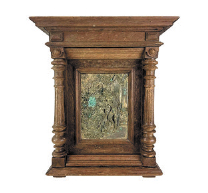
Cupboards and chests seemed especially popular at Wells. Derik Pulito displayed a handsome freestanding example in the first tent that was made and found in Maine. Pulito dated the cupboard to 1790-1820, showing a cutout base, band molding and raised panel door. It retained early green paint on the exterior and revealed yellow wash of a similar age inside.
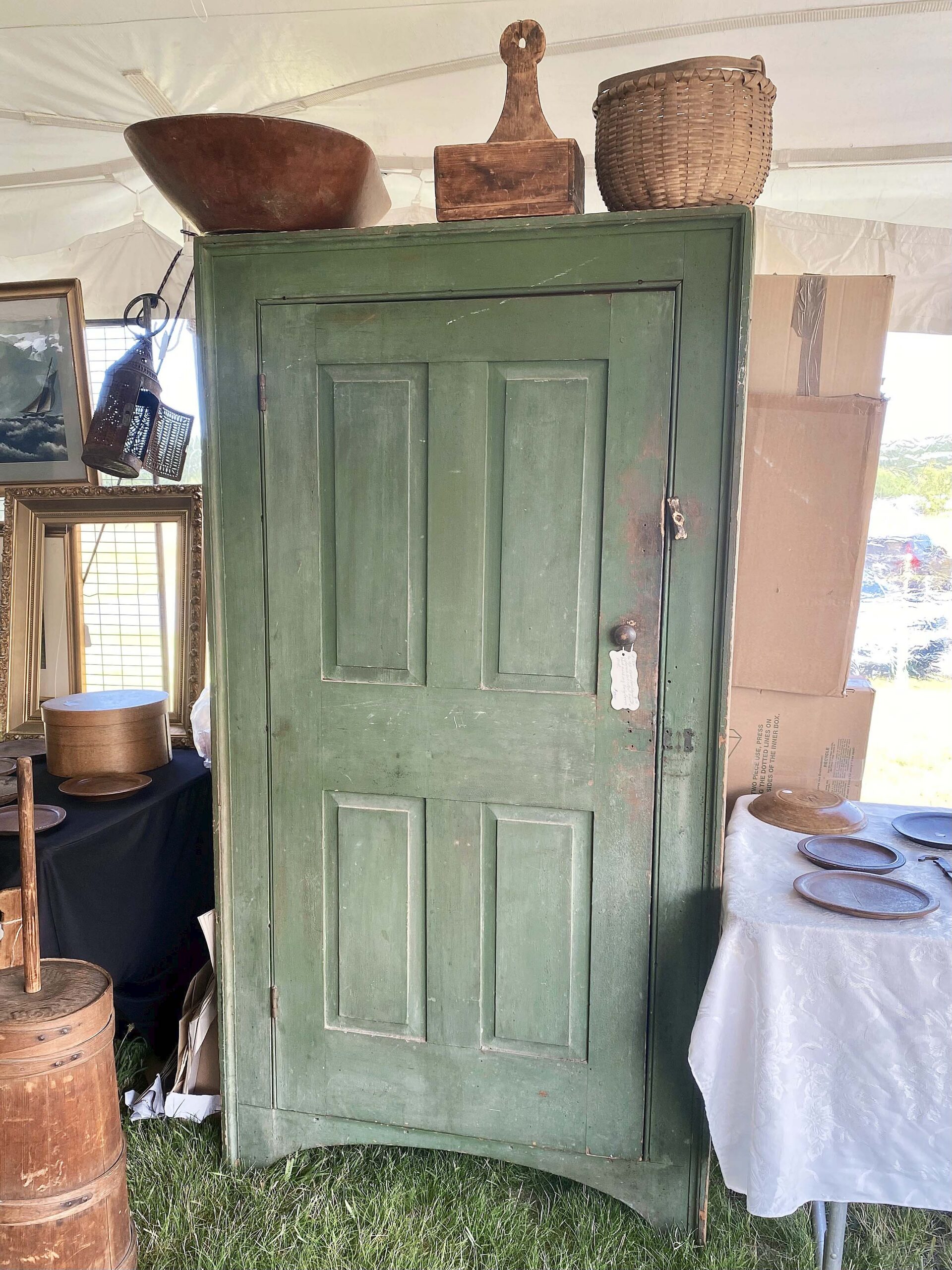
Made circa 1790-1820, this cupboard was sourced in Gray, Maine, and offered by Derik Pulito, Kensington, Conn.
Searsport, Maine, dealers Dennis Raleigh and Phyllis Sommer of Pumpkin Patch Antiques brought one of two chimney cupboards from the same era. These were custom made to fit on either side of a fireplace in the historic Maine home where they were found. “In my 61 years of business, I’ve never seen a true pair,” Raleigh commented. Showing early yellow paint and a raised panel door, the cupboards are ideal for an apartment or smaller home, even without a chimney, and are still available at press time.
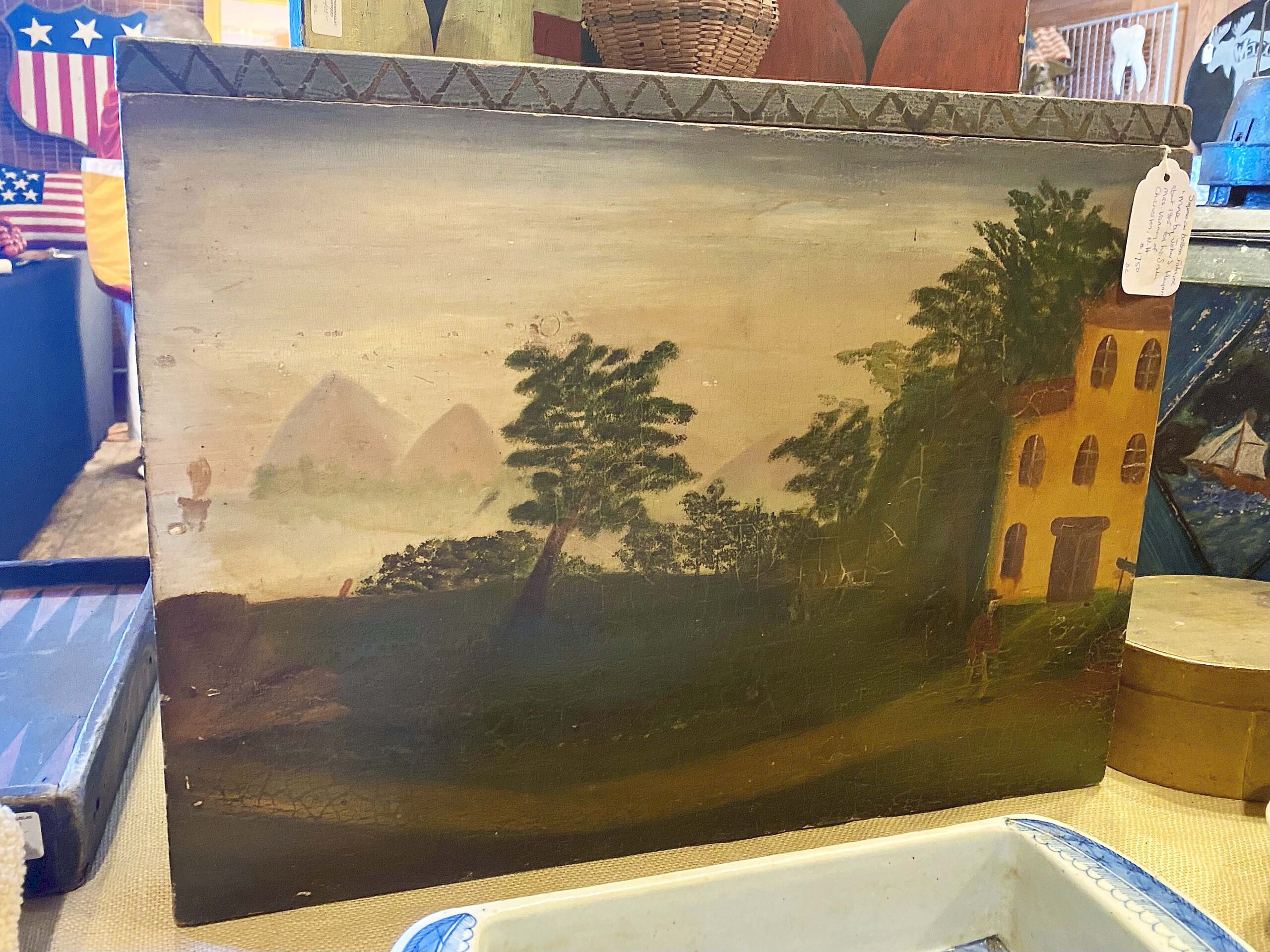
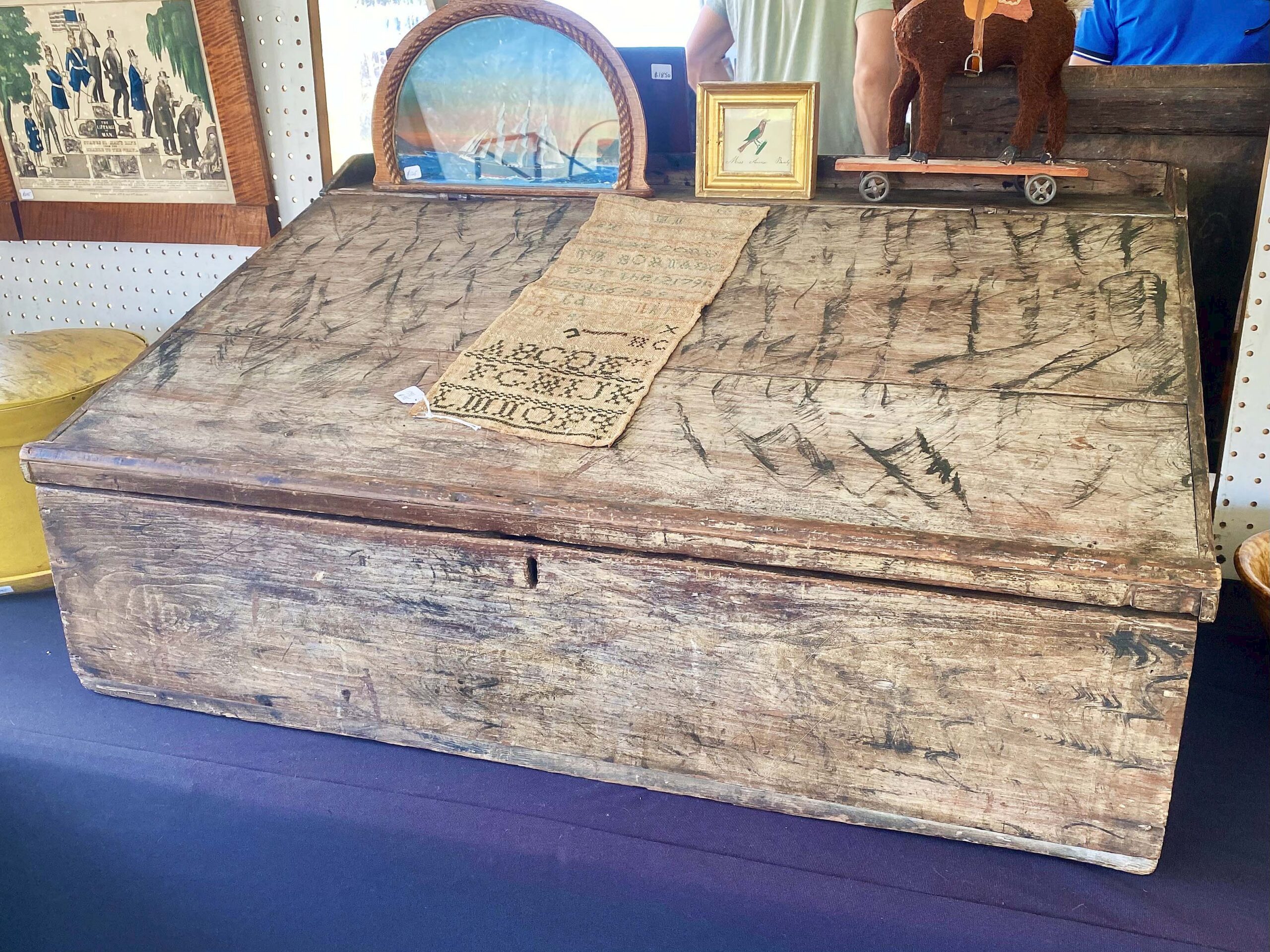
Chests of every size are often abundant at shows like Wells, some even decorated, but rarely are they inscribed and signed. Stephen-Douglas Antiques presented a medium-sized tabletop chest that was painted with a serene bay scene on its front panel. The scene included mountains on the far shore, a small sailboat and a man walking up to a yellow house with reddish brown trim. The image and colors were wonderfully preserved. On the bottom interior panel, an inscription read, “Made by John S. Haynes about 1905 for his sister, Mrs Varney of Chichester, N.H.” Haynes (1848-1922) was born in neighboring Concord and married Ellen E. Varney Haynes (1852-1944) in 1893. “Varney” is a prominent name in Chichester, and though his sister presumably married into the same family, her given name is yet to be discovered.
Robert Markowitz had another folk art landscape in his nearby booth, but that’s where the similarities between the two objects ended. His was a framed, multicolor straw work scene of the Menai Suspension Bridge and the Britannia Bridge that connected mainland Wales to the Isle of Anglesey over the Menai Strait. The former was designed by Thomas Telford (1757-1834) and completed in 1826, the first modern suspension bridge in the United Kingdom and the largest in the world at that time. The two-way deck was suspended with more than 2,000 tons of wrought iron in 16 chain cables, supported by transverse bracing and trussed railings. The bridge was renovated with steel cables in 1939 to support automobile traffic and is currently closed for renovations until 2027. The Britannia Bridge was designed and opened by Robert Stephenson in 1850 who, with his father, also built the first successful locomotive. Its central foundation is Britannia Rock, and it is constructed with wrought-iron box tubes. Stephenson could not build another suspension bridge due to crowded shipping lanes on the strait, and with this material was able to give the bridge a 105-foot clearance below. Carefully constructed from hundreds of multicolored straw pieces, the artist shows some buildings that still stand on the shore, along with a locomotive and ships to illustrate changing transportation technologies.
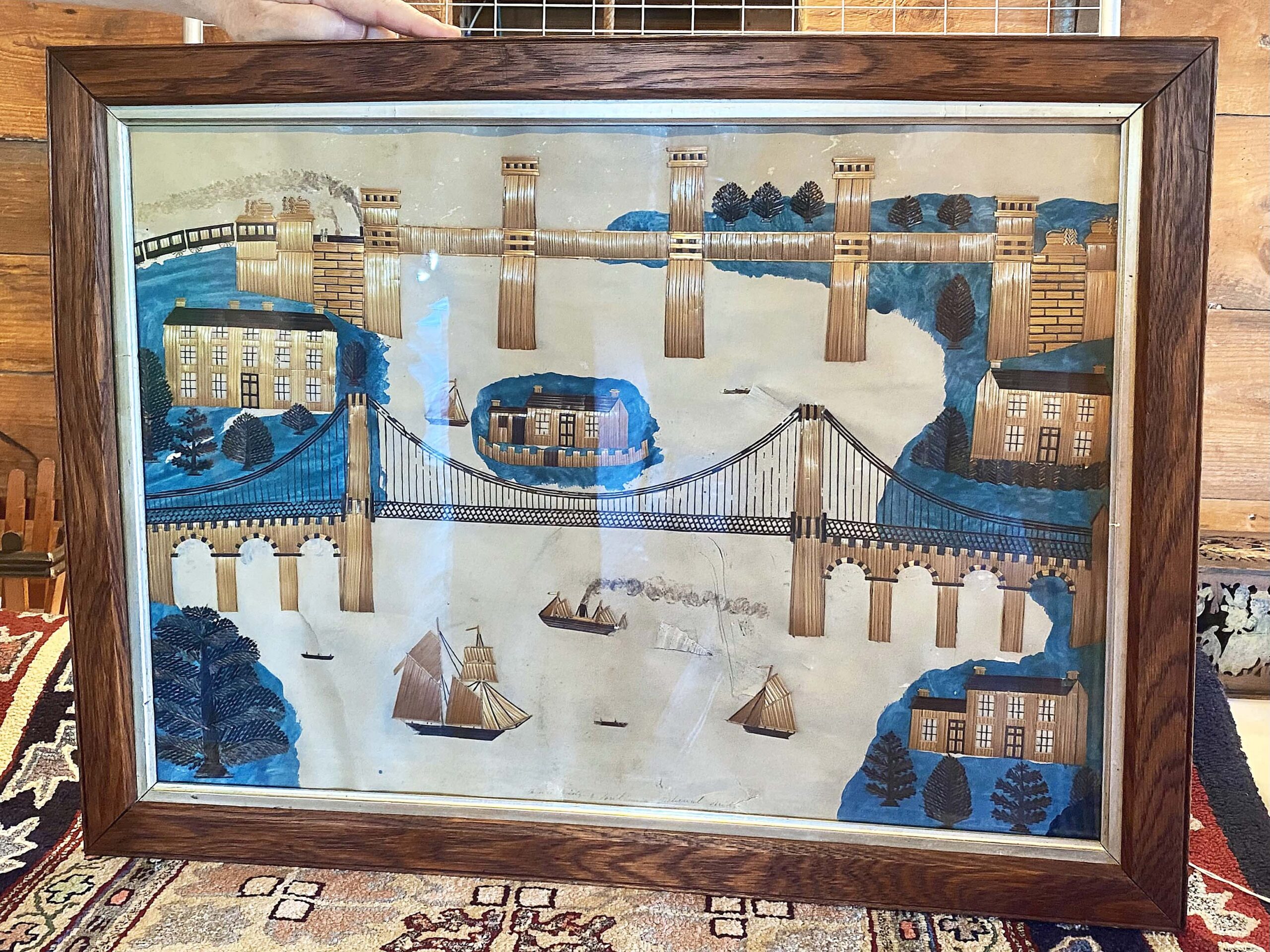
This unusual straw work landscape shows “progress” on the Menai Strait, Wales, by including the Menai Bridge, the Britannia Bridge and the changing ways of mid Nineteenth Century travel and commerce. Robert Markowitz, Groveland, Mass.
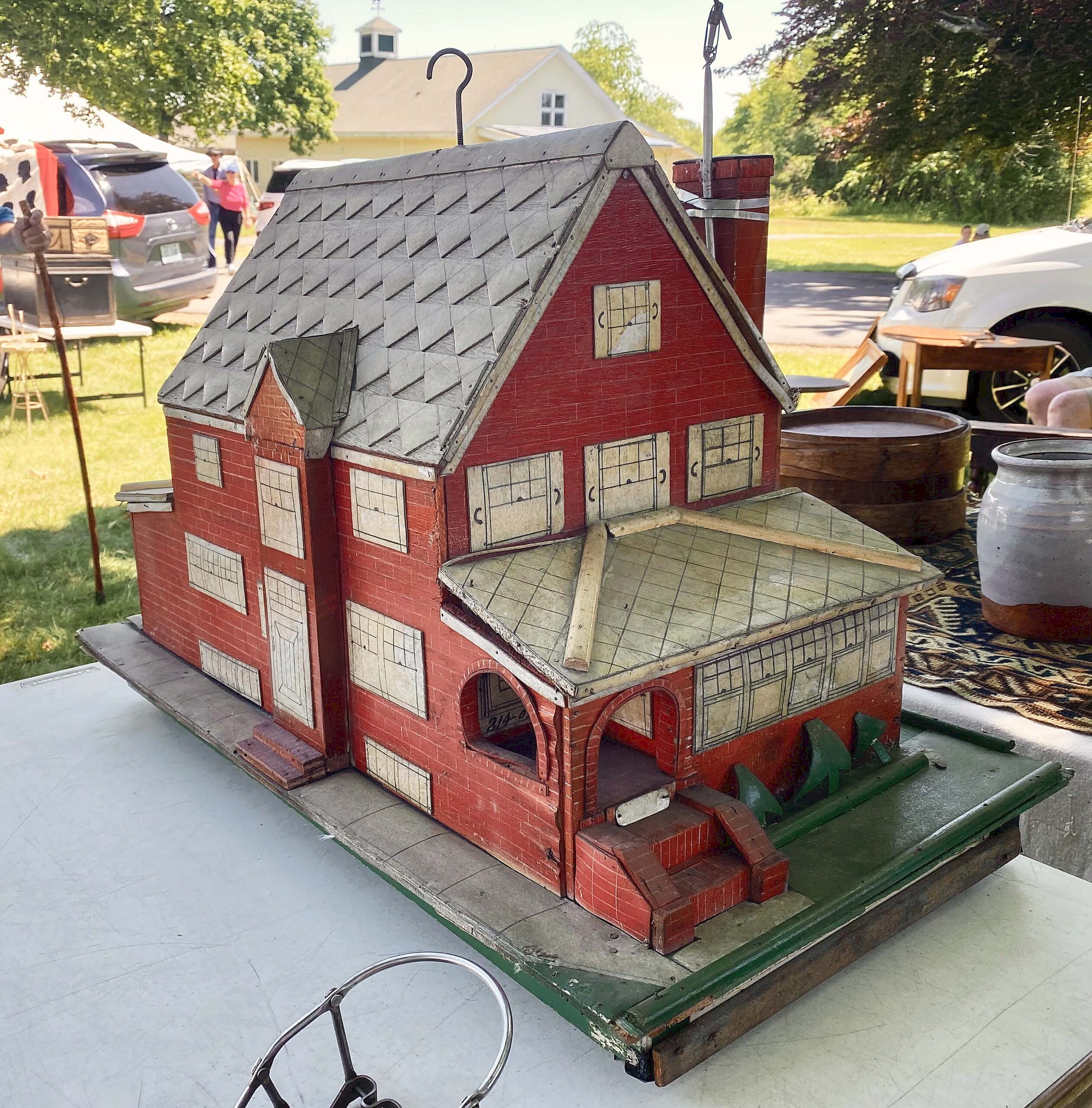
Industrial history on a smaller scale was offered by Farrin’s Antiques in the form of a model home. Owner Josh Farrin, who found the model in Coopers Mills, Maine, pointed to inscriptions on either side that read, “Model of a house built for Anthony C. Serrada… Cost $12,000 including 20’ x 20’ 2-car brick garage.” The house was also made of brick with two stories and an A-frame attic. The number of bedrooms and bathrooms is not listed, but the architect did write down the owner’s name and address on Long Island, Maine. However, the house could not be found and whether or not it’s still standing is currently unknown.
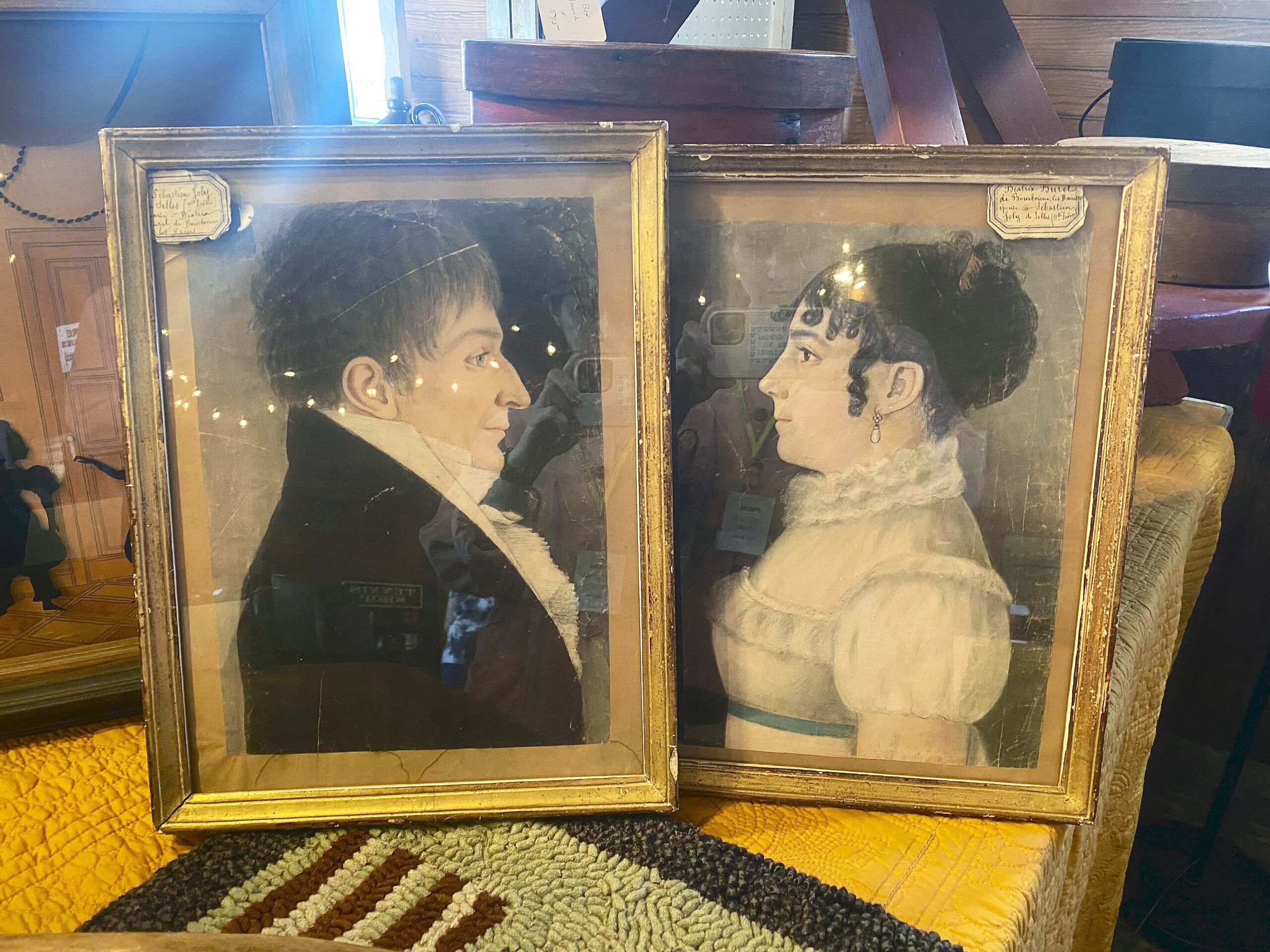
Two early Nineteenth Century profile portraits from Nancy Douglass of Willow Springs Perennial Antiques presented another opportunity for investigation. Labels on each of the early, if not original, frames identified the sitters as French, yet Douglass was unsure how the portraits ended up in Saratoga Springs, N.Y. Likely painted on the occasion of their wedding, the husband Sébastien Joly came from the small commune of Selles in the Haute-Saône department. This is just over the Haute-Marne border from Bourbonne-les-Bains, the hometown of his wife, Beatrix Burel. Should this information sound familiar to any possible descendants, the portraits did not yet find a new home at Wells.
Goosefare’s 58th New London Historical Society Antiques Show & Sale will be on Saturday, July 25, on the New London Historical Society grounds, 179 Little Lake Sunapee Road, New London, N.H. For information, 800-641-6908 or www.goosefareantiques.com.