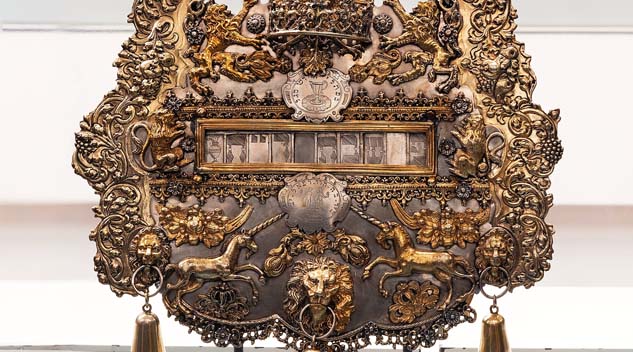
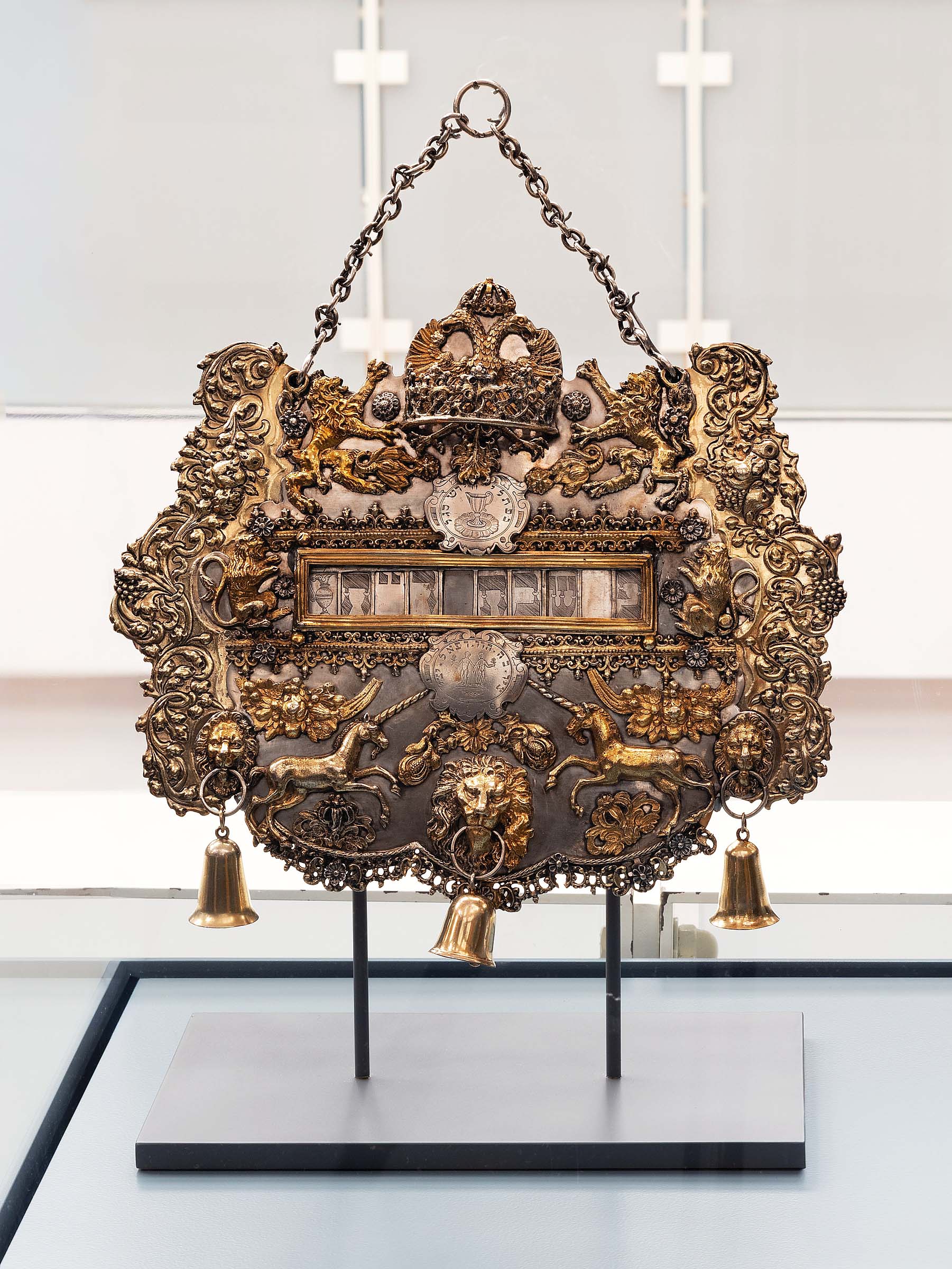
Torah shield, 1661-64. The Jewish Museum, gift of Dr Harry G. Friedman. On loan from the Jewish Museum, New York. Photo courtesy Detroit Institute of Arts.
By Andrea Valluzzo
DETROIT — Designed to spark important conversations that seem especially relevant today given rising antisemitism and a highly divisive geopolitical climate, a display of 13 masterworks of ceremonial Judaica is on view at the Detroit Institute of Arts. Instead of being a grouping unto itself, the objects have been interspersed among the institute’s permanent collection.
Walk into the Islamic galleries, for example, and across from a Quran one will see adornments for the Torah, the most sacred text for Judaism and observed as divine law — drawing connections for visitors of the sacredness of both texts.
This intermingled exhibition approach is the de facto style for the institute’s Guests of Honor series of exhibitions, where special objects on loan are placed alongside other objects to tell a broader story. In the case of the “Guests of Honor: Art of Faith from the Jewish Museum, New York” exhibition, on view through January 3, these items explore themes of interfaith interaction, artistic influence and developments, craftsmanship and global cultures. The exhibit was co-curated by Alan Darr, senior curator of the European art department & the Walter B. Ford II family curator of European sculpture and decorative arts, and Katherine Kasdorf, curator, arts of Asia and the Islamic world.
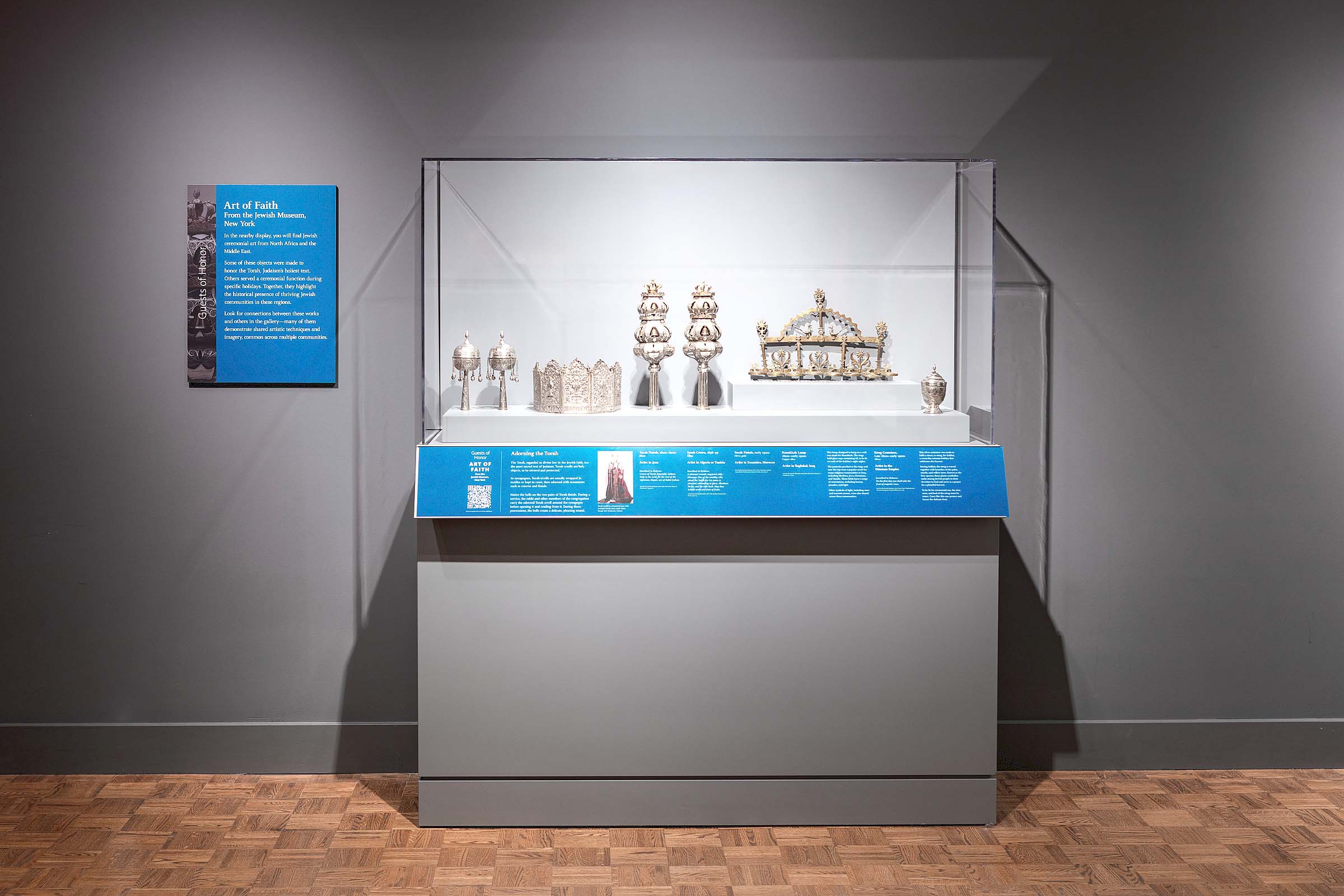
Installation view of “Guests of Honor: Art of Faith from the Jewish Museum, New York.” Courtesy Detroit Institute of Arts.
“The Detroit Institute of Arts is deeply honored to collaborate with the Jewish Museum to bring these extraordinary Jewish ceremonial artworks to our community,” said Detroit Institute of Arts director Salvador Salort-Pons. “This partnership represents more than a loan of objects; it is a testament to the power of cultural institutions working together to preserve and share the richness of Jewish history as well as artistic and spiritual life. Through this exhibition, we hope to foster greater understanding and appreciation for Jewish history and culture, while strengthening the bonds between our institutions and communities.”
“Working alongside our collaborating partners at the Jewish Museum to select these pieces has been an incredible journey of discovery and scholarship,” said Judith Dolkart, Detroit Institute of Arts deputy director, art, education & programs. “Each artwork tells a unique story — of faith, resilience, craftsmanship and community — and together we have carefully identified objects that will resonate with our visitors on multiple levels. I am excited for our audiences to experience the beauty, meaning and history embedded in each piece.”
The DIA’s collection is encyclopedic, offering a rich understanding into world cultures, so spreading the “Art of Faith” objects across five of its galleries allows viewers to not just see these objects dating from the 1400s to the 1800s but to appreciate the connections among faith traditions, such as in religious art made for Christian and Islamic patrons during the same era.
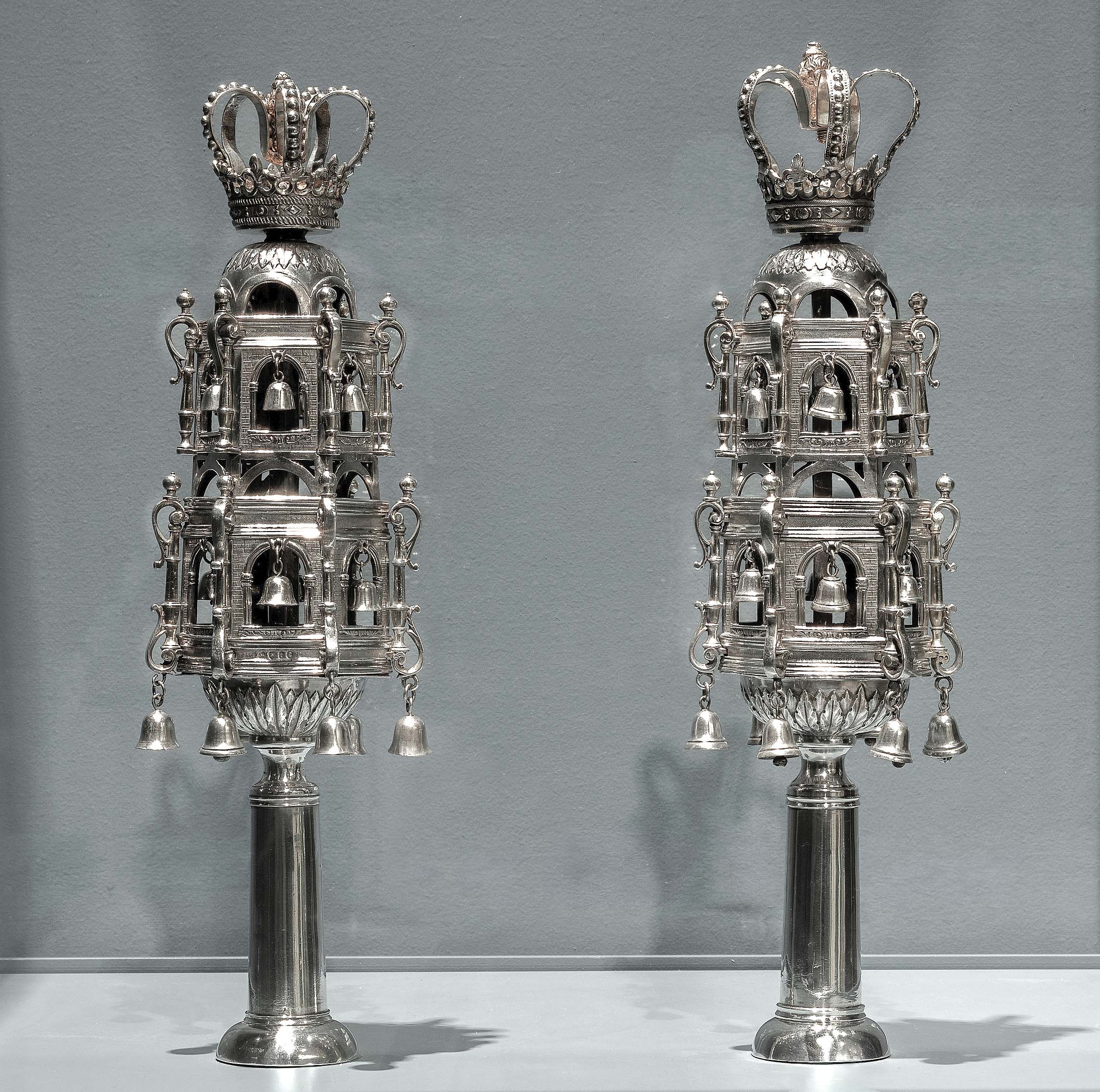
Torah finials, 1794; The Jewish Museum, museum purchase. On loan from the Jewish Museum, New York. Photo courtesy Detroit Institute of Arts.
“I always find going to the museum is a little bit like taking a trip around the world and it’s interesting to use the pieces in this installation as a way to travel through Europe and the Islamic world but through the lens of the Jewish faith,” Dolkart added. While the Institute’s collections are world class, the diversity of Judaica was a bit thin, so the Institute turned to the New York museum to borrow distinctive and important objects. “We felt that by going to one of the best collections in the world, we would be able to share absolute masterworks with our audiences,” she explained.
Adorning and honoring the holy Torah text was a key goal for some of the objects on display, while others were reserved for holidays or to be used in ceremonies. Taken in as a grouping, they speak to the diverse communities of Jewish people in Europe, the Middle East and North Africa, and the lasting influence the traditions observed in these communities and the objects’ makers had.
Among the earliest Torah shields surviving today, one made by Thomas Ringler (German, 1628-1704) is the oldest known example of Jewish ceremonial silver from Nuremberg, which was a key silversmithing region in the 1500s to 1700s. The function of a Torah shield was to mark the portion of the Torah that would be read in the synagogue that week. As it served to decorate the Torah scroll, its decoration was often lavish. The Ringler shield features two silver plaques, probably inscribed for the shield’s patrons, surrounded by unicorns, lions and foliage in high relief. The style of decoration and motifs are markedly similar to those in German art and Christian religious silver created in Nuremberg at this time.
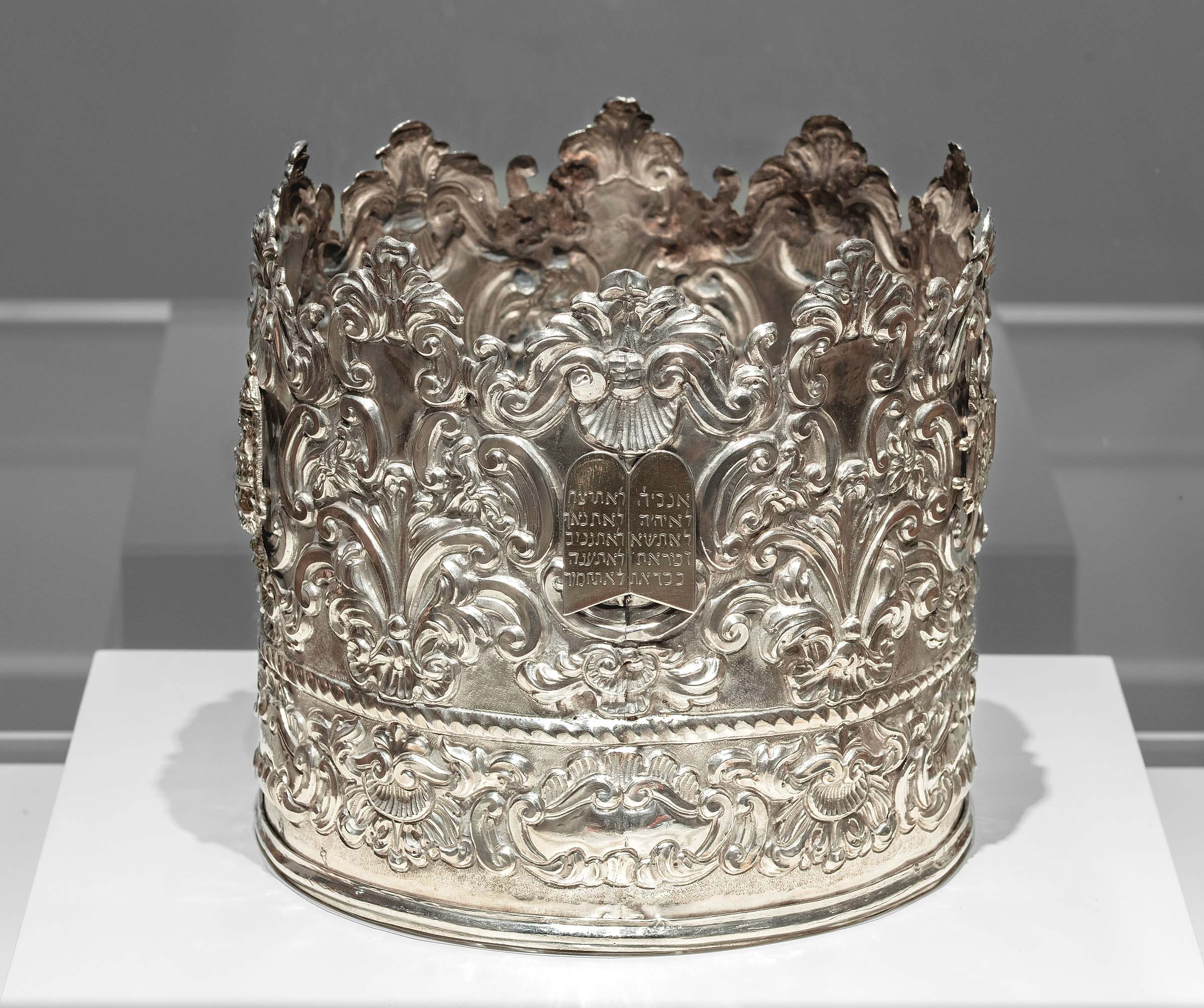
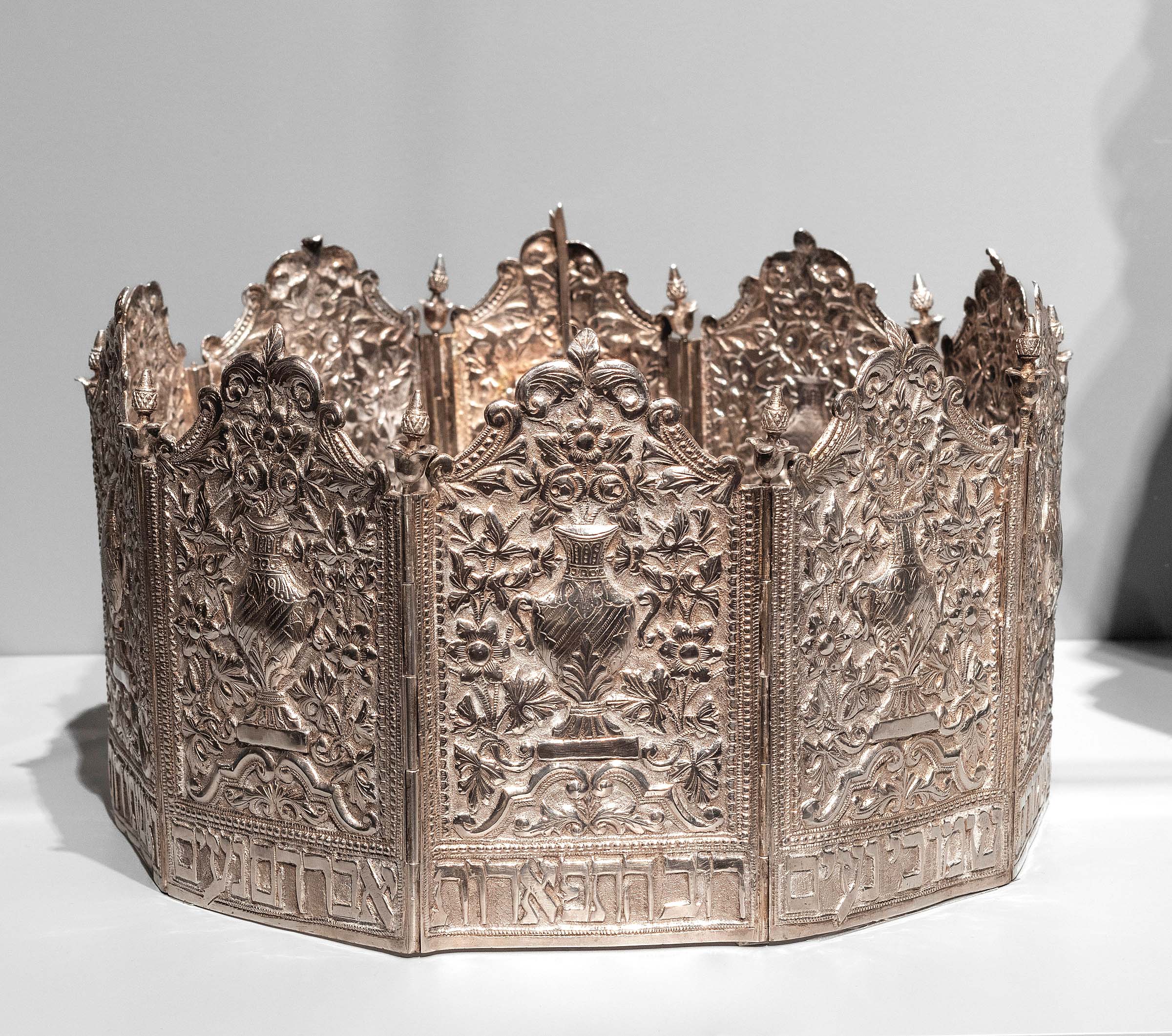
Torah crown, 1764-77. The Jewish Museum, gift of Dr Harry G. Friedman. On loan from the Jewish Museum, New York. Photo courtesy Detroit Institute of Arts.
“Although people may have had different faiths, they shared common motifs in the imagery used or similar materials,” Dolkart said. “These are commonalities that are transcendent in various communities. The unicorns were motifs that you would have found in non-Jewish contexts.”
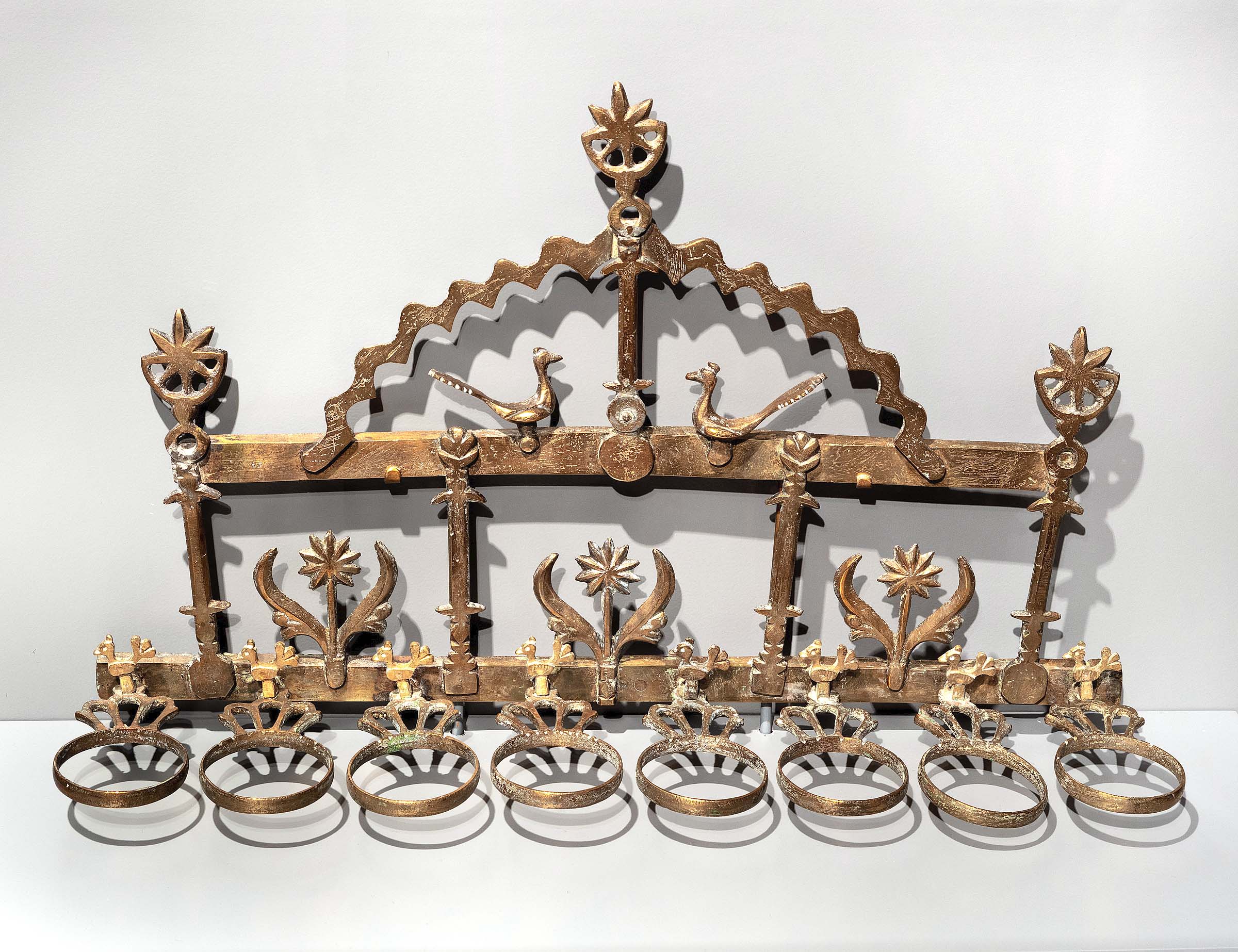
Also showing commonalities among artistic traditions is a menorah in the Islamic galleries that has peacocks on it, a trait shared by several Islamic objects in the Institute’s collections. “These symbols and motifs were used across cultures and religions,” she added. A copper alloy Hanukkah lamp made by an artist in Baghdad, Iran, in the 1800s to early 1900s, has peacocks perched near the top and at the rings. The birds are thought to symbolize paradise, beauty and light, the latter especially fitting for this lamp. Peacocks were common motifs in religious art for peoples in Iraq, from Muslims to Jews to Christians. Another Hanukkah lamp from northern Germany also shares similarities with popular non-Judaica designs from that area.
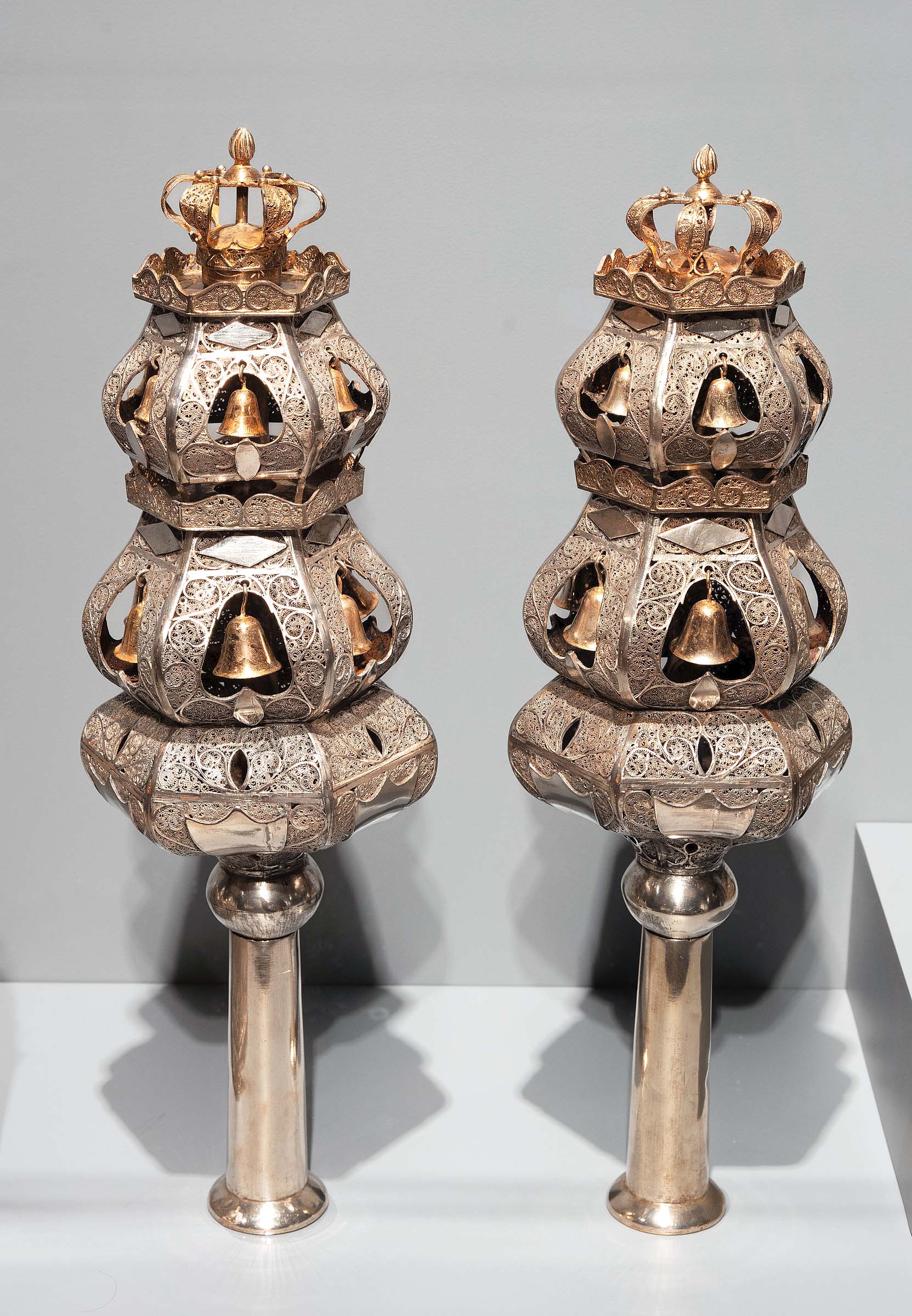
Three sets of Torah finials are on view, allowing viewers to discern similarities and differences in styles and decoration across time. As part of the weekly worship service, the Torah, decorated with ornaments such as finials, shields and crowns, moves around the synagogue before passages are read aloud. Made to sit on the wooden rollers of a Torah scroll, a cast and chased set of gilt silver Torah finials from 1794 was made by London silversmith Solomon Hougham, who was active from the late 1700s to early 1800s. Hougham embellished them with silver bells and a crown on each, a clear statement on his part of the importance of the Torah. When these were carried in a procession by the rabbi and members of the congregation, the bells would gently chime to make what has been described as a joyous sound. Another set of Torah finials on view dates to the early 1900s and was wrought in gold and silver by an artist in Essaouira, Morocco. The third set was made in Iran in the 1800s to 1900s and was inscribed in Hebrew, “Crown of Torah, beautiful, radiant, Holy to the Lord, for the soul of the righteous Nissan, son of Rabbi Joshua.”
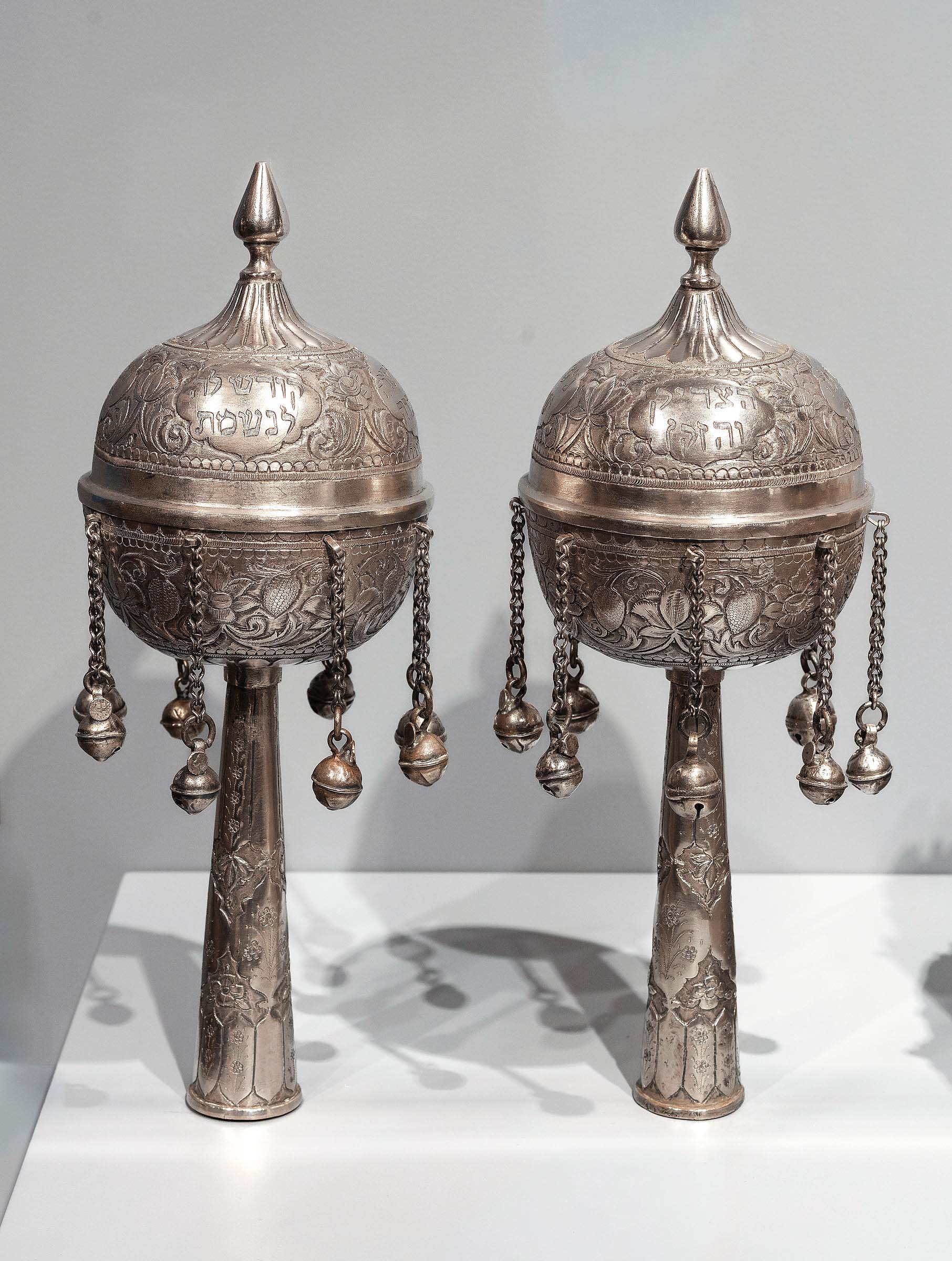
Torah finials, 1800s-1900s. The Jewish Museum, gift of Dr Harry G. Friedman. On loan from the Jewish Museum, New York. Photo courtesy Detroit Institute of Arts.
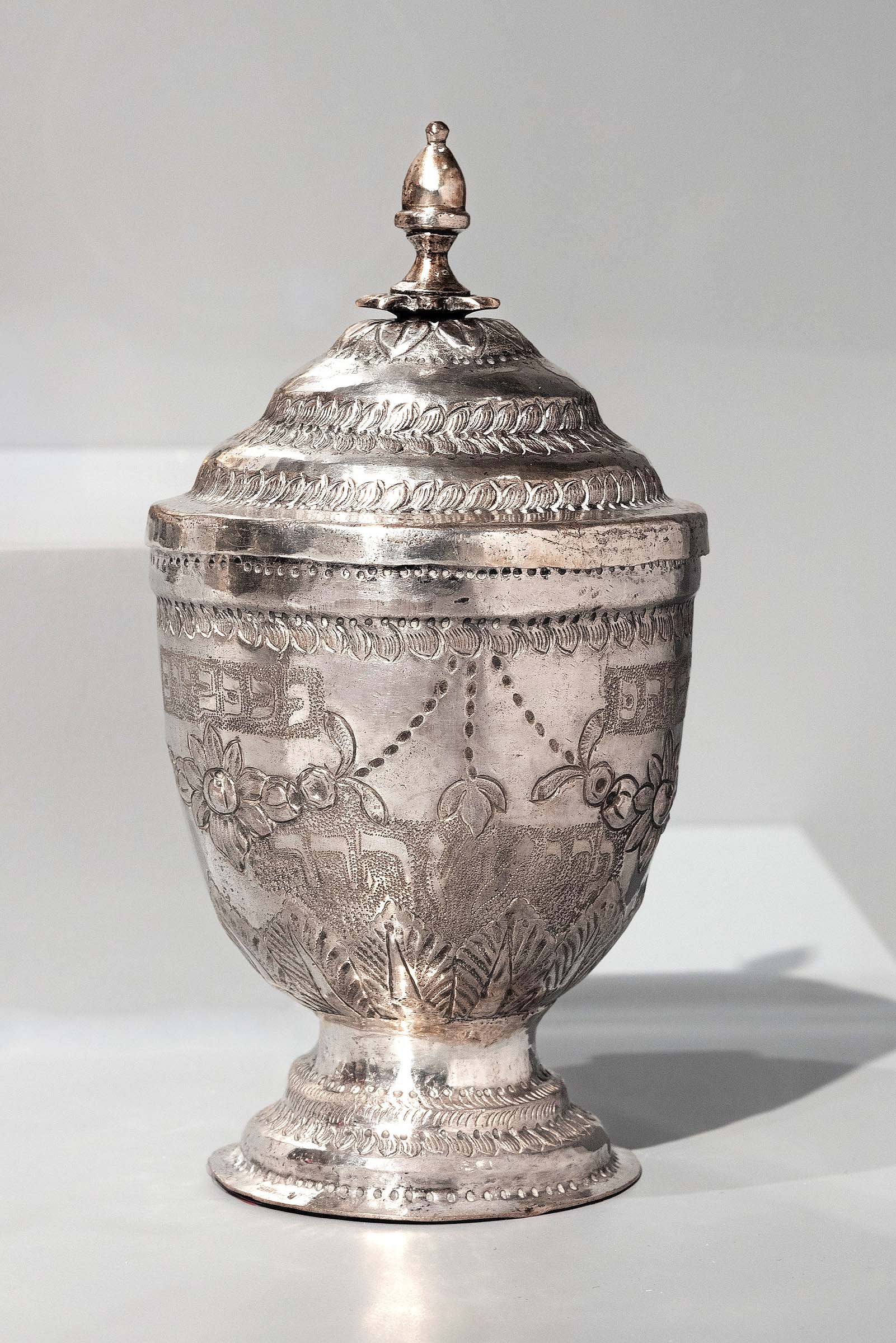
Among objects created for ceremonial use that evince a wider context in which they were originally designed is a late 1800s-early 1900s etrog container in silver, made by an artist in the Ottoman Empire. It is inscribed in Hebrew, “On the first day you shall take the fruit of majestic trees.” This type of container was designed to hold a citron, or etrog, for the Sukkot holiday, a seven-day holiday that pays homage to the fall harvest. The case was needed to protect the delicate fruit, including its skin, stem and bud, to keep it intact and fit for ceremonial use. The etrog was then combined with branches of palm, willow and myrtle trees, as the four species of trees symbolized unity in their Jewish faith as well as a prayer for a bountiful autumn harvest.
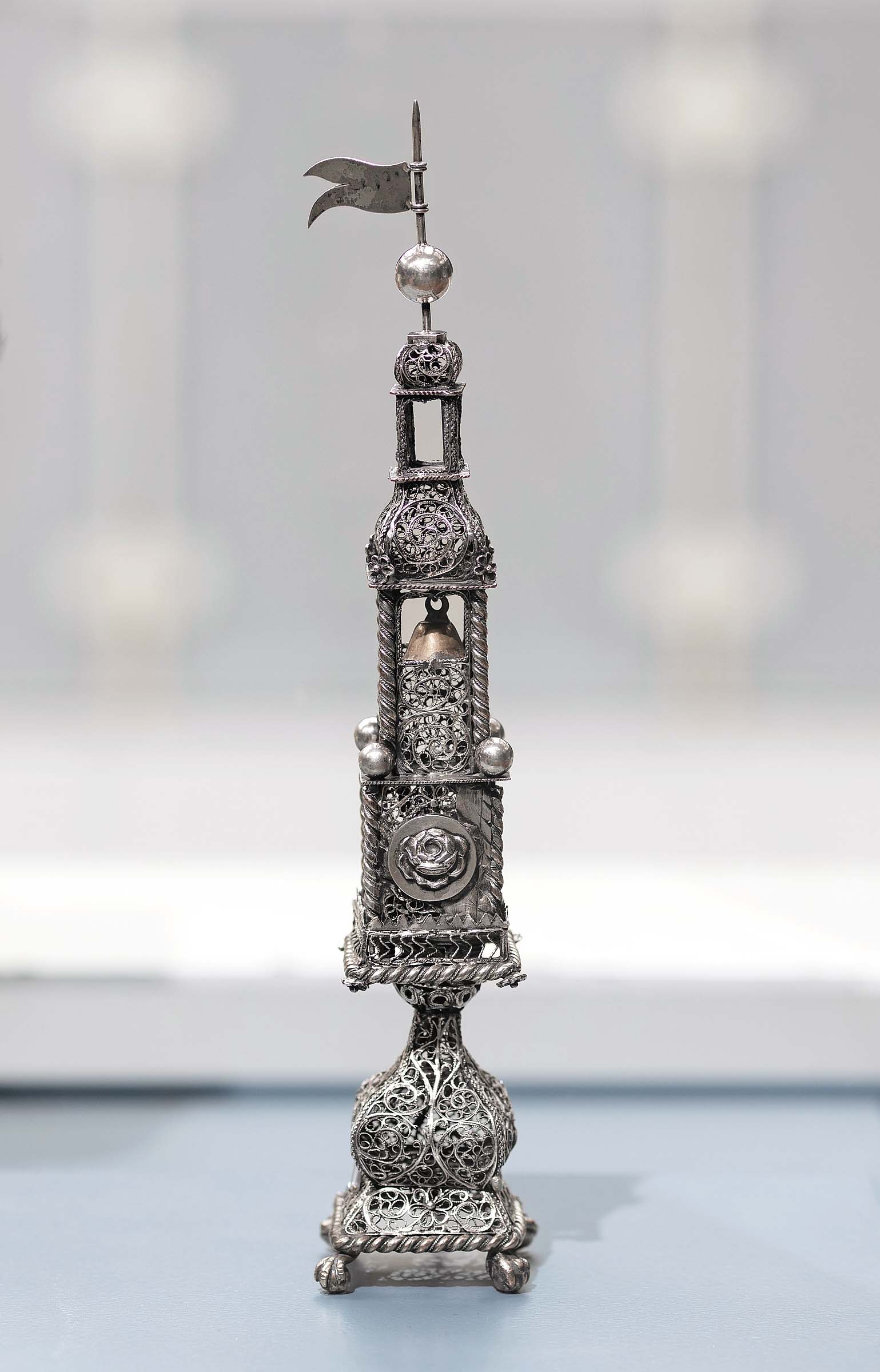
Another striking object that marries artful design with function is one that reflects the popular architecture of the area. The Eastern European spice container, which would have been used during a Havdalah ceremony at the conclusion of the Jewish Sabbath, mimics the look of a Gothic clock tower.
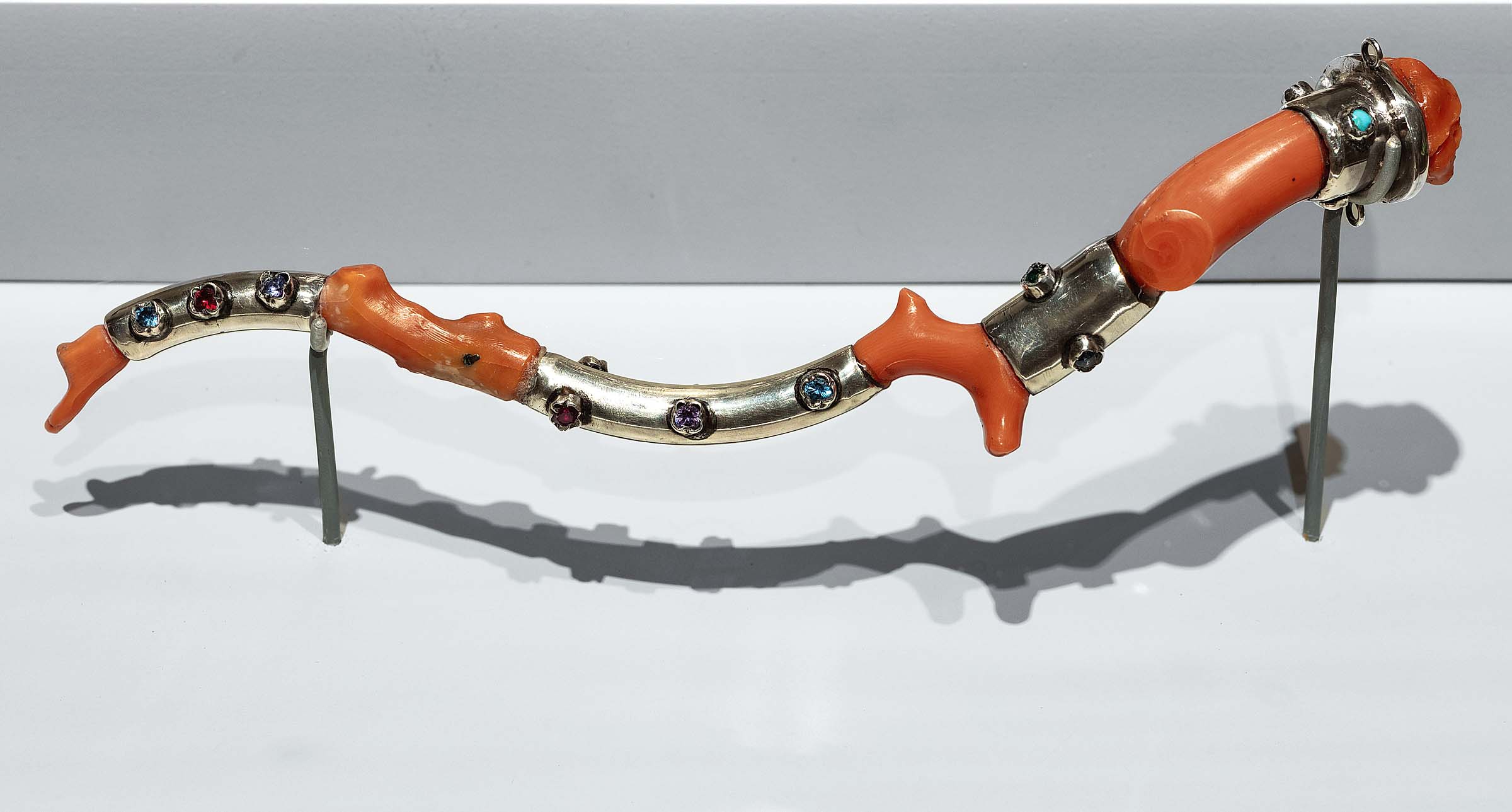
Owing to the sacred nature of the Torah itself, artisans also created objects like Torah pointers to allow readers to follow along and keep their place in the text without actually touching the delicate parchment of the Torah. An Italian example on view dates to the 1700s and was made of silver and carved red coral — a natural resource highly prized in Italy and the Mediterranean region that also symbolized protection or good fortune. The pointer was also embellished with semiprecious stones and overall its designs are similar to Islamic silver from the same region and era.
The Detroit Institute of Arts is at 5200 Woodward Avenue. For more information, www.dia.org or 313-833-7900.