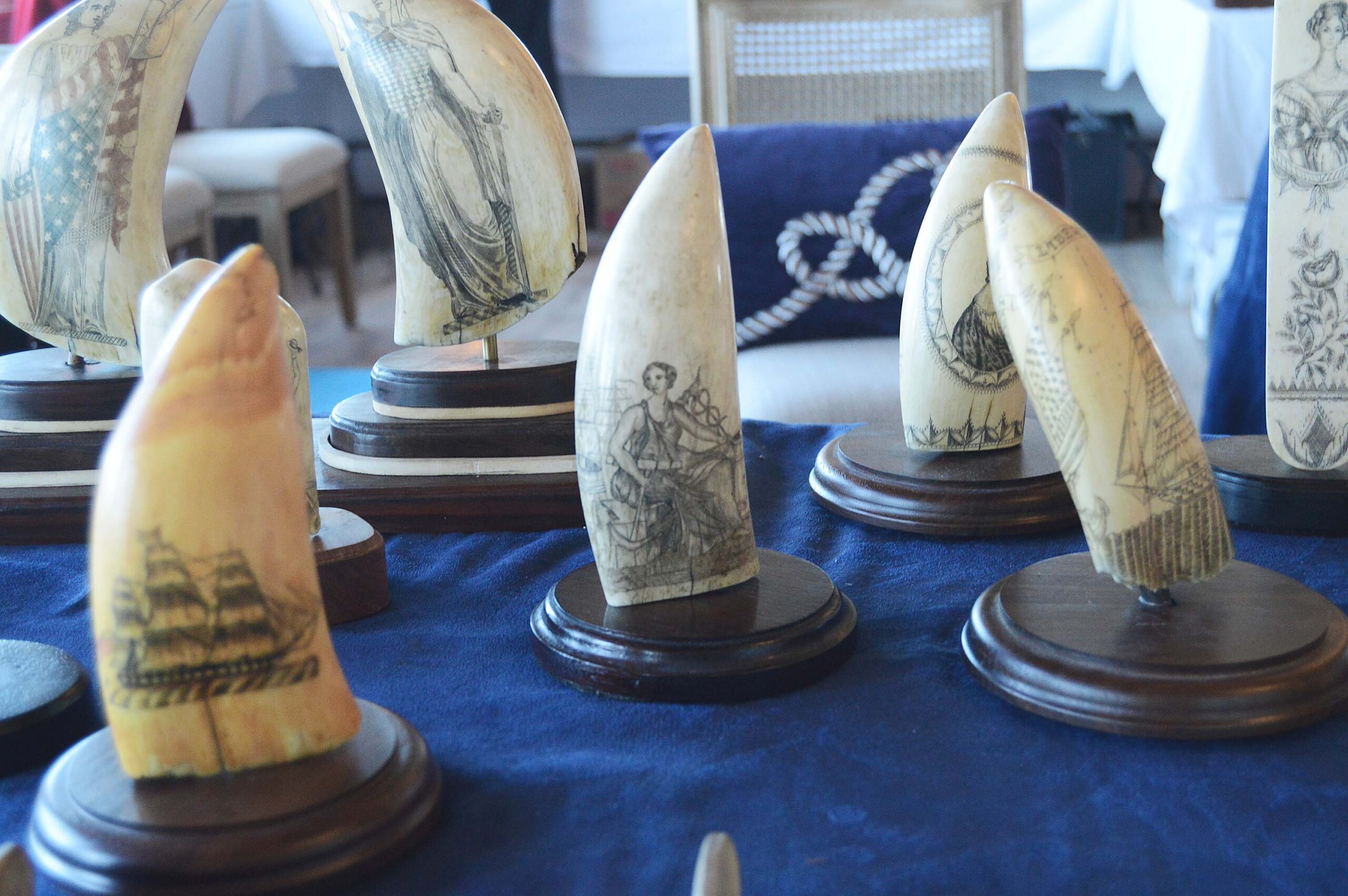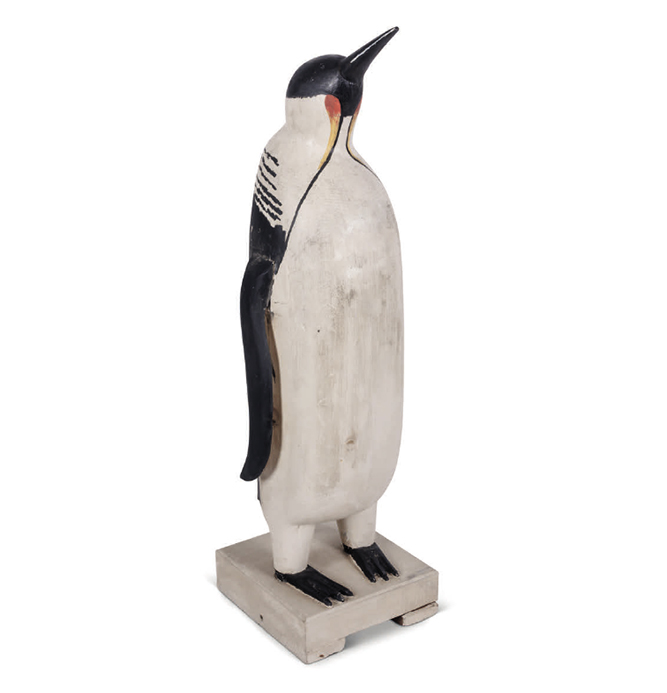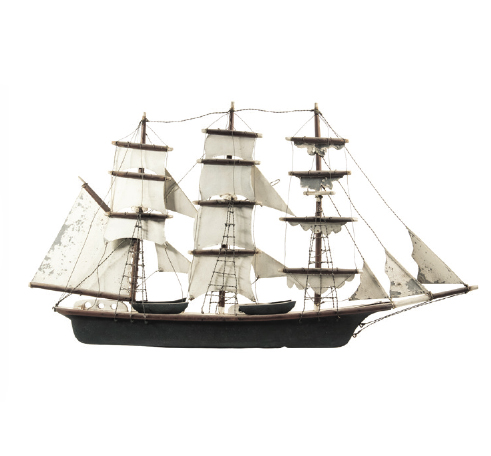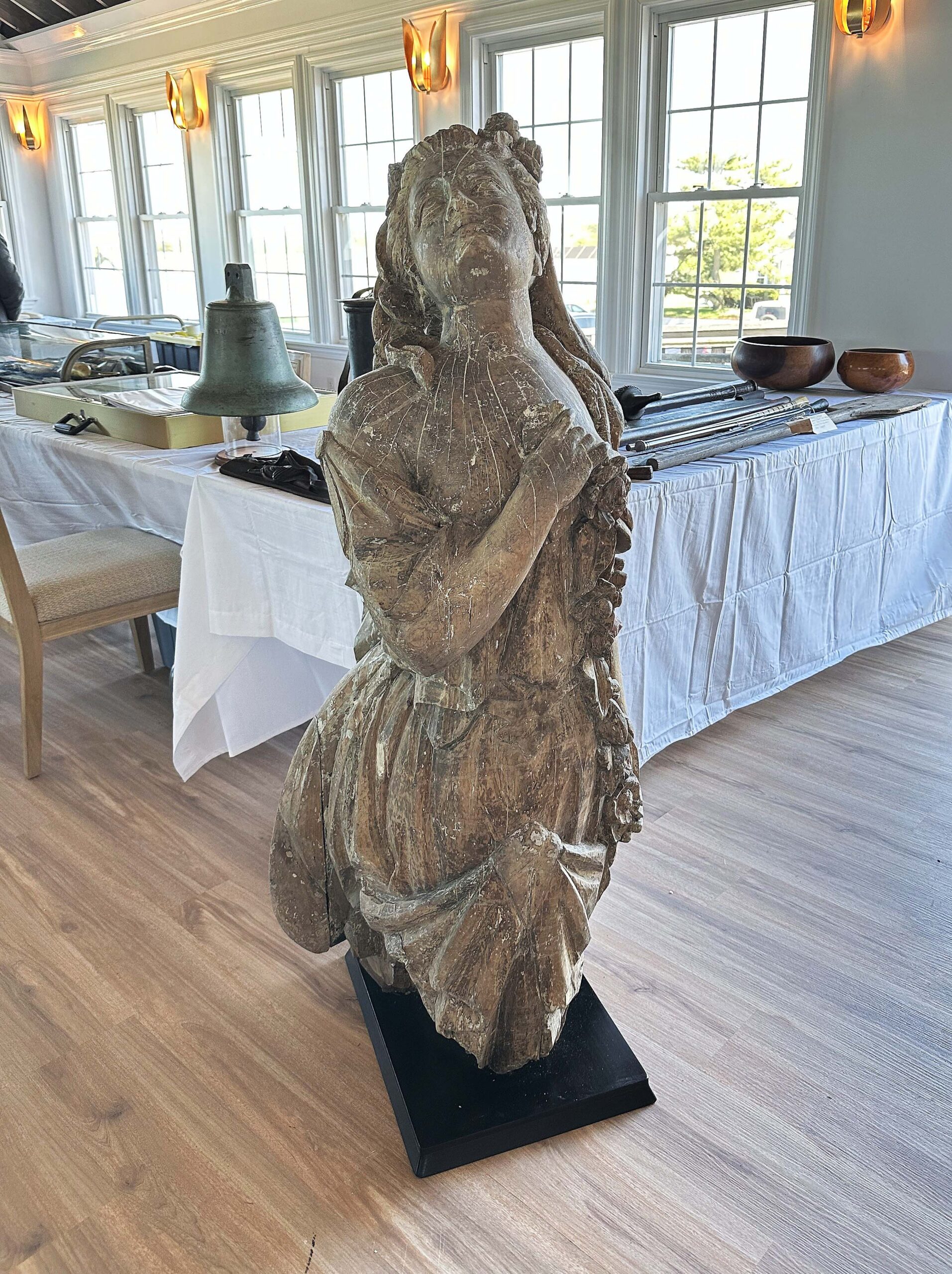
Ship figureheads are scarce and don’t stick around on the market long. Ryan M. Cooper Nautical Antiques & Art offered this one at the show. Yarmouth Port, Mass.
Review & Onsite Photos by Andrea Valluzzo
WEST DENNIS, MASS. —Members of the Antique Scrimshaw Collectors Association have a deep and abiding passion for whaling history, as well as nautical antiques in general. One of the Association’s most well-attended and eagerly anticipated events is its Scrimshaw & Nautical Antiques Weekend, which was celebrated this year on May 15-16 at a new location: the Lighthouse Inn in West Dennis, Mass.
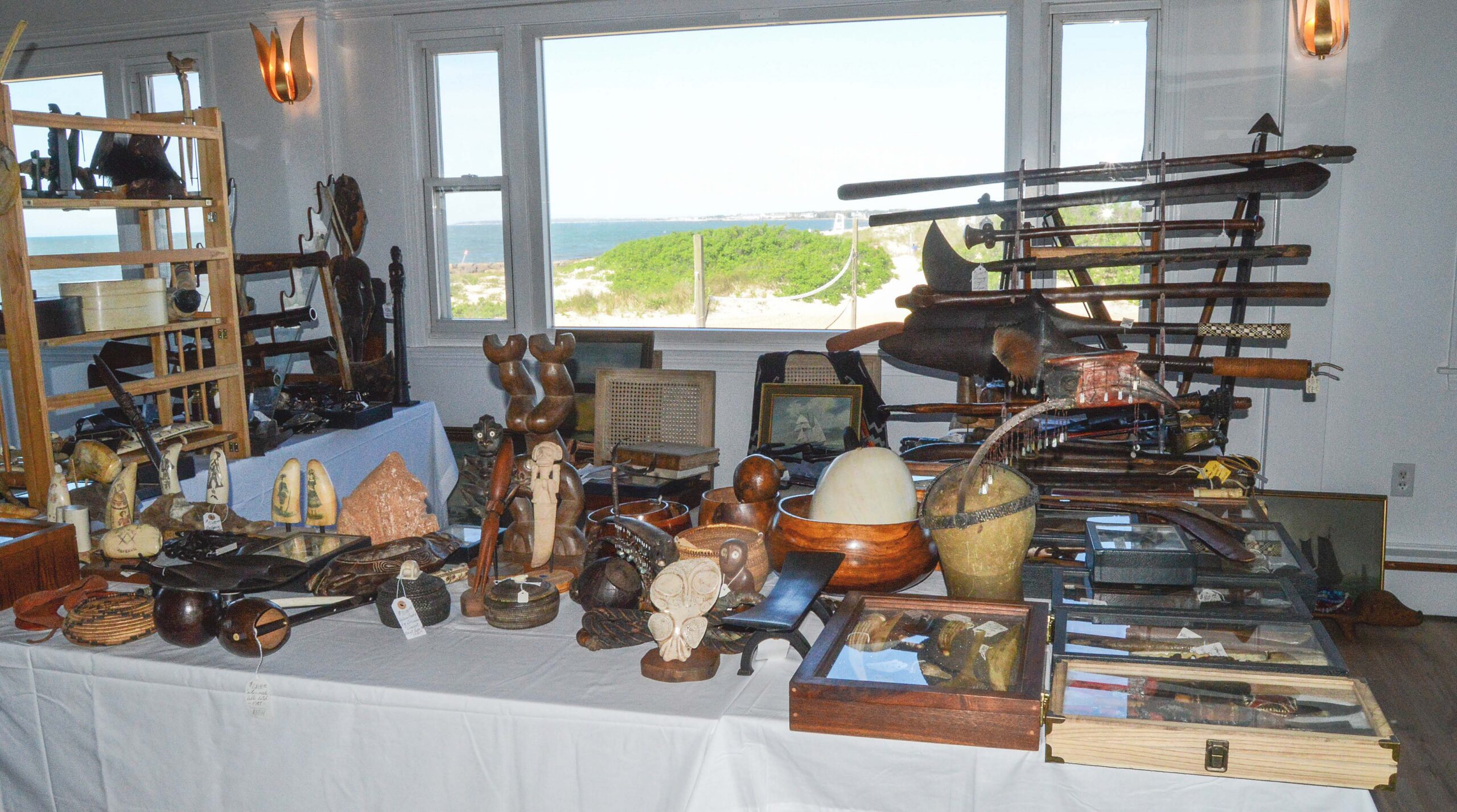
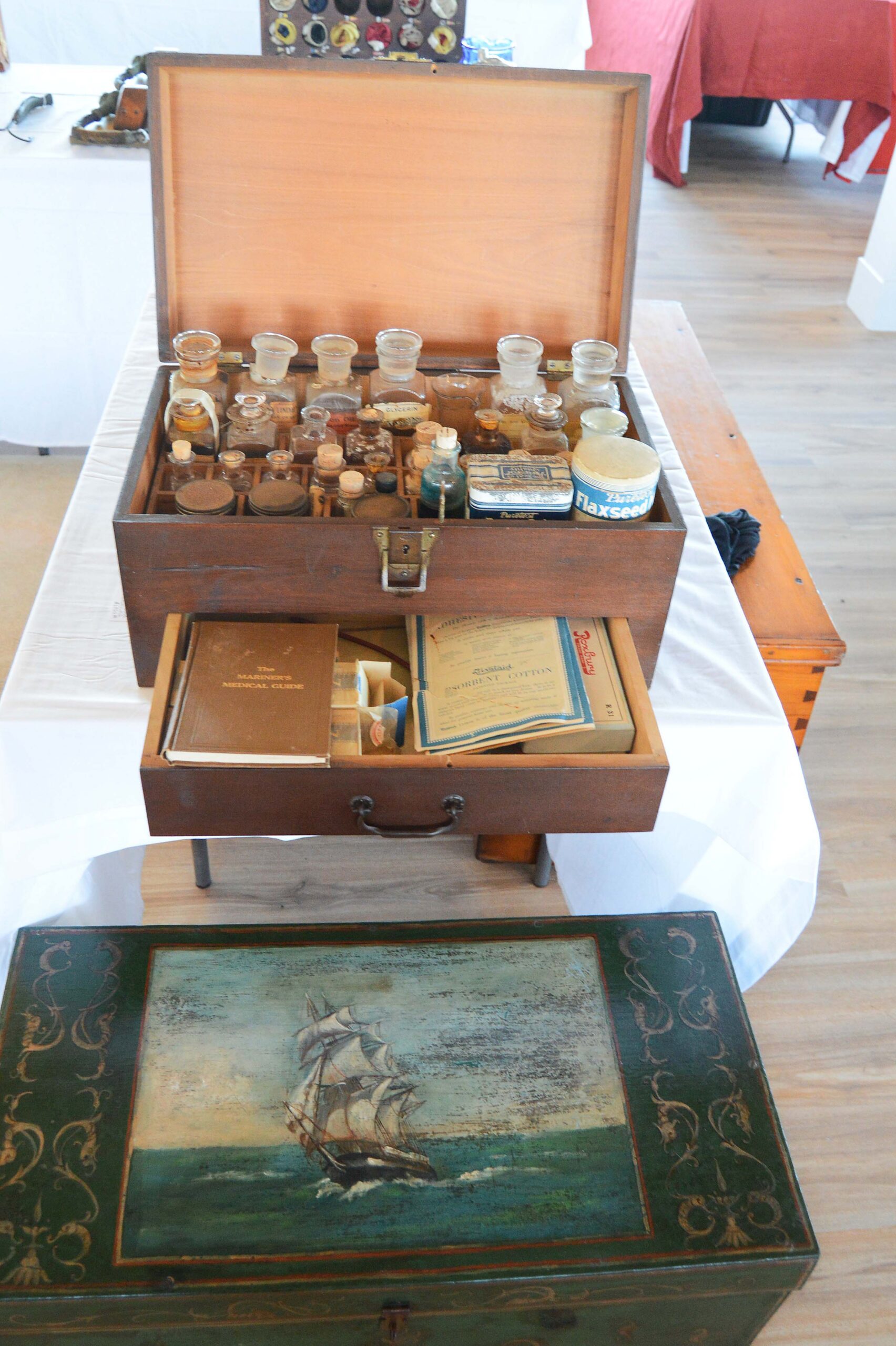
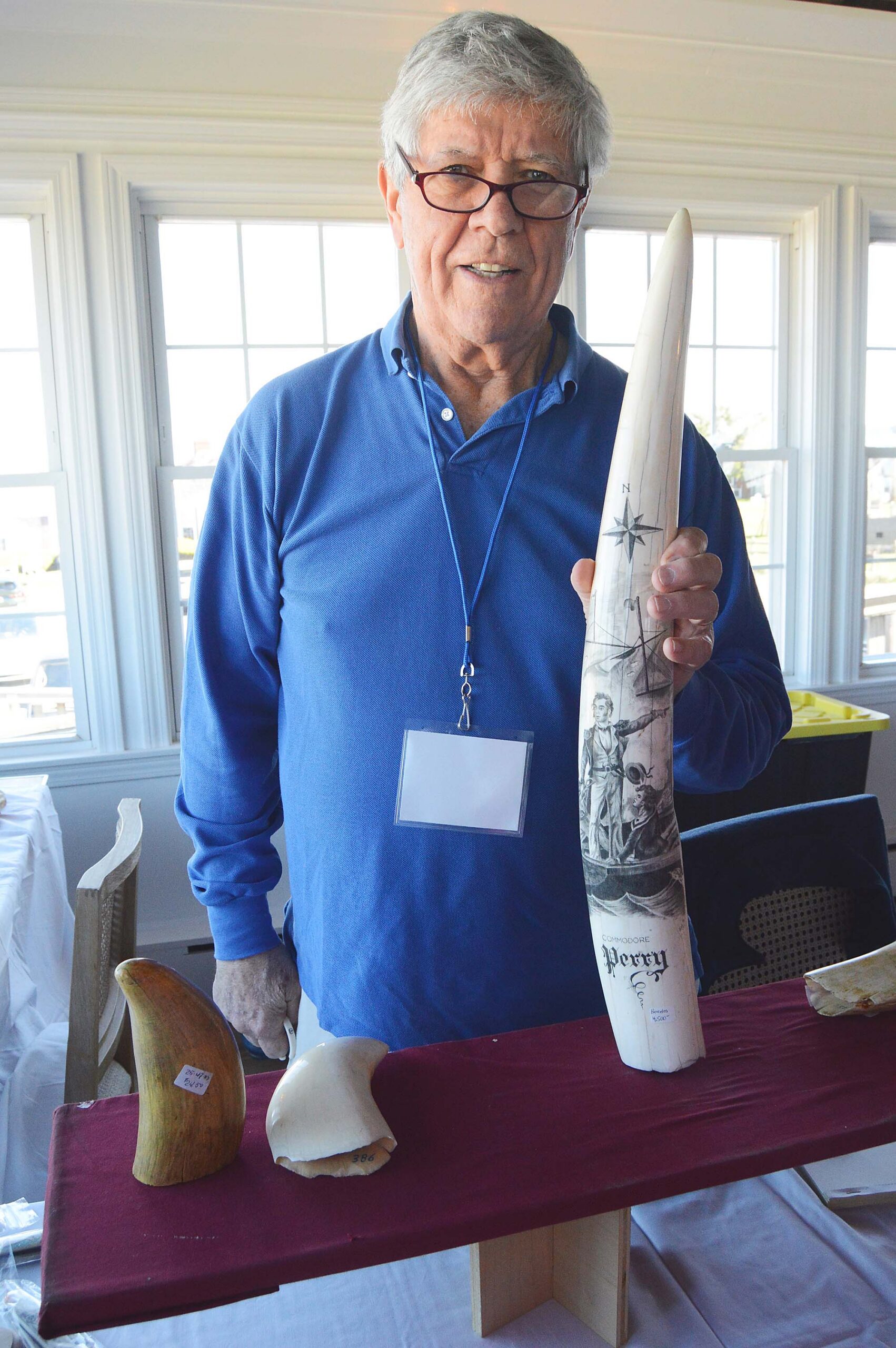
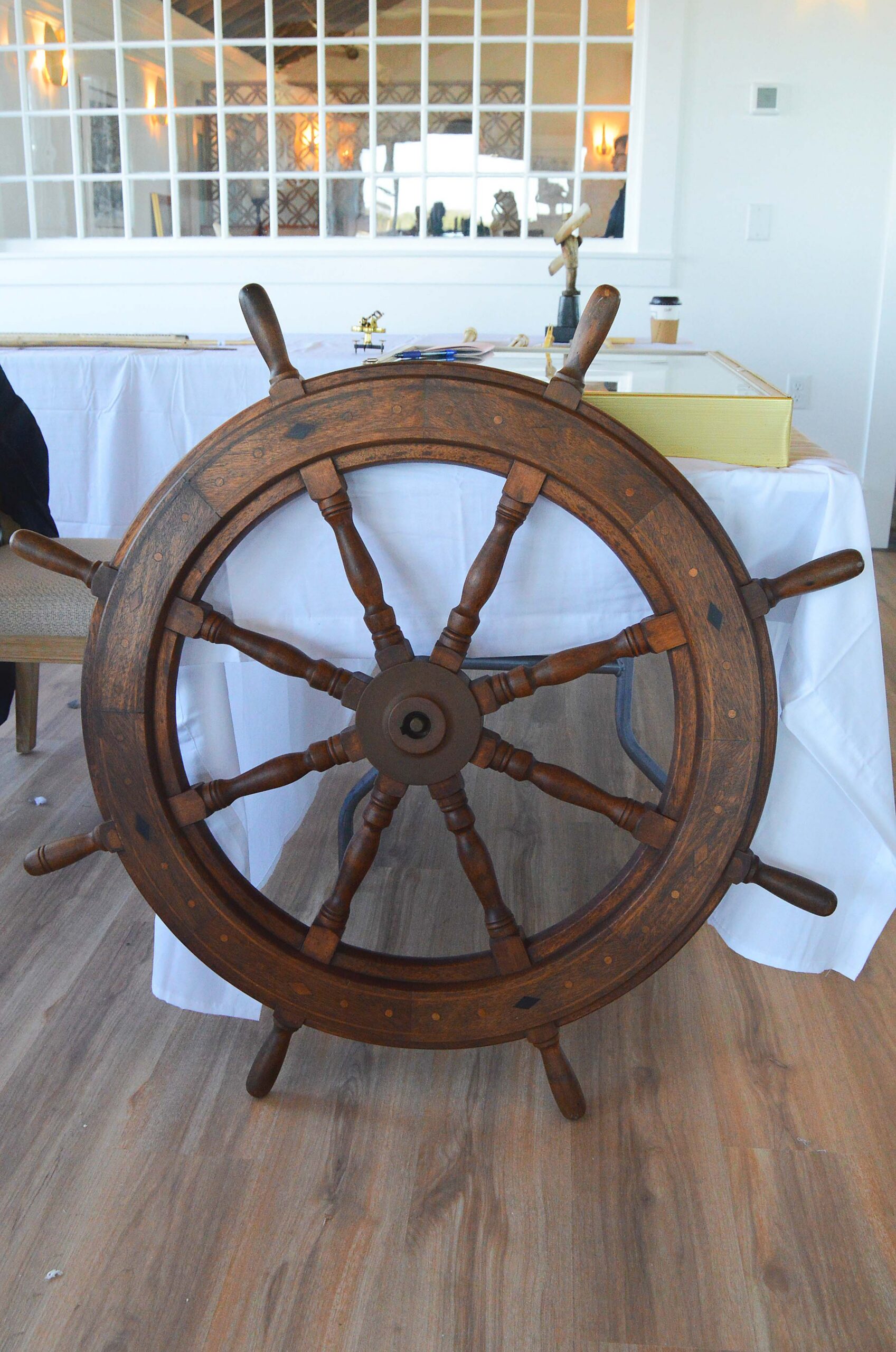
The appetizer for this 35th edition was Friday’s symposium sessions and evening program, but the main course was the 14th annual Scrimshaw & Nautical Antiques Show that took place on Saturday. A baker’s dozen dealers set up across two second-floor meeting rooms at the inn, offering splendid views of the coast. There were old favorites who return year and after year but some new faces as well.
“This was my first year both setting up as a dealer and attending the show, and I had an absolute blast of a time,” said Nicholas Cotoulas. “It’s a highly specialized and sophisticated area of antiques that truly resonates with me on a deep level. This show is essentially nothing short of the best of the best for antique scrimshaw and nautical antiques, both in terms of the dealers and their deep knowledge of the history of the items and field, and the choice pieces they bring being all of highest museum level quality.”
Cotoulas commented that he was very grateful to be able to set up at this show and acknowledged the assistance of several of the exhibiting dealers that he has known for a bit who “have been great mentors and incredibly supportive of me as a young, still fairly new antiques dealer.”
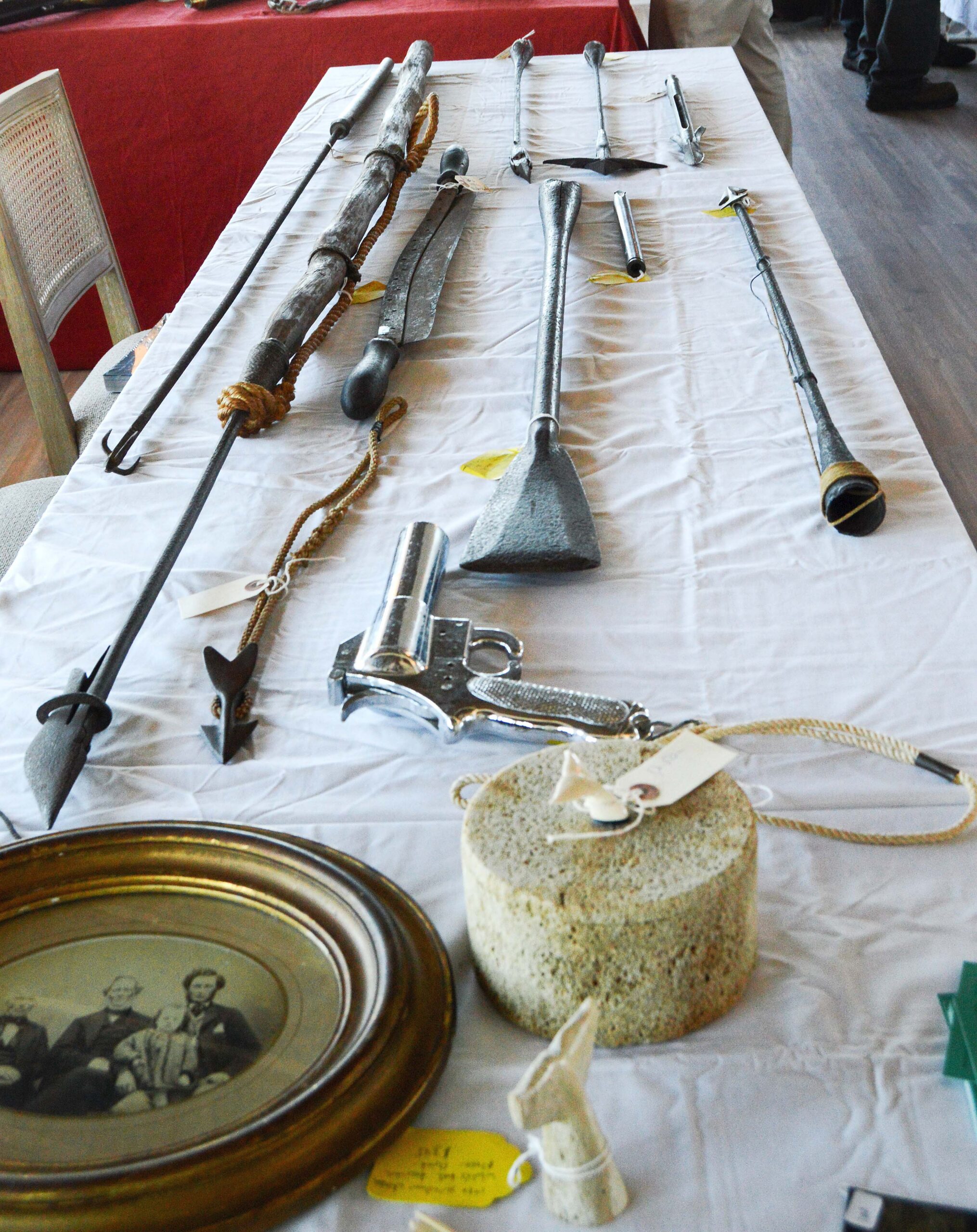
Nicholas R. Cotoulas Early Photography & Antiques, Hull, Mass.
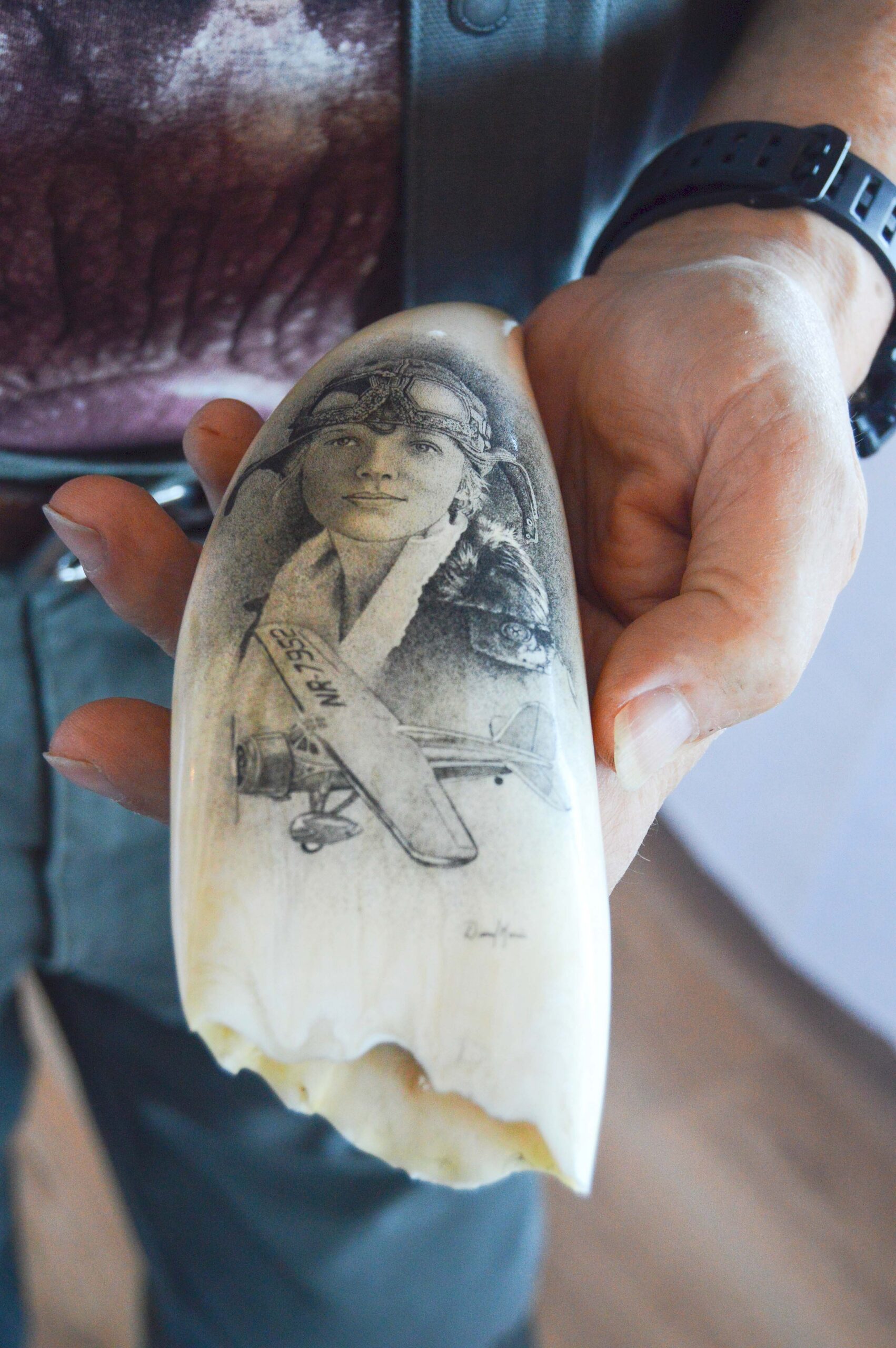
His favorite sales of the show included a large antique scrimshaw whalebone seam rubber with a polyhedral shaped knob and formed handle. This circa 1850 American piece was in excellent condition and sold while he was still setting up. Another was a highly unusual and rare piece of Nineteenth Century whalecraft: a “head spade” used to decapitate whales. Double stamped with two maker’s marks, it was an extremely large and heavy item at an overall length of 48 inches and weighing in at 12 pounds. “The ‘head spade’ has spectacular provenance being from the Robert Hellman Whaling & Whalecraft Collection. I was also very glad that a few early nautical and whaling photos sold, and that people were really excited to see early photography and daguerreotypes I brought to the show,” Cotoulas said. “I would say people attending the show had the most interest in the whalecraft and harpoons, scrimshaw and early photography for the items I brought, but, of course, for a lot of collectors it’s all about the whale teeth, which are truly amazing items.”
He continued, “All of the dealers had spectacular items including incredible antique carved American ship figureheads, amazing antique scrimshaw whales teeth and old sea chests and sea chest beckets with the original cleats. My overall impression of the show is that antique scrimshaw and nautical antiques are still truly very, very strong collecting areas in the world of antiques, and that there is also a lot of interest in New England and global whaling history, which is great to see being someone from Southeastern Massachusetts who has a deep passion for local and nautical history.”
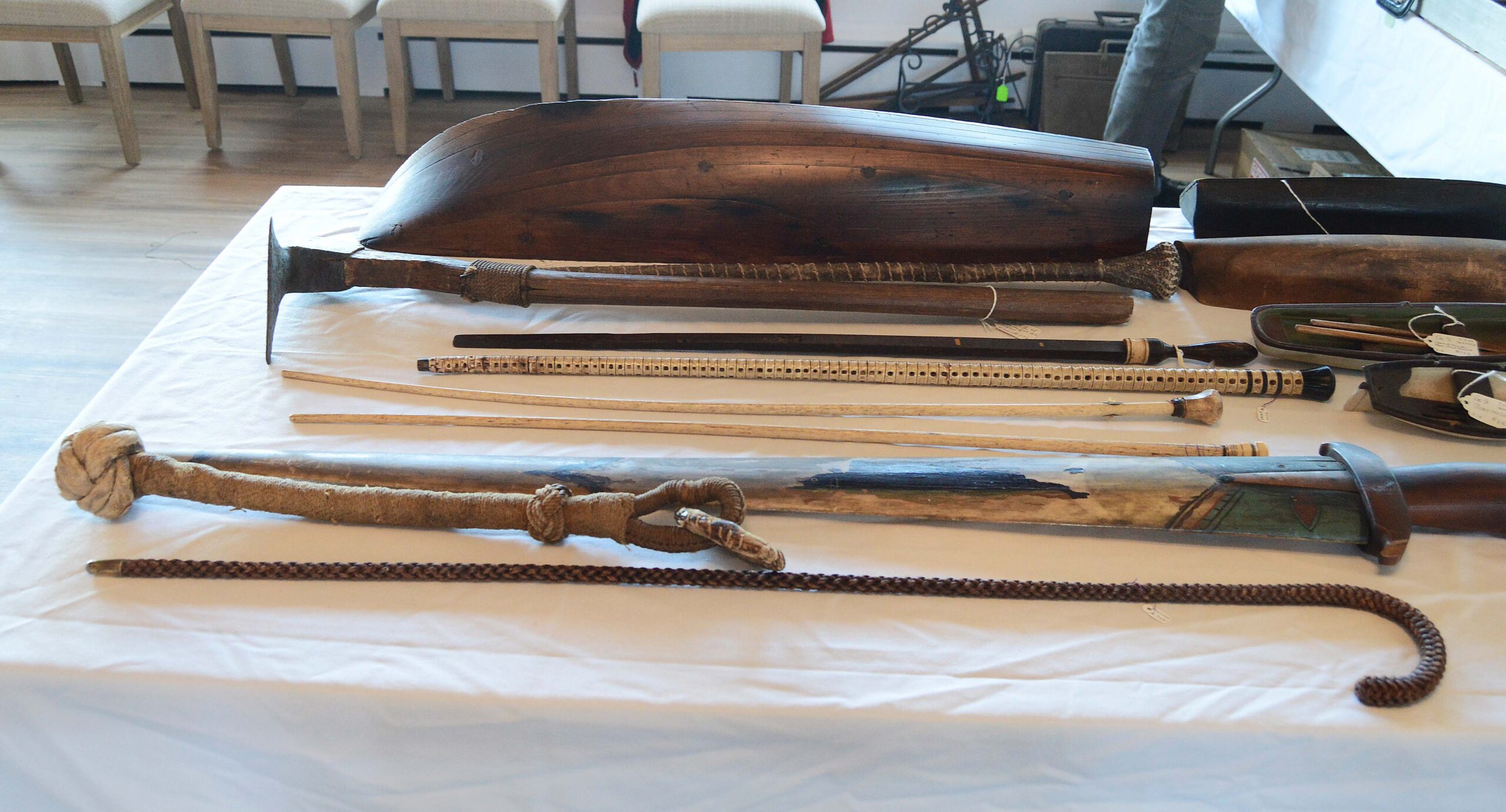
Gordon Stanley, Maritime Gallery, Searsport, Maine.
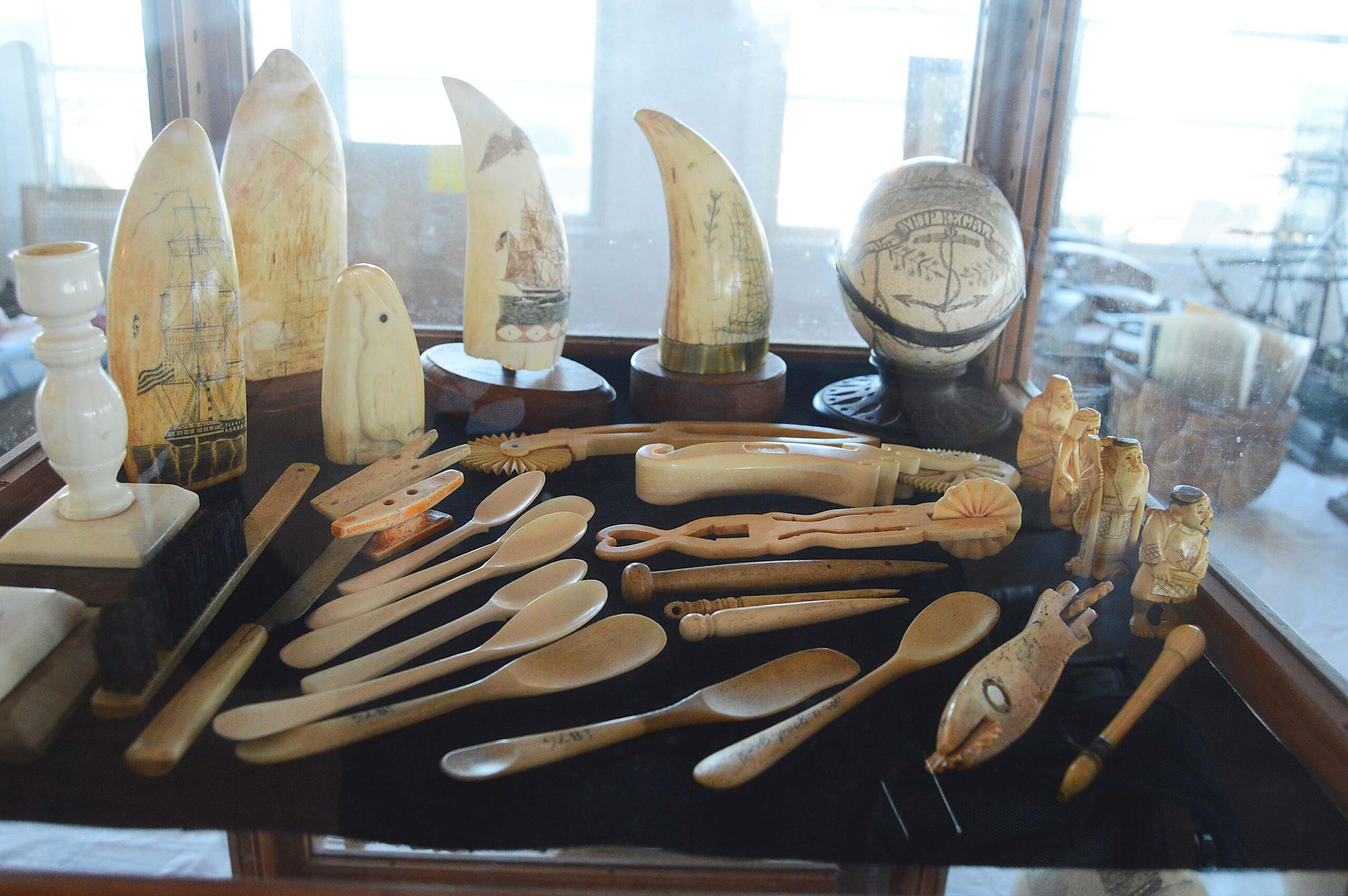
Gordon Stanley was concerned about the new location for the show being hard to find, but his fears were soon put to rest as serious buyers turned up. “I have learned in the 50 years of doing shows, they will find you!” he said, noting this was a very good show for him, and opening sales were brisk. “I specialize in Eighteenth and Nineteenth Century unusual and historical nautical artifacts. I do very few shows and have a very loyal customer base that knows that I have the very best items for their collections,” Stanley remarked. “I also try to have a little space in my booth to share some of my favorite items in my collection. These items are normally ‘for display only.’” However, he gave in to demand for rare pair of pie crimpers and said the crimpers are now in a friend’s collection. Stanley managed to negotiate ongoing visiting rights though, so he can continue to enjoy these rare artifacts.
Just about every dealer interviewed after the show reported being pleased with their sales. Ryan Cooper said the show overall was a success for everybody, noting that it’s the only one of its kind with the central theme being nautical antiques and scrimshaw. “I sold a variety of items including harpoons and other whale craft. The most notable was the ship’s figurehead, which attracted the most attention,” he said. Not sold but also attracting much attention was was a ship’s bell from the Nantucket, Mass., whaleship Ohio. The bell was cast by E. Field of Nantucket in 1833.
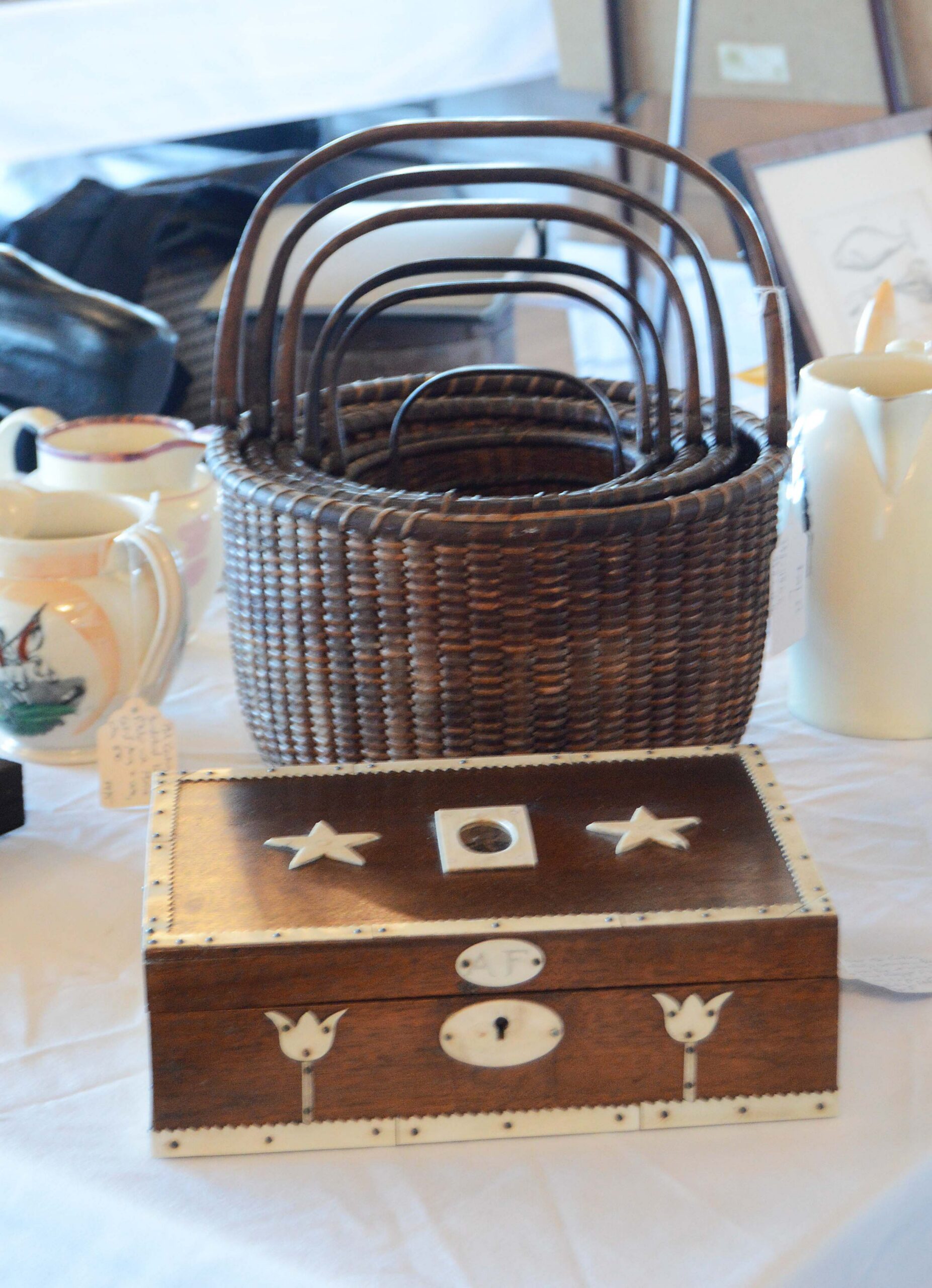
Jack Fritsch, The Antiques Depot, Nantucket, Mass.
Jack and Ciara Fritsch of Nantucket Antiques Depot maintain a very busy year-round antiques shop on Nantucket, so they do not go off to do shows anymore — the one exception being this marine-themed weekend. “It is always great to see the community of dealers, scholars and collectors that attend every year as well as meeting newcomers to the field,” they said. “Most years we sell a number of items from a variety of genre — fine art, folk art, marine artifacts and, of course, Nineteenth Century sailor’s scrimshaw. This year, while everything received a lot of attention, the sales were mostly centered on the antique scrimshaw, including our most valuable pieces. It was a great weekend with the dealers and attendees all in high spirits — there was a great buzz in the rooms.”
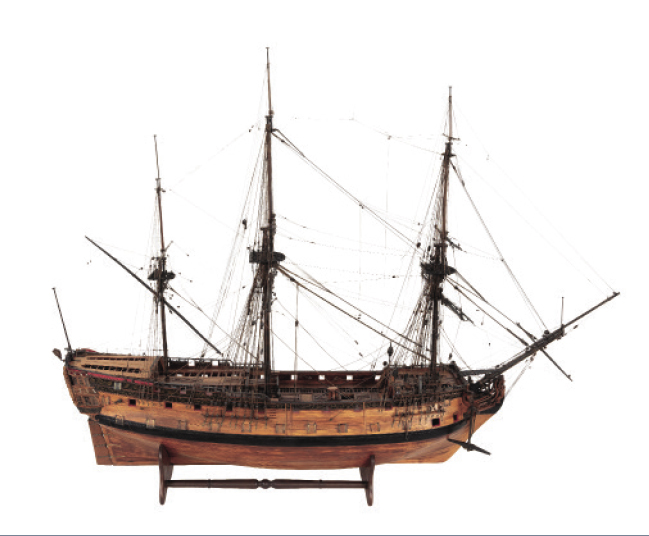
David White noted that almost all the attendees were either dealers or very serious nautical and scrimshaw collectors with very few, if any, casual walk ins. “As a result, the buyers were knowledgeable both on quality and price. I, for one, learned a lot from others, but then I’m low on the totem pole among this group of scrimshaw experts,” he commented. “I sold a wonderful shadow box, a nice old tooth, a great bone ditty box and some other things. What didn’t get much interest was nautical art, ship models, half hulls, navigation instruments, etc. Buyers seemed to be most interested in scrimshaw.”
A veteran dealer at this show, Andy Jacobson explained that location is pivotal in the real estate world, so the show’s location was fine if one wanted a superb view of Nantucket Sound, but, being far off the “beaten path,” the walk-in gate suffered.
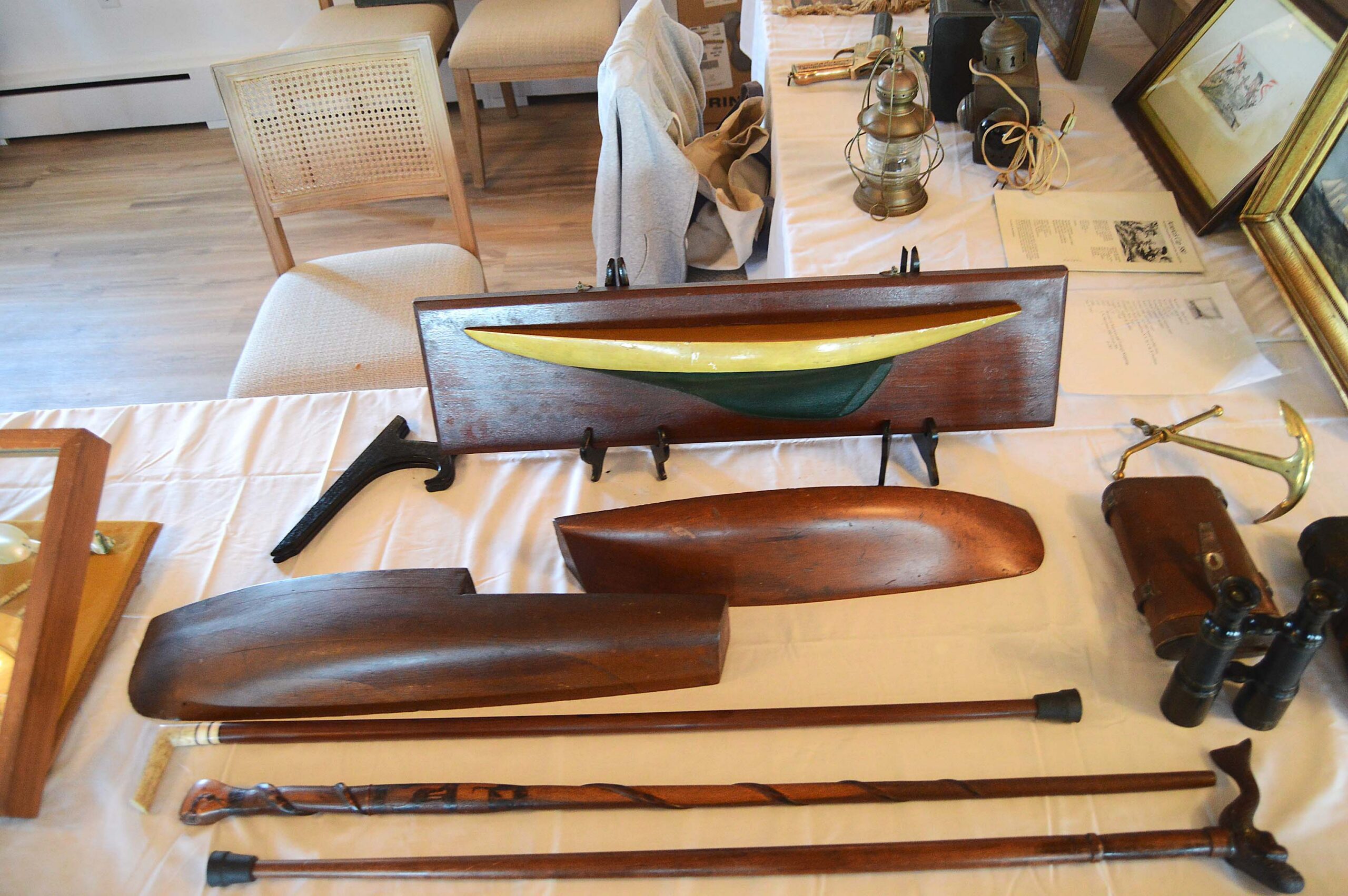
Andrew Jacobson Marine Antiques, Ipswich, Mass.
“The local trade and Cape collectors or seasonal folks didn’t attend,” he said. None of that mattered all that much, since the usual cast of buyers were either already there at the symposium or were dedicated scrimshaw collectors who found their way to the show, he explained. As other dealers noted, Jacobson also said that “Scrimshaw was the operative selling point, and that proved true across the board. I heard no dealer complaints about sales, which seemed strong. I sold well in that category and had the added pleasure of selling some pictures.”
Traveling from California for this show, Rod Cardoza, co-owner of West Sea Company, said he also had a “wonderful” and productive show selling nautical antiques to collectors, dealers and institutions alike. Since California outlawed the selling of endangered species parts in 2011, the San Diego-based shop, which opened in 1979, cannot sell much of its maritime antiques in the retail location. As a result, the company accrued nearly a year’s worth of whaling items before displaying them at this show.
“Flying out from California, we are already at a disadvantage in terms of transportation, logistics and expenses in comparison to our East Coast compatriots, but I am happy to say that we paid for our travel along with a profit, by offering our customers fresh-to-the market antiques from across the continent at below-market prices,” Cardoza reported.
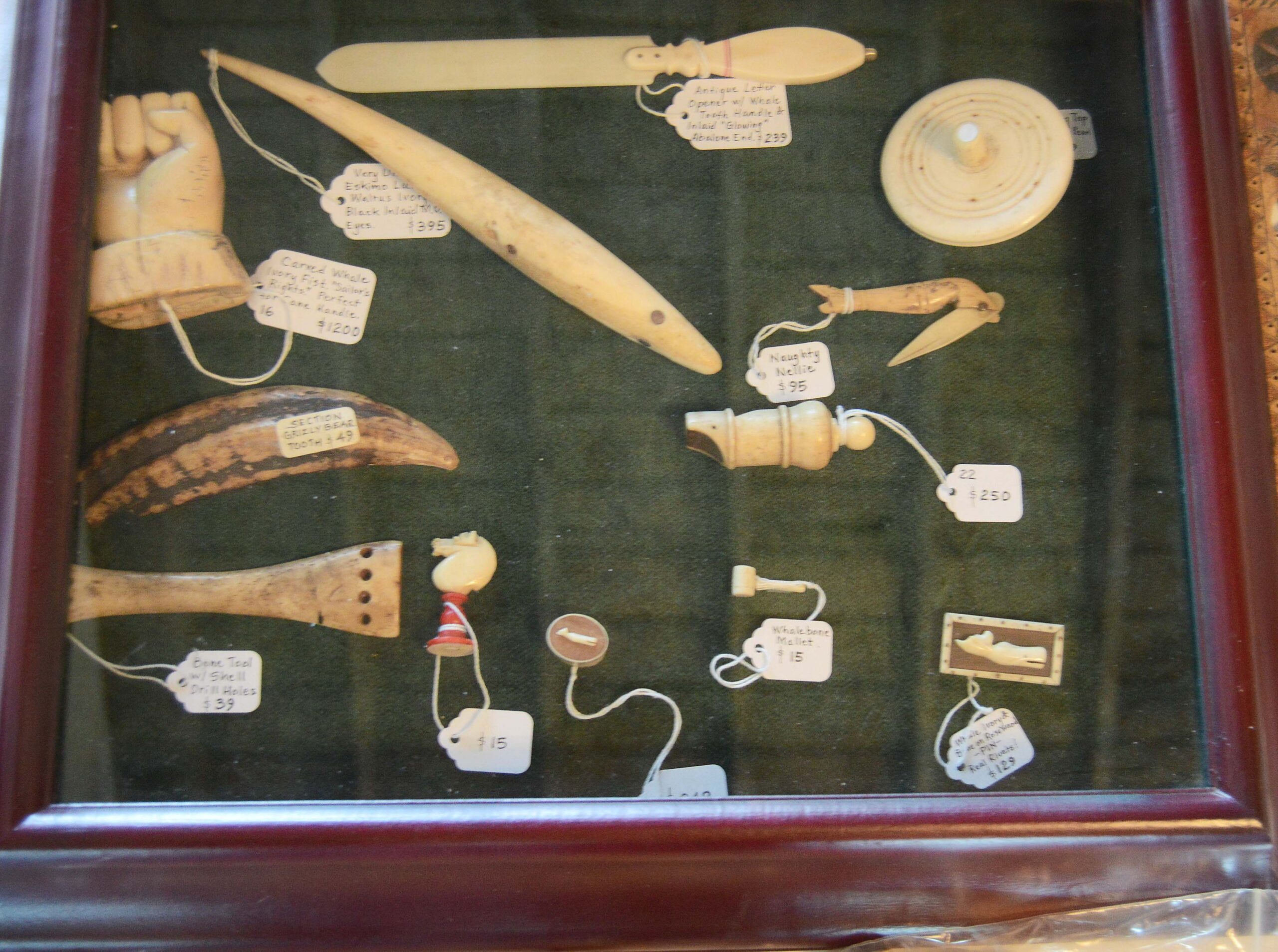
Rod Cardoza, West Sea Company, San Diego, Calif.
Among the items Cardoza offered was the McDowell collection from Carmel, Calif. “We were honored to be chosen to exhibit and sell a number of those items at this show,” he said. McDowell was an artist and had collected whaling and related artifacts since the early 1960s. Later, while continuing to build his own collection, he was an advisor to renowned collector Barbara Johnson, who amassed a world-class collection of whaling-related items.
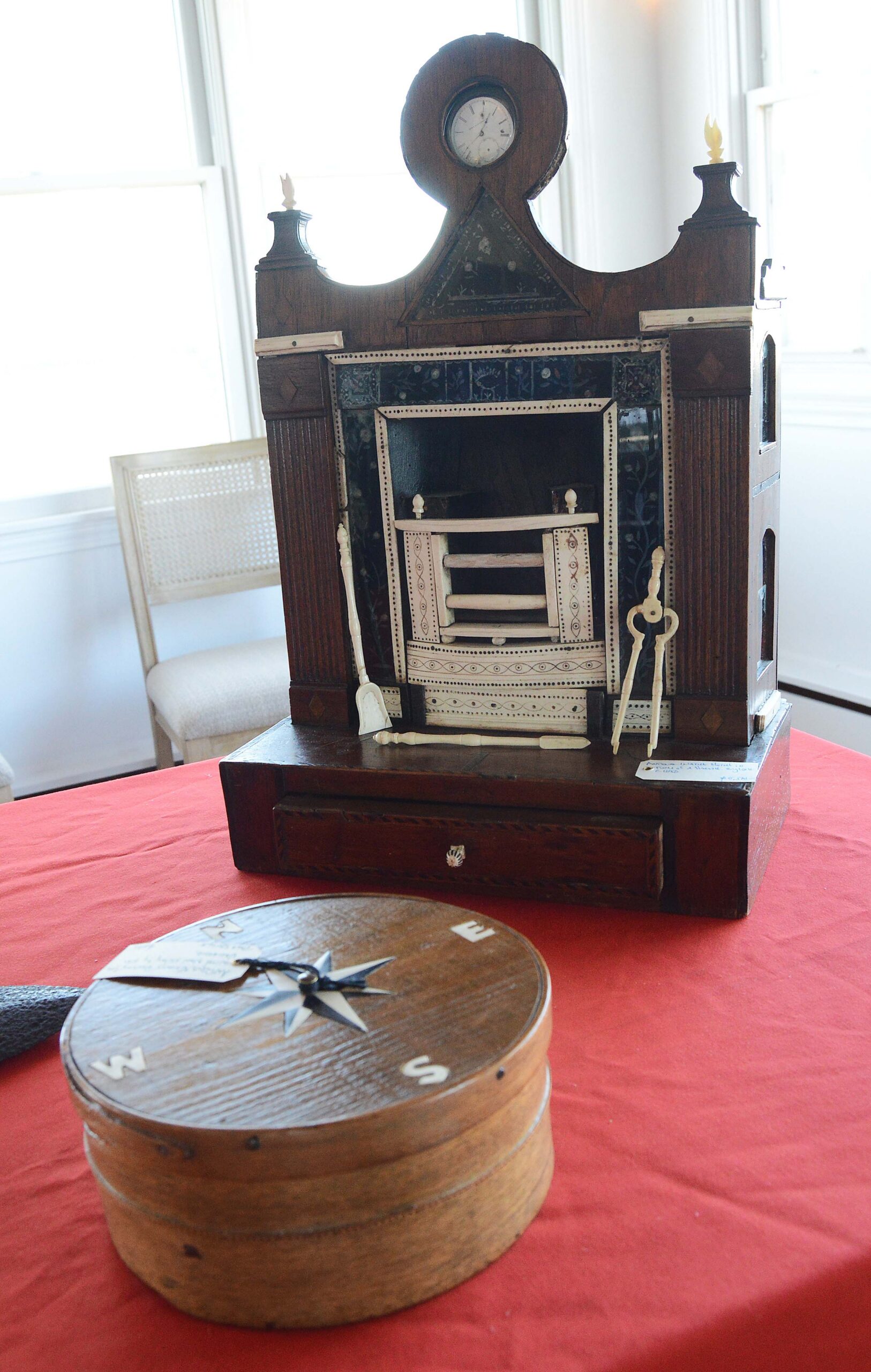
Among West Sea Company’s sales was a set of five whaling logbook stamps of superb quality, which sold to a dealer, and a unique Eighteenth Century miniature boxed compass. Other rare items he sold were a double sailor’s shellwork valentine, a group of miniature scrimshaw toys, a massive sperm whale’s tooth (the largest in the show), a Nineteenth Century sextant in its marquetry-inlaid box, a detailed model of a whaling boat that came from a museum and a rare cast iron bank depicting Jonah & The Whale.
Buying and camaraderie go hand in hand at niche shows like this. Dealer Mark Humpal said the scrimshaw dealers and collectors here are a very friendly and intelligent group, and there was excellent material to be perused. “I very much enjoyed the event. I would have liked to see more interest in seafaring artifacts that the sailors brought home from around the world,” he said. “Cultural artifacts are a very interesting study.”
Dealer Bill Feeney was pleased with the show and said it was great to see old and meet new friends. Interesting pieces he offered included an 1831 scrimshaw tooth by George Clapham, which was discussed in Stuart Frank’s latest book.
The Scrimshaw & Nautical Antiques Weekend will return next May, date to be announced. For information, www.antiquescrimshawcollectors.org.