The Keeler Tavern Museum & History Center has welcomed Tina Malhotra as its newest executive director. We sat down with Malhotra, who also serves as chair of the Ridgefield Board of Education, to discuss the new position.
Congratulations on the new role! How have the first few weeks been?
Thank you! The first few weeks have been wonderful, energizing and incredibly busy in the best possible way. I’ve spent my time listening, learning and meeting with staff, volunteers, board members, supporters and community partners. What has struck me most is how deeply people care about this place. Keeler isn’t just a museum to the people who work here and support it. It is personal. That came through in every conversation I had.
I’ve also been immersing myself in Keeler’s history, collections, educational programs and daily operations.
What motivated this additional community role after serving as chair of Ridgefield Public Schools’ BOE?
I currently am chair of the Ridgefield Board of Education, so I’m fortunate to continue serving our community in both roles.
Throughout my career, I’ve prioritized positions in nonprofit leadership that allow me to contribute to my community. Personally and professionally, I understand the importance and impact of education, and that’s been a throughline in all my roles. Taking on the position of executive director at KTM&HC, which already has an incredible reputation for education and community, was an exciting next step.
When I think about why Keeler felt like the right opportunity, it comes back to something very personal. I am an immigrant. I came to this country, and ultimately to Ridgefield, looking for something I think every newcomer hopes to find: a place to belong. A place where your story becomes part of a bigger story. Ridgefield became that place for me. My son grew up here. He visited Keeler Tavern on a fourth grade field trip and came home talking about the Revolution in a way that made history feel real and personal. He is now at the University of St Andrews, and I believe experiences like those helped spark his curiosity and appreciation for the past.
That is why this opportunity means something beyond a career transition. I understand firsthand what it means for a community to have a place that says: your history matters, your story belongs here.
What skills from previous leadership experiences do you bring to this role?
I think the most honest answer is that I bring the experience of someone who has spent more than a decade building relationships in this community — not as someone learning the landscape from the outside, but as someone who already lives here, serves here and cares deeply about what Ridgefield becomes.
I’ve led fundraising and development work, built volunteer programs and worked closely with boards and community partners throughout my career. As chair of the Ridgefield Board of Education, I’ve had the opportunity to lead a large public institution through complex decisions, bring people together around a shared mission and help guide conversations that impact the broader community. But what I think truly prepares me for this role is something harder to put on a résumé: I understand personally what it means to come to a place, become part of a community and feel that your story belongs there.
Historic sites are not simply places where we preserve objects and buildings, they are places where people gather, learn, ask questions and connect with one another. Keeler carries that legacy, and I want to help ensure it continues to thrive.
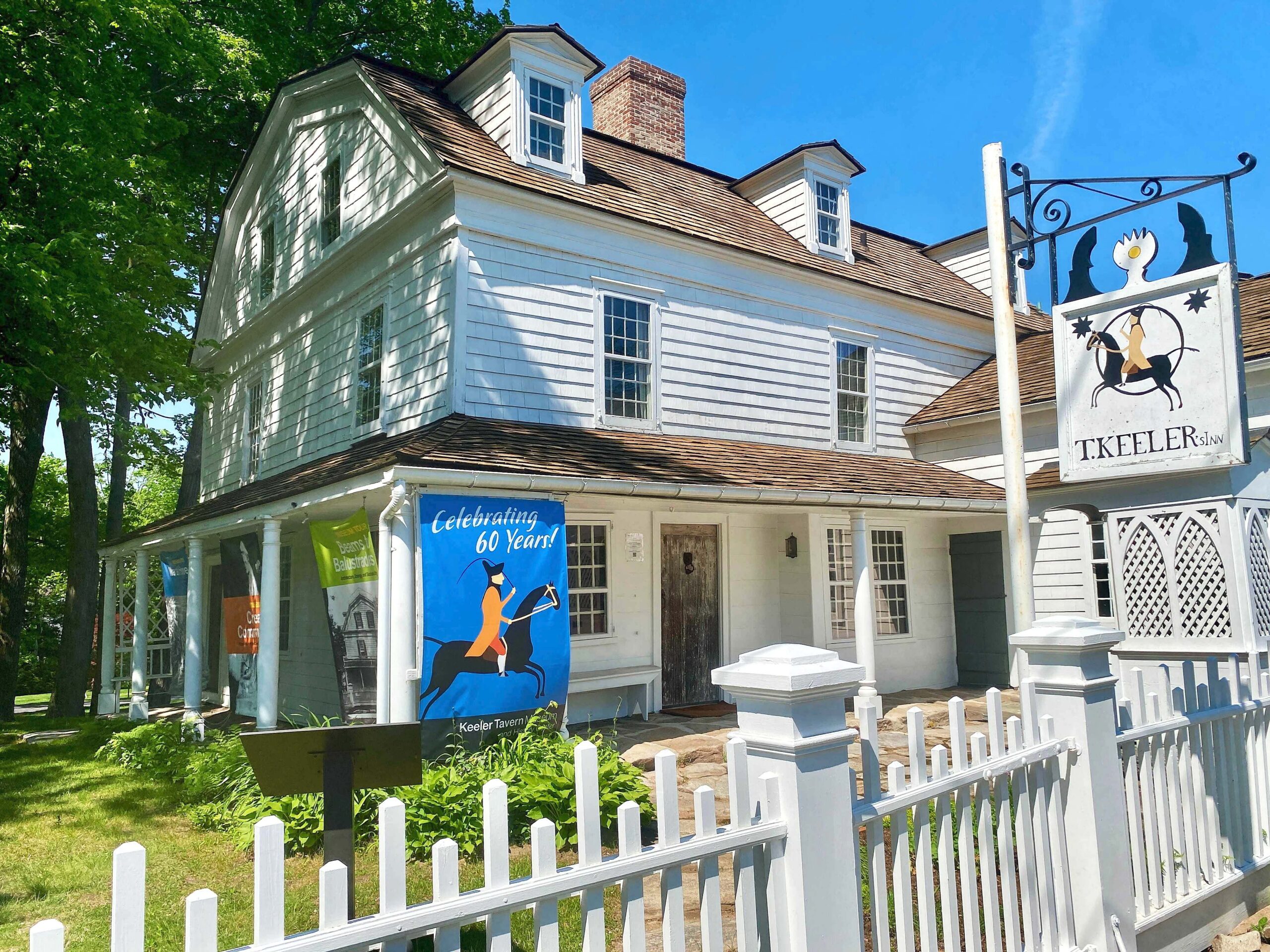
The Keeler Tavern Museum & History Center. Photo courtesy the Museum.
Can you share why your first priorities at Keeler are fundraising and development, especially within the education and curatorial programs?
Fundraising matters because without strong philanthropic support, none of the other work is possible. But I don’t see fundraising and mission as separate conversations. When I ask someone to invest in Keeler, I’m asking them to invest in a place where a student can connect a classroom lesson to a room where history actually happened. I’m asking them to invest in a place that welcomes community conversations, educational programs and experiences that bring people together.
When people understand that impact, giving becomes less about a transaction and more about a relationship. That is the kind of development program I want to build at Keeler — one grounded in genuine connection to the mission and the people we serve. Our education and curatorial work are at the heart of that story.
The nation’s Semiquincentennial also marks 250 years since the Battle of Ridgefield, and Keeler is celebrating its own 60th anniversary as well. What’s planned?
It is a remarkable convergence of anniversaries, and I think it creates an opportunity that goes beyond celebration.
There is a cannonball embedded in the wall of the Keeler Tavern — a reminder of the Battle of Ridgefield in 1777. You can stand in front of it and see a physical connection to a moment in history. That is what makes places like Keeler so powerful. History is not only something we read about; sometimes it is something we can experience.
As our country reflects on 250 years of history and continues conversations about what our shared story means, Keeler is exactly the kind of place where those conversations can happen. My hope is that through our 60th anniversary programming, America250 events and Battle of Ridgefield commemorations, Keeler continues to be a place where people gather, reflect, learn and connect.
If people leave feeling a little more curious, a little more connected and a little more inspired than when they arrived, then we’ve done our job.
—Kiersten Busch