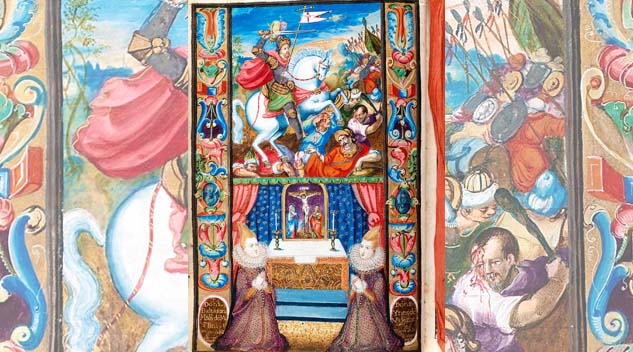
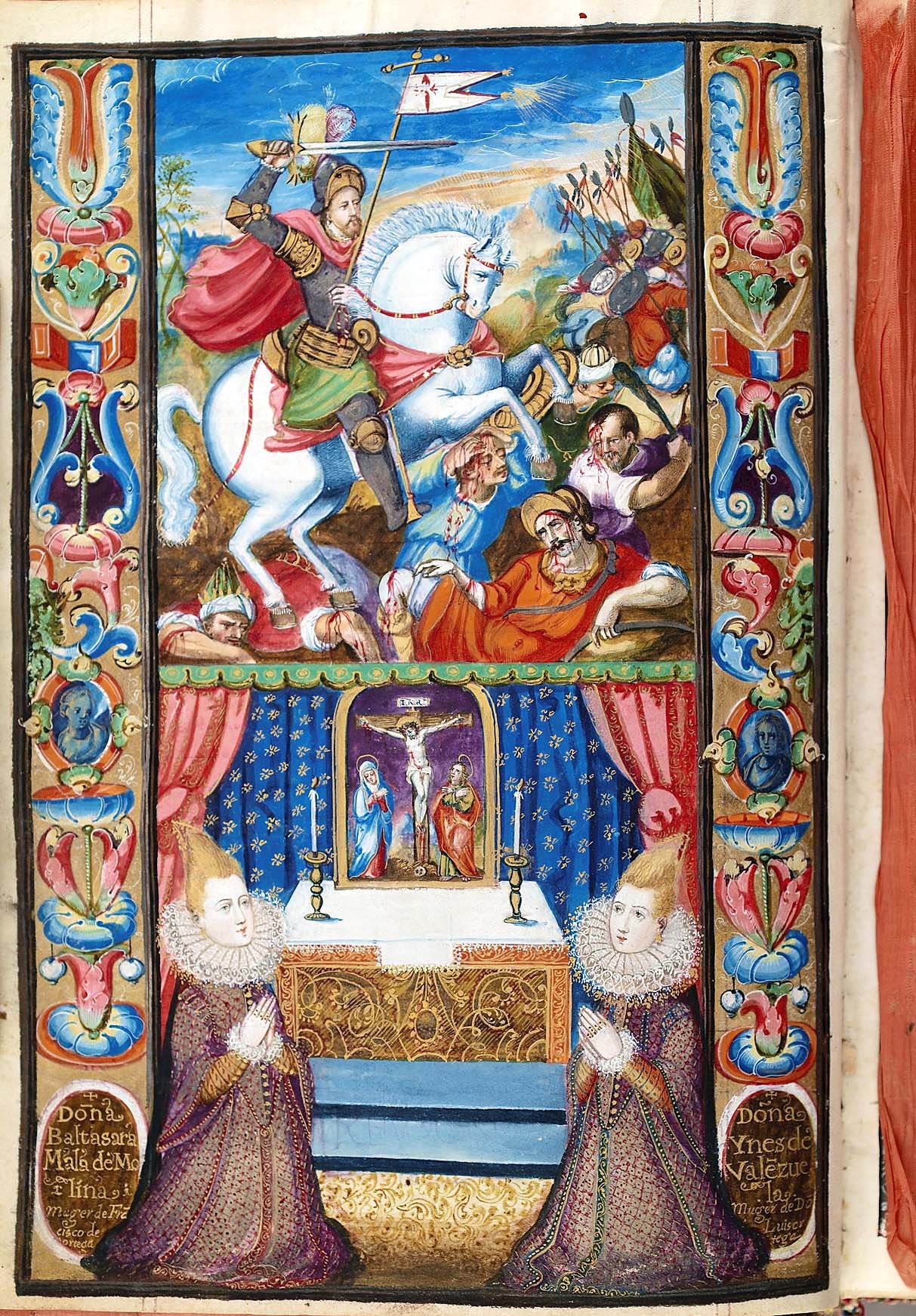
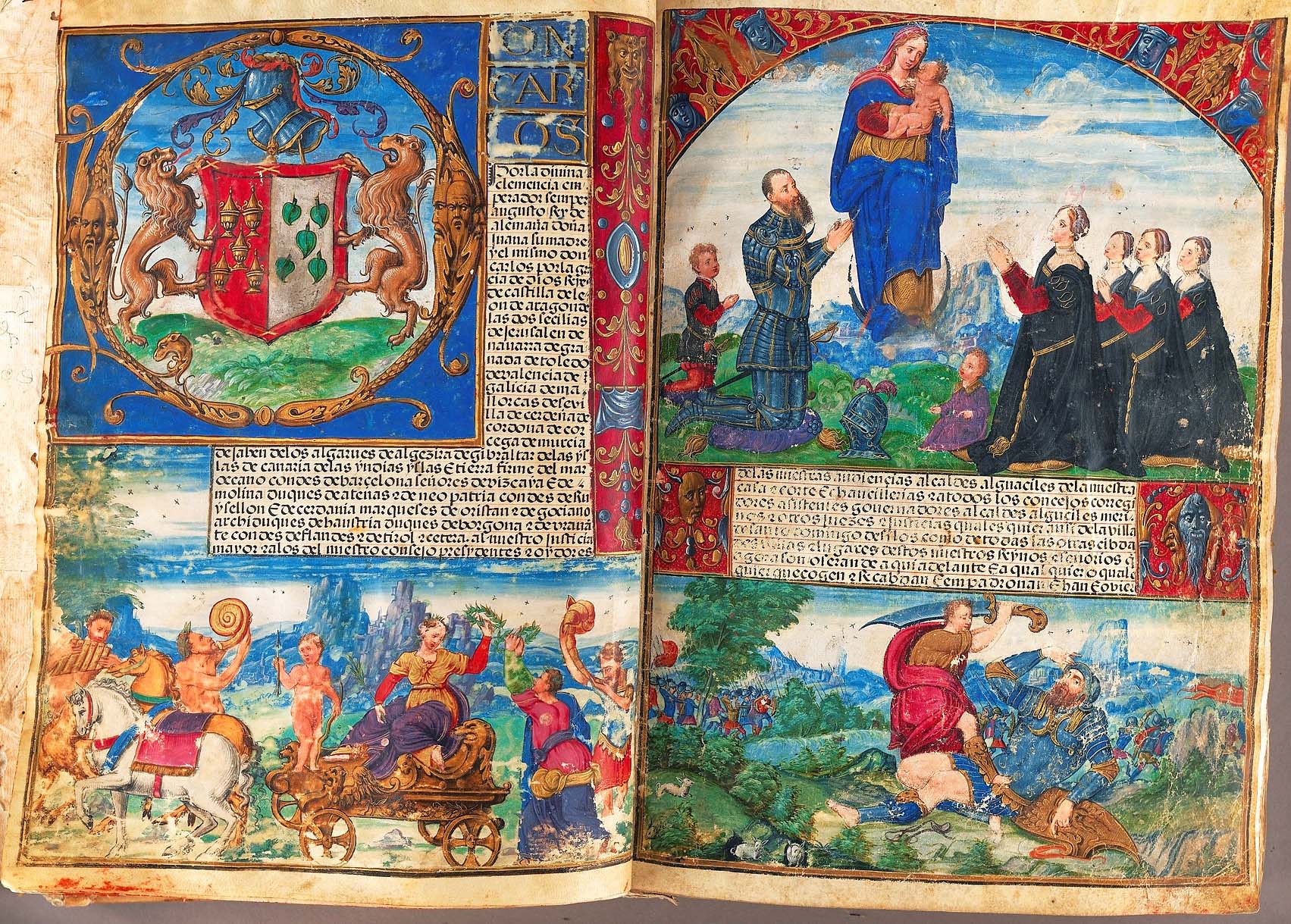
Third issue of a letter of nobility petitioned by Francisco and don Luis de Ortega Vallejo, brothers and residents of Valdepeñas (Jaén), Granada, 1601, illuminated manuscript on parchment. Courtesy of the Hispanic Society of America, New York. Photo: Patrick Lenaghan.
By Laura Layfer
NEW YORK CITY — Offering a rare look at the high style that reigned throughout the Spanish Empire period, “Spanish Style: Fashion Illuminated, 1550-1700,” is on view through March 22, at The Hispanic Society Museum & Library (HSM&L). The exhibition and accompanying catalog of the same title surveys the treasures housed here that best represent such adornment.
The institution was founded in 1904 by American philanthropist and scholar Archer Milton Huntington. His pursuit began with amassing a vast collection of literature, art and cultural artifacts from Spain, Portugal, Latin America and the Philippines, dating from antiquity up through the early 1900s. In keeping with his original intent, opportunities and ways to understand Spanish culture continue to evolve today in new forms and, in this case, fashion.
The exhibition’s guest curator, Dr Amanda Wunder, a cultural historian with a keen interest in Sixteenth and Seventeenth Century Spain is a professor of history at Lehman College and on faculty at CUNY Graduate Center’s programs in Art History, History and Global Early Modern Studies. She said that her interest in the broader subject of clothing and design began as a young girl learning how to sew from her mother. Vintage patterns soon became a collecting passion for Wunder, but it wasn’t until after graduate school and a fellowship working with early modern textiles at The Metropolitan Museum of Art where she began to realize the intersection of fashion and art. In 2024, she published Spanish Fashion in the Age of Velazquez: A Tailor at the Court of King Philip IV, and it was during that time spent researching at the HSM&L that the idea for this exhibition materialized.
Letter of nobility petitioned by Alonso de Castro, resident of Santo Domingo de Silos, Valladolid, 1553, illuminated manuscript on parchment. Courtesy of the Hispanic Society of America, New York. Photo: Patrick Lenaghan.
The exhibition opens inside the museum’s Renaissance terracotta courtyard, described by Wunder as “an evocative atmosphere to see Spanish fashion.” Visitors are welcomed by two sculptures, “Effigy of a Man” and “Effigy of a Woman,” that Wunder notes have not previously been seen outside of storage for many years, and never up close and in the round. Each made of painted wood, the figures are portrayed kneeling and in full garb. Their appearance is so crisp it could almost be mistaken for marble or alabaster because of the intricate carving and rich coloration. The depiction of these funerary figures in the round gives another level of prominence to the details of their clothing and its memorialization. In the back, underneath the cloak of the male, one can even see the soles of his shoes peeking from underneath the depicted folds of the fabric.
The most significant source of Wunder’s impetus for this exhibition stems from the 16 illuminated manuscripts on display. Six manuscripts are arranged chronologically in a long case; the other ten are displayed throughout the exhibition. These legal documents, known as cartas ejecutorias de hidalguía, or letters of nobility, were used when a family’s status was challenged. In the mid 1500s, there was a social shift that occurred with the establishment of a global empire that allowed great fortunes to be made. As a result, many people filed lawsuits in court in order to gain their class privileges, such as tax benefits or holding office. Wunder describes hidalgos as the lowest of nobility, yet these certificates were recreated in the highest painterly detail to celebrate the achievement of an elite level of recognition. They become not only a source of pride, but an elevated work of art. While the original would be kept on file in the court archives, families would then commission a second of what Wunder calls a “luxury copy” to be beautifully bound and shown off.
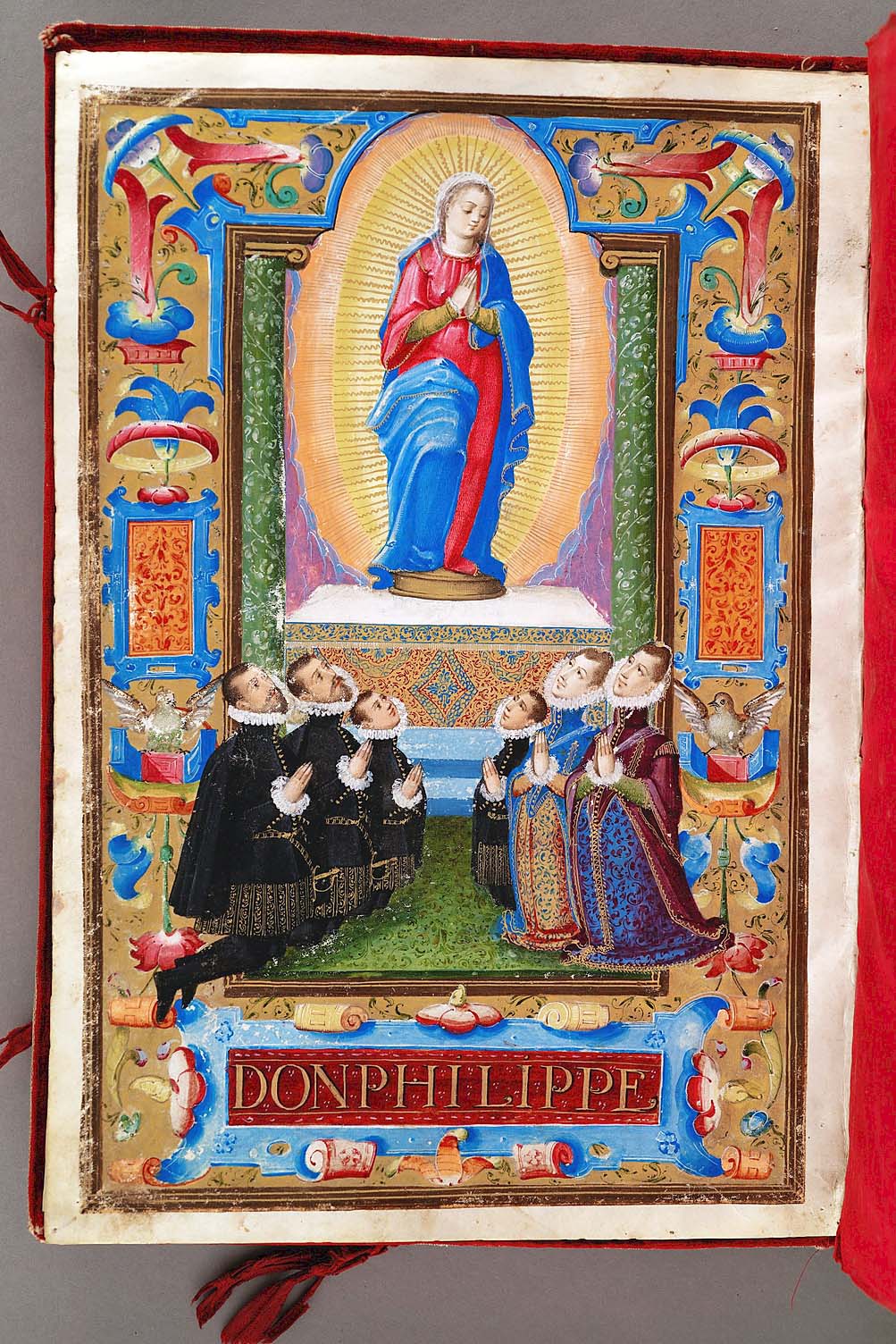
Letter of nobility of Alonso, Juan y Francisco de Vilches Tamariz, brothers and residents of Carmona and El Viso, Granada, 1591, illuminated manuscript on parchment. Courtesy of the Hispanic Society of America, New York. Photo: Patrick Lenaghan.
As she spent weeks poring over hundreds of these manuscripts in the Hispanic Society Library, Wunder noted how hard it was to narrow down her selection. While most are filled with tedious text and detailed family drama, approximately 122 were illuminated with portraits. This is how she recognized the value and attention given to the dress of the men, women and children and how these materials could be used to survey Spanish fashion history through decades. “It’s almost like Instagram,” she joked, “appearances manipulated to present the ideal post for how you want others to see you.”
For example, in the parchment manuscript petitioned by Alonso de Castro in 1553, who was a banker, he presents himself as if he were a knight. His son kneels behind him in black and red, and all the women in the family wear black gowns with expensive velvet. Another example, for the brothers Francisco and don Luis de Ortega Vallejo, dates to 1601 and depicts the men attired in classic black with oversized ruff collars and sword belts. An accompanying page shows their wives in formal brocade gowns, with bright red lips and dyed blonde hair in an updo (a popular hairstyle given the collar heights of the period). “This was considered the epitome of beauty for the moment,” said Wunder, “these outfits of nobility were not to express individuality, they were to show belonging.”
The shift in taste and trends is evident in some of the later manuscripts such as that of petitioner Antonio de Contreras, from 1651. The family of three is shown with the mother wearing a then in-vogue headdress or wig, and along with her son and husband, all have a much more conservative collar and overall ensemble. The appliqué on the father’s sleeve and the rich pale blue of the boy’s coat reveal that their clothing is far from simple and closer inspection shows how much attention was given to detail. There is an awkward aesthetic to much of the fashion shown, yet according to Wunder, that probably only mimics the way most of us typically feel in clothes for special occasions. “I think of it like wearing high heels and how uncomfortable that can be,” she said.
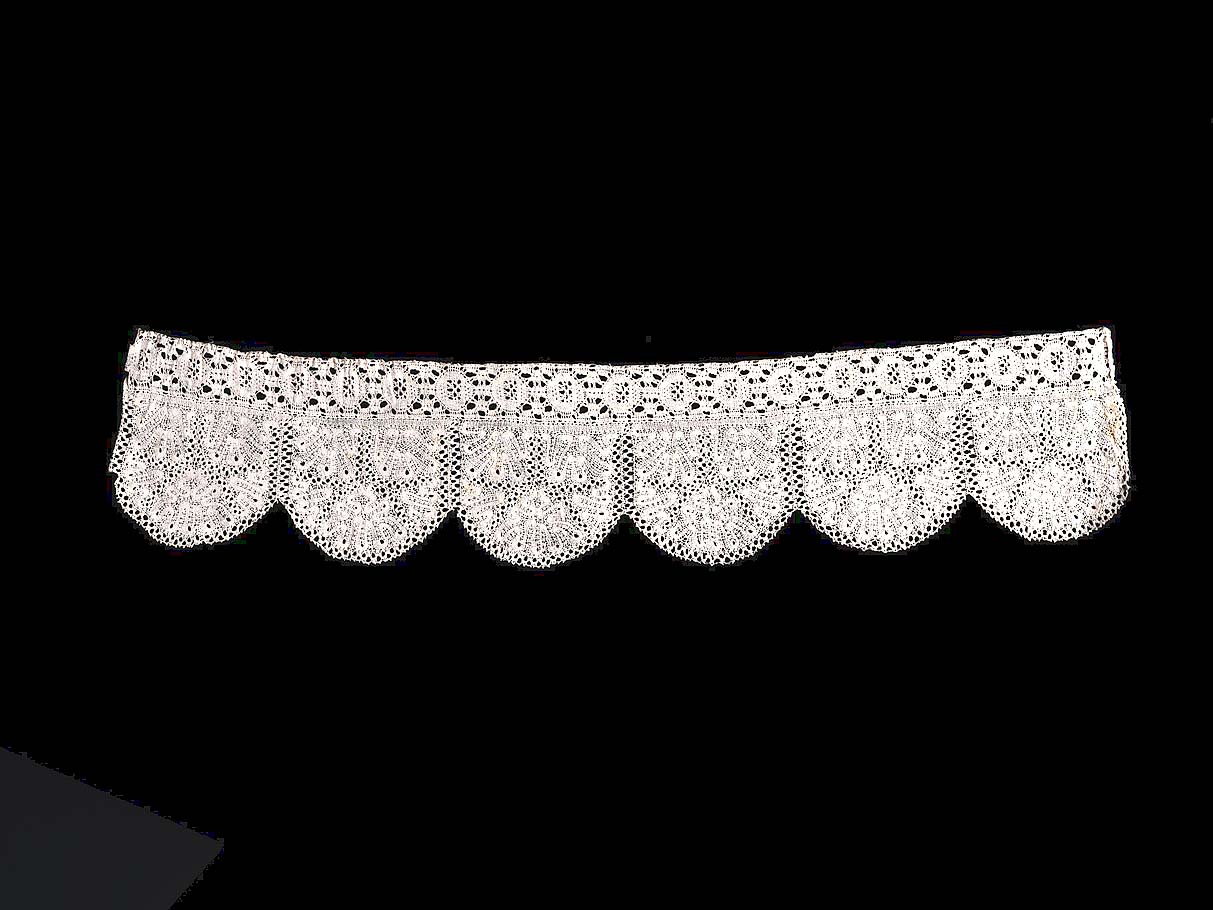
Fragment of bobbin lace, Spanish (Huelva), Seventeenth Century. Courtesy of the Hispanic Society of America, New York. Photo: Kirk Davis Swinehart.
While few textiles survive from this period, there are several special fragments on view. These include a bobbin lace with geometrical design and a Venetian needle lace, likely once part of a shawl, as well as a red and yellow silk and velvet brocade fabric. Such delicate remnants showcase the intricacy as well as the dimensional quality to the fabrics seen in the manuscript. The only full garment mounted in the galleries is a black cut silk embroidered velvet dalmatic from the Sixteenth Century, and one that has rarely been seen in a public setting. It was shown once before here in the 1930s. It was conserved by the Metropolitan Museum of Art (New York City), and though ecclesiastical pieces often sustain through generations as compared to other articles of clothing, the color black has a penchant to fade, an inherent part of the dye process, making this garment even more exceptional.
One case features jewelry, primarily religious, that would have been worn to reveal both status and piety. This is evident through two reliquary rock crystal pendants presented; one that depicts the Annunciation and the other bearing a cross within a heart shape. By comparison, the amulets of jet and silver reference what would have more commonly been worn by everyone of all classes. Throughout the gallery there are various portraits of the royal family in the top Spanish fashion ensembles of the time, and a small side gallery section even includes portraits of individuals wearing items banned through sumptuary laws.
By the Eighteenth Century though, French fashion had taken over in Spain and across Europe. One of the most identifiable works by Francisco Goya, “The Duchess of Alba” in mourning dress, 1797, conveys the inevitable cycle of fashion and those looks that never wane. Dressed in traditional Spanish style with lace and a fan, the duchess is clothed in the basic black uniform that Wunder notes is a reminder of a revival we all seem to turn to for chic comfort, then and now.
The Hispanic Society Museum & Library is at 613 West 155th Street. For more information, www.hispanicsociety.org or 212-926-2234.