NEW YORK CITY — Perhaps you have heard of the fabled dealers Israel Sack, Charles Woolsey Lyon and Nancy McClelland, but how about C. Vandevere Howard, Matthew Holden or Estelle Berkstresser?
Among the delights of “Making It Modern: The Folk Art Collection of Elie and Viola Nadelman” is the serious and thorough attention given to art retailers who contributed to the formation of this remarkable compendium during the 1920s and 30s. Co-curators Margaret K. Hofer and Roberta J.M. Olson explore the interactions between the Nadelmans and these dealers as one aspect of a broader exhibition and catalog project, the first to address the Nadelman Collection in a scholarly way.
They reveal the names and circumstances of these antiques traders and show how the Nadelmans drew upon dealers’ connections and finds to build their exceptional trove. What makes this initiative even more astonishing is the fact that it was stimulated by the seemingly prosaic unearthing of six boxes of index cards in a family’s long-term storage area.
“Making It Modern: The Folk Art Collection of Elie and Viola Nadelman” will enchant visitors at the New-York Historical Society through August 21, before moving on to the Addison Gallery of American Art in Andover, Mass., where it will be on view September 17–December 31. It opened at the Albuquerque Museum of Art and History last year.
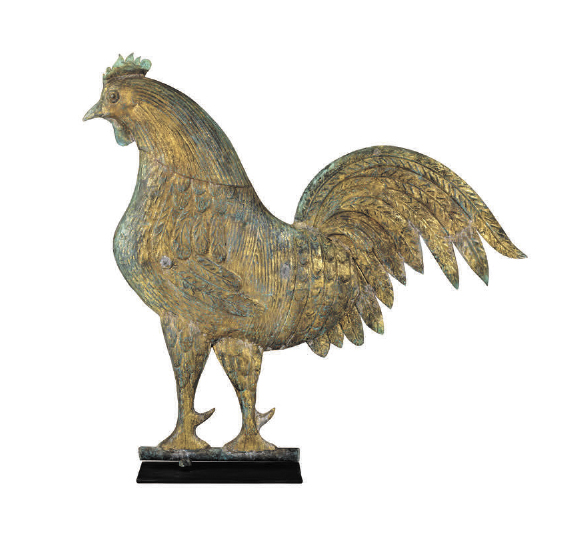
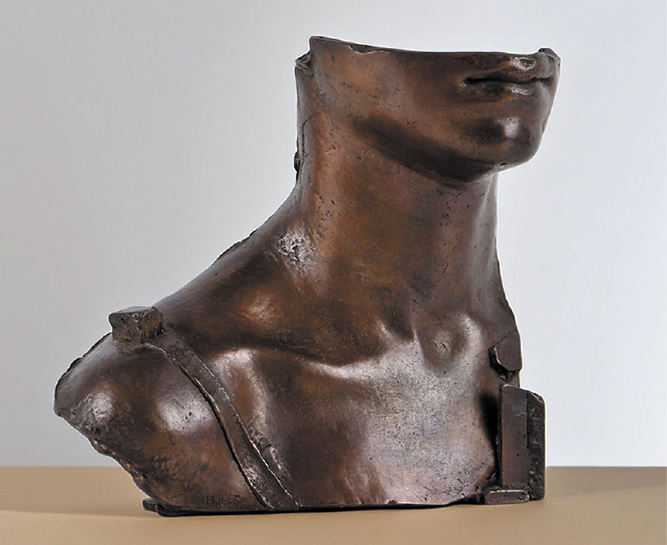
The exhibition and accompanying catalog honor the collaborative collecting genius of Elie and Viola Nadelman. The co-curators have selected 200 fine and decorative art objects and tools from the assemblage of 15,000 items the institution purchased from the Nadelmans after they disbanded their Museum of Peasant and Folk Arts in 1937. Hofer and Olson have combined these items with other former Nadelman possessions now owned by such institutions as Boston’s Museum of Fine Arts and the New York State Historical Association and with examples of Elie Nadelman’s Modernist sculpture.
Hofer, vice president and museum director of the New-York Historical Society, and Olson, curator of drawings, are also the lead authors of the substantive and sumptuous catalog. They are joined by art specialists Kenneth L. Ames, Barbara Haskell, Cynthia Nadelman and Elizabeth Stillinger, who offer intriguing essays on folk art cultural constructs and collecting, the making of Modern art and the Nadelmans’ participation in these and related arenas.
Born in Warsaw, Poland, the sculptor and draughtsman Elie Nadelman (1882–1946) was part of the avant-garde in Munich and in Paris during the early years of the Twentieth Century. With the outbreak of the Great War in 1914, he immigrated to New York City. The American-born, European-educated Viola Spiess Flannery (1878–1962) was a wealthy widow when she and Elie met. The couple wed in 1919.
Cynthia Nadelman explains in “Viola Nadelman as a Collector” that her grandmother’s existing interest in art intensified after marriage to Elie Nadelman. Within the realm of their collecting — which included a fascination with Classical antiquities and medieval art as well as American and European folk art — Viola managed the objects and related transactions. She oversaw the creation and administration of the Museum of Peasant and Folk Arts constructed on the property of their seasonal home in the Riverdale section of the Bronx. The museum was in operation from 1926 until 1937.
Stillinger offers a moving mediation upon the Nadelmans’ 1937 sale of the MPFA collection in her absorbing catalog essay. “Parting with their collection was probably the hardest thing Elie and Viola ever did, for it had become the center of their lives, and it represented the embodiment of all their ideas about art and life.”
At first take, it is amazing that a partial set of curatorial cards from a long-defunct museum could set off such a flurry. The 4,628 3-by-5-inch index cards found in 2012 corresponded to approximately one-third of the collection in the Nadelmans’ museum. Yet, in the right scholar’s hands, the data on the MPFA curatorial cards might be woven into an illuminating story about the intersection of antiques collecting and dealing in the 1920s and 1930s. Those “right hands” were Hofer’s.
As Hofer commented, “I was captivated by the dealer information. It was brand-new. The cards had just come from Cynthia Nadelman and they were a gold mine of information.” The typed and handwritten cards contained the names of the dealers who had sold the objects, what the Nadelmans thought they were buying, and purchase prices and dates.
Hofer conducted research along genealogical and business-history lines and in early Twentieth Century antiques journals to address gaps in information about the 202 dealers mentioned and to provide context about trends in early scholarship and collecting. Surprisingly, the names of most of these dealers are little recognized or completely unrecognized today. Some of them operated fashionable shops in midtown Manhattan, while others ran more homey establishments in cities and towns beyond the metropolis.
Hofer shared much of what she discovered in her essay “Manhattan to Munich: The Nadelmans’ Sources for Folk Art” and in the “Checklist of Dealers and Auction Houses Patronized by the Nadelmans, 1923–36.” Hofer and Olson have also included dealer provenance in object captions and additional facts and insights in the object entries.
Describing the collecting strategy employed by the Nadelmans, Hofer told how they forged associations with a network of dealers in New York City, elsewhere in the United States and in Europe — especially in France, Germany and Hungary. These dealers “scouted for them and fed them objects. They went to some dealers again and again and bought huge numbers of objects from them.… Dealers were instrumental in making objects available so that the Nadelmans could take these antiques and make them into a subset which they called ‘Folk Art.’”
Among their favorites was Clarence Vandevere Howard, who ran a shop at 141 East 57th Street. He specialized in European imports, including “painted and unpainted peasant furniture,” and relied on Swiss pickers among others keep his stock fresh. As evidenced in the MPFA cards, the Nadelmans bought more than 470 objects from him. Howard’s store is among other shops and auction houses located on a map generated from the card data entitled “Dealers Patronized by the Nadelmans Clustered in Manhattan’s East Fifties, ca. 1925,” which is included in the catalog. Like many of the Nadelmans’ “go-to” dealers, C. Vandevere Howard is virtually unknown now. As Hofer succinctly put it, “Not everybody was advertising in The Magazine Antiques.”
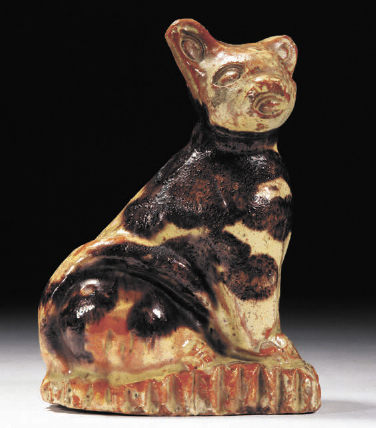
Similarly, there was Matthew Holden of Rye or Jamaica, N.Y., who handled such American pottery gems as the 1798 stoneware spout pitcher by Clarkson Crolius Sr and the 1828 “Liberty for Jackson” sgraffito plate by Samuel Troxel. Holden sold the Nadelmans more than 40 pieces of pottery from 1926 to 1930 as indicated in the MPFA curatorial cards. It took Hofer considerable genealogical sleuthing to find a first name for the mysterious Mr Holden.
Hofer also told of the many women from whom the Nadelmans bought art and artifacts. In fact, more female than male dealers appear on the surviving curatorial cards. Some were widows who sold antiques to support themselves. Others supplemented their husbands’ income through dealing. An example of the latter was Estelle Berkstresser of York, Penn. From roughly 1925 to 35, Berkstresser ran a shop out of her home while her husband worked as a machinist. She was the source for 98 of the Nadelmans’ artifacts, including a German bride’s box, nursing bottle, chalkware urn and butter print carved with a palm tree, all displayed in “Making It Modern.”
With Hofer’s review of the previously unstudied cards came the realization that the Nadelmans had not discovered these objects in situ, but that they were already on the market. “The idea was sort of out there that the Nadelmans had been knocking on doors and acquiring these objects from an original context but that was not the case. They discovered folk art in a different way. They bought objects as ‘antiques’ and recast them as ‘folk art.’ I was disappointed at first, but it doesn’t diminish their contributions. It just makes for a different narrative.”
When asked why she was tackling this subject now, Hofer observed that aside from the reevaluation prompted by the discovery of the curatorial cards, “the topic had long screamed for greater scrutiny. The Nadelman Collection was the largest acquisition ever made by the New-York Historical Society. Because it involves many different media, it was dispersed among different collections. There’s a little bit of everything, some of it even ended up in the library, and its impact was diluted.… It was hard to appreciate the contributions the Nadelmans made without a critical mass of objects. We wanted to tease out the larger impact of the Nadelman Collection through the exhibition and the catalog.”
Hofer, Olson and the other catalog essayists are to be congratulated for the success of this thorough and sweeping project. Together, they salute the collecting prowess of the Nadelmans, offer a rigorous examination of the intellectual and artistic underpinnings of folk art and Modernism, and present the latest scholarship on folk and related objects. They also pay homage to the underappreciated but critical role city and country dealers played in the preservation of American and European material culture.
The show’s accompanying catalog, Making It Modern: The Folk Art Collection of Elie and Viola Nadelman, was published in 2015 by the New-York Historical Society Museum and Library in association with D. Giles Limited, London.
The Historical Society is at 170 Central Park West in New York City. For information, www.nyhistory.org or 212-873-3400.