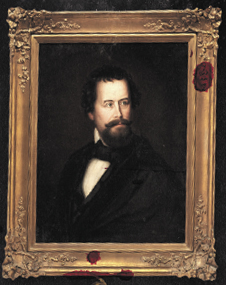
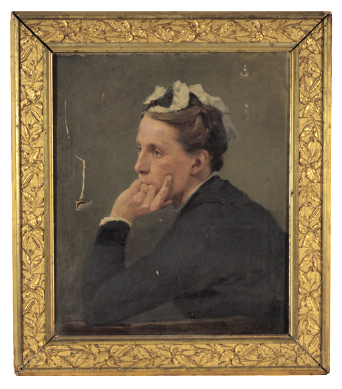
When Holly Stair joined Stair Galleries as its director of marketing, she became the fifth generation of the Stair family to work in the arts and antiques trade. She joined the family business to oversee brand creative, marketing and advertising, social media, partnerships and audience development. Prior to joining the auction house, she spent more than a decade in the advertising industry in New York City working for creative agencies. We reached out to learn what it’s like working for the family business and how the firm is positioned in the long run.
When did you become director of marketing at Stair?
I officially joined the team in August 2024. My father, Stair founder and president Colin Stair, and I had been talking for years about the future of the Stair brand — our areas of expertise, our differentiators and shifting our strategic focus to how people collect today. This conversation naturally led down a path about what we both wanted for ourselves, eventually developing a long-term plan for me to join the company. As the fifth generation in a family of auction people, it’s a remarkable honor to carry the legacy my family has established in New York and London starting in 1911.
We were choiceful in picking the right moment and worked with a generational family business consultancy to ensure we were entering a partnership that would preserve our close relationship and set us up for success in working together. Colin had seen how his father, his grandfather and great-grandfather had transitioned through the trade together and he was dead set on getting it right. We prioritize the health of our relationship and transparency in communication. I am enterally grateful for this, and lucky to count Colin as my father, my business partner, friend and mentor.
Had you helped around at Stair before officially joining the team?
I grew up around old things and accompanied my parents to their studios and workshops my whole life.
My mother, Katrina Stair, was a painting restorer, and I have many joyful memories in her home studio and traveling with her to visits in New York. I remember stopping by the Sotheby’s Restoration headquarters on 91st Street to visit my father and grandfather at work, the smell of shellac and wood filling the air.
When Colin started Stair in 2001 it was a true family affair. I had always helped around the Stair Restoration shop — removing upholstery during spring break, helping the crew with pickups during the summer — and it went without saying that when we opened the auction house, we all pitched in. At our first auctions, I helped my father catalog, set up the exhibitions, present lots and run concessions. When we moved into our current headquarters at 549 Warren Street in 2006, I spent that first summer helping to restore the building and subsequent weekends through the year running previews and processing inventory.
In 2007, I moved to New York to attend Parsons The New School of Design but was always excited to help with on-site pick-ups in the city or support on auction days. We were still doing weekend auctions at the time, and I would come back to help with phone bidding and clerking. As my career took off and work kept me busy, I still made time to come back and help with our big sales like Mario Buatta, Joan Didion and André Leon Talley.
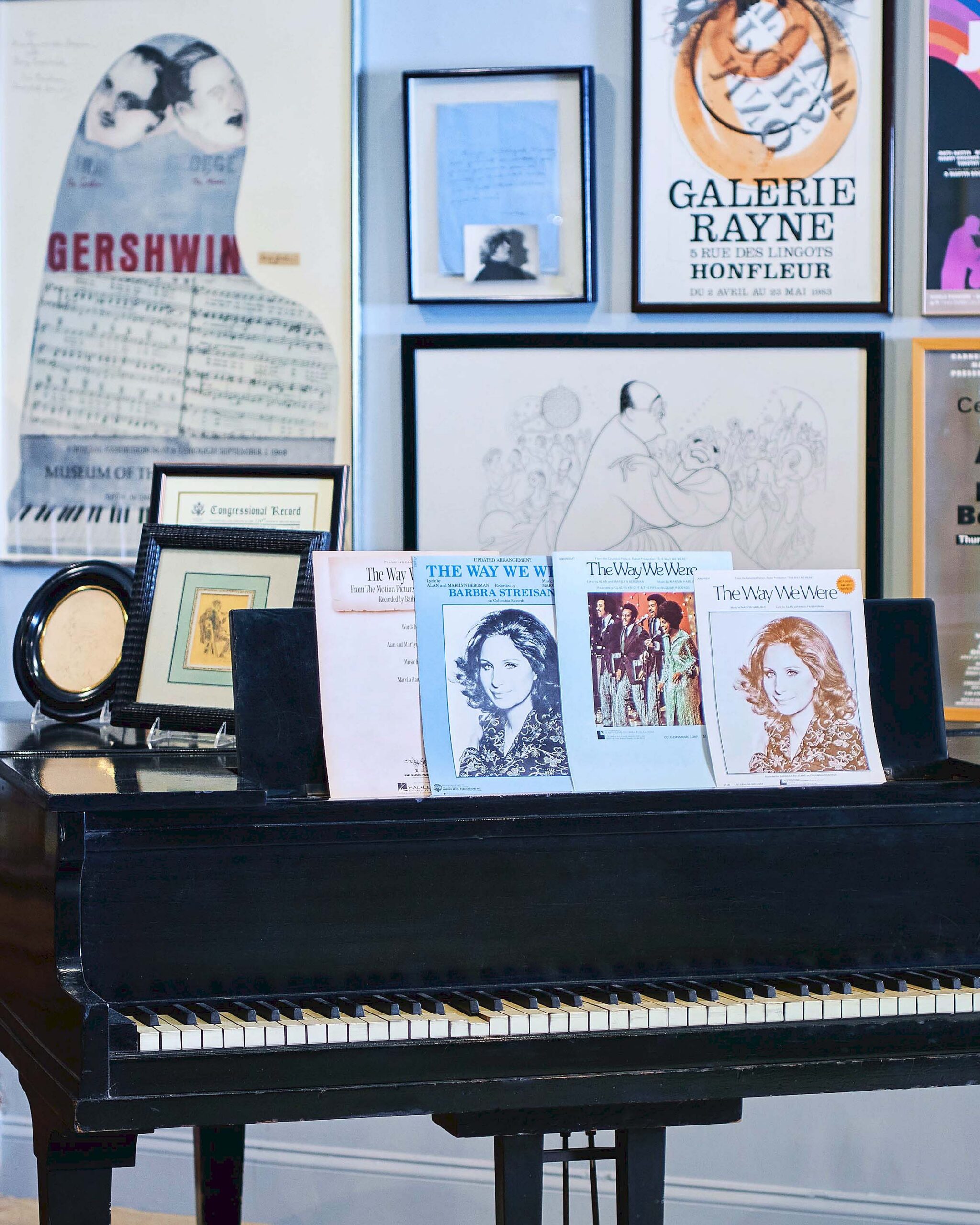
In marketing auctions, each has its own story. The April sale of the collection of songwriters Alan and Marilyn Bergman was titled The Way We Were.
How did your decade in the advertising world in New York help you transition to auctions?
When I left advertising, a creative director looked at me on my last day and said (rather condescendingly, I might add), “Oh, this will be great for you, you’re going to have such a lighter workload and work normal hours now that you’re joining a family business.” As if!
In many ways, working at a global creative advertising agency and an auction house are incredibly similar. In past roles, I would work on anywhere from five to eight brands, all in vastly different categories, speaking to different audiences, with varied budgets, and client needs. With each client, you could have anywhere from two to five projects, ranging in complexity from making an Instagram post to producing an experiential event. It requires a masterful knowledge of time and resource management, and an endless pursuit of novel thinking.
The auction calendar is such that you’re working on sales six to eight months in advance, with anywhere from one to 15 consignors. Each sale has its own strategy — a carefully crafted identity, creative approach, storytelling and exhibition. With 30 auctions a year, there is a lot to balance on a staggered timeline. But this is what keeps it fun and creates an environment where you can easily pivot to try new things. Working at a company where we can make decisions and act on them quickly is vastly different from any corporate environment that I’ve ever worked in. We can have an idea for a video at 9 am and have it published by noon. We can get a call about a visit and be in the city shooting the interiors the next day. This keeps us creative, nimble and non-stagnant.
Our north star of “Selling Interesting Things from Interesting People” truly is a guiding light for everything we do, and a rubric for how we make decisions from new business to editorial content. As a small business, and an incredibly dedicated team, we don’t exist within silos and approvals that bog down creativity. We try new things, evaluate performance, take learnings from one sale to another and constantly evolve our playbook.
What is a challenge in working for the family business? What’s the biggest joy or advantage of it?
The greatest challenge and anxiety that I have is time. Not in the number of hours in a day, but in how much time I have left to learn and shape my point of view. In many ways, I wish I joined this business sooner, but I also know my approach and skillset wouldn’t have been as valuable even five to eight years ago.
I am the fifth generation to carry the torch of the trade, but I am the first to have no formal training as a specialist. I spent the first year being very tough on myself for what I didn’t know, but I know this trade is not learned in a classroom but in experience. My priority now is to get out as much as possible — meet as many clients as I can, attend shows and fairs, and work in the field whether it’s packing boxes or making property lists. I hold myself to an exceptional standard, and it’s truly a joy to be in a space where all my colleagues are at the top of their game and so willing to share their knowledge.
Perhaps the greatest joy is to be able to help shape what the next generation of collecting looks like. Attitudes are different, trends are constantly evolving and the landscape has never been more bifurcated. How people discover our brand, how we build trust and bring our sales to market is a rich challenge.
Twenty twenty-six is the 25th anniversary of Stair. We’ve been preparing for this milestone for many years, having just completed a major overhaul of our entire technology stack to a system that best suits our inventory, client and data management, along with a brand-new website and bidding system. This has been an investment not only in our own independence as an auction house, but to better serve our clients — to continue to present the highest quality material, from world renowned collections, in a safe and easy-to-use digital platform. The in-person component of what we do, from exhibition to sale day is what thrills us and fulfills us, and I hope to bring back a classic Saturday Stair auction to celebrate 25 later this year.
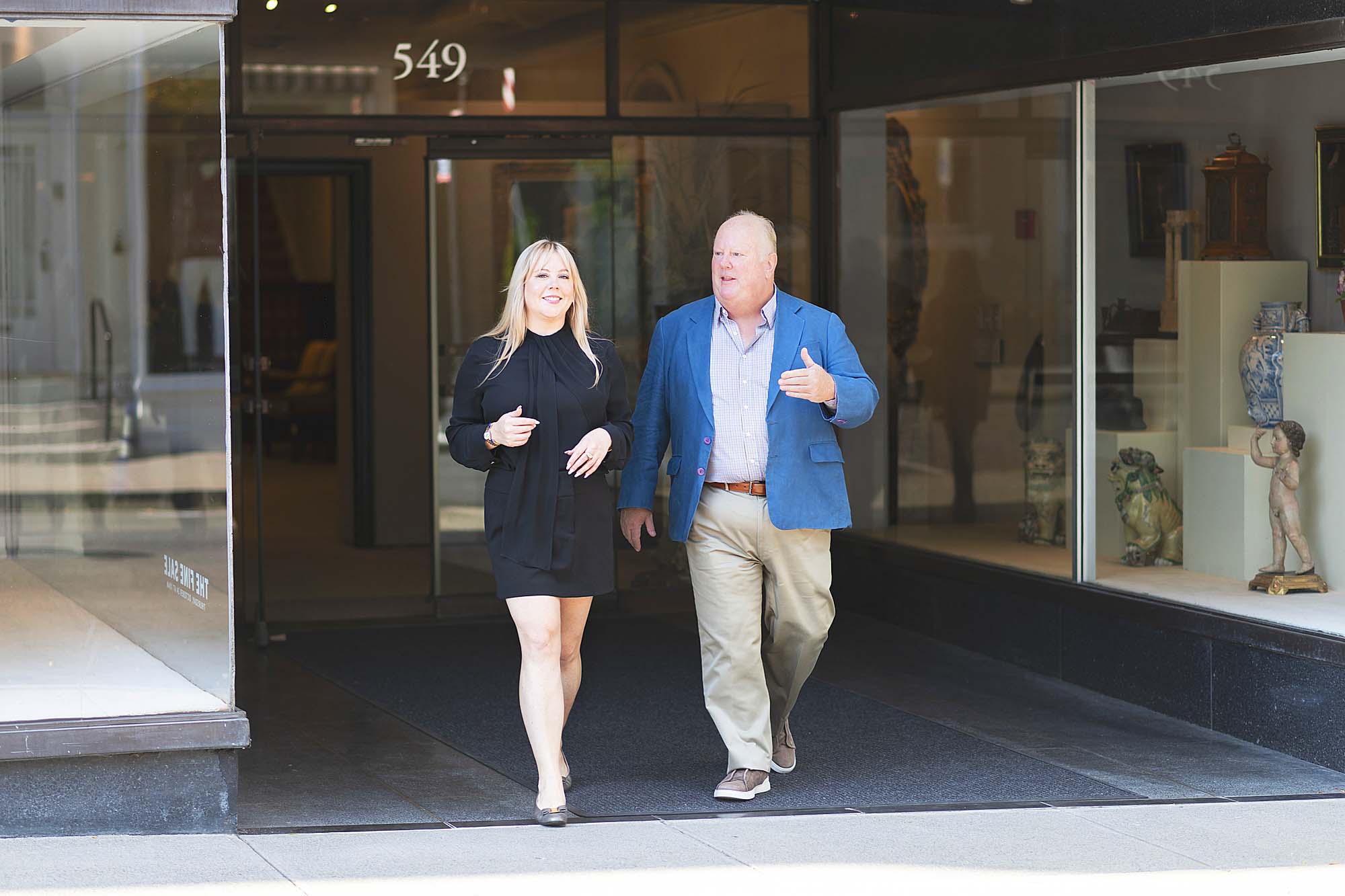
Holly and Colin Stair outside the auction gallery.
What do you do outside of work?
I am very passionate about participating in the civic and cultural landscape of our area. I sit on the board of the historic Hudson Hall, New York State’s oldest surviving theater, and support various organizations that support the health and wellbeing of young women in the Hudson Valley.
What are your marketing focuses in terms of audience outreach?
Each one of our auctions has a bespoke strategy that is first dictated by the property and then the stories of the collectors behind them. “Interesting Things from Interesting People.” No two sales are the same, and we make it a point for each experience, whether in our gallery or online, to feel custom to honor the point of view and legacy of the collector.
We are very supportive of traditional media, as it’s still a great way to reach our clientele. We pour over the trade pages of Antiques and The Arts Weekly, Antiques Trade Gazette, The Magazine Antiques and other art publications.
Stair has always been a digital-first brand, from our earliest days of publishing online catalogs and bidding. My experience building brands in these digital spaces has proved to be incredibly valuable as we greatly enhance our data approach and identify new markets and partners to reach new collectors. The digital landscape of discovery is fiercely competitive, and we are in competition not only with other houses but the attention economy of third-party online marketplaces. Sure, digital advertising on Meta is important to maintain relevance, but having executed multi-million-dollar campaigns on social platforms, marketers must think beyond best-practices and trends. The risk of overextending yourself financially and creatively can become a burden and have diminishing returns.
Perhaps it’s my nostalgia for the internet of the 2010s, but it’s been so encouraging to see the rise of Substack and longer-form written content can take back narrative control and elevate individual voices. Whether it’s Julie Brener Davich’s “The Appraisal,” David Lê’s “The Arcades” and Sami Reiss’ longtime “SNAKE” newsletter, there is so much more room to discover, learn and browse from unique voices who are helping demystify the world of auctions and collecting.
When I look around the gallery on auction day and meet someone bidding on the floor, who has never been into the gallery before, and ask them how they found us and they say, “We saw you on Instagram!” it’s very gratifying. We’ve seen that videos, insights and specialist-led conversations can really get us to the next increment. It’s how people of all ages discover new ideas, and it’s not about the one thing you do, but the many little things.
—Andrea Valluzzo