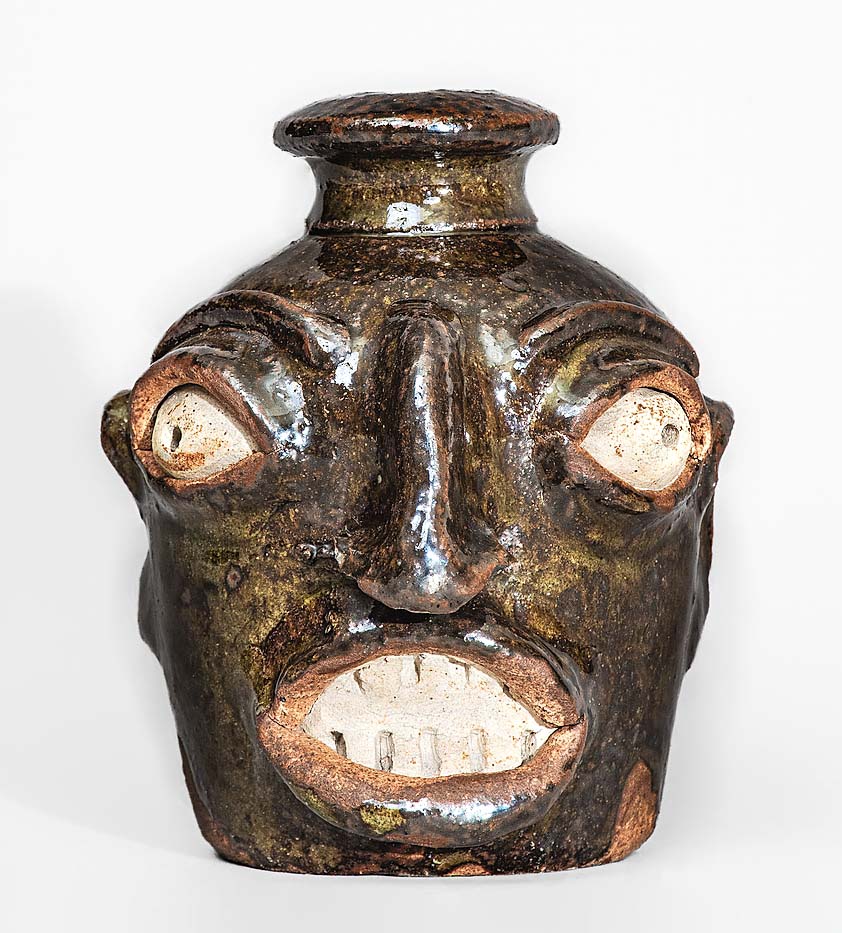
The top lot in the sale was this alkaline-glazed stoneware face pitcher, Edgefield District, S.C., third quarter Nineteenth Century, 5⅜ inches tall, which was raised to $90,000 ($40/60,000).
Review by Carly Timpson
SPARKS, MD. — “David and Jon Ward were both born in South Carolina, evidently destined to become two of the leading collectors of the famous alkaline-glazed pottery for which their home state has become so well known,” wrote Crocker Farm in its overview ahead of the firm’s May 20-30 auction of The Lifetime Southern Ceramics Collection of David and Jongy Ward. Featuring just more than 110 lots in total, mostly all alkaline-glazed stoneware from South Carolina, the collection amassed significant interest and realized $607,410, overperforming estimates and expectations for the sale, as noted by Mark Zipp, partner at the auction house.
“Just about every lot was within or above its estimate. There was strength throughout the collection and we saw a lot of strong numbers overall,” Zipp explained. “There were no surprises as far as things going underestimate. It really shows the strength of the market if you can put up a sale with so many pieces of alkaline-glazed stoneware from the South and have it all do so well.”
A testament to the care and dedication David Ward put into the collection, which certainly contributed to the strong prices realized. Zipp shared, “David was very meticulous in his record keeping and his research. He had a whole library relating to his collection — where he bought them, when he bought them, their publication history, correspondence with museums and newspaper clippings.”
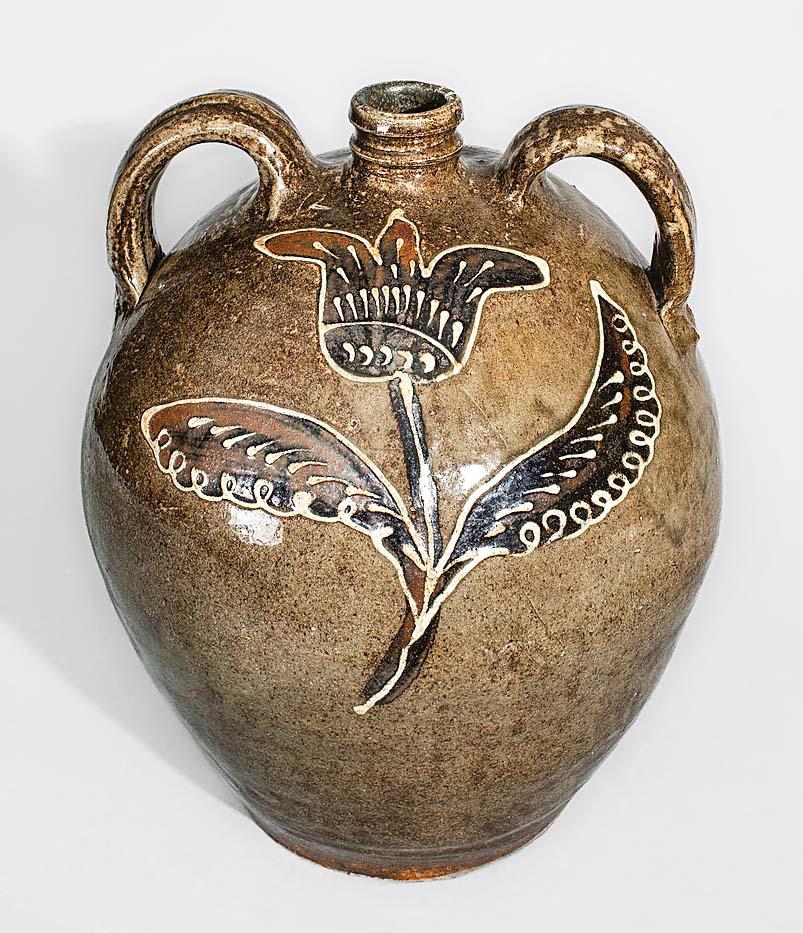
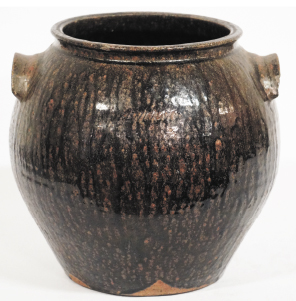
With the rare “C Rhodes / Maker” mark, this Collin Rhodes, Edgefield District, S.C., four-gallon double-handled stoneware jug, 16 inches tall, brought $45,000 ($30/50,000).
Achieving top-lot status was a face pitcher from Edgefield District, S.C., that Crocker Farm promoted as the auction’s headlining lot, noting that it was “among the finest and most famous Edgefield examples in existence.” Standing 5⅜ inches tall, this “exceedingly rare and important” olive-green alkaline-glazed stoneware pitcher with an unusual broad, flattened spout was formed in the third quarter of the Nineteenth Century and featured an expressive applied clay face with kaolin eyes, an open mouth with kaolin insert and incised teeth and C-scroll ears. The piece had additional provenance to Helen Eve, and John Gordon, whose collection was sold at Christie’s in 1999, where it was then, too, considered the standout of the group. In 1999, Ward purchased the pitcher for $17,250 against an estimate of $700-$1,000. Once again the vessel was a desirable buy, and in this sale, it rose past its $40/60,000 estimate to earn $90,000. “Very few face vessels have hit that number at auction. It had very incredible provenance and it was an incredible form — one of better examples known,” explained Zipp.
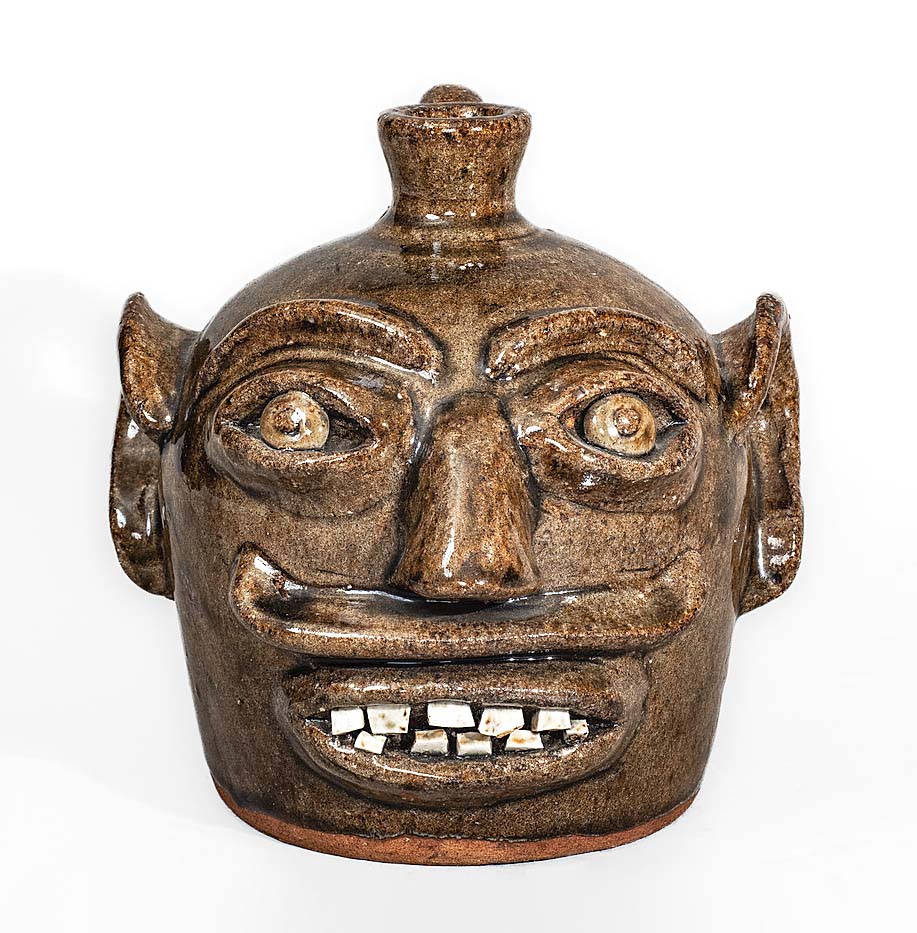
Bought in the same Christie’s auction of the John Gordon Collection of Folk Americana, a circa 1867-85 face jug attributed to the Miles Mill Pottery (Edgefield) was taken to $30,000. As described in the catalog notes for this 5-inch-tall jug, “This lot’s remarkable history of ownership places it among the most well-documented face jugs known from Miles Mill, perhaps the most recognizable producer of this form in Edgefield.” With wide-set pieced kaolin eyes, this jug was glazed in a mottled olive-green to brown color.
At $45,000, another Edgefield jug, this example incised “C Rhodes / Maker.” Made at the Collin Rhodes Pottery on Shaw’s Creek circa 1843, this double-handled jug had two-color slip floral decoration. One side of the jug featured a large iron-slip tulip, but the other was more unusual. Described as a butterfly, however stylized it may be, the decoration had unusual incised treatment that earned it a prominent spot in Mark Hewitt’s Great Pots from the Traditions of North & South Carolina. The jug stood out further due to it having incised gallonage, which were rarely seen in vessels from this pottery. Stranger still, that mark was described as, “conjoined incised numerals, which appear to be the maker’s attempt at altering the gallonage from a 3 to a 4.”
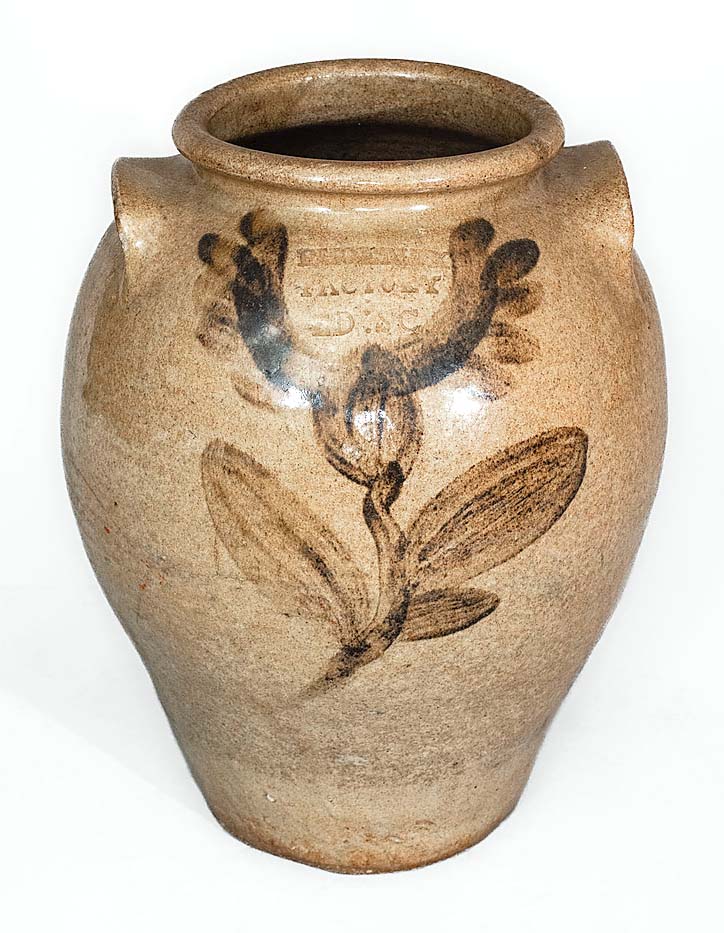
This circa 1840 ovoid jar from the short-lived Phoenix Factory, Shaw’s Creek, Edgefield District, S.C.,14 inches tall, made $22,800 ($20/30,000).
The first example of a piece from the Phoenix Factory with a maker’s mark that David Ward had seen was an ovoid jar with flattened lug handles and featuring a flowering plant in iron slip on its front and another on its reverse. The catalog noted that this jar was “One of a small number of surviving pieces bearing a Phoenix Factory maker’s mark, [highlighting] a rising interest in producing decorative ware in Edgefield,” adding that Crocker Farm has only handled one other since the company was founded in 2004. The jar from this short-lived company topped off at $22,800.
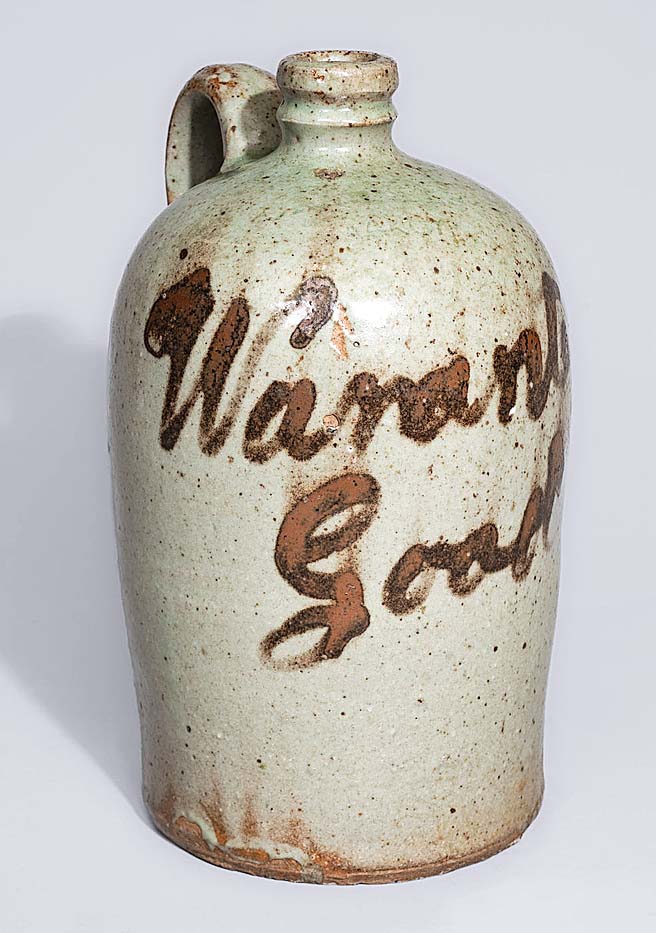
A hallmark of the collection was its selection of stoneware made at the Thomas Chandler Pottery at Kirksey’s Crossroads. Leading the grouping at $22,800 was a half-gallon jug with “Waranted Good” scrolled in slip on its front. This petite jug, which was “among the best surviving examples of Chandler stoneware bearing this prized inscription,” was paired with a clipping of an 1850 ad from the Edgefield Advertiser in which Chandler stated he “will not only recommend, but will warrant [his wares] to be good.”
Steeped in history as well was a dispensary jug attributed to the J. G. Baynham Pottery. This cylindrical late Nineteenth Century jug was impressed with the word “Dispensary” beneath an image of a palmetto tree marked “S.C.,” indicating its use as a vessel for alcohol purchased from a state-run facility, a program that only lasted from 1893 to 1907. Estimated at $4/6,000, bidders drank it up, resulting in a $9,600 finish.
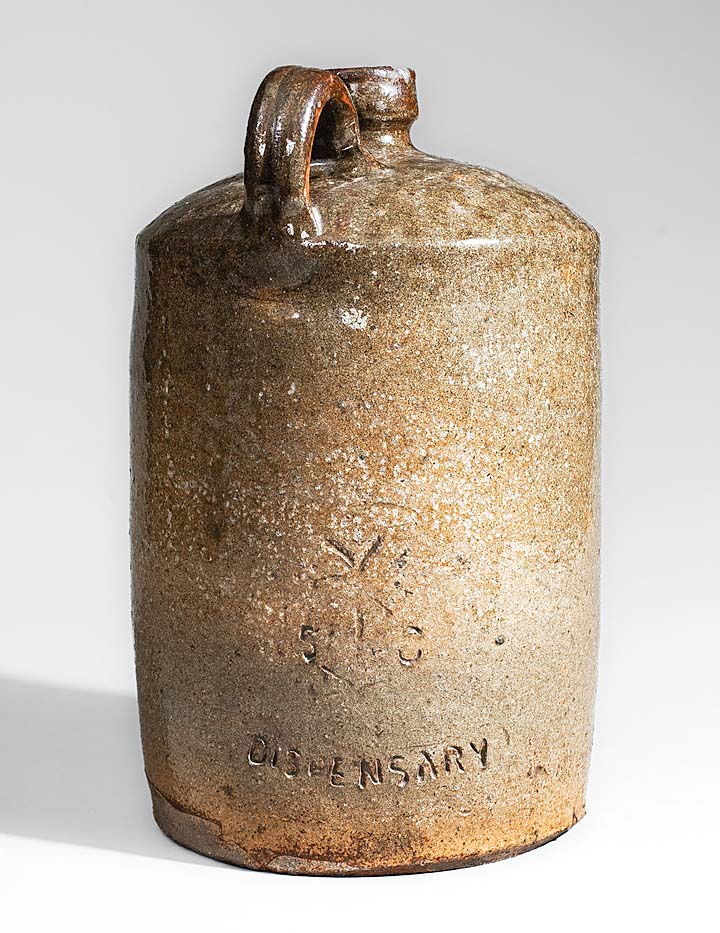
This South Carolina Dispensary jug, attributed to the J. G. Baynham Pottery, Trenton, Edgefield District, S.C., late Nineteenth Century, was not a “pour decision” at $9,600 ($4/6,000).
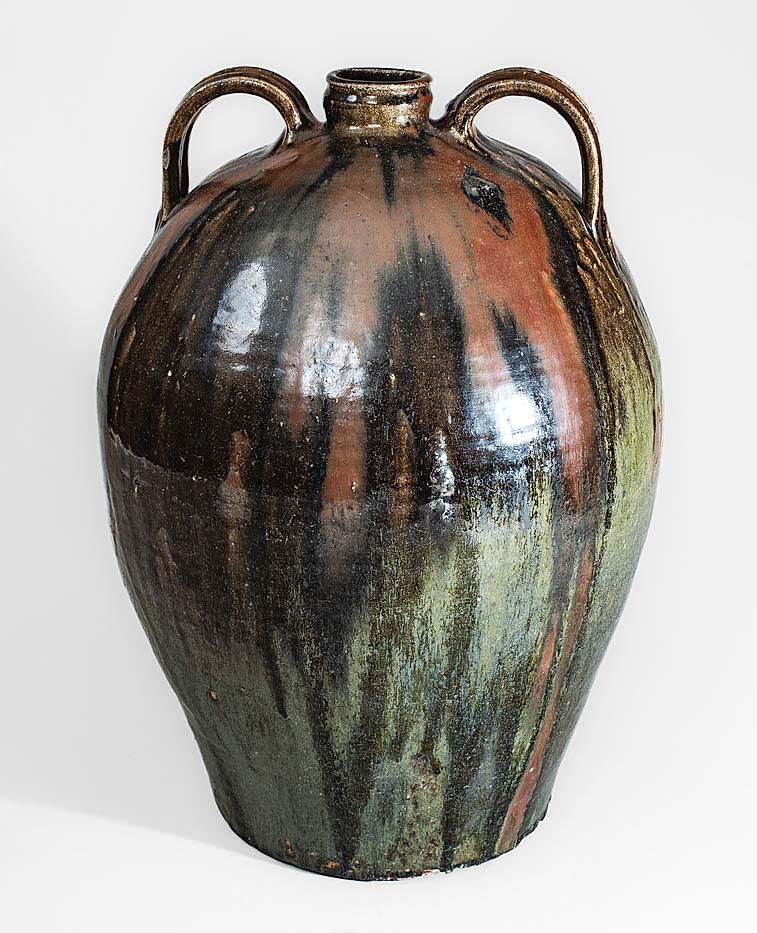
A rarity for the region, a double-handled jug from South Carolina or Alabama was described in the catalog as a “masterwork of mysterious origin.” The double-handled jug is typical to see in New York examples, but Zipp said it is “considered a great form from the South — one of the very best forms they produce down there.” At 20 inches tall, it was quite large, and it had a great mix of colors with a streaky olive to gray-green alkaline glaze and reddish-brown iron-slip runs. Given an extensive writeup with theories of its possible origin in Hewitt’s Great Pots, the mysterious example was found in Spartanburg, S.C., having descended in a local family since before the Civil War. It more than doubled its high estimate to achieve $19,200.
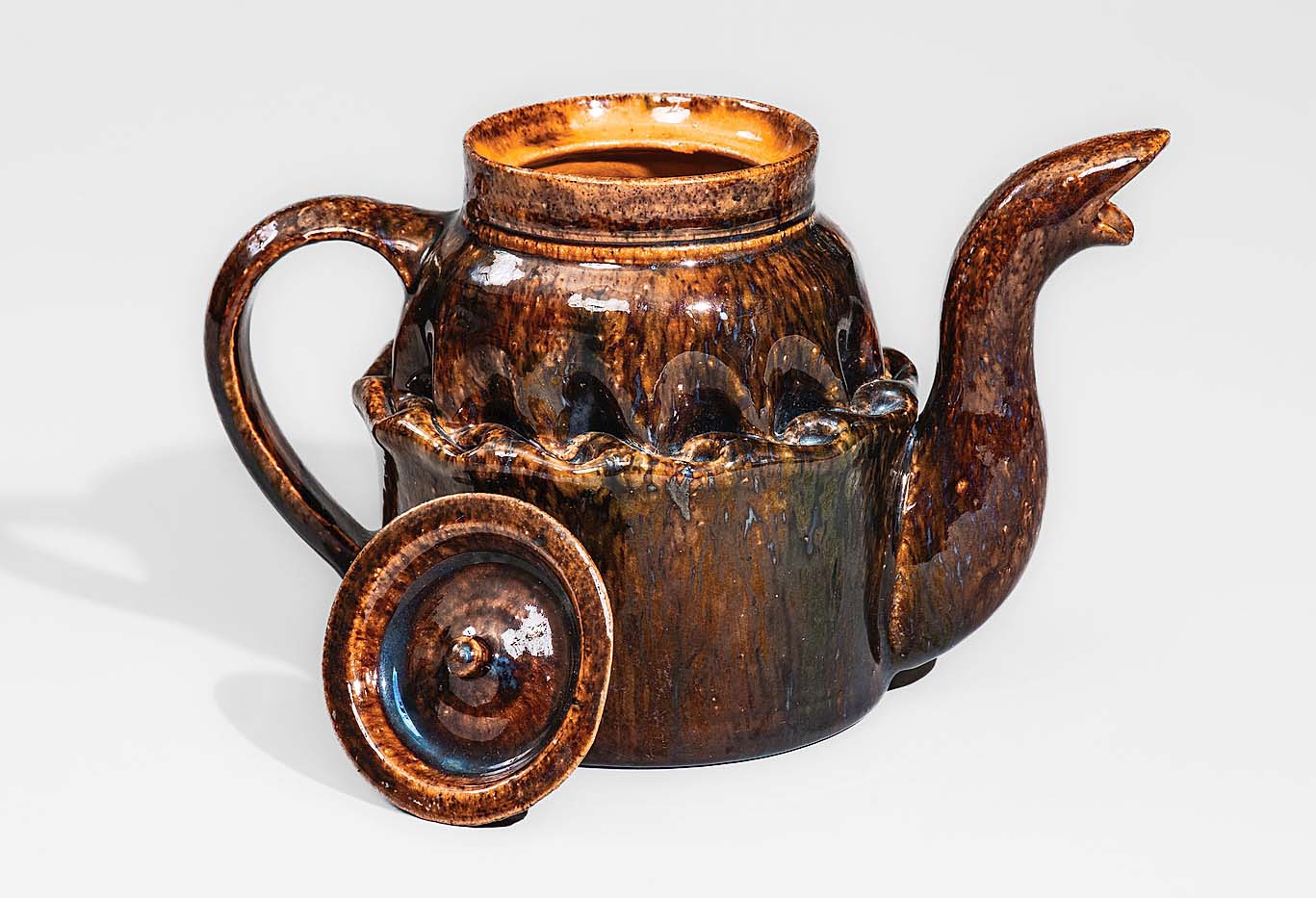
While Edgefield and South Carolina pottery in general was the crux of the collection, items outside the region also achieved strong results. A squat face jug from the Harvey Reinhardt pottery in Vale, N.C., bearing the marker’s mark on its reverse and which Zipp called “really good,” earned $16,800. A lidded teapot made by the George Ohr Pottery in the late Nineteenth Century, with rust-colored glaze over orange clay, bore the maker’s “Geo E Ohr / Biloxi, Miss” mark to the underside of both pot and lid and went for $13,200. A small presentation jug signed “Weaverville Pottery / Sep 7- 1904” and inscribed to “Mae Louise Matson” was the only signed example from the Buncombe County, N.C., pottery that Crocker Farm is aware of with Zipp adding “it was incredibly rare and possibly unique.” As such, the rare piece was one of the most important by the maker and it rose to $12,000.
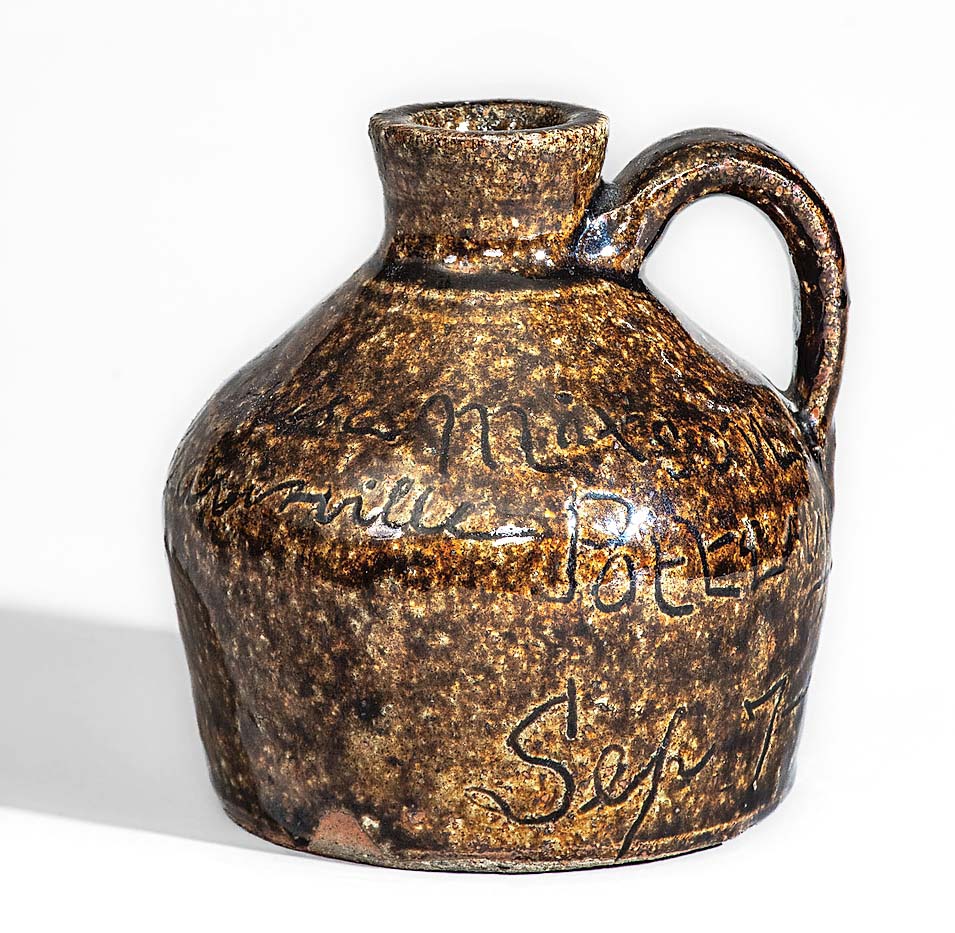
Dated to September 7, 1904, this 5-inch-tall Weaverville Pottery presentation jug, Buncombe County, N.C., was inscribed to “Mae Louise Matson.” It brought $12,000 ($2/3,000).
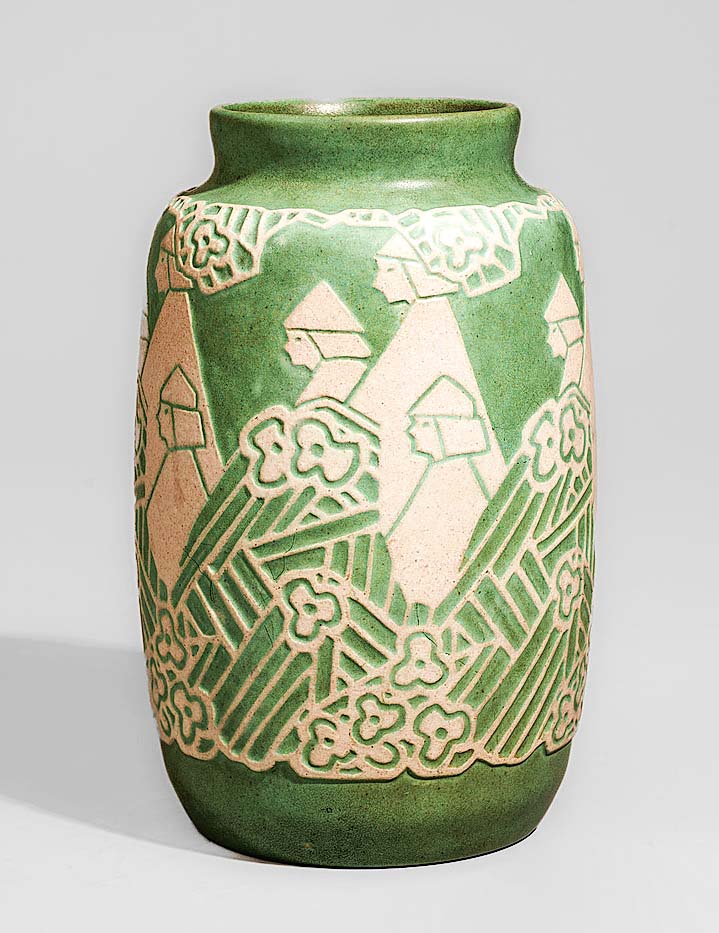
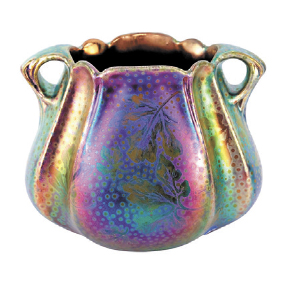
“The Wards’ taste was primarily country pottery in the area they lived in — Greenfield S.C., Upstate and mostly from the South. But they had some taste in other pottery, so there was an eclectic mix and a handful of things that didn’t seem to fit,” Zipp explained. Certainly an eclectic addition, standing out visually but also in origin and date was an Overbeck Pottery vase from Cambridge City, Ind. Created circa 1920 by Elizabeth and Mary Frances Overbeck, this vase featured a sea-green ground with a stylized relief pattern of hatted wizards and flowers. Zipp described the vase as a “very high-style piece of art pottery from the Twentieth Century among a collection of Nineteenth Century utilitarian stoneware. It’s not the type of piece we usually handle, but David wanted us to sell it for him, so we put it at an estimate that would be enticing.” The bidders did come for it, taking it to $7,200 against the $2/3,000 estimate.
Prices quoted include the buyer’s premium as reported by the auction house.
Crocker Farm’s next auction, running July 22-31, will celebrate America 250. For information, www.crockerfarm.com or 410-472-2016.